
Thin Section Bearings for Compact and Space-Limited Designs Overview
Compare representative CXE Bearing products by dimensions, material, and seal type. Use the left navigation to switch collections without returning to the catalog home.
Products In This Collection
Browse all matching CXE Bearing products in this collection. Each row shows dimensions, material, seal type, public reference price, and the fastest RFQ path.
1-2 / 2 products
| Image | Product | Bore | OD | Width | Material | Seal | Reference Price | RFQ |
|---|---|---|---|---|---|---|---|---|
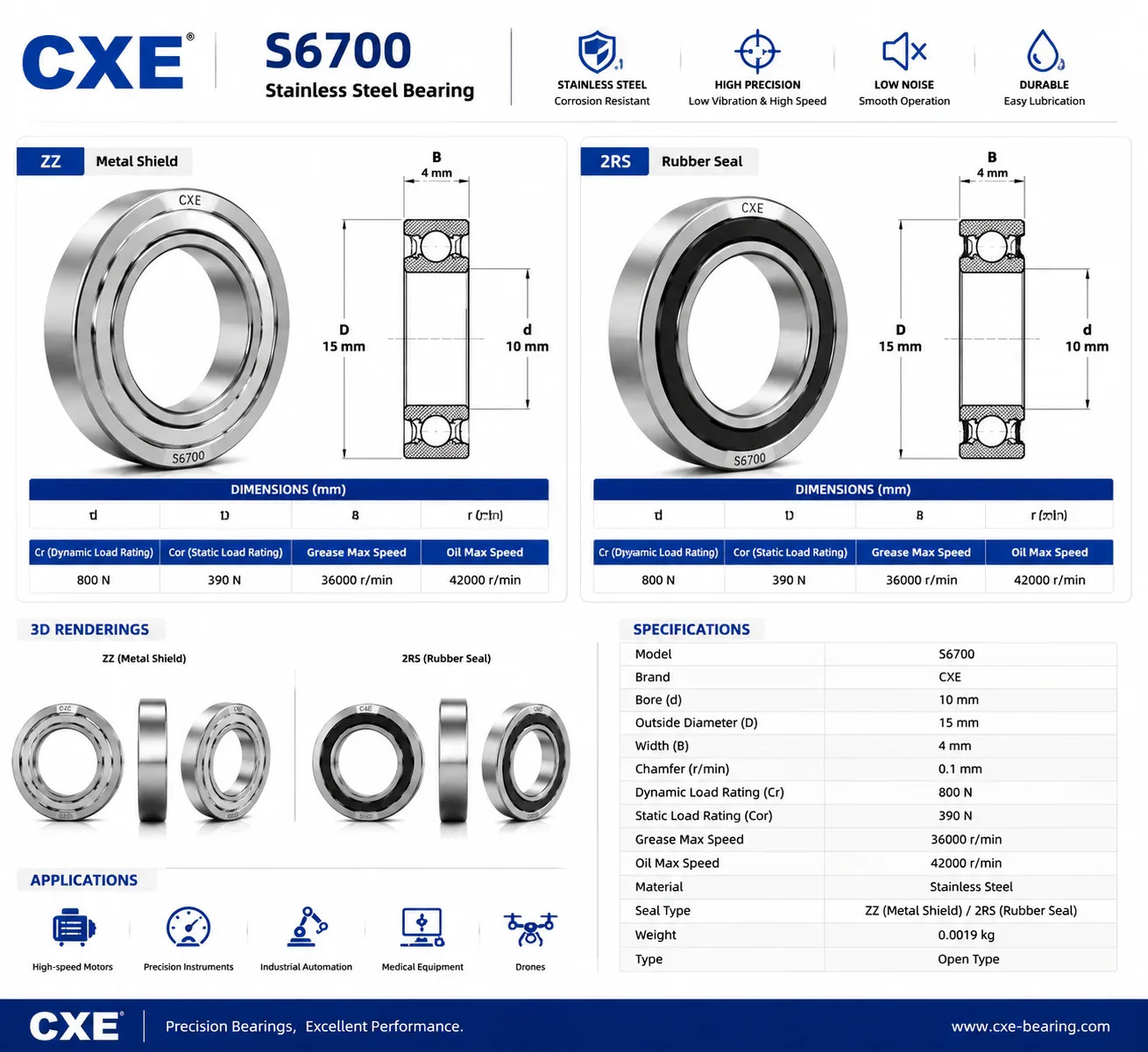 | S6700-ZZ 10 x 15 x 4 mm Deep Groove Ball Bearing | 10 mm | 15 mm | 4 mm | Stainless Steel | ZZ | On request | RFQ |
| S6700-2RS 10 x 15 x 4 mm Deep Groove Ball Bearing | 10 mm | 15 mm | 4 mm | Stainless Steel | 2RS | On request | RFQ |
Related Collection Types
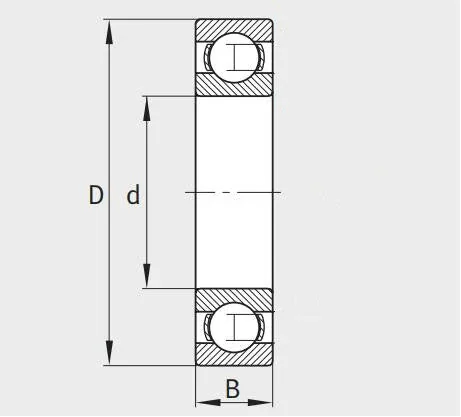
Technical Guide Materials, applications, selection notes, and internal reference links for this collection.
Thin section bearings are used when the design has limited radial space, needs a larger shaft opening, or must reduce rotating weight without moving to a bulky standard bearing. They are common in compact automation, instruments, rotary platforms, robotics, inspection equipment, and other assemblies where the available envelope is tight.
The important buyer decision is whether a thin cross section actually fits the load path. A smaller section can save space, but it should not be used as a shortcut when the application really needs higher load capacity, stronger shaft support, or a wider bearing arrangement. CXE Bearing can compare thin section requests with deep groove ball bearings, stainless thin section bearings, ceramic hybrid bearings, and stainless steel bearings when material or space is part of the same decision.
Where Thin Section Bearings Fit
Thin section bearings are reviewed when a machine needs a large bore relative to the bearing section. This can help designers route shafts, cables, optics, tooling, or lightweight rotating parts through the center while keeping the outside envelope compact. They are often considered for robot joints, scanning devices, camera and optical systems, rotary tables, laboratory equipment, and compact positioning assemblies.
They may also be selected when weight reduction is important. The benefit is not only bearing weight; the bearing can allow a smaller housing, lighter support structure, or tighter packaging around the rotating assembly.
Do Not Shrink the Section Too Quickly
A thin section bearing should not be chosen only because the available space is small. If the shaft is poorly supported, the housing is flexible, the load includes impact, or the assembly has misalignment, a thinner bearing may become more sensitive to deflection and mounting error. Before changing from a standard bearing to a thin section bearing, review the shaft diameter, housing rigidity, load direction, speed, lubrication, and how the bearing is retained.
If the old bearing failed from heat, noise, edge loading, or raceway marks, the replacement should be checked as an arrangement problem, not only as a size problem.
Selection Points
| Selection point | What to confirm |
|---|---|
| Bearing type | Radial, angular contact, or four-point contact depending on load direction and shaft location. |
| Dimensions | Bore, outside diameter, width, and available housing space. |
| Material | Chrome steel, stainless steel, or hybrid ceramic depending on corrosion, speed, and precision needs. |
| Sealing | Open, shielded, or sealed depending on contamination, drag, and lubrication requirements. |
| Mounting | Shaft and housing fit, shoulders, retaining method, and alignment. |
Application and Material Notes
For clean compact equipment, a standard steel thin section bearing may be reviewed. For humid or washdown-adjacent equipment, stainless steel bearings may be more suitable. For low-friction or electrical-insulation concerns, ceramic bearings or hybrid ceramic options can be reviewed, but the material choice should still match load, fit, and lubrication.
If the design is a small instrument or miniature mechanism rather than a large-bore compact assembly, stainless miniature ball bearings may be the more relevant category.
RFQ Checklist
For a thin section bearing RFQ, send the bearing number, bore x outside diameter x width, available housing space, load direction, speed range, material preference, seal type, lubrication method, shaft support condition, and whether the bearing is used for radial support, axial location, or moment control. A drawing or photo of the bearing position helps confirm whether a thin section bearing is the right path.