
Rod Ends And Spherical Plain Bearings Overview
Compare representative CXE Bearing products by dimensions, material, and seal type. Use the left navigation to switch collections without returning to the catalog home.
Products In This Collection
Browse all matching CXE Bearing products in this collection. Each row shows dimensions, material, seal type, public reference price, and the fastest RFQ path.
1-120 / 171 products
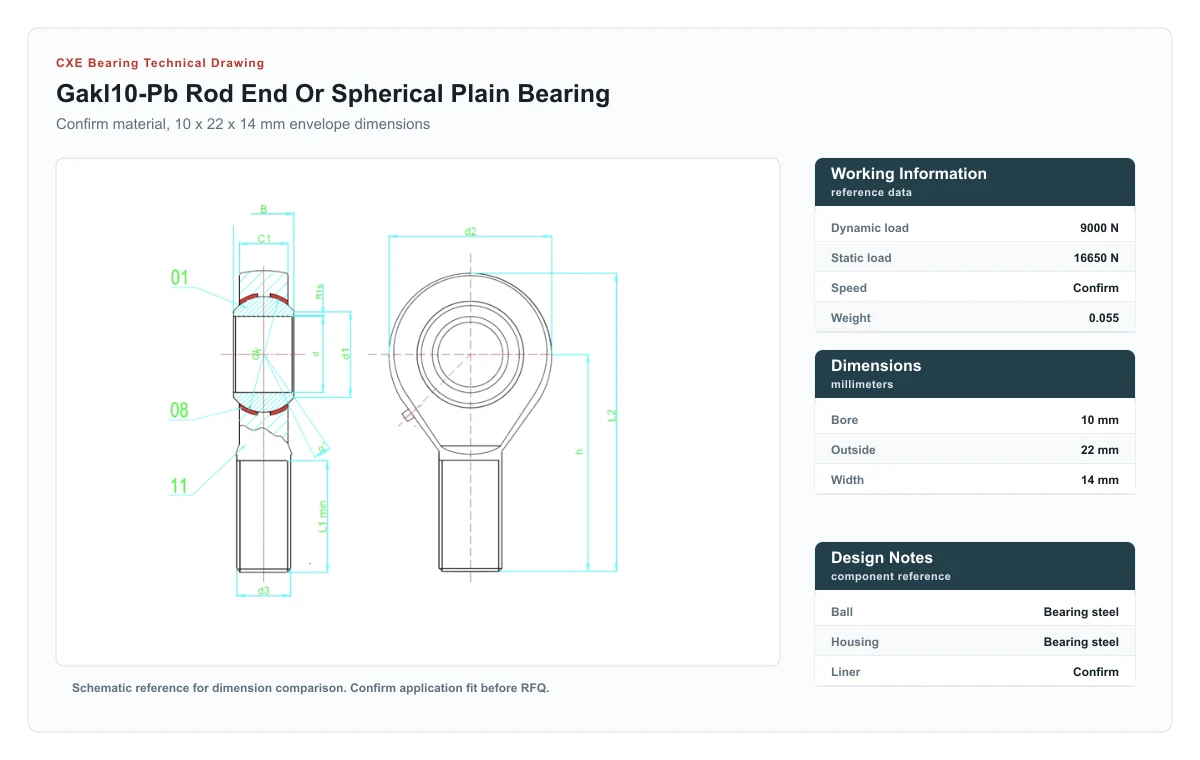
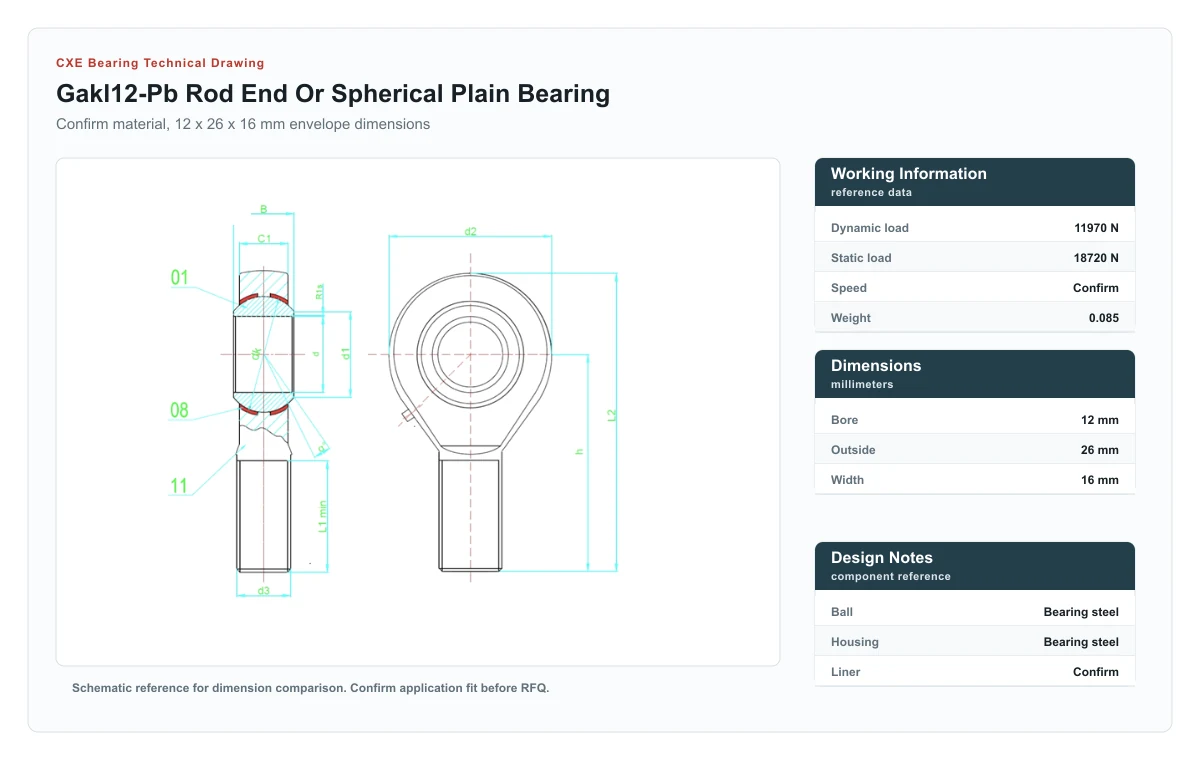
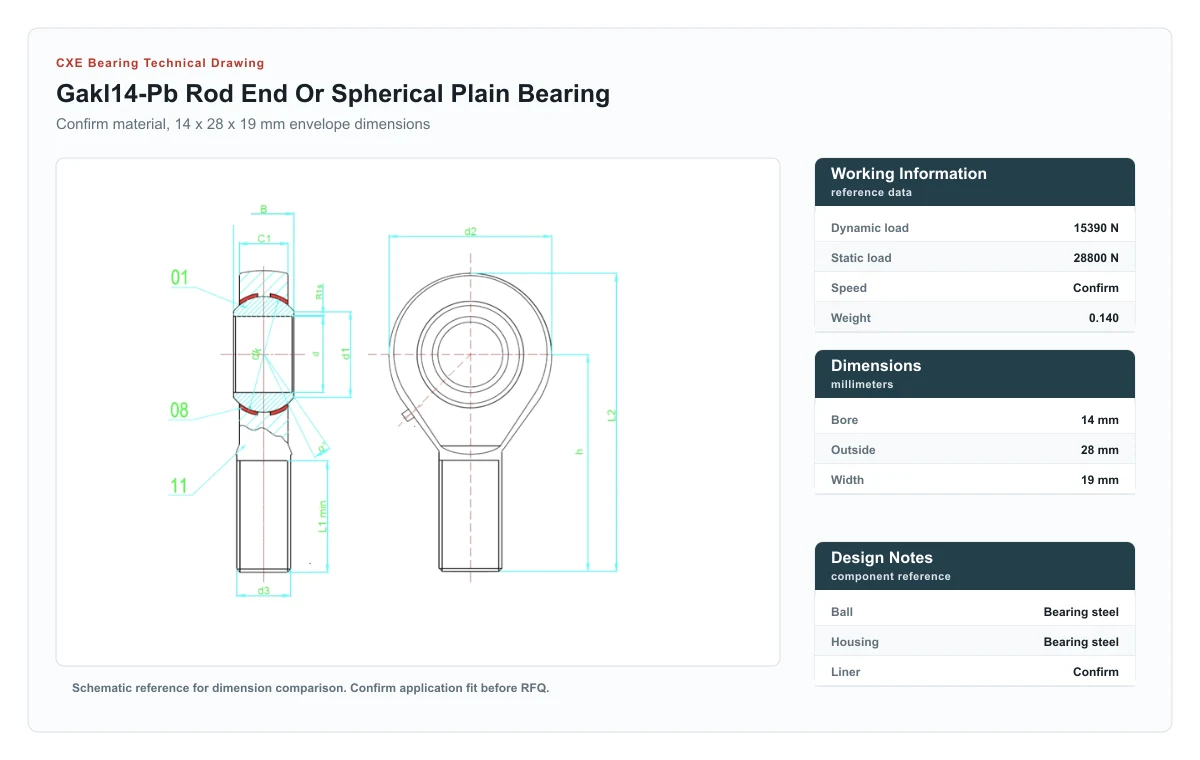
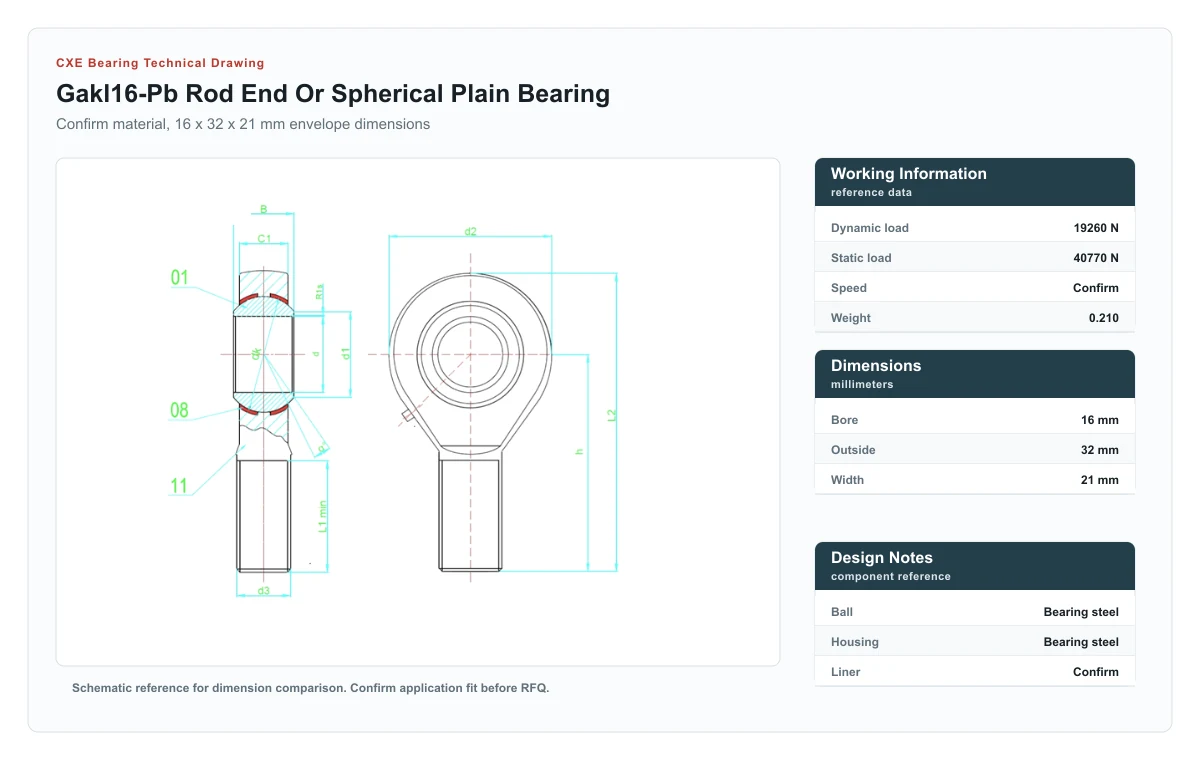
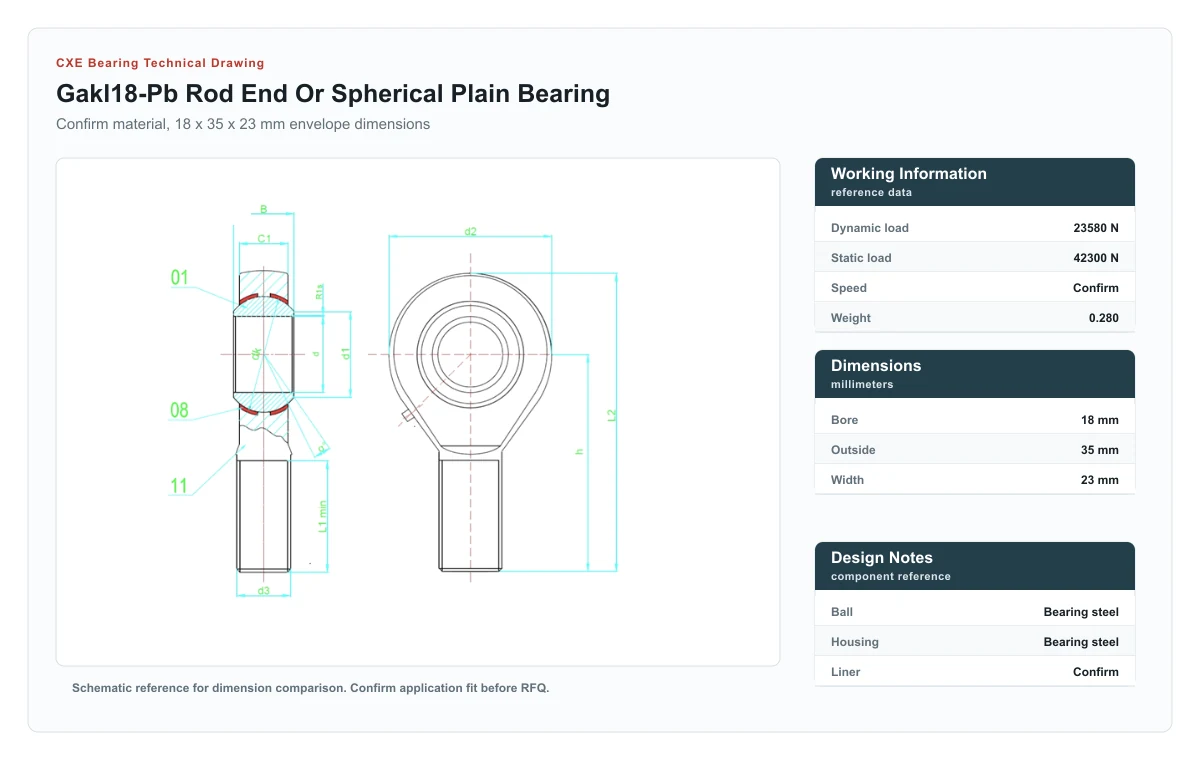
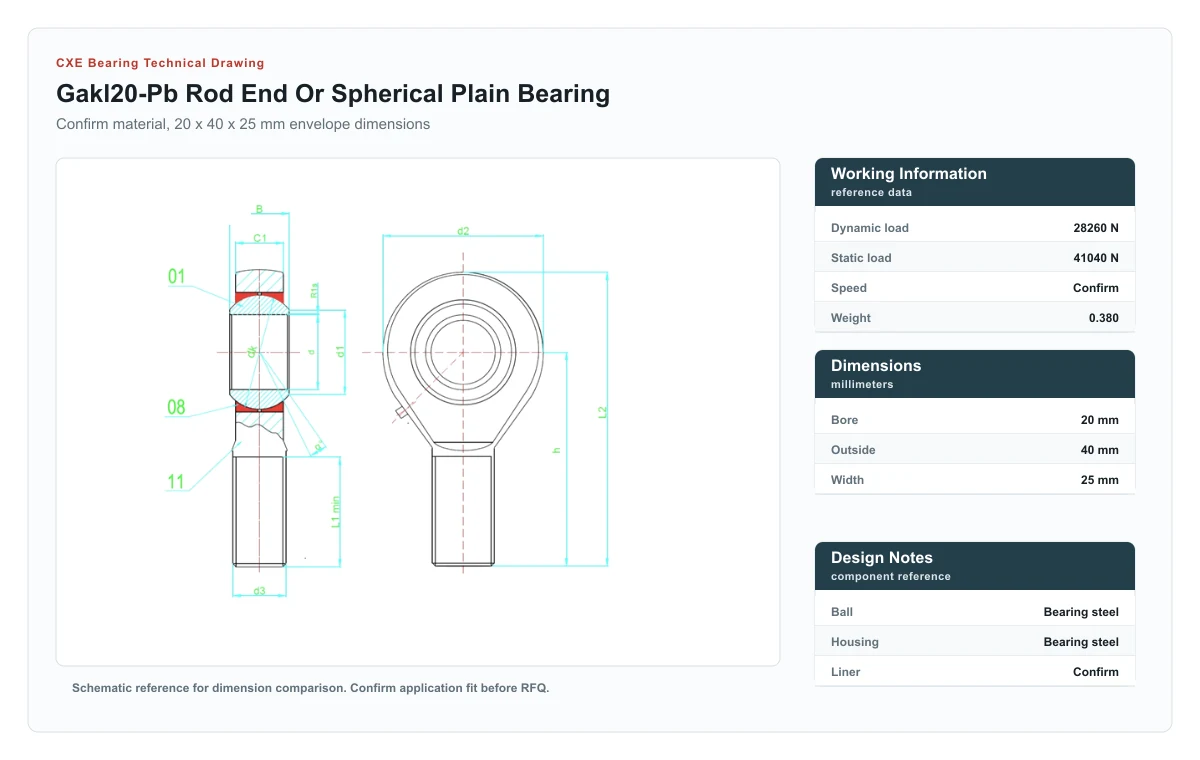
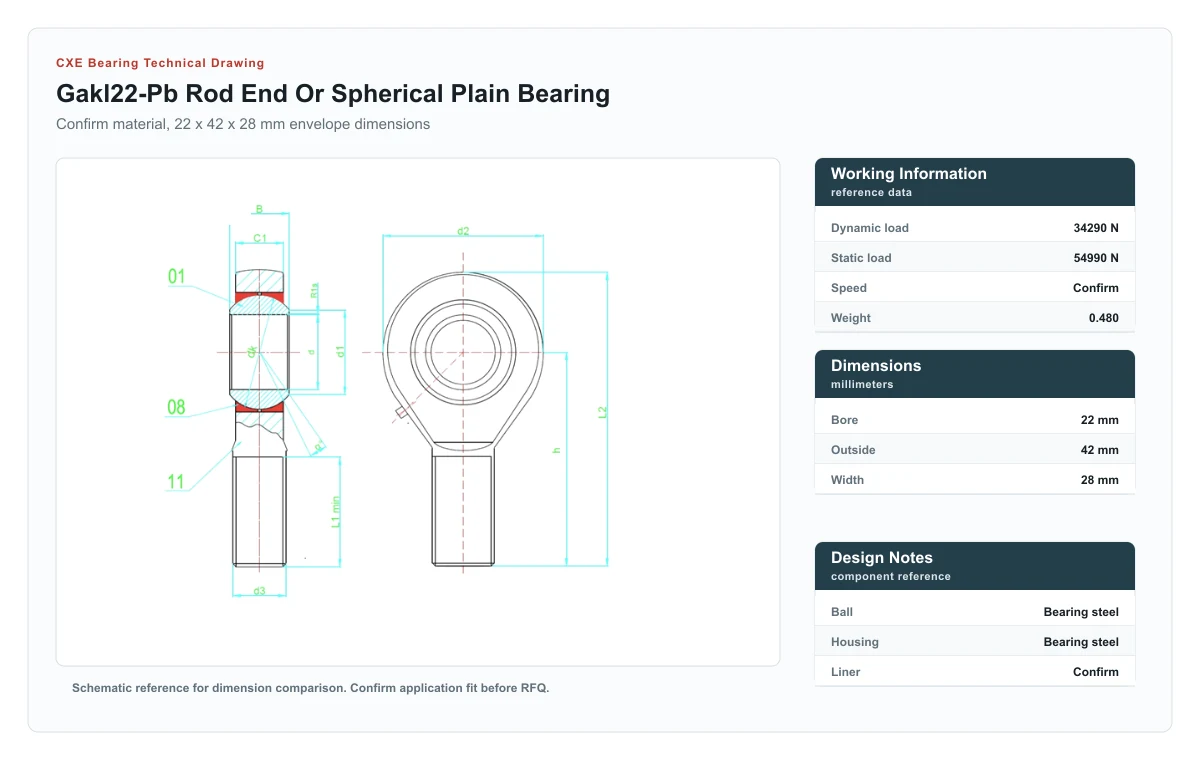
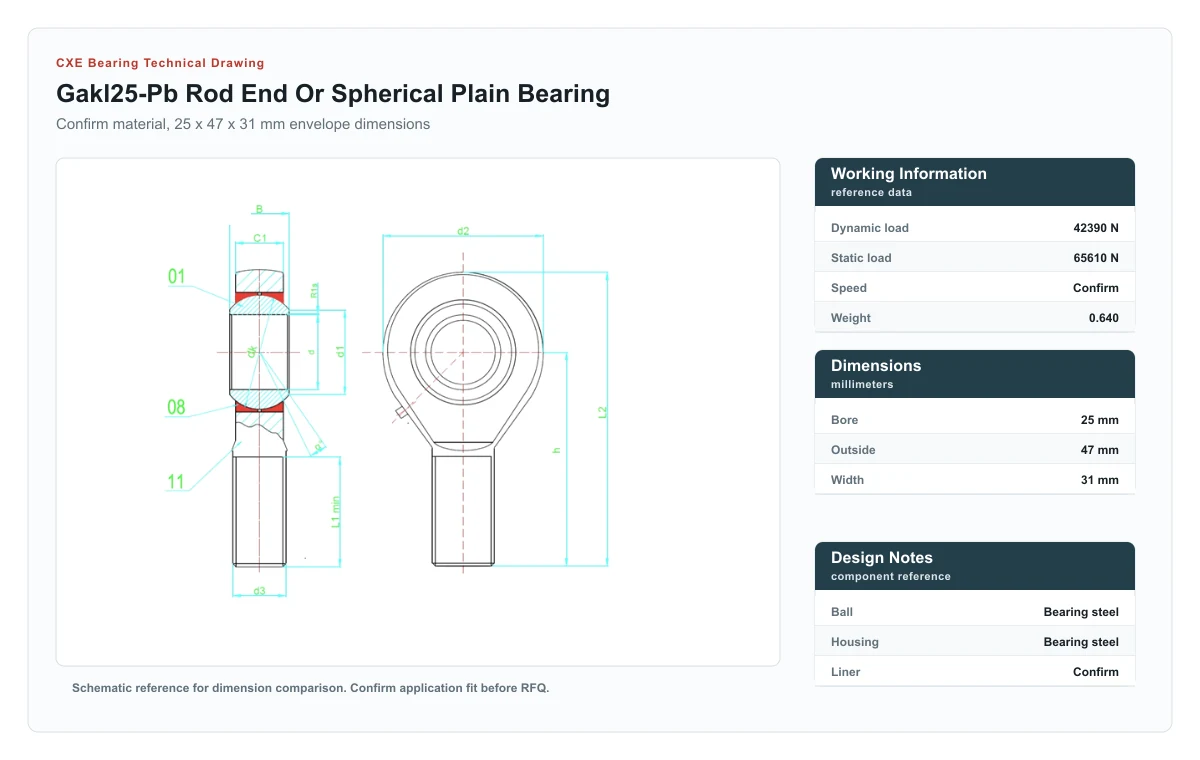
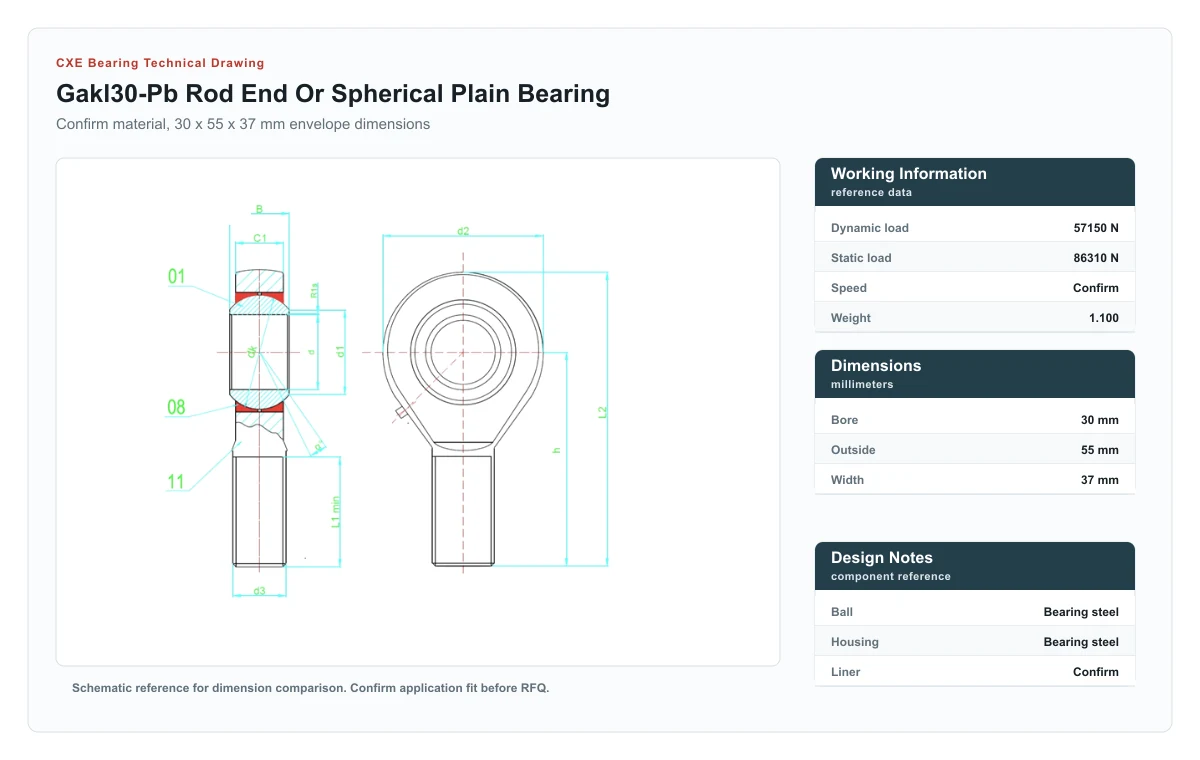
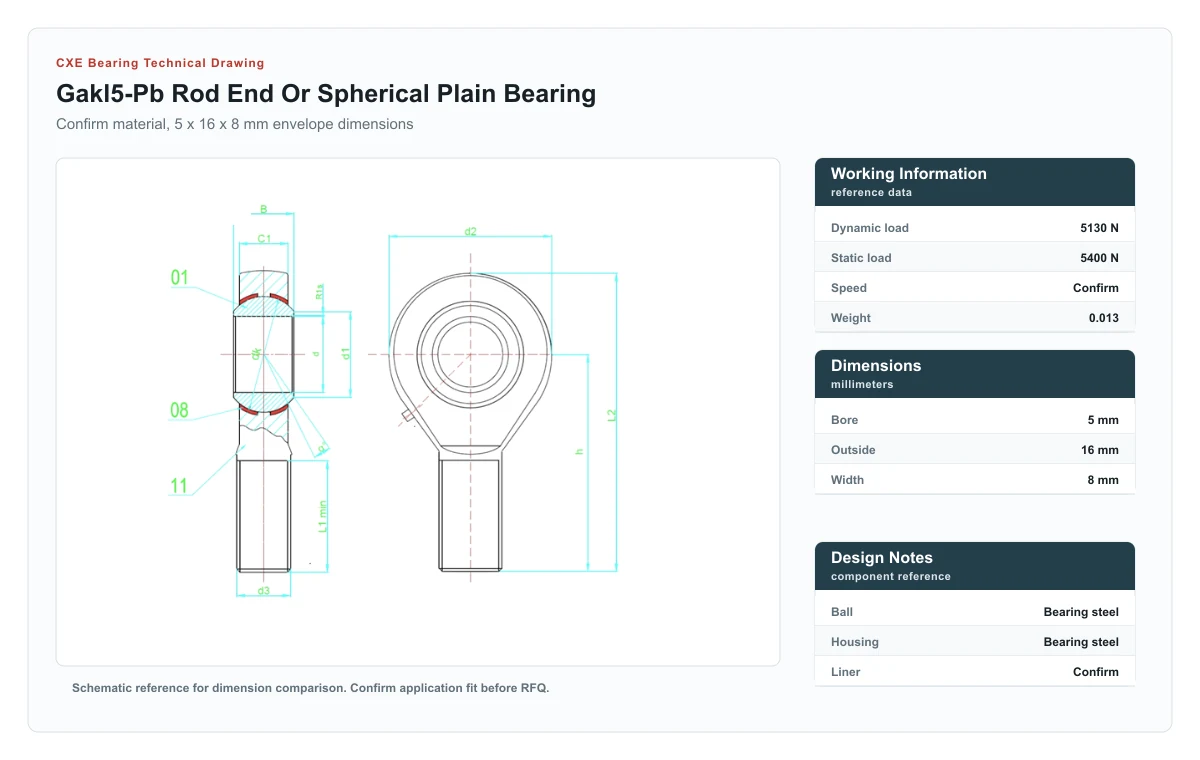
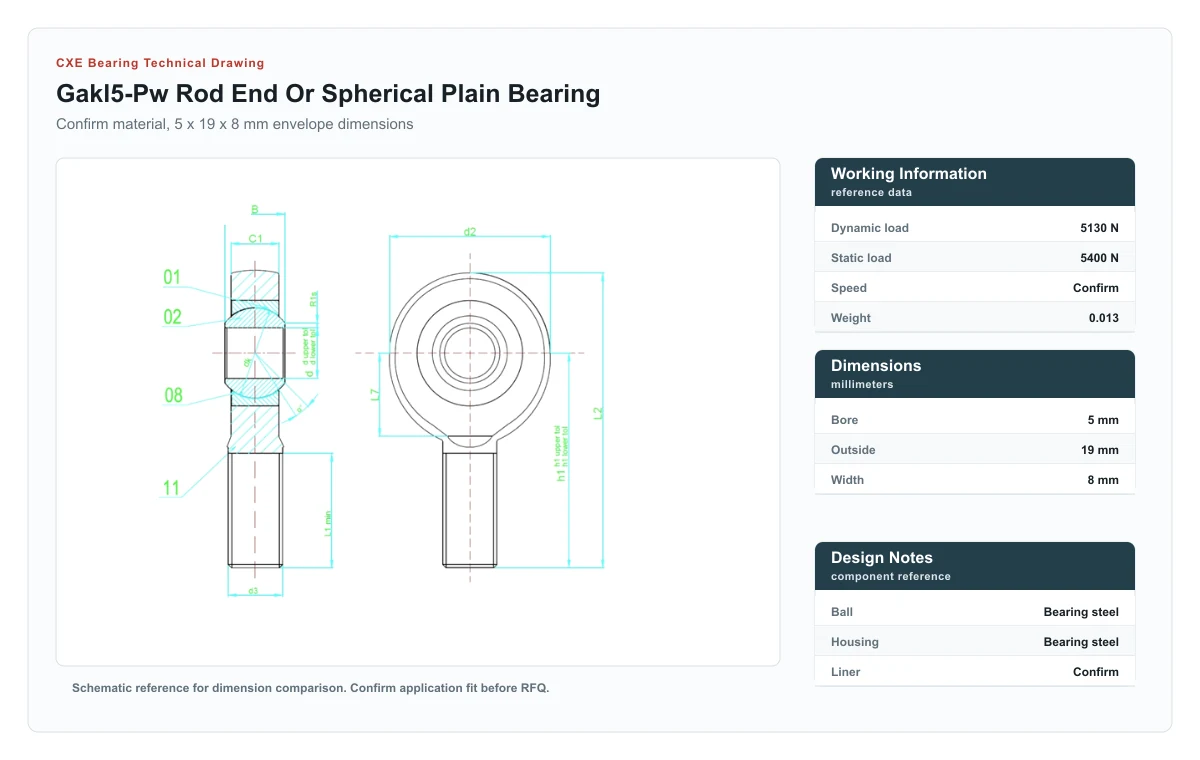
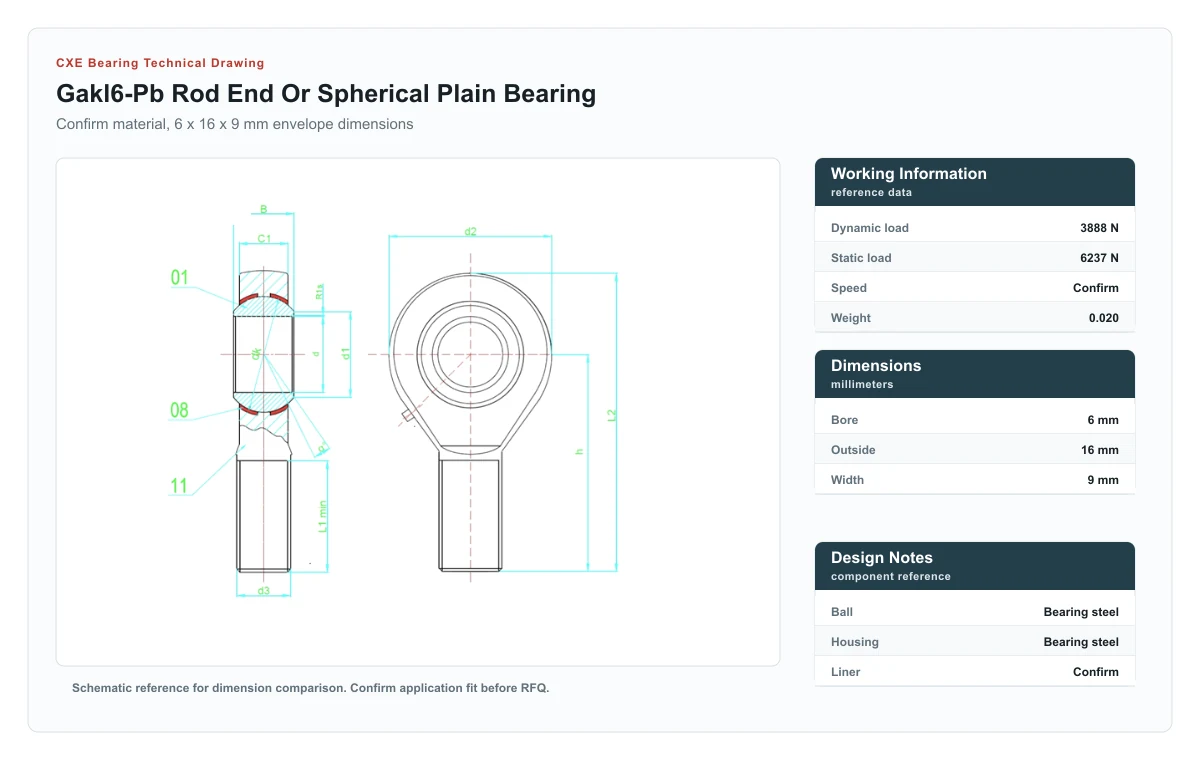
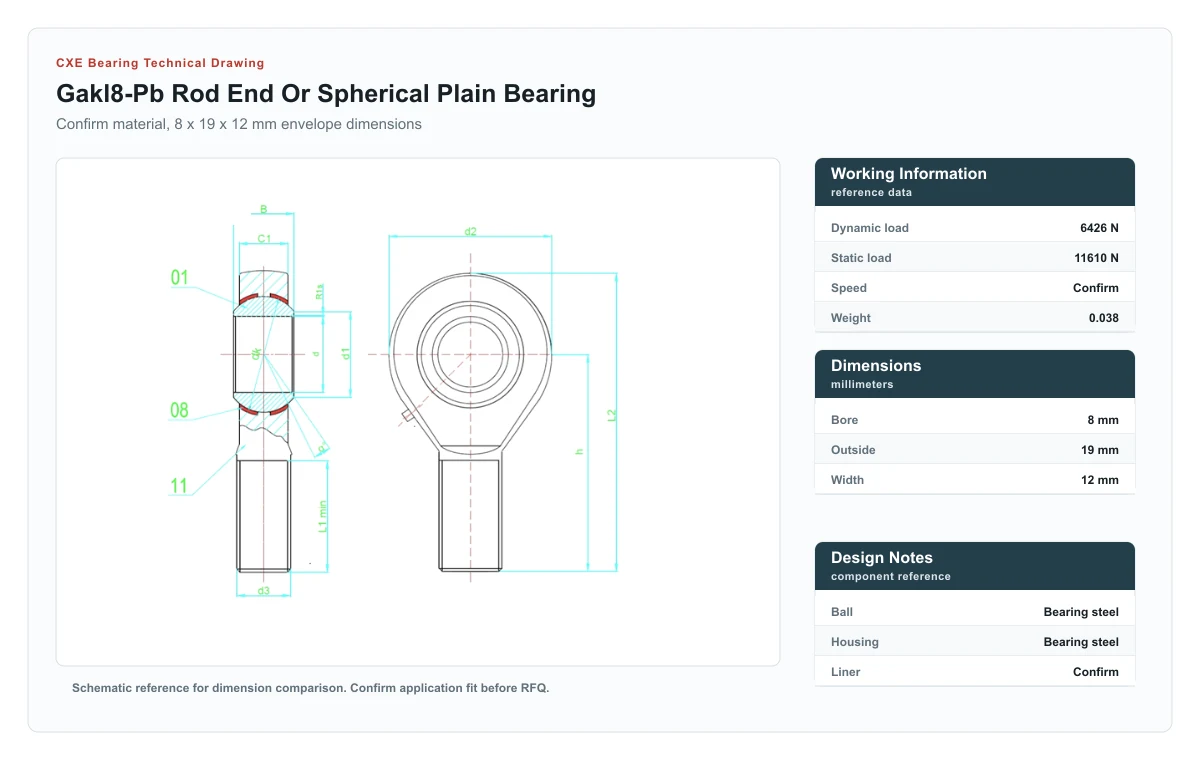
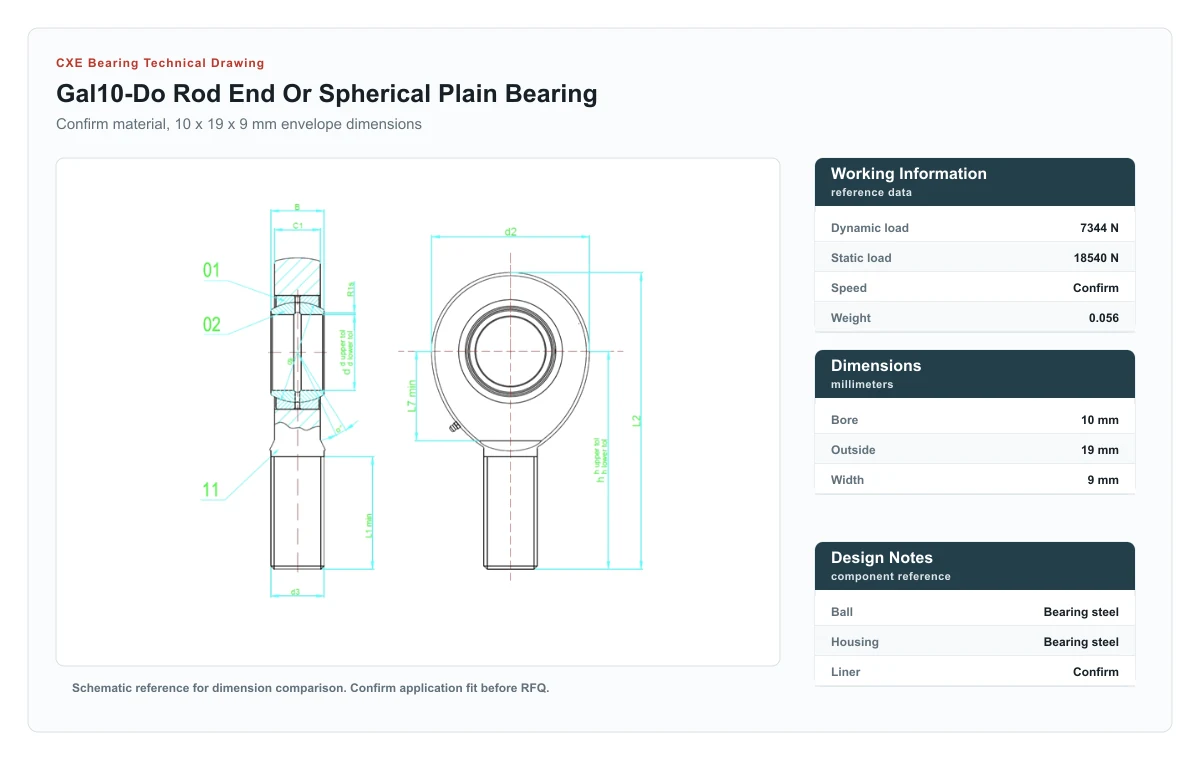
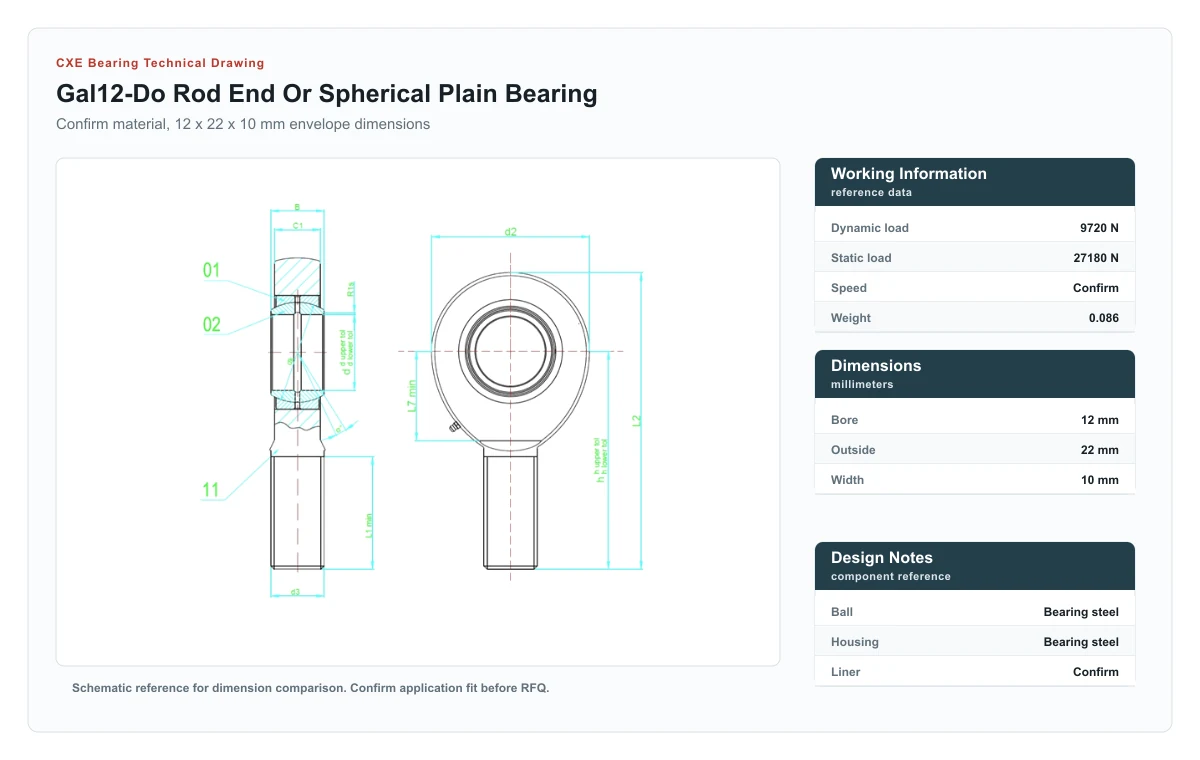
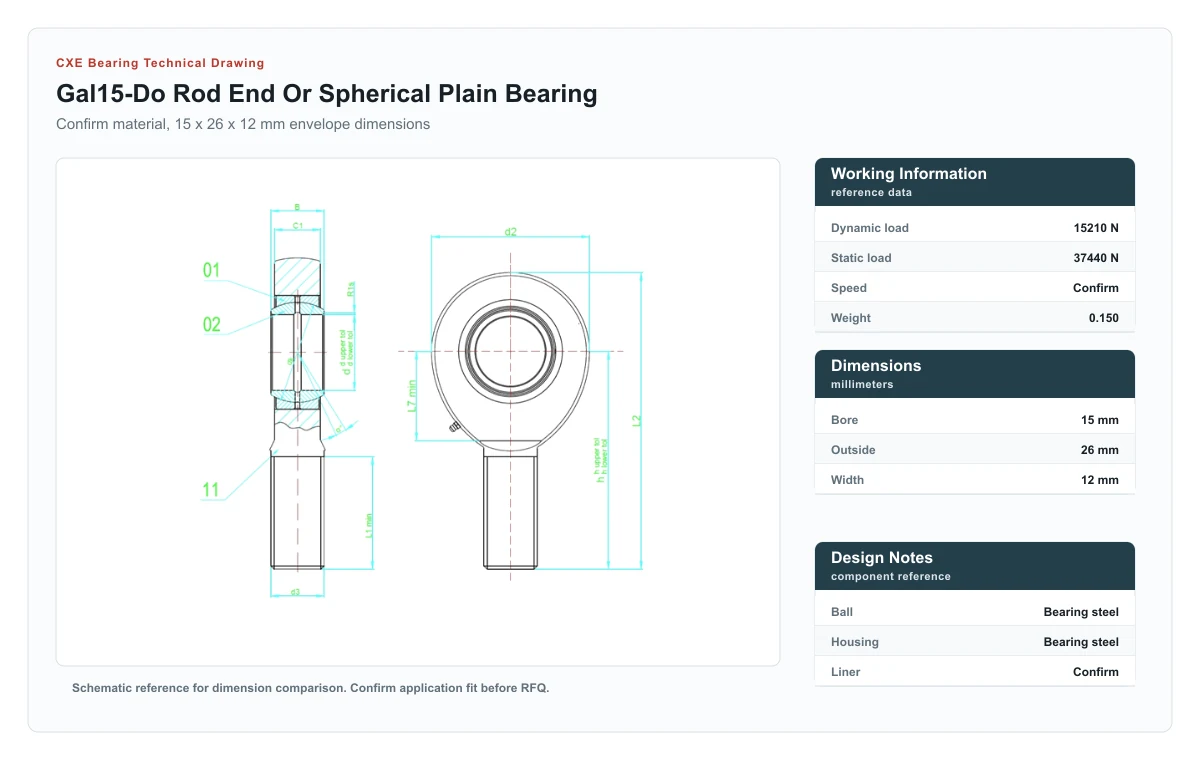
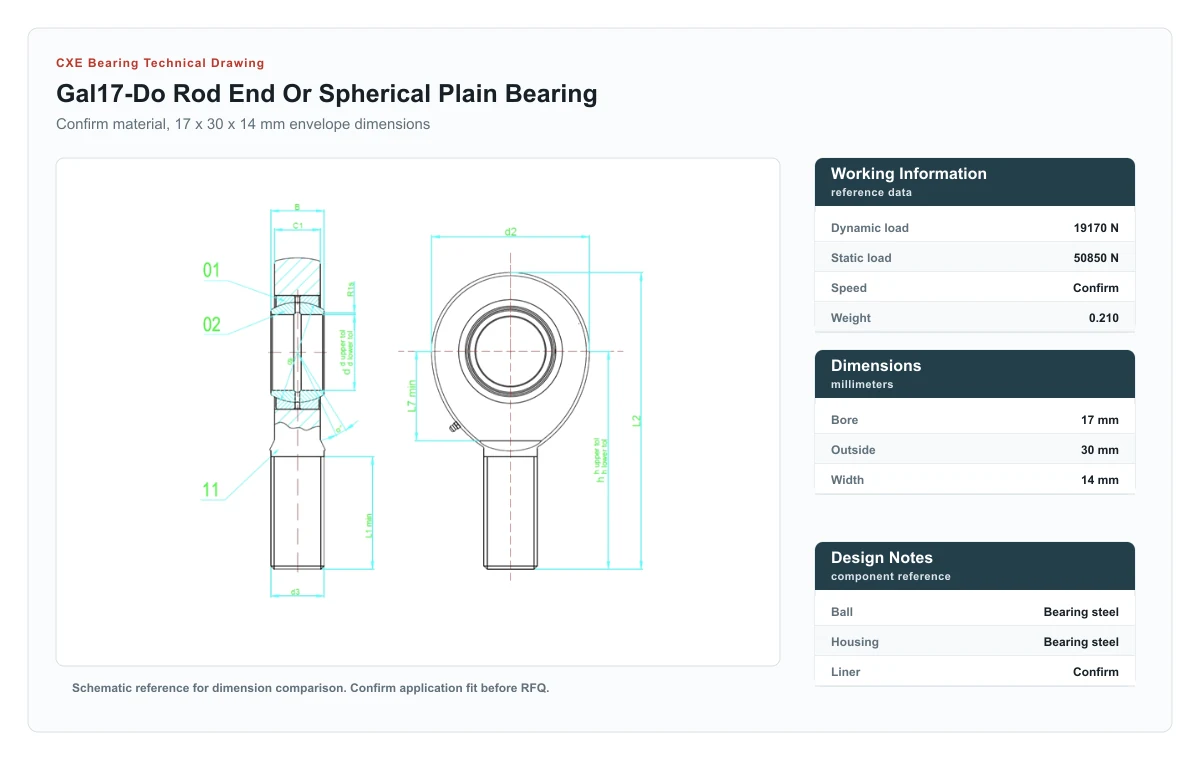
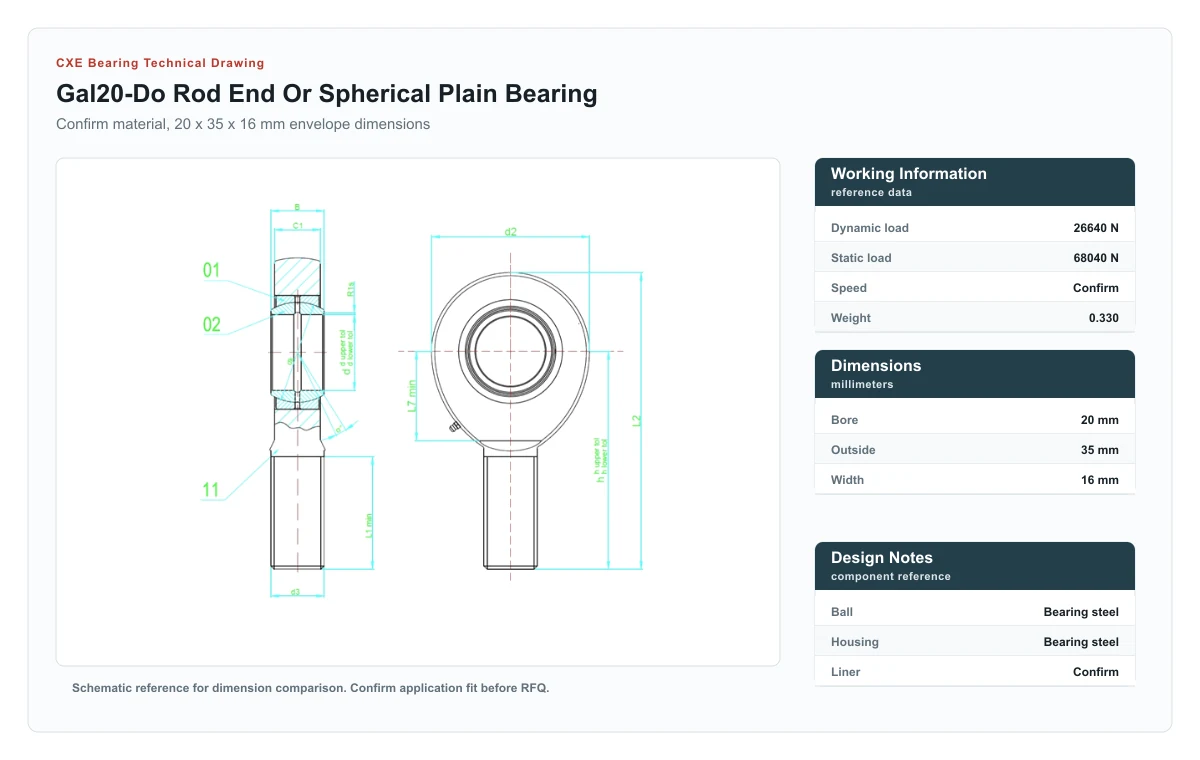
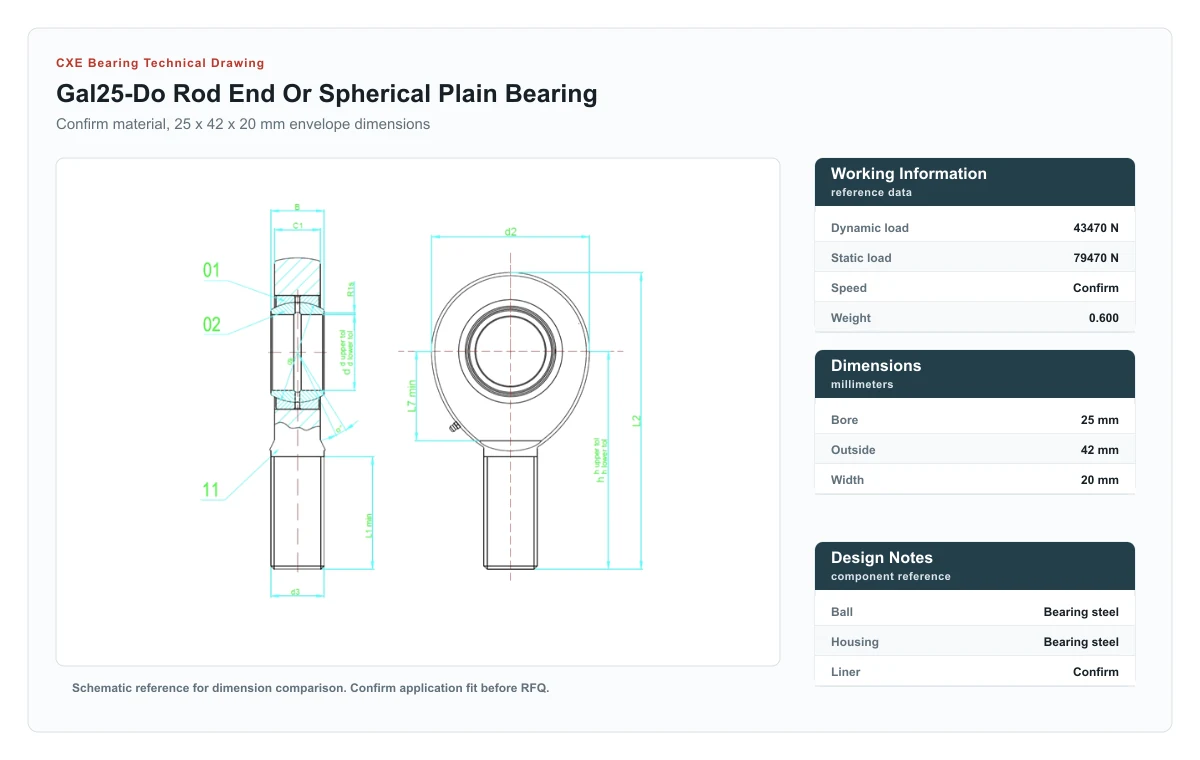
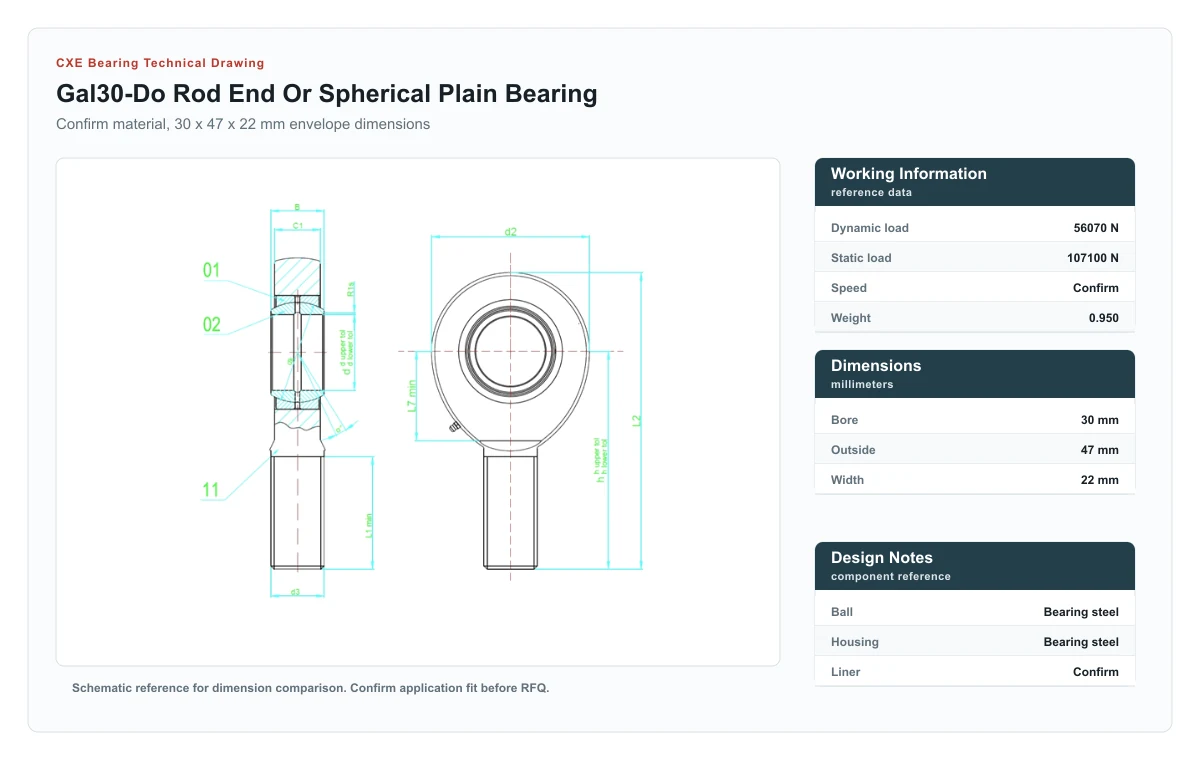
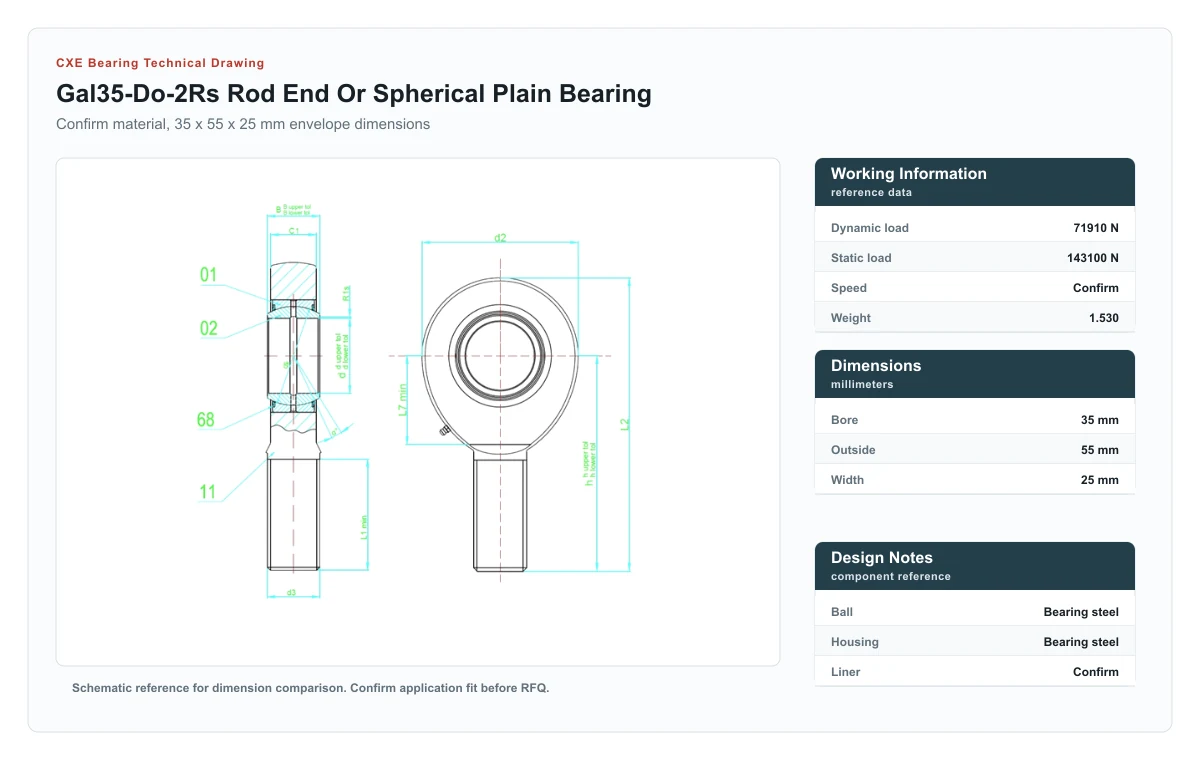
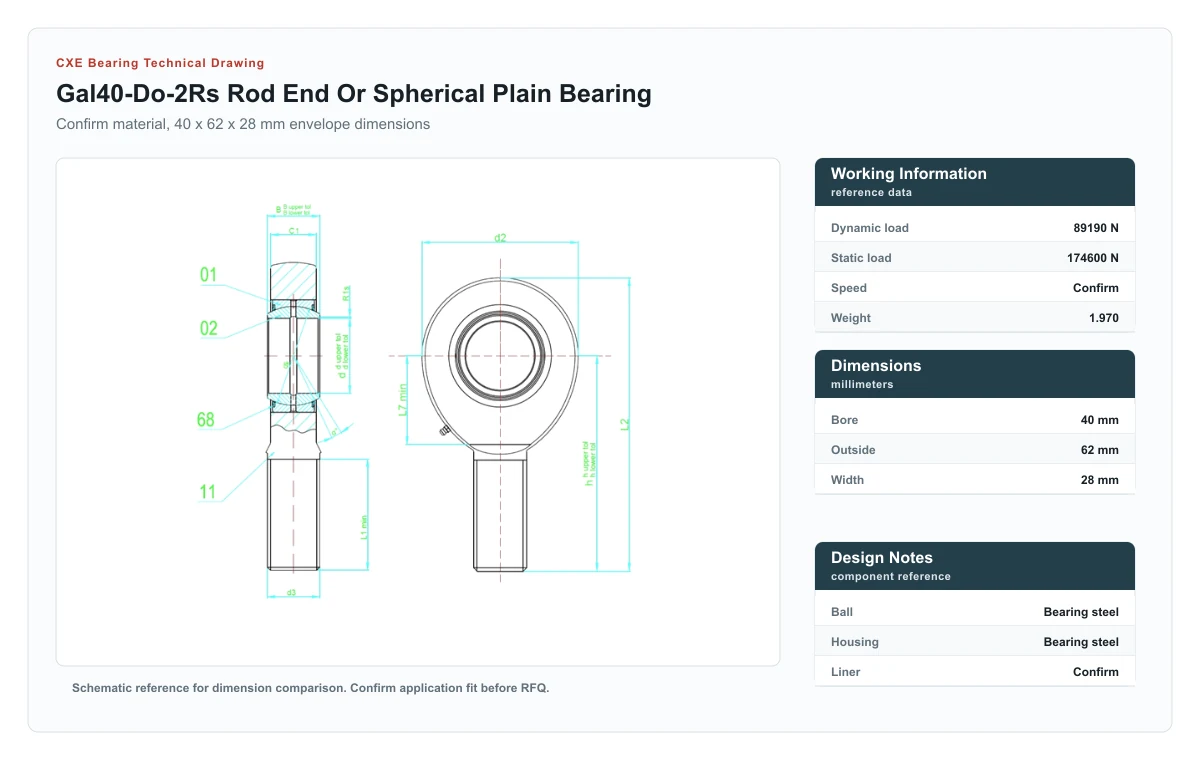
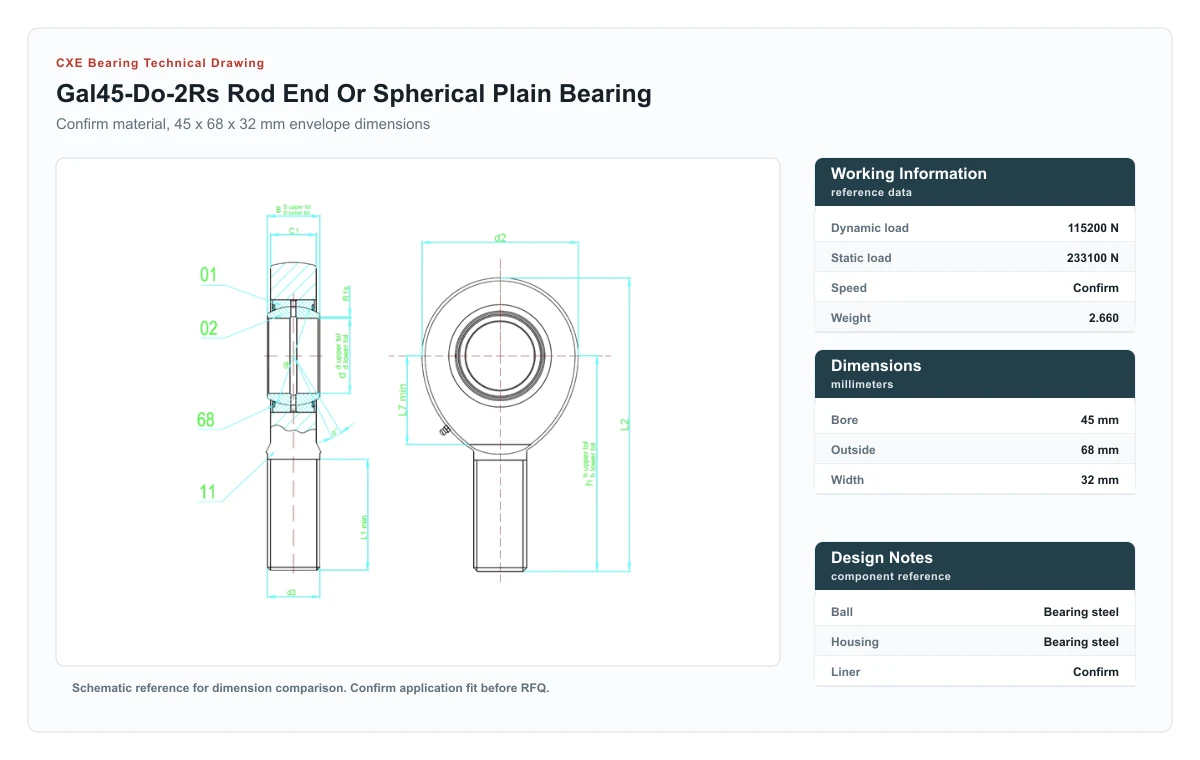
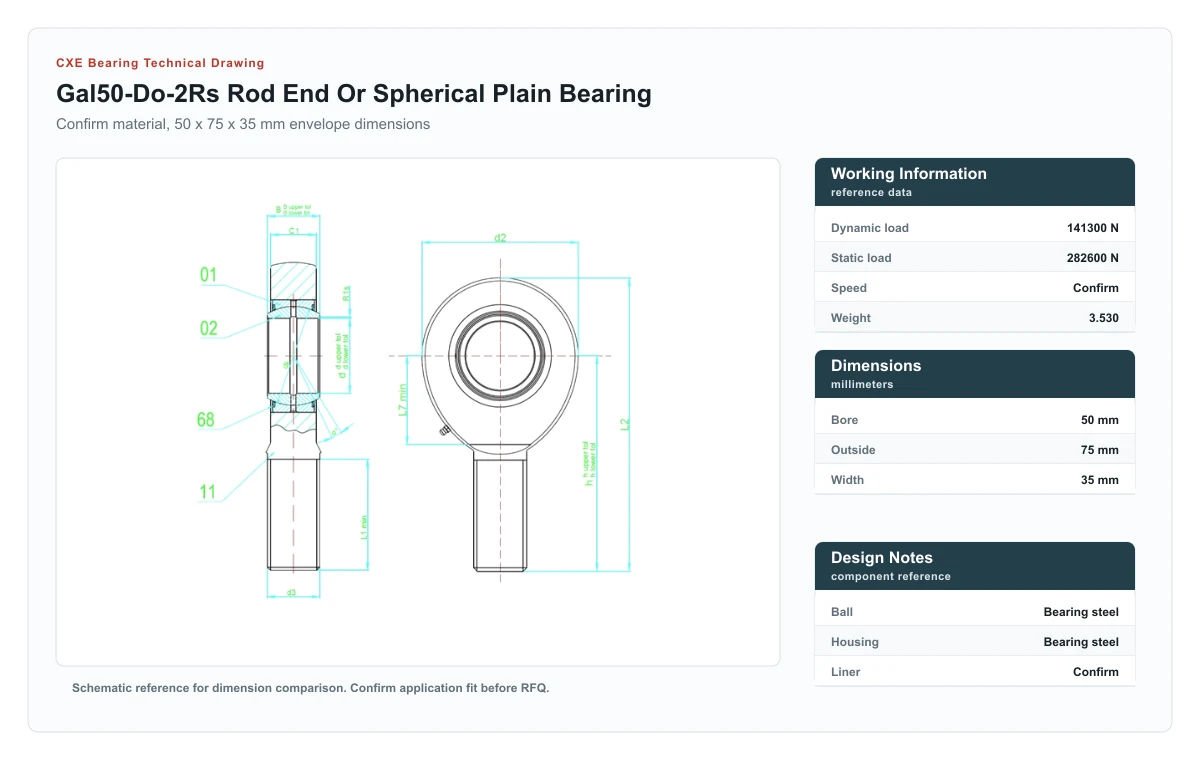
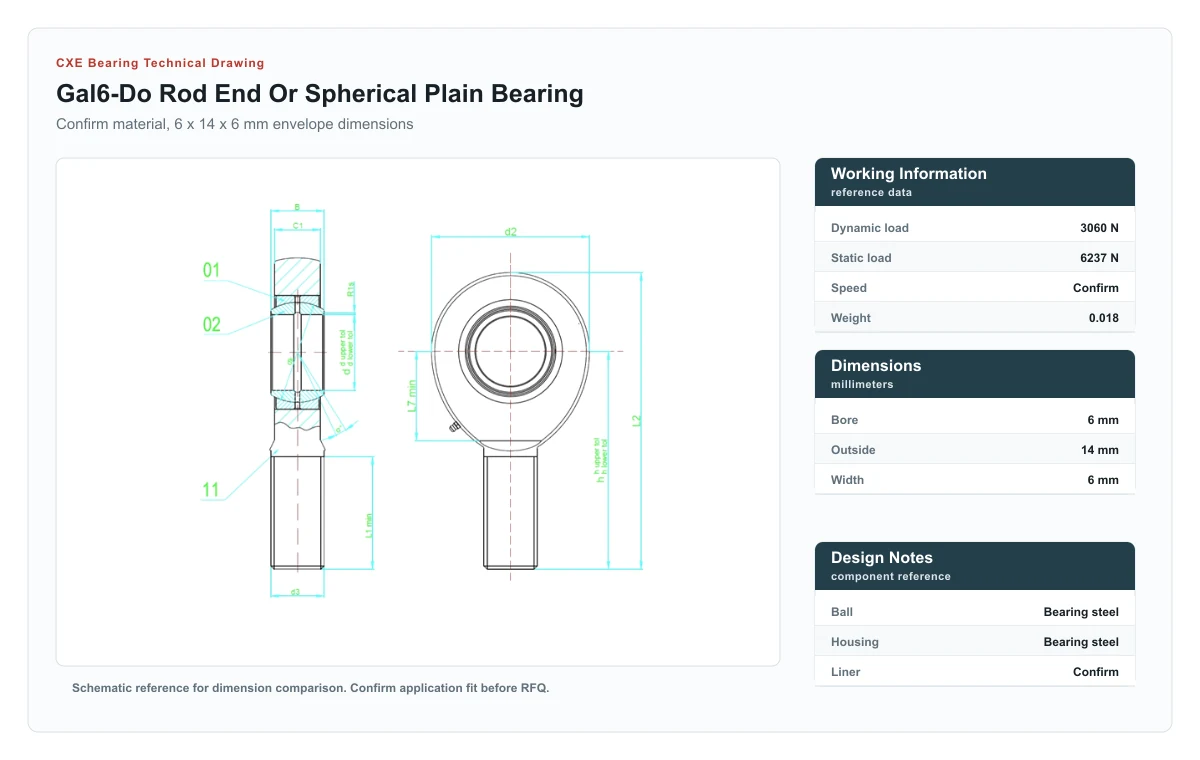
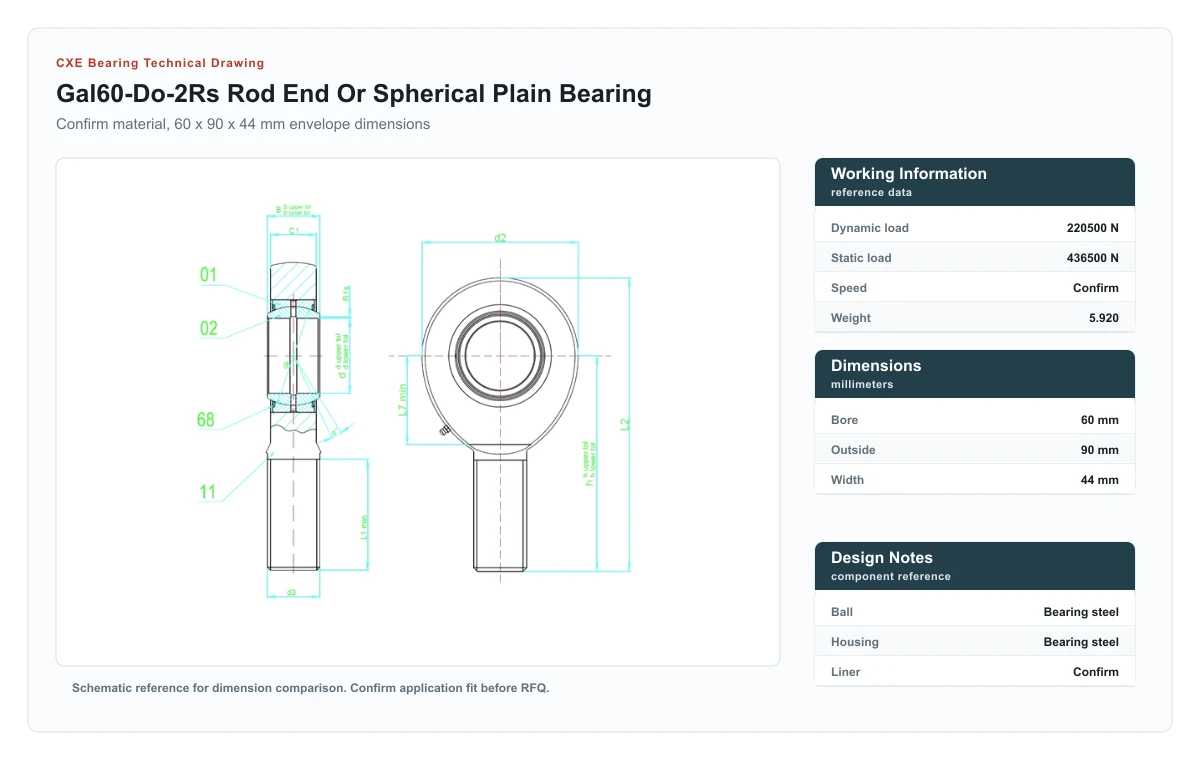
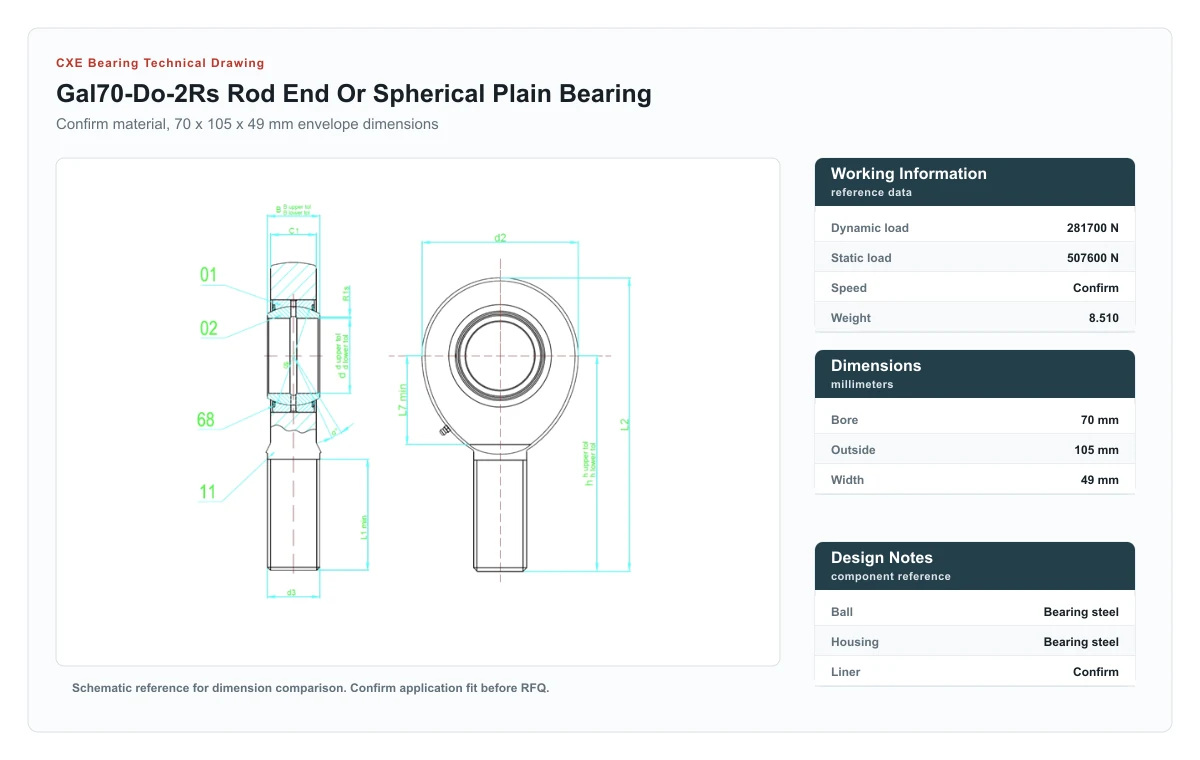
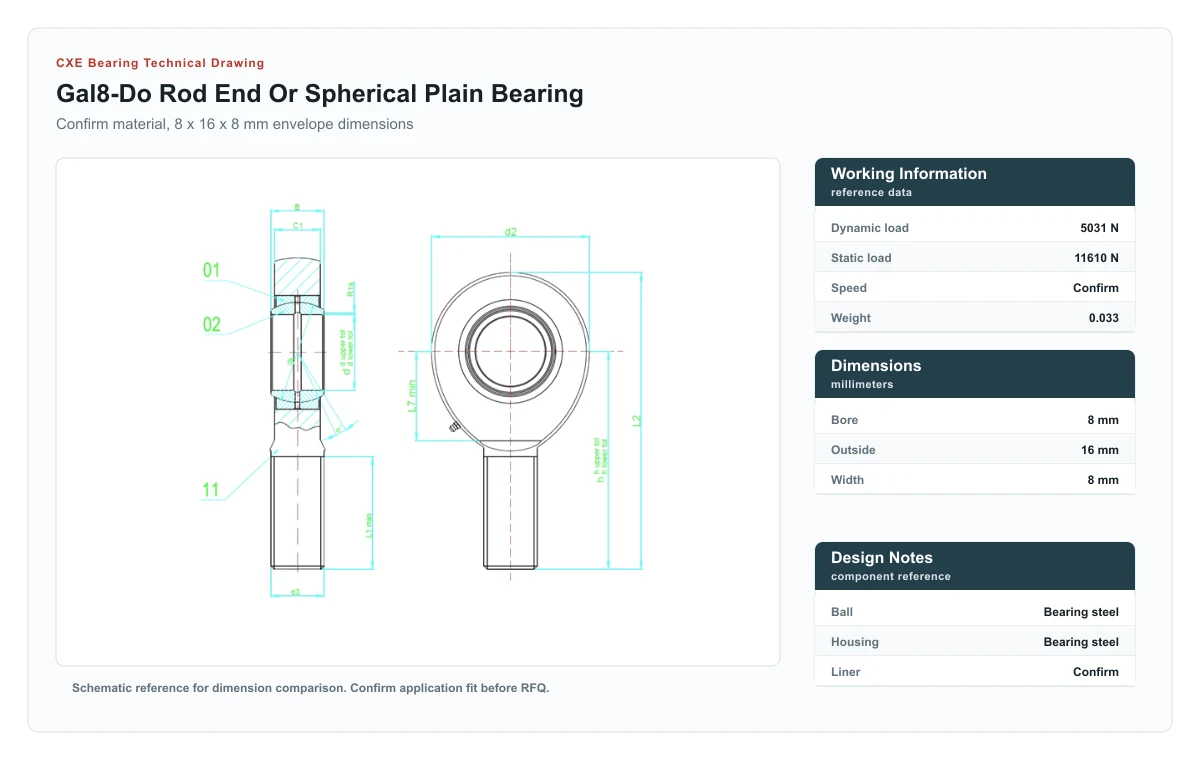
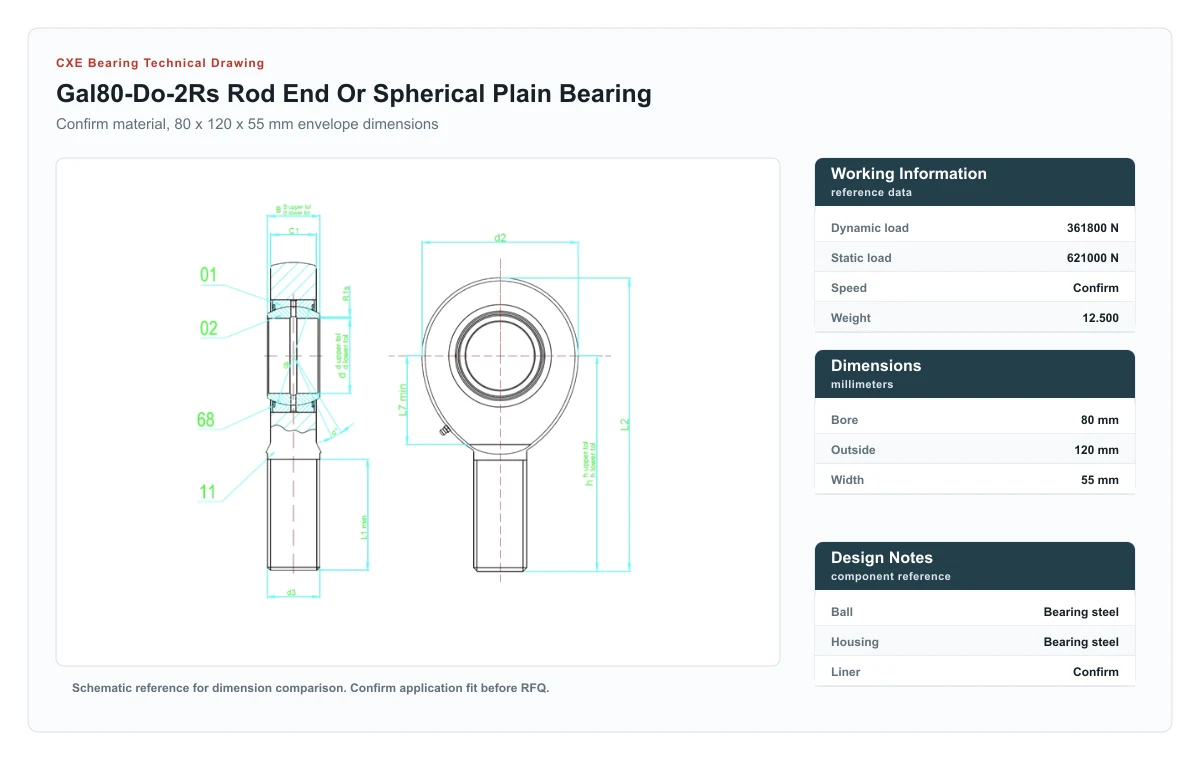
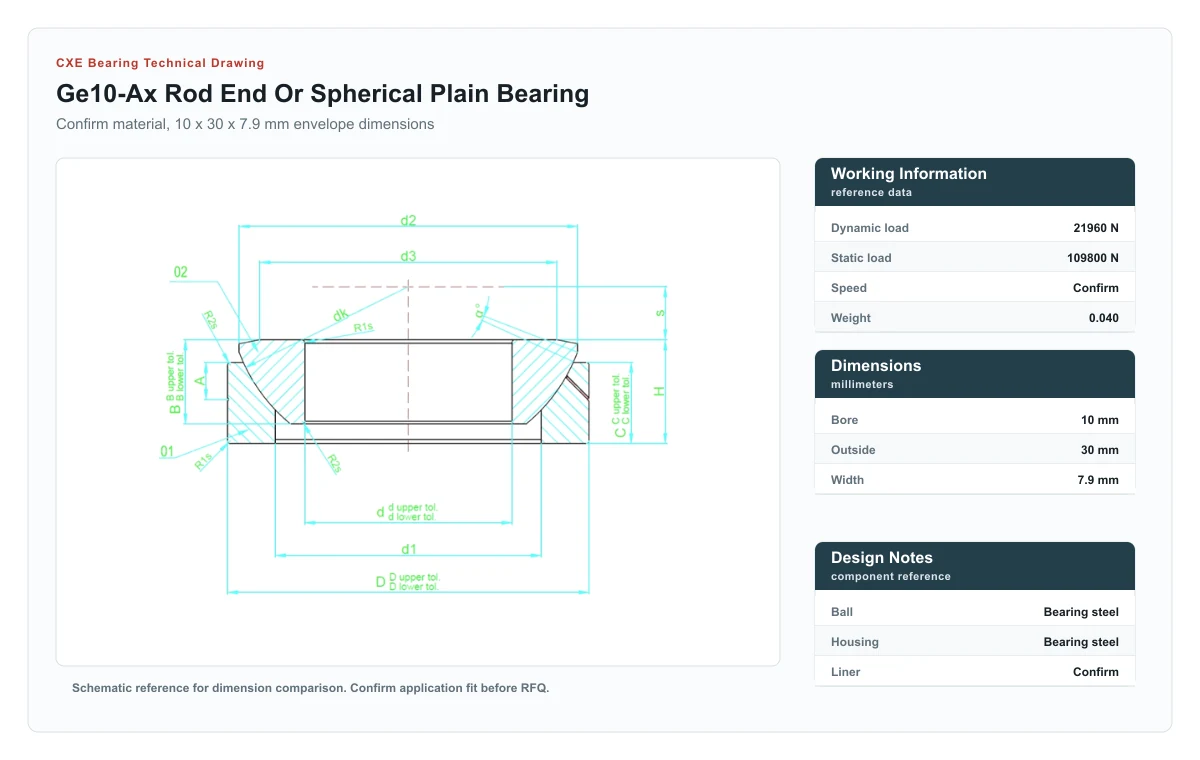
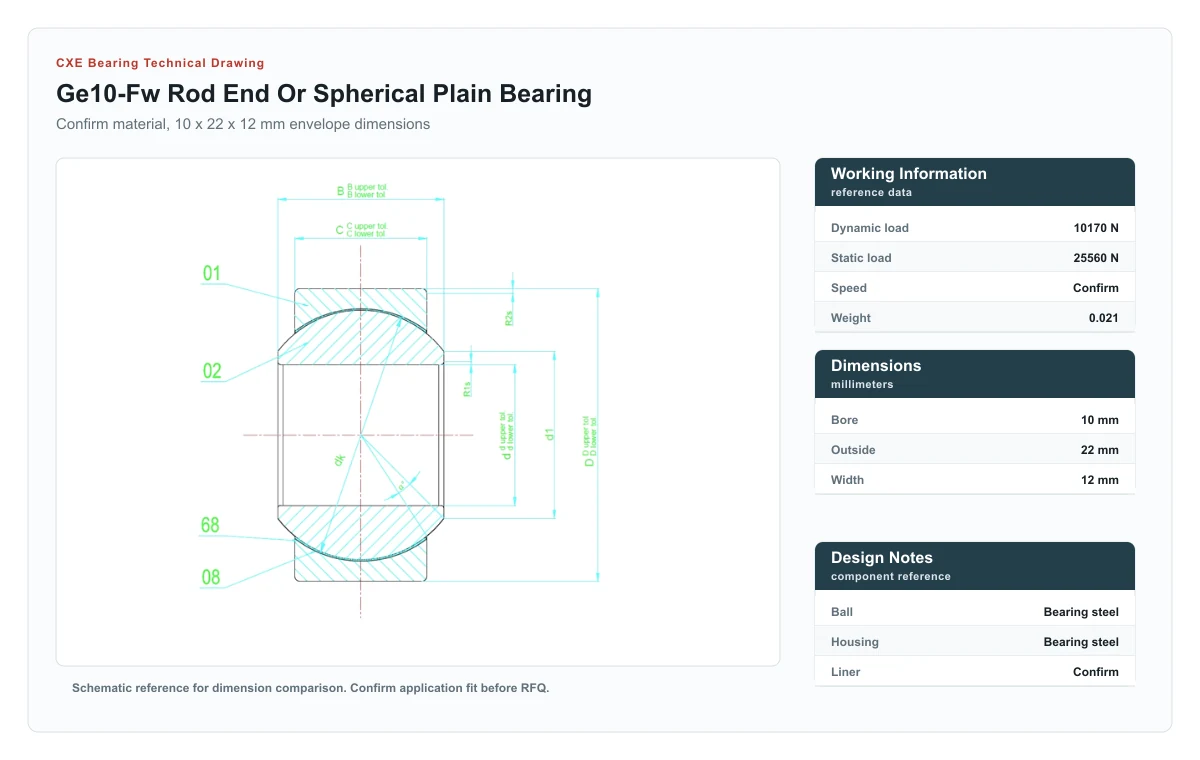
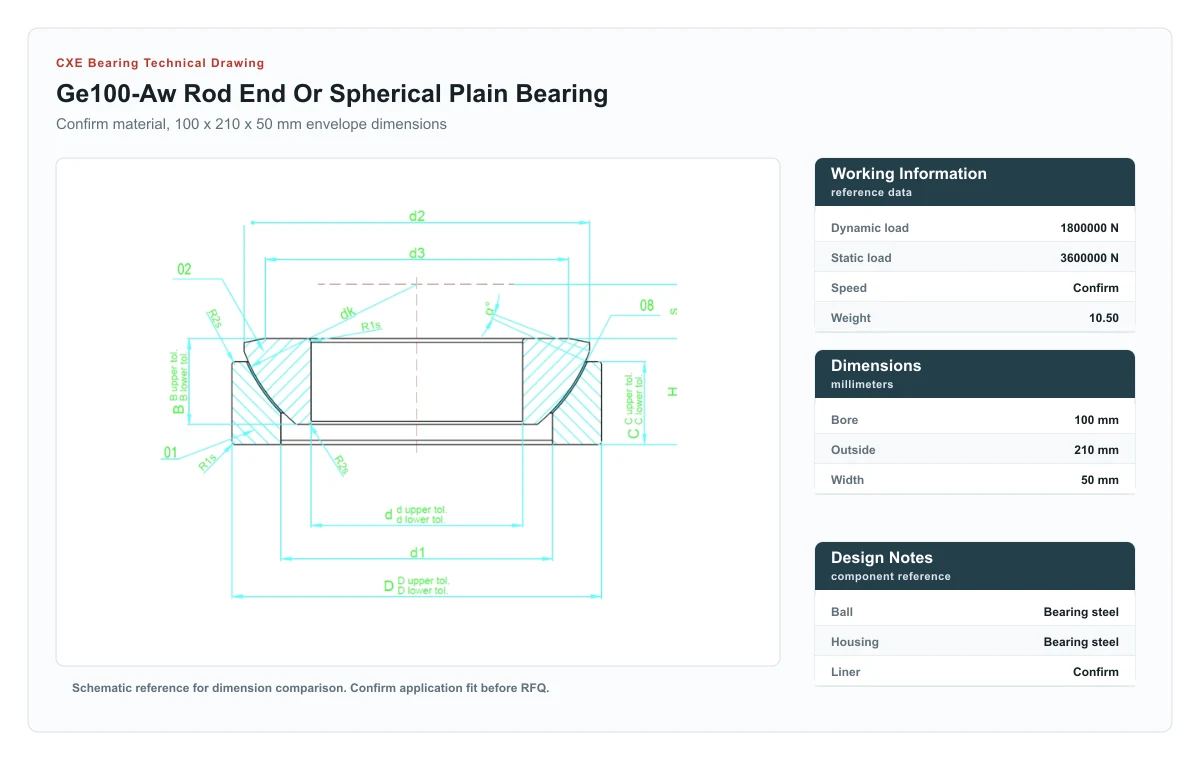
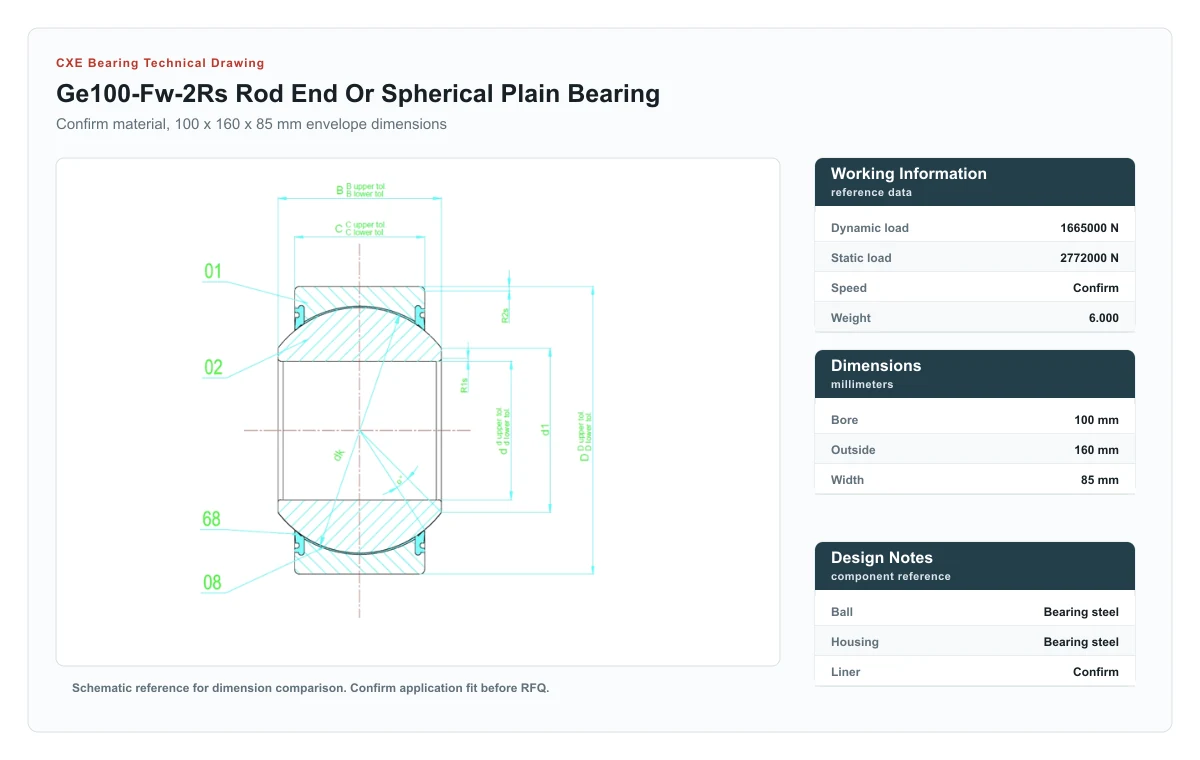
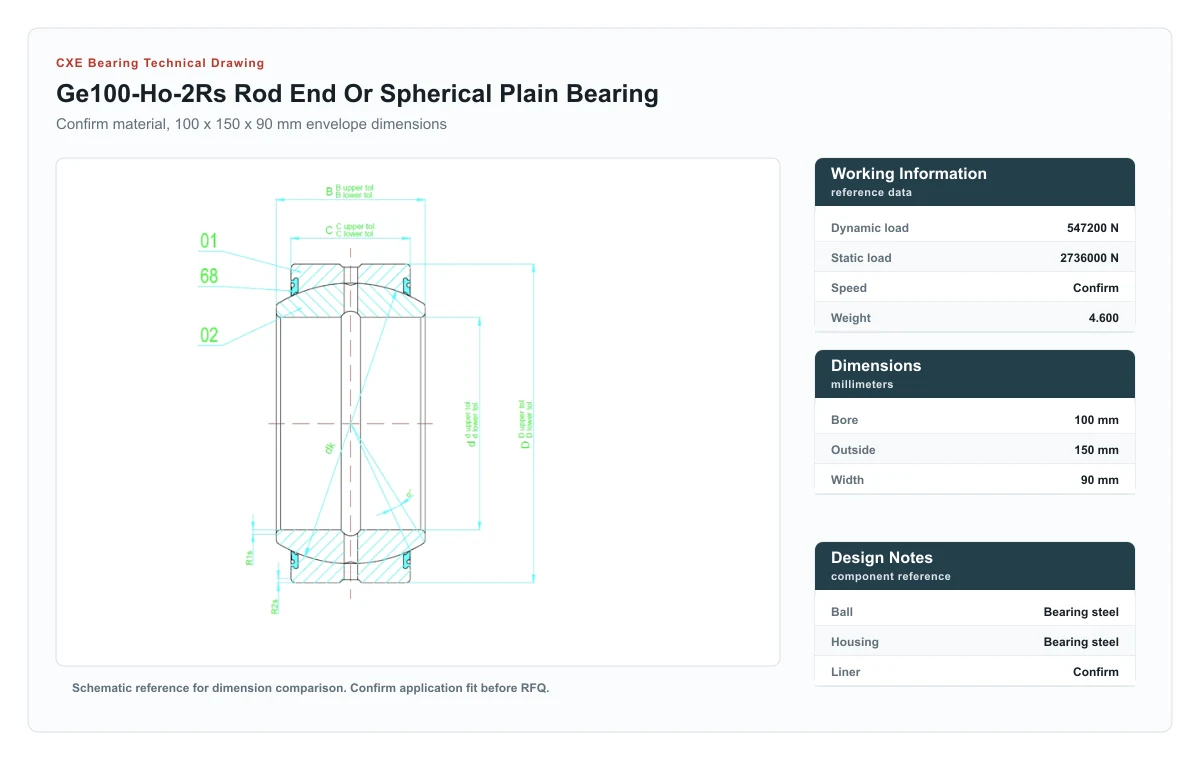
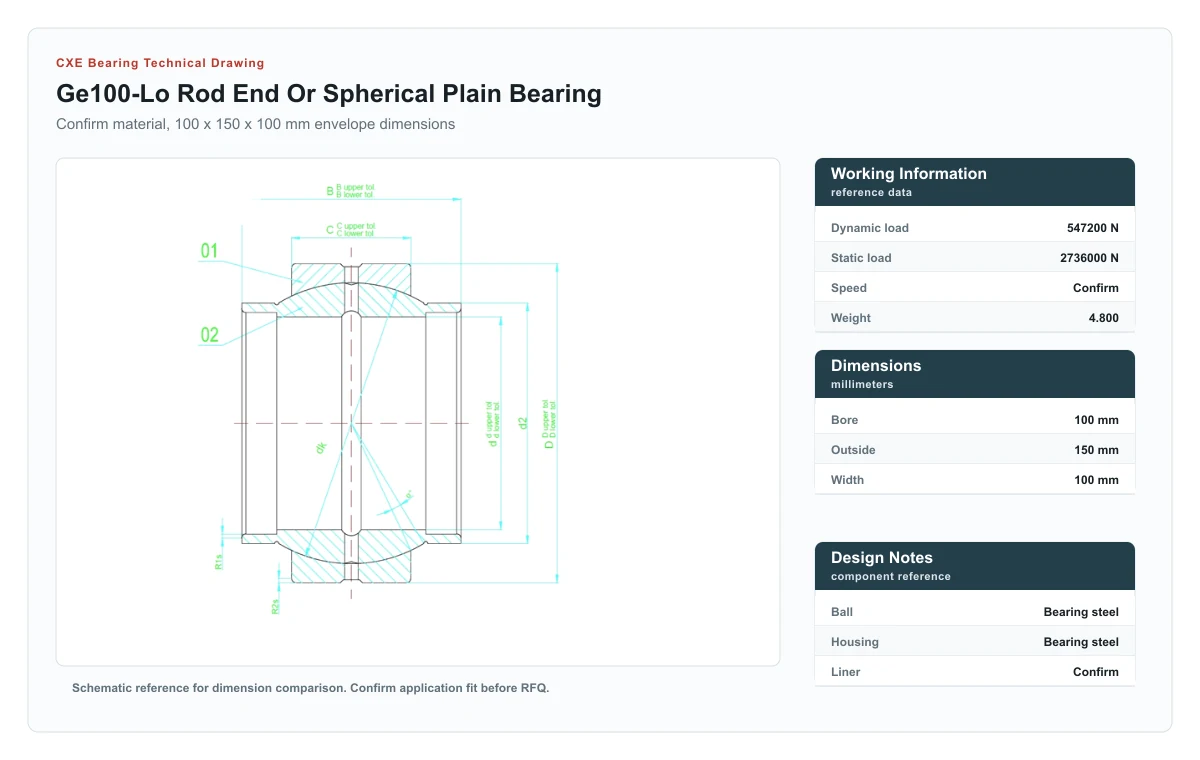
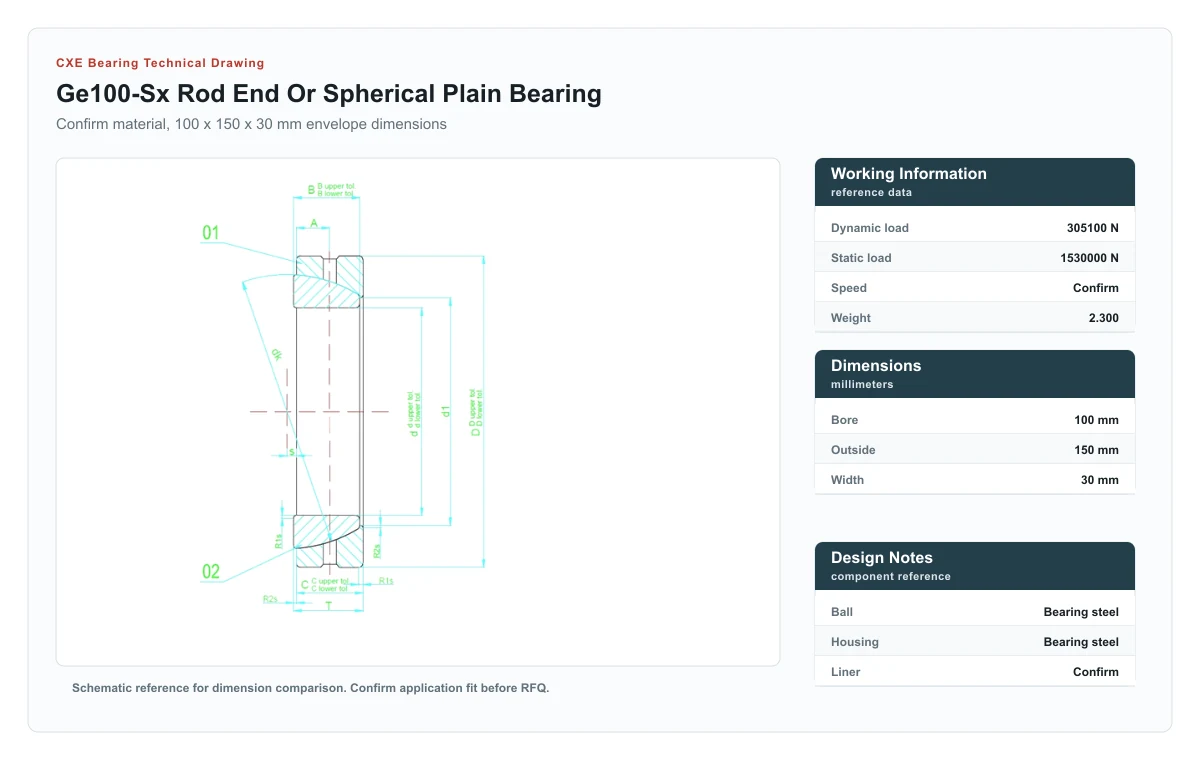
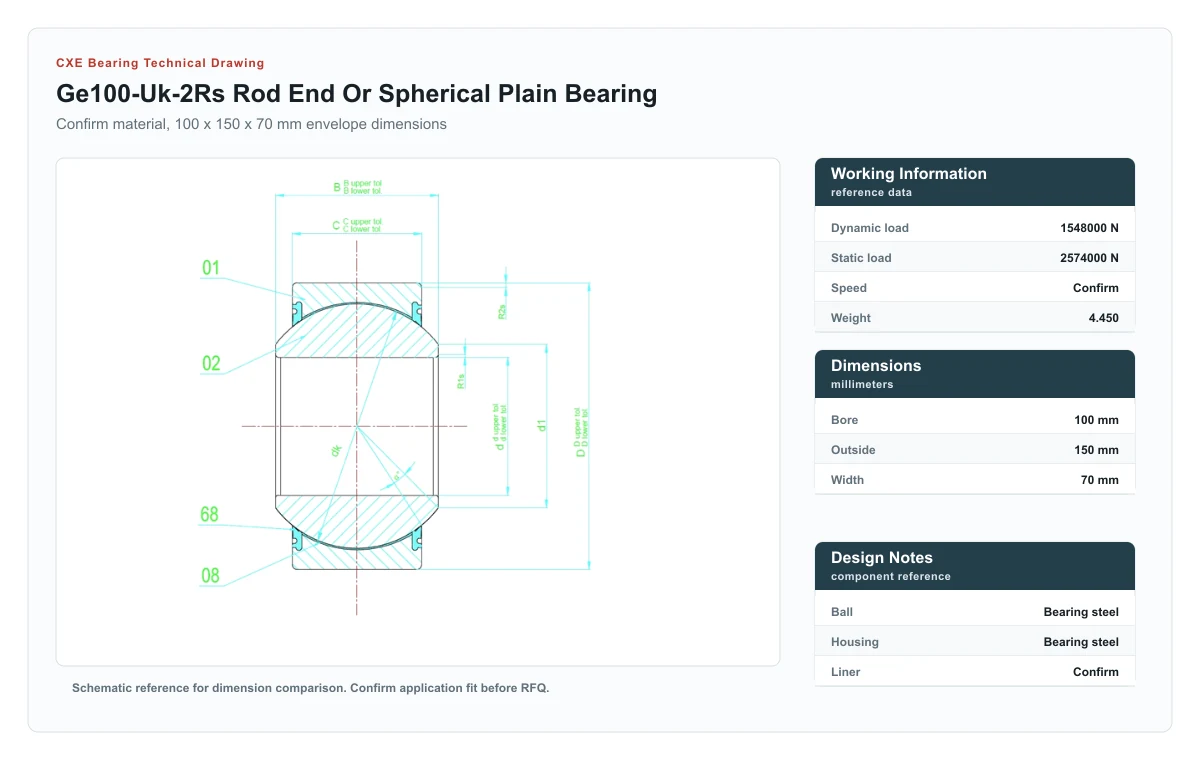
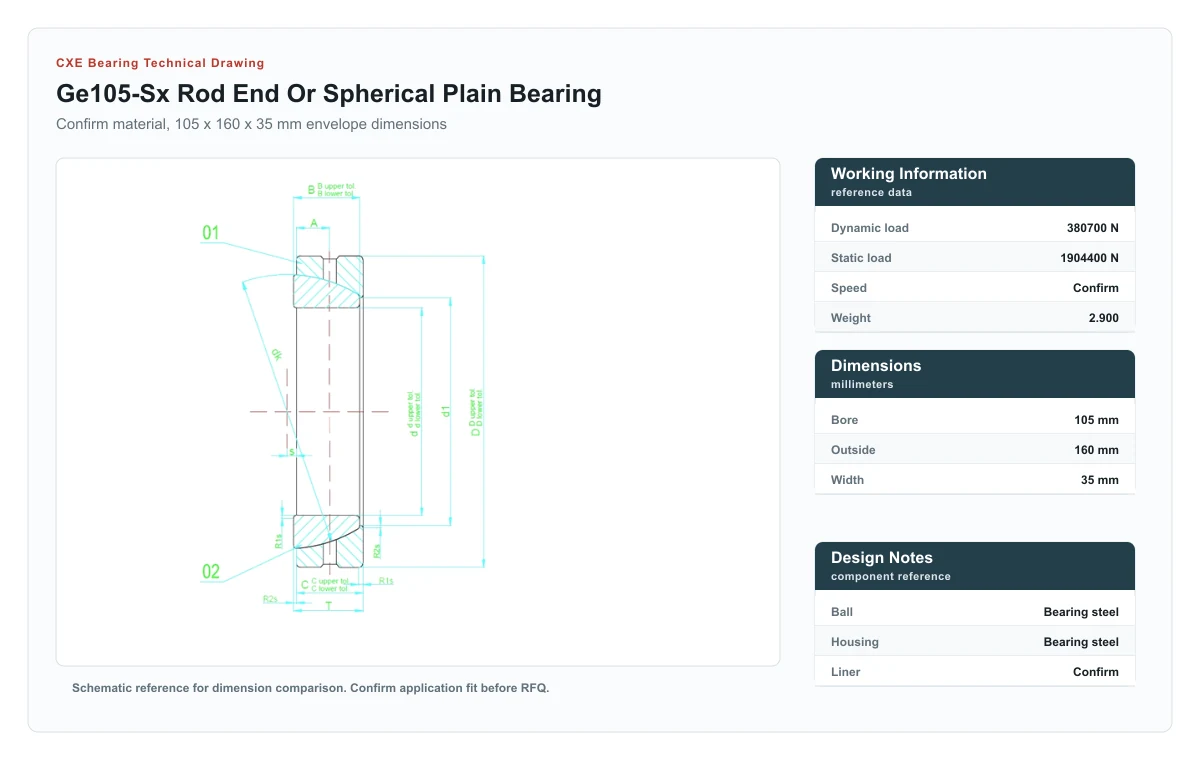
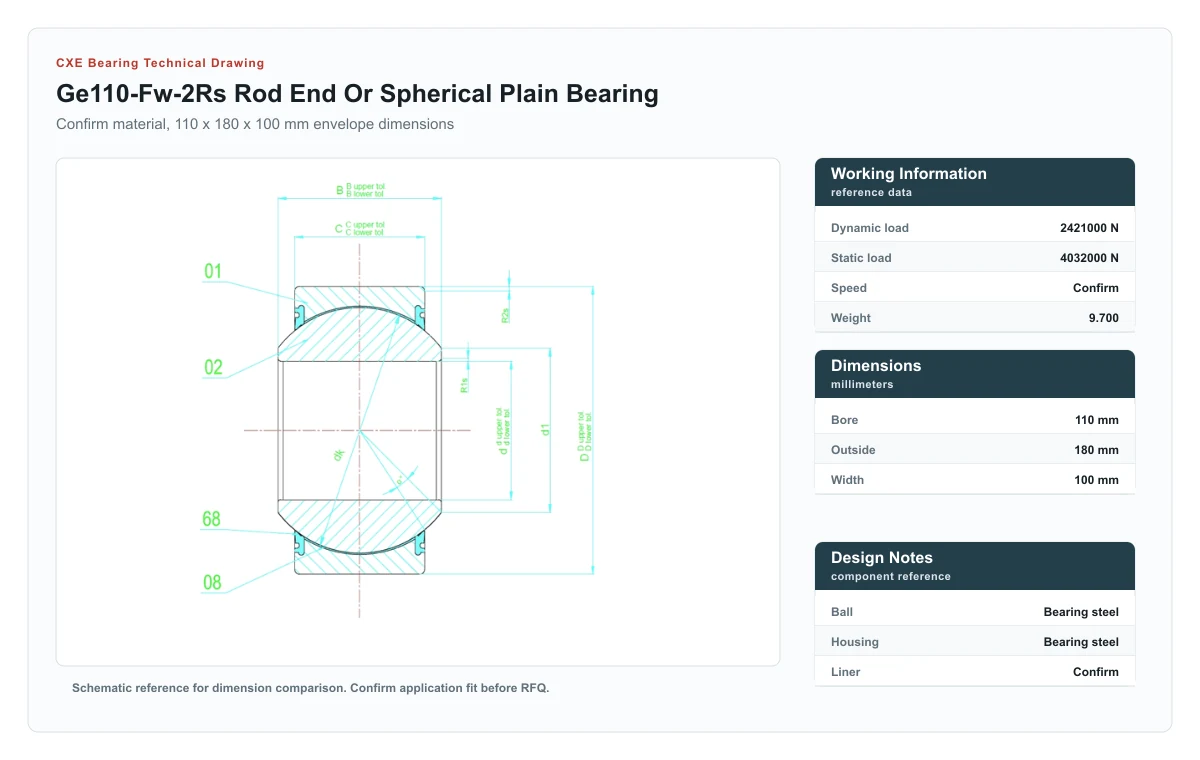
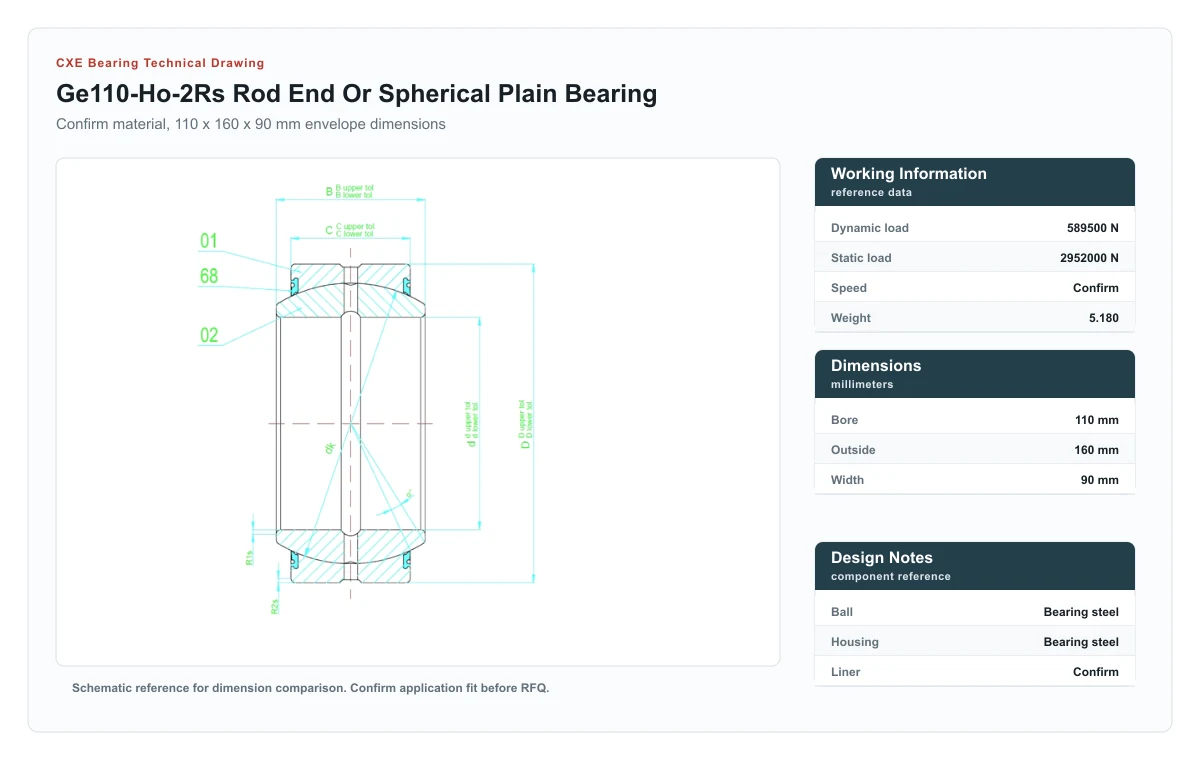
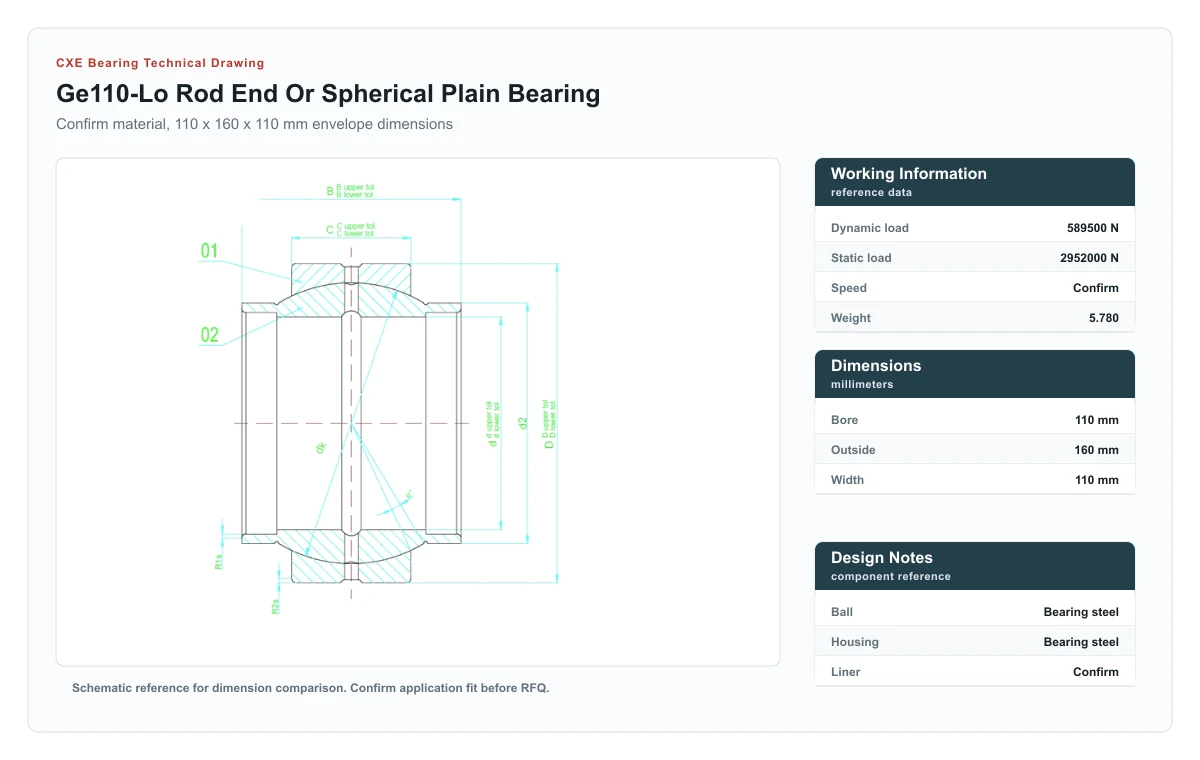
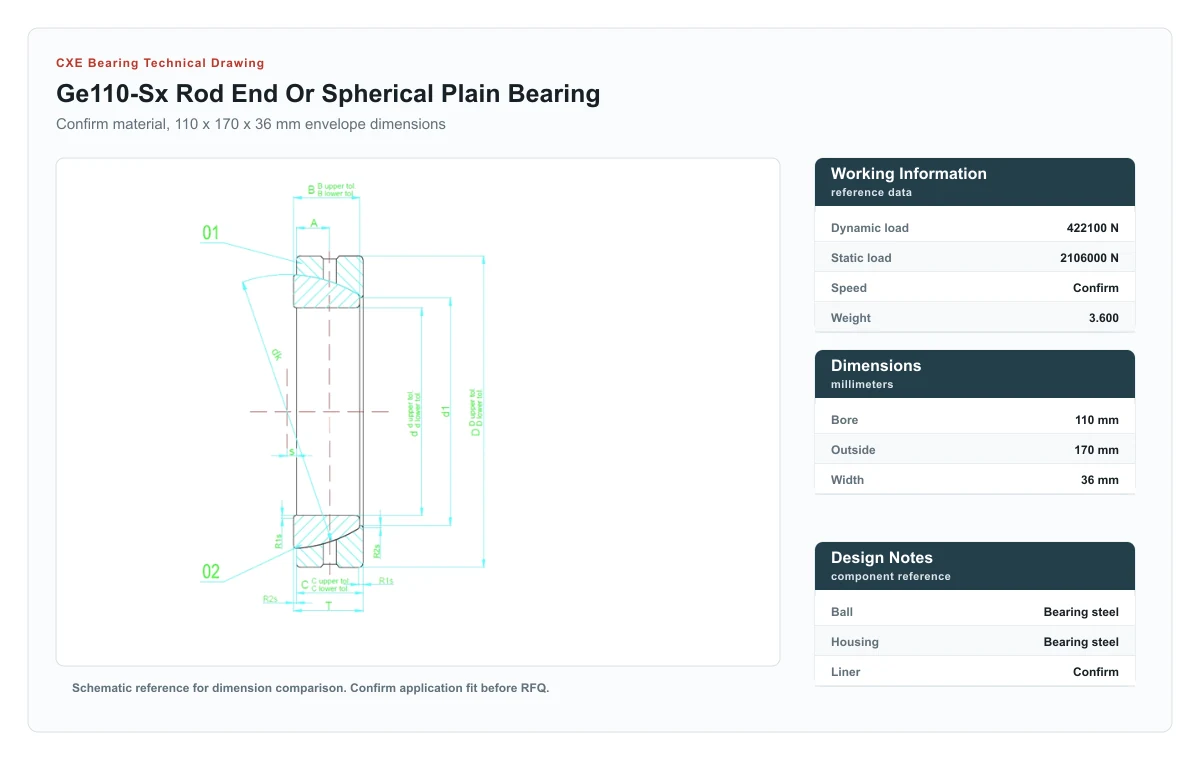
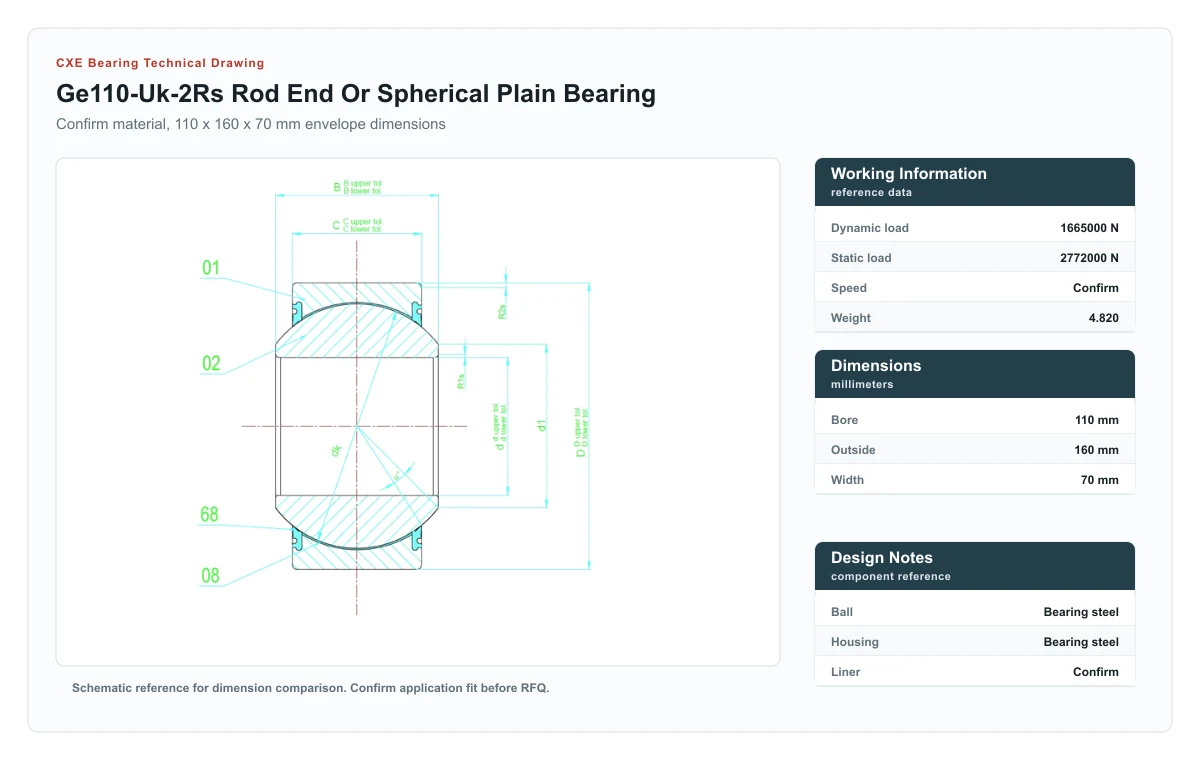
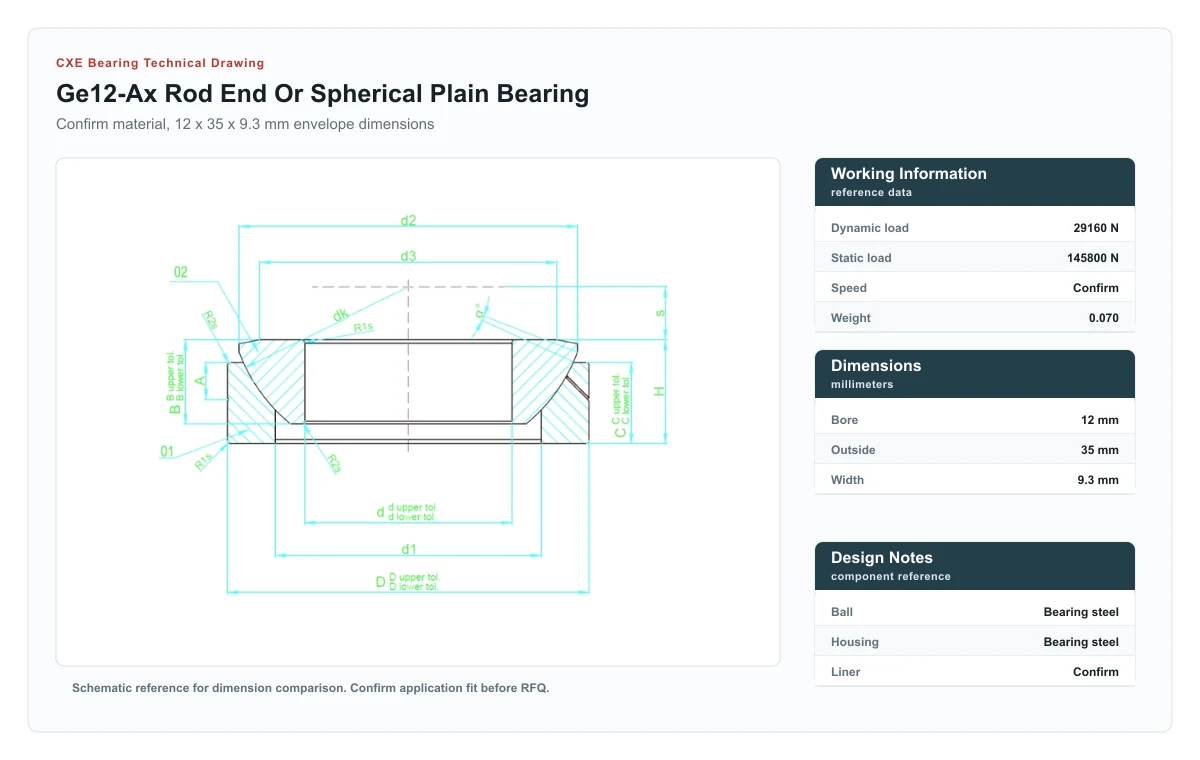
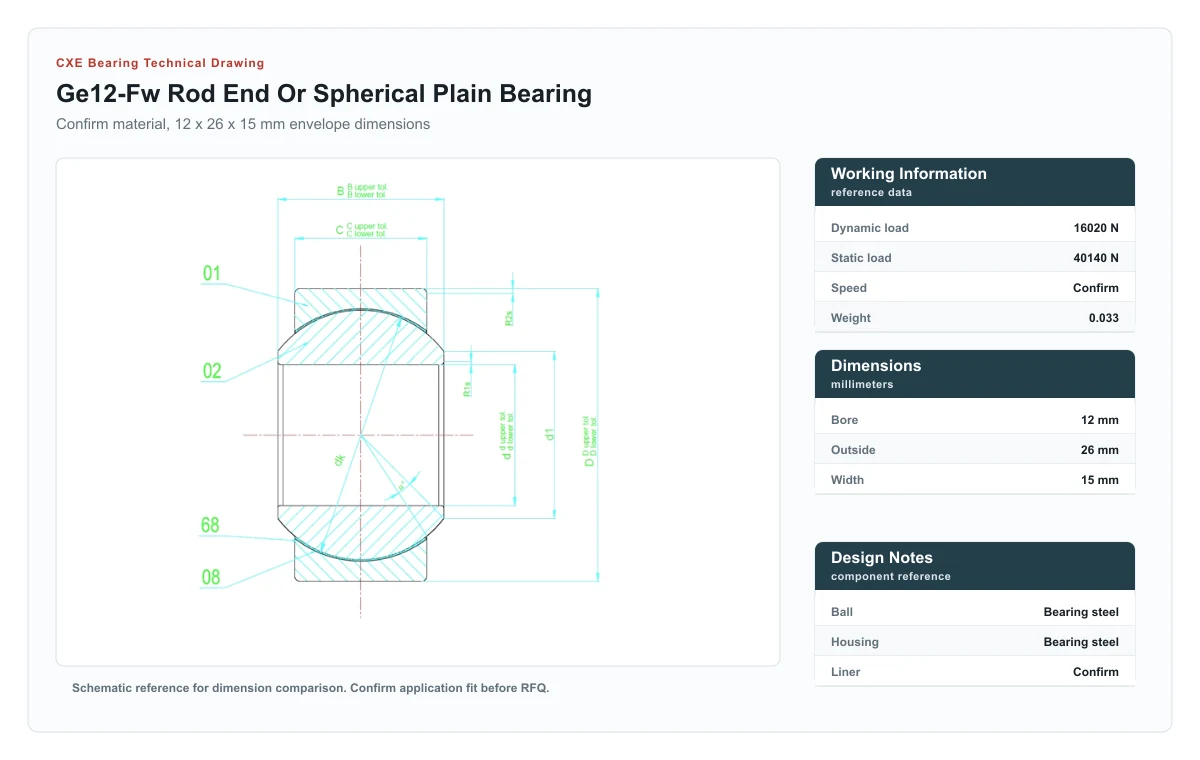
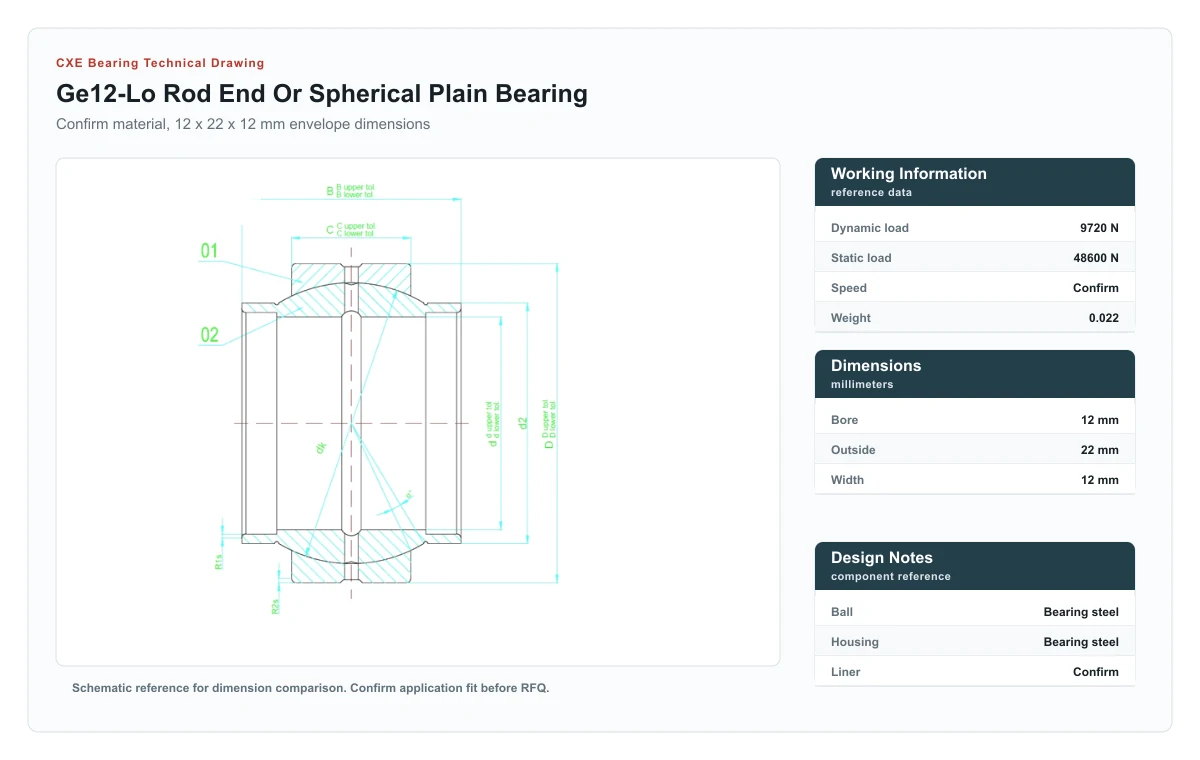
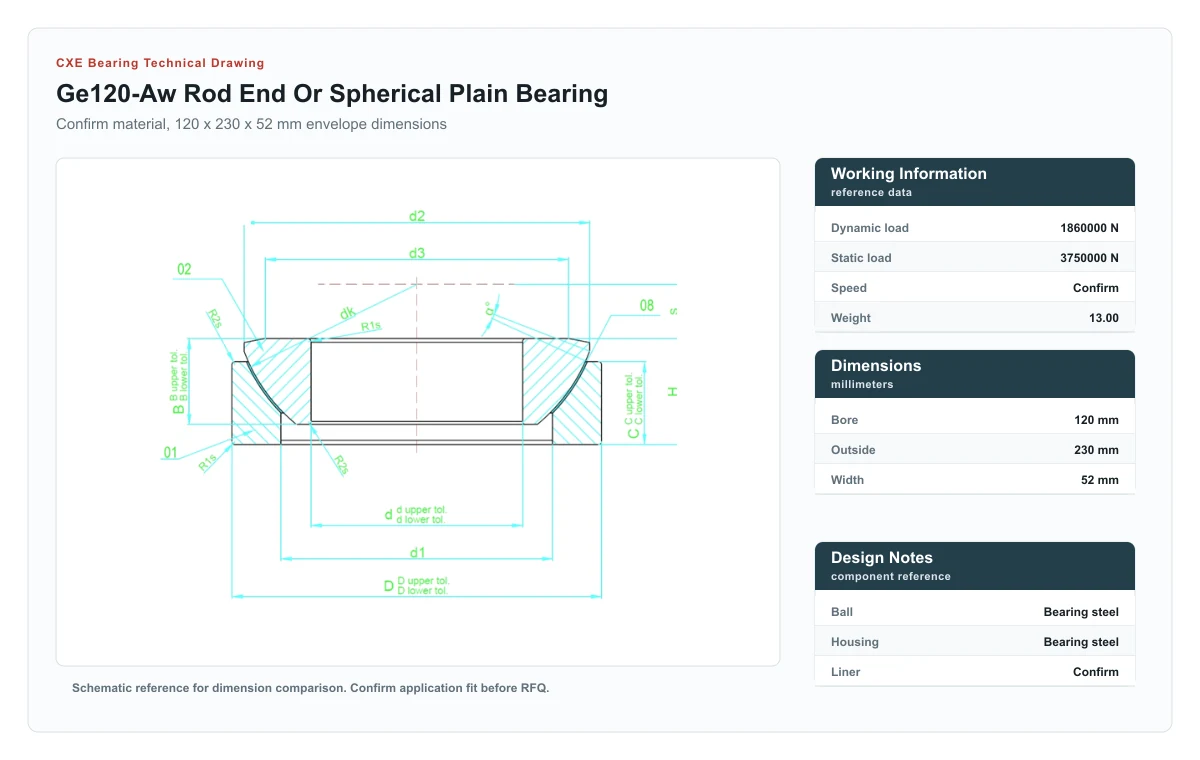
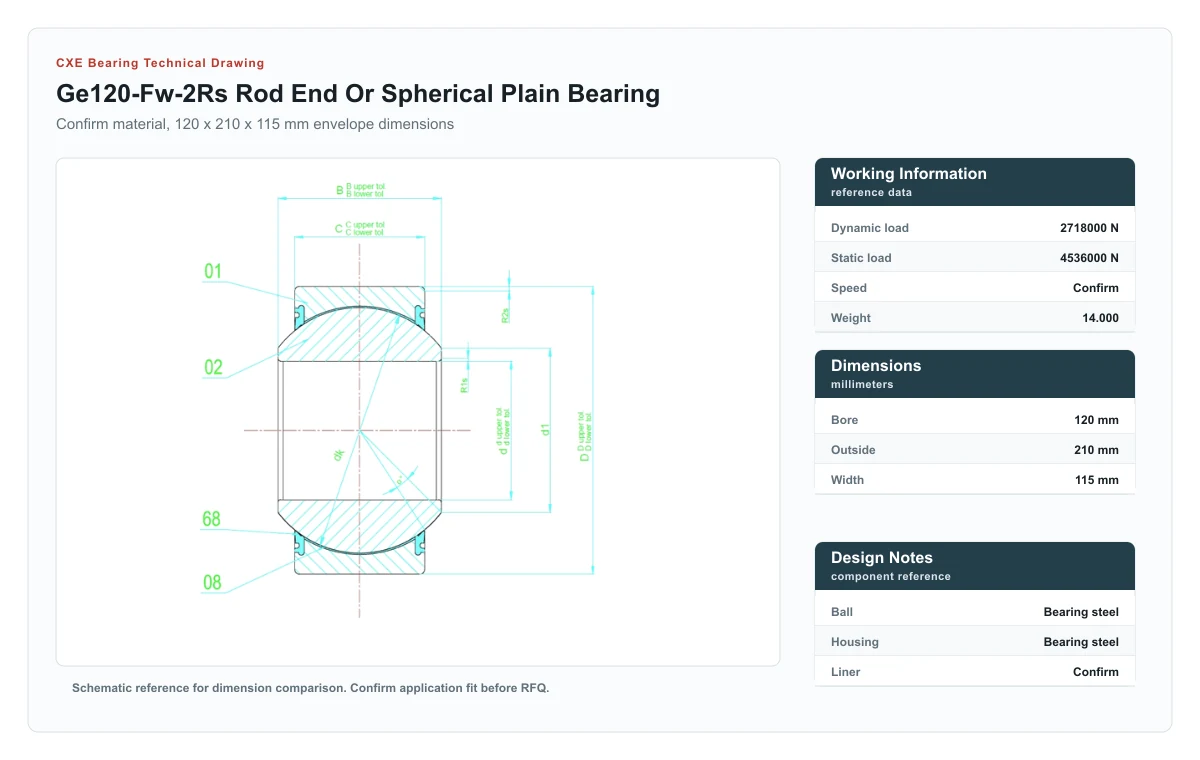
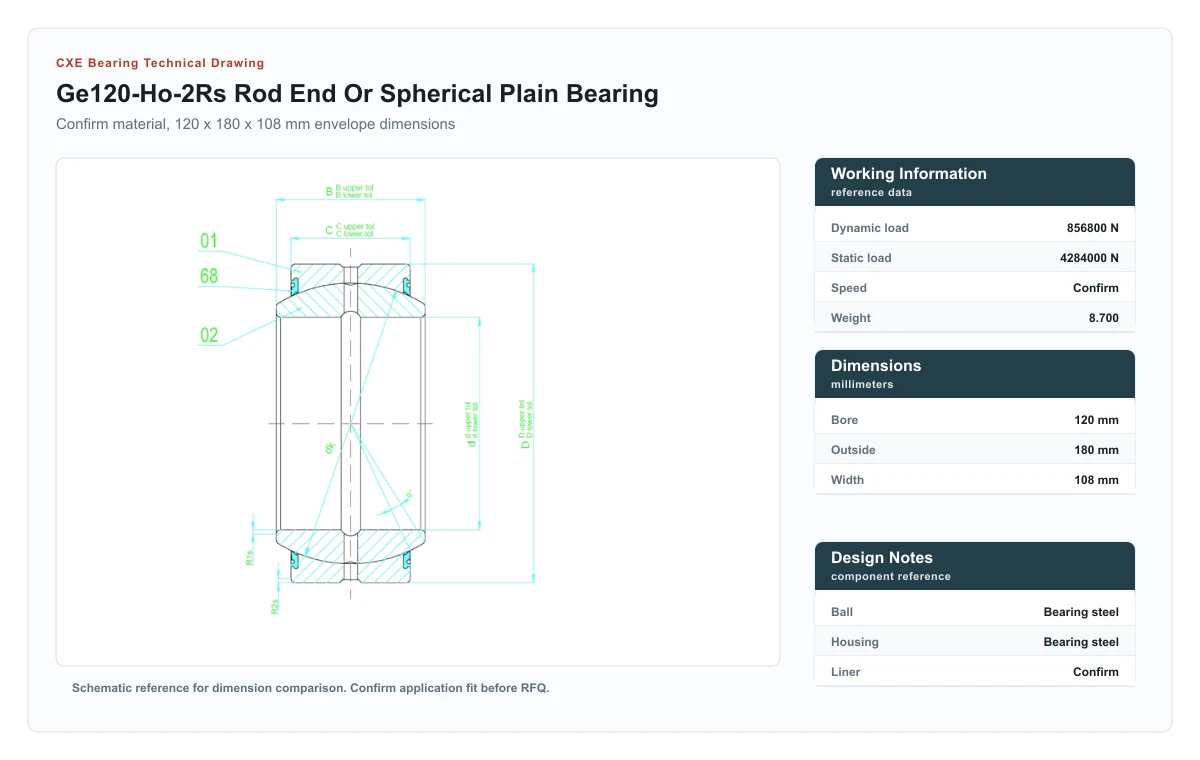
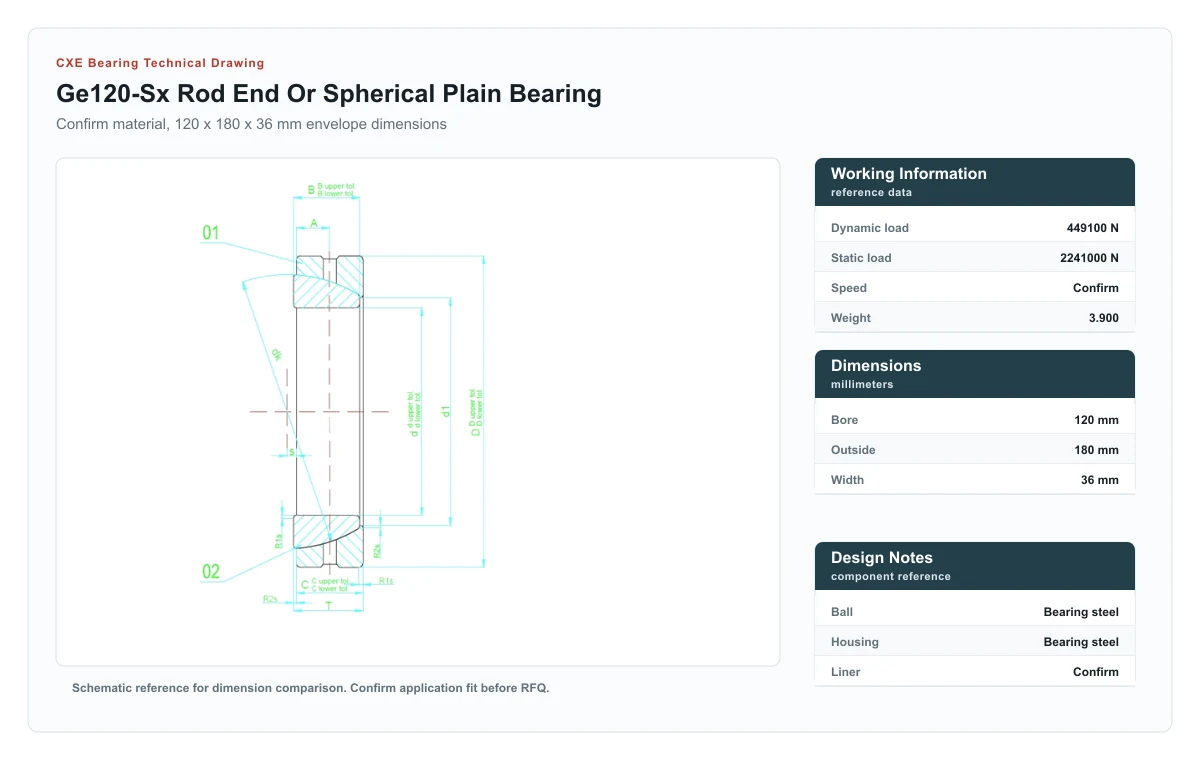
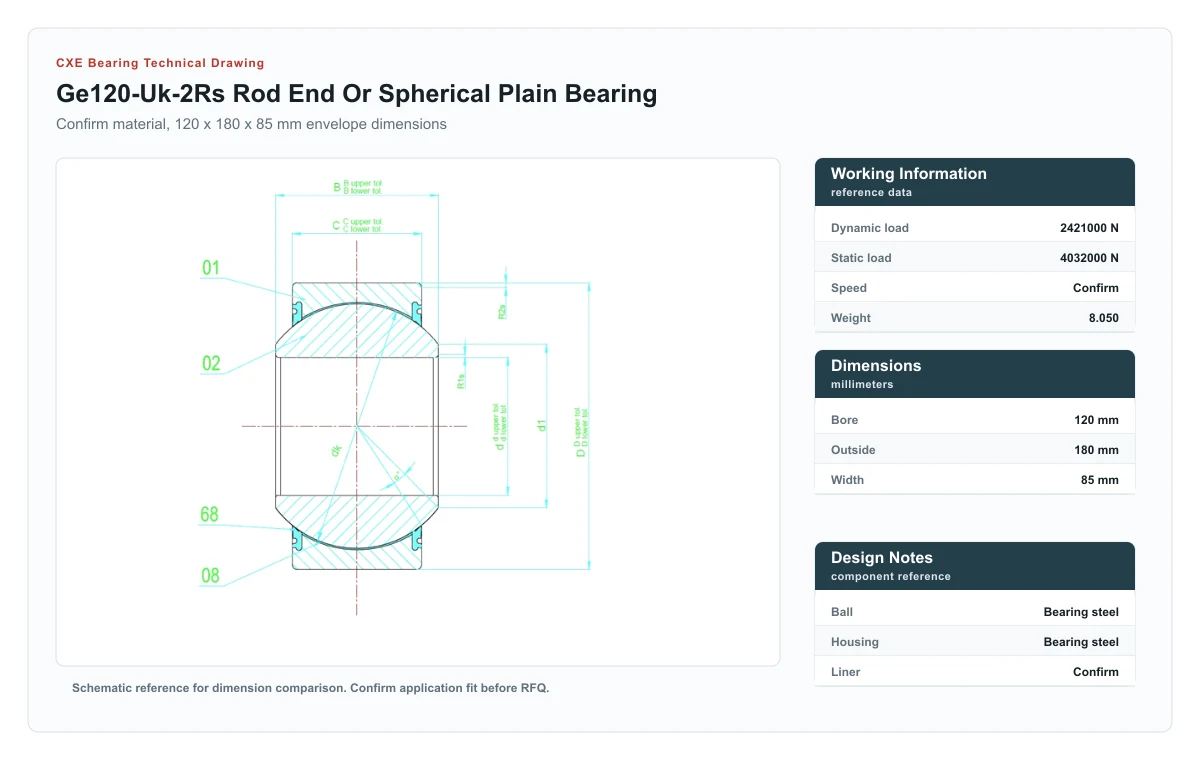
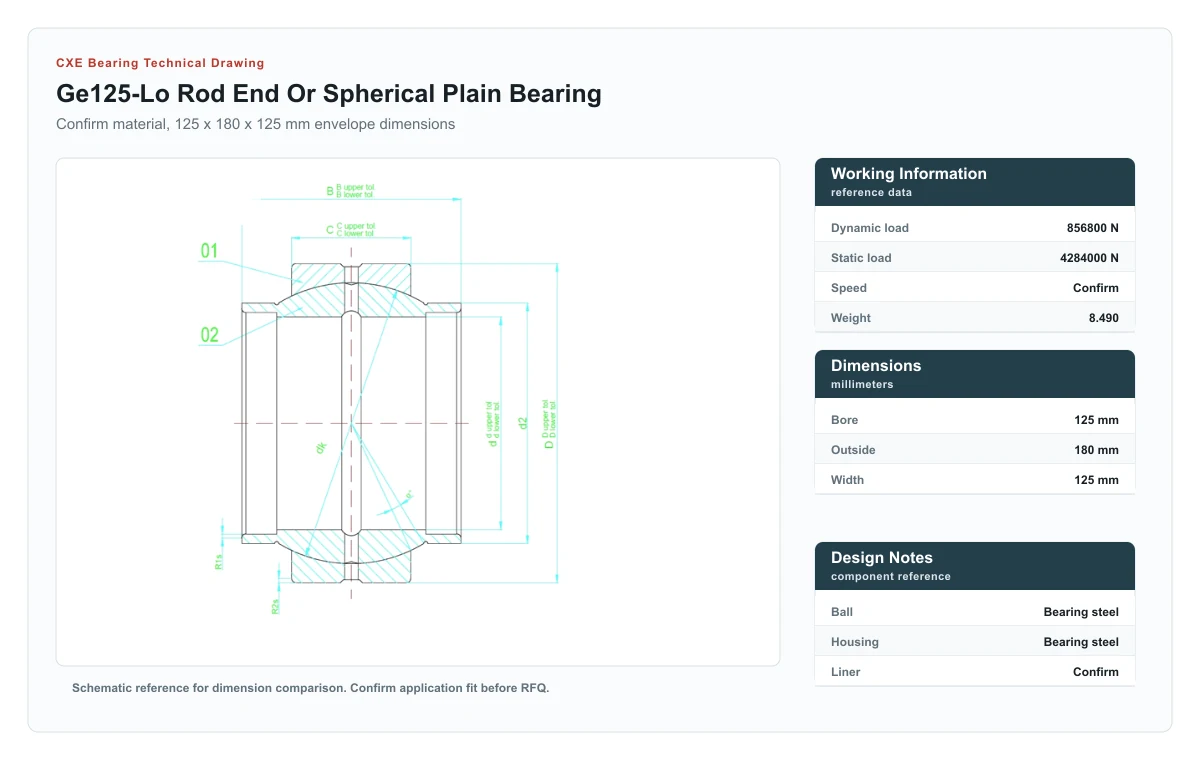
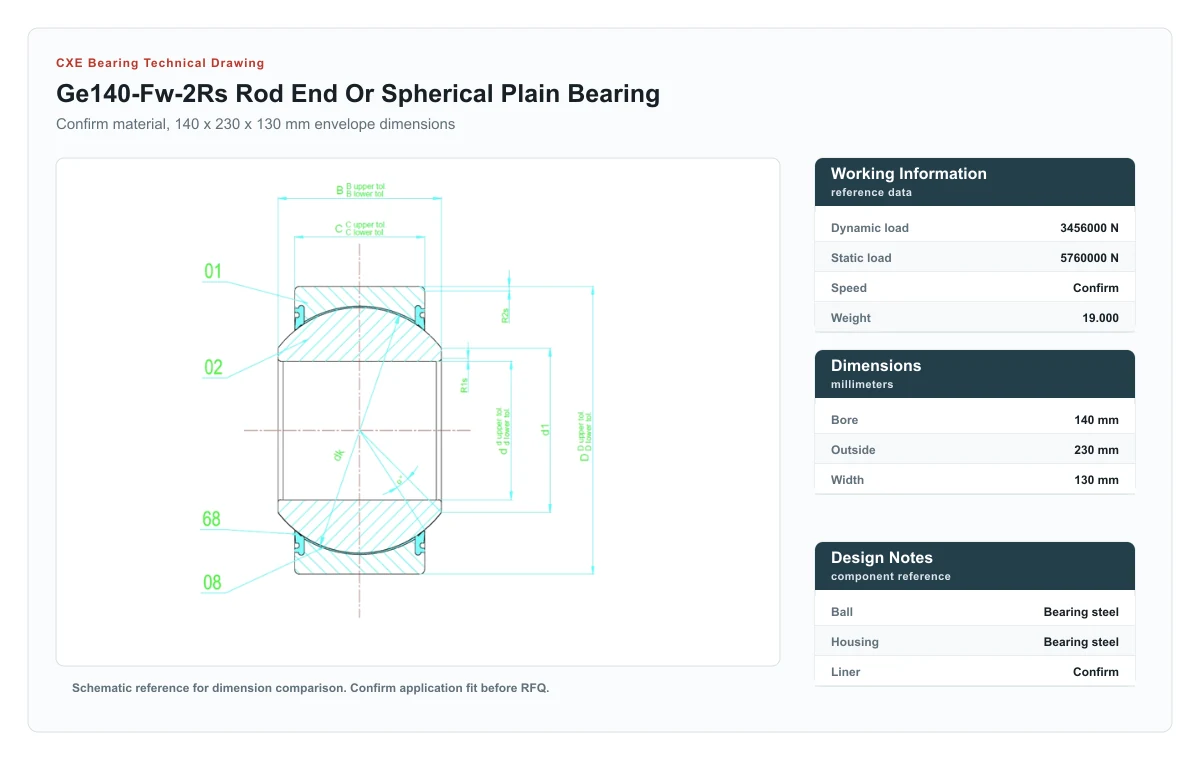
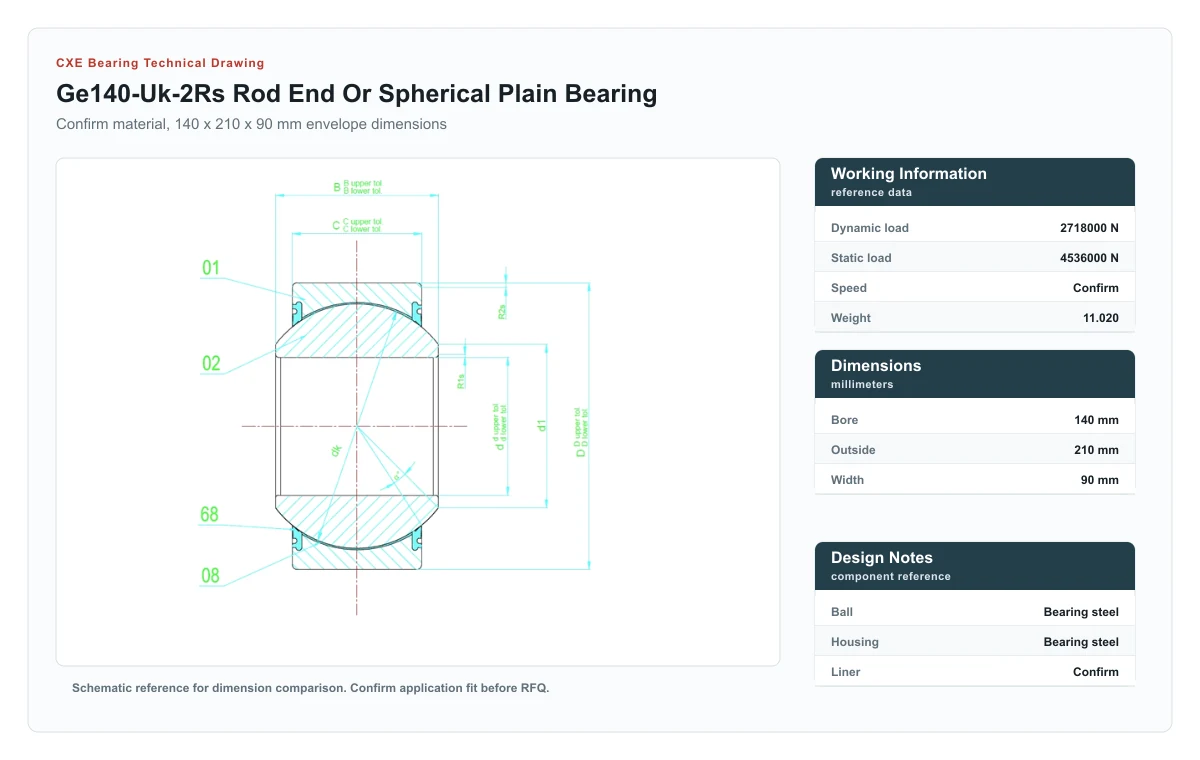
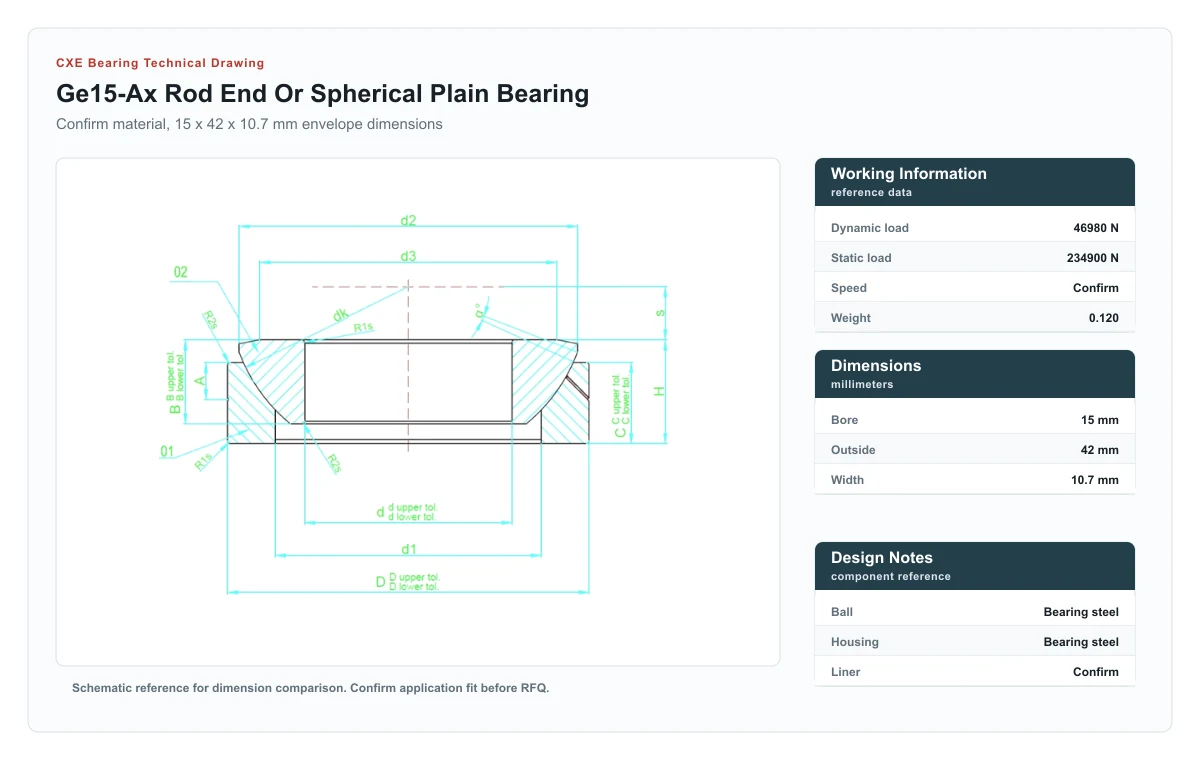
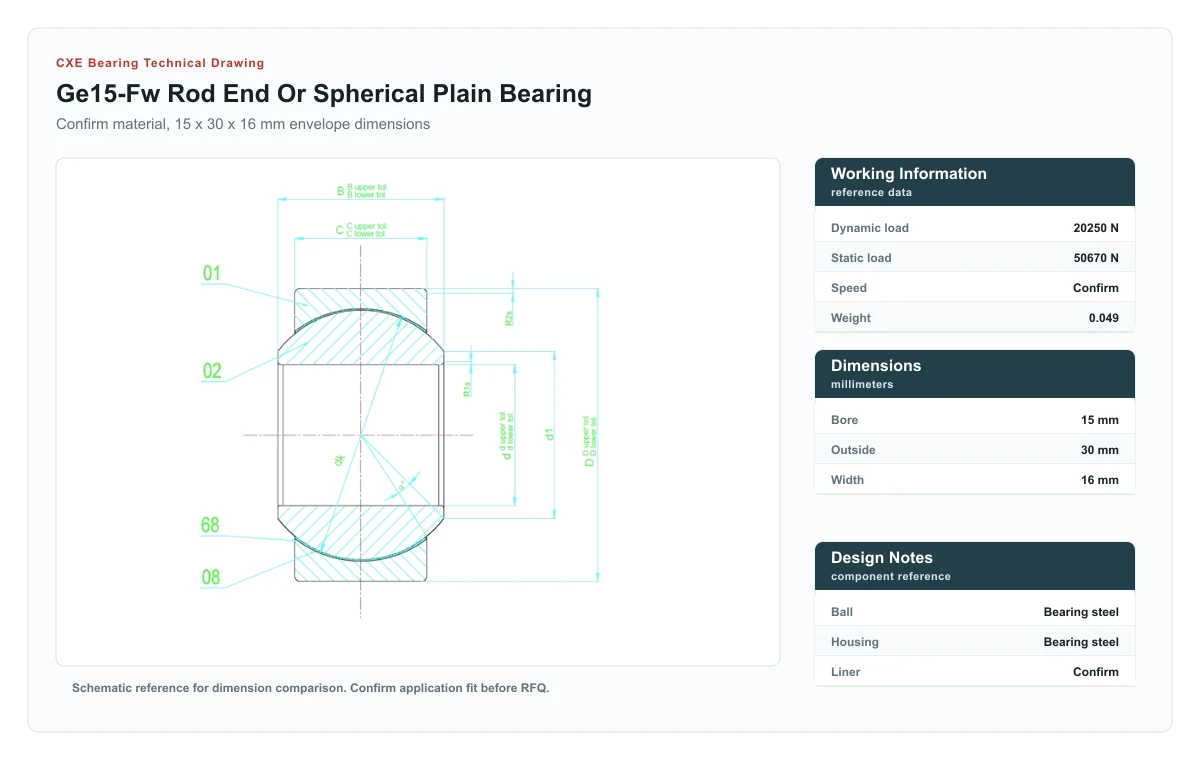
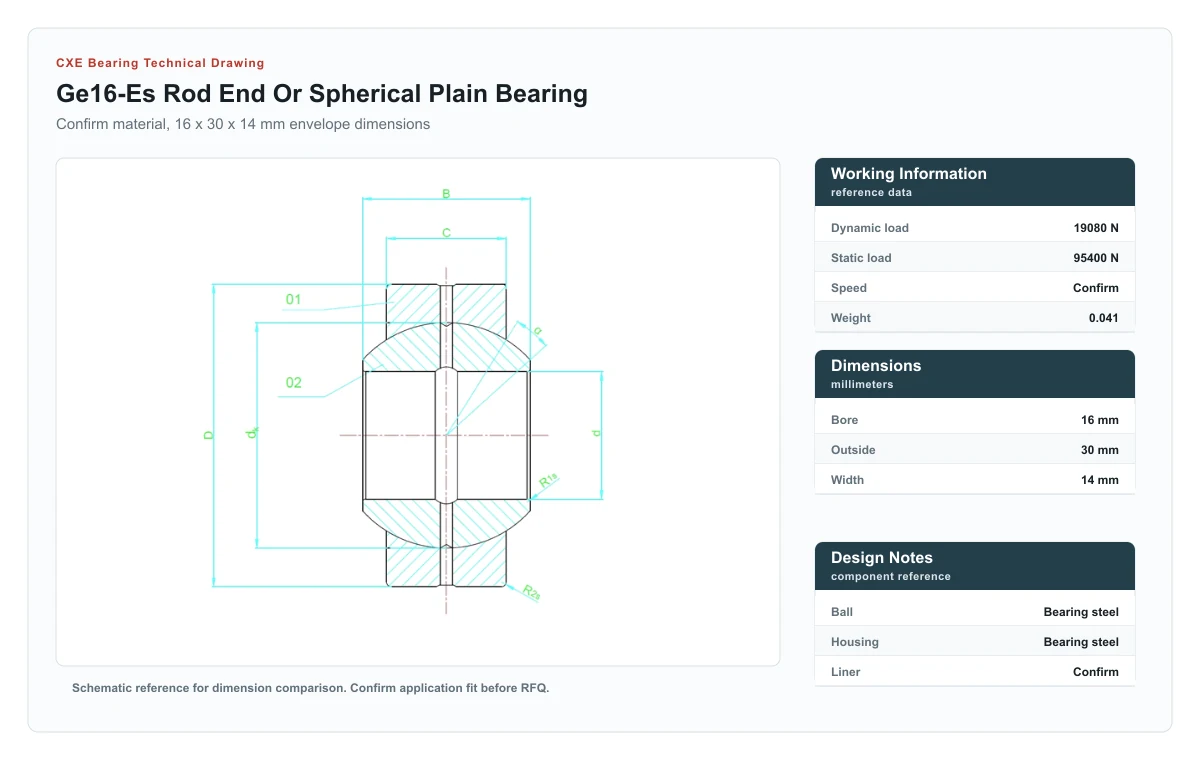
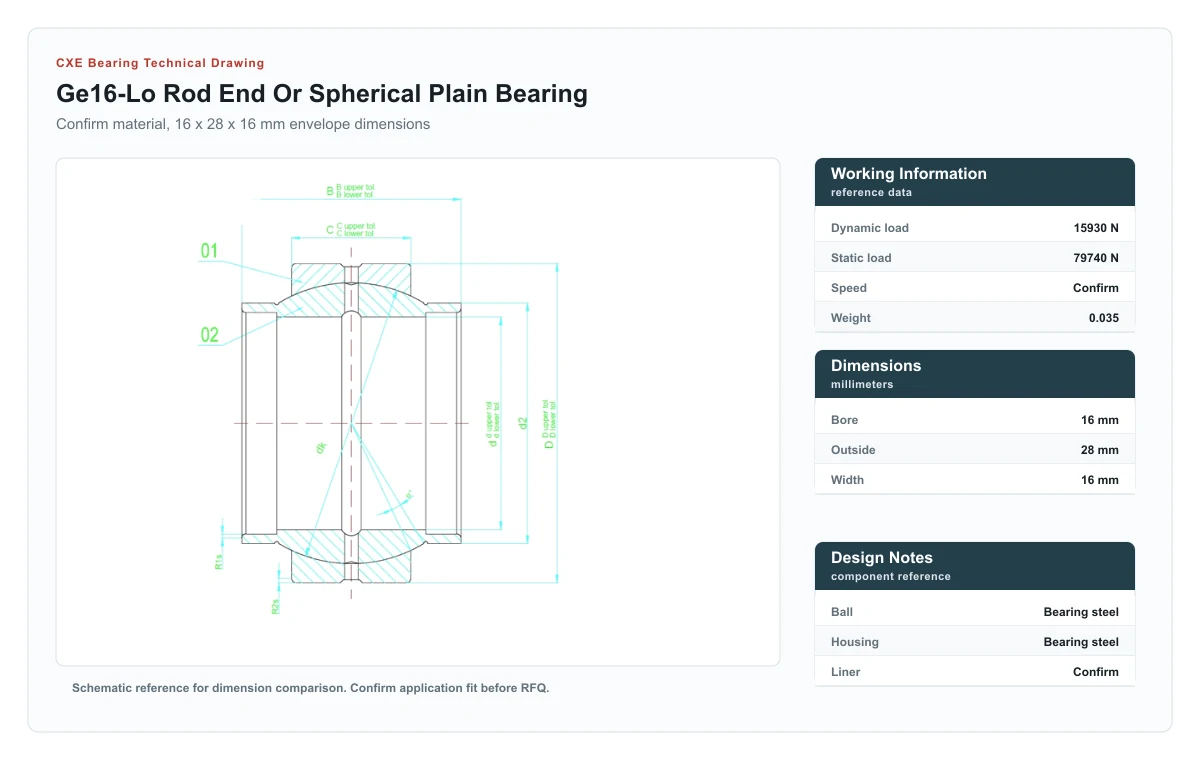
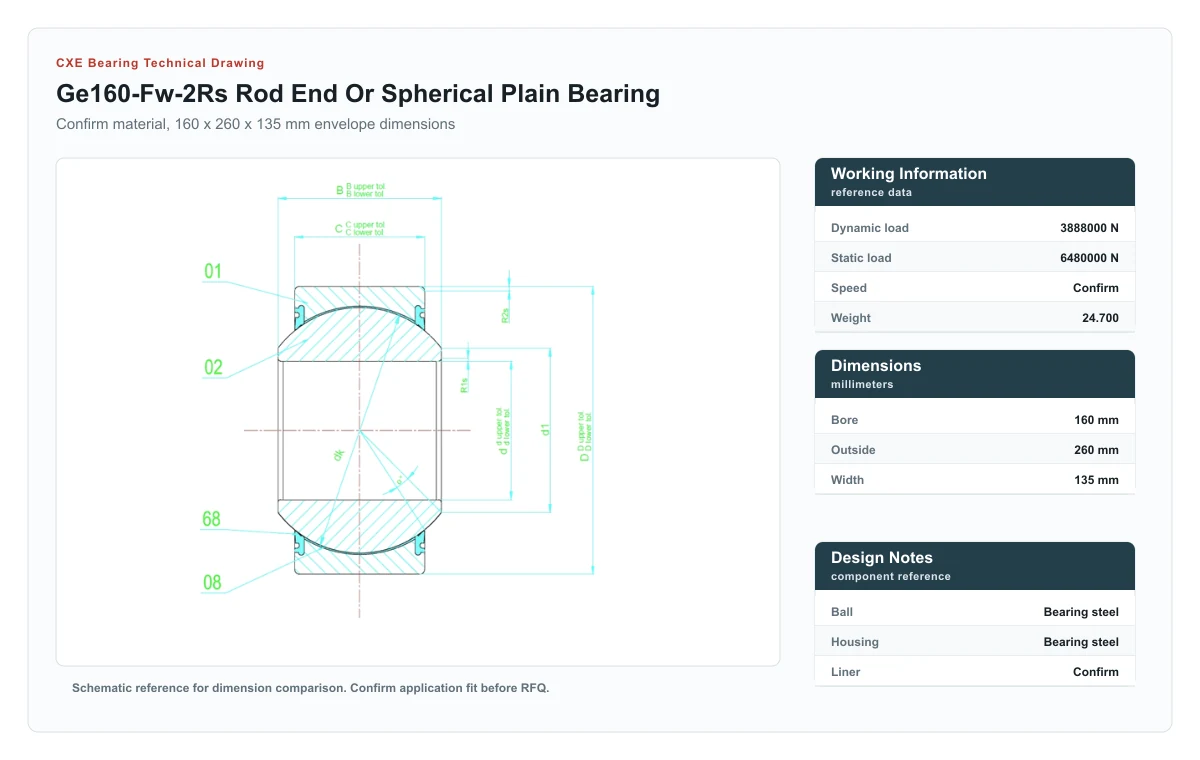
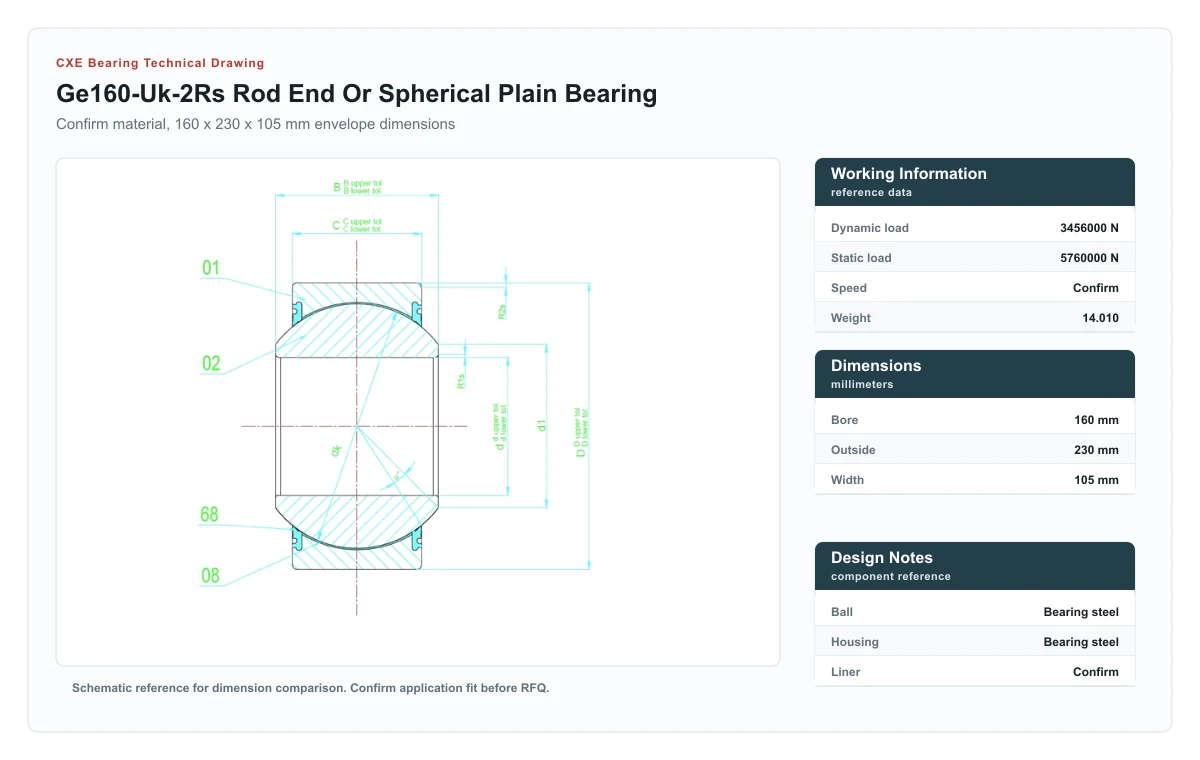
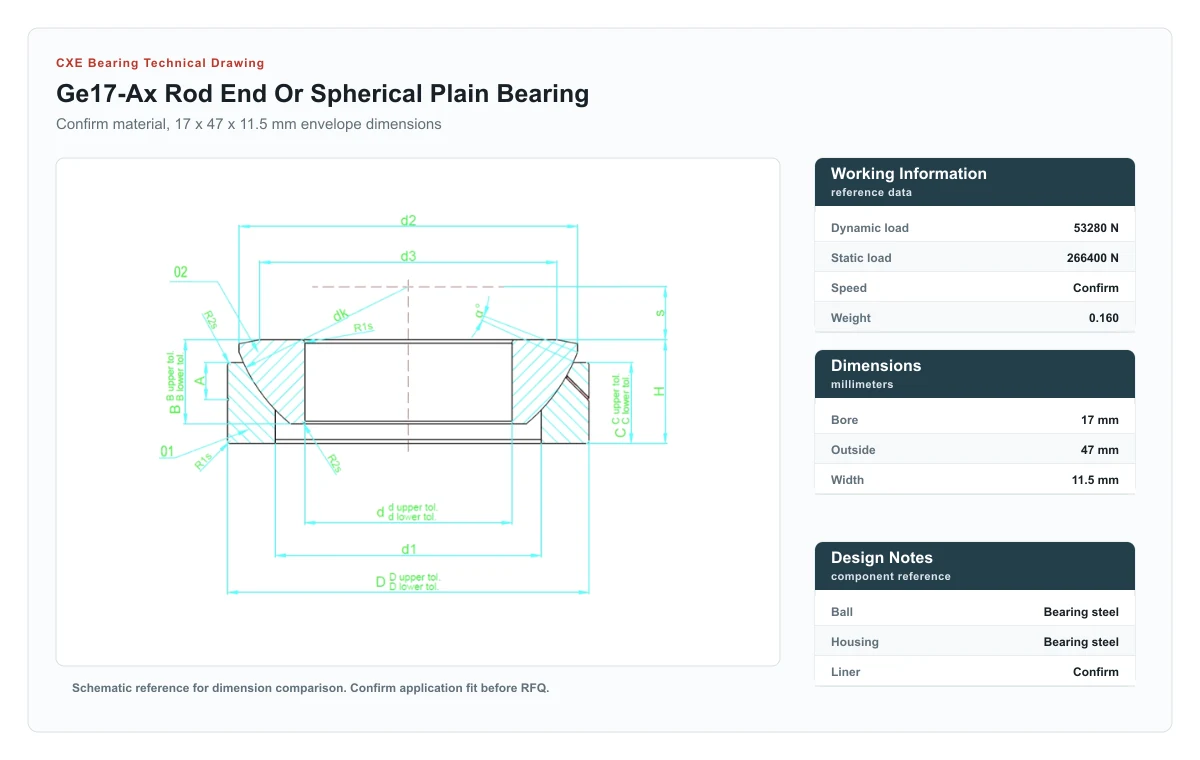
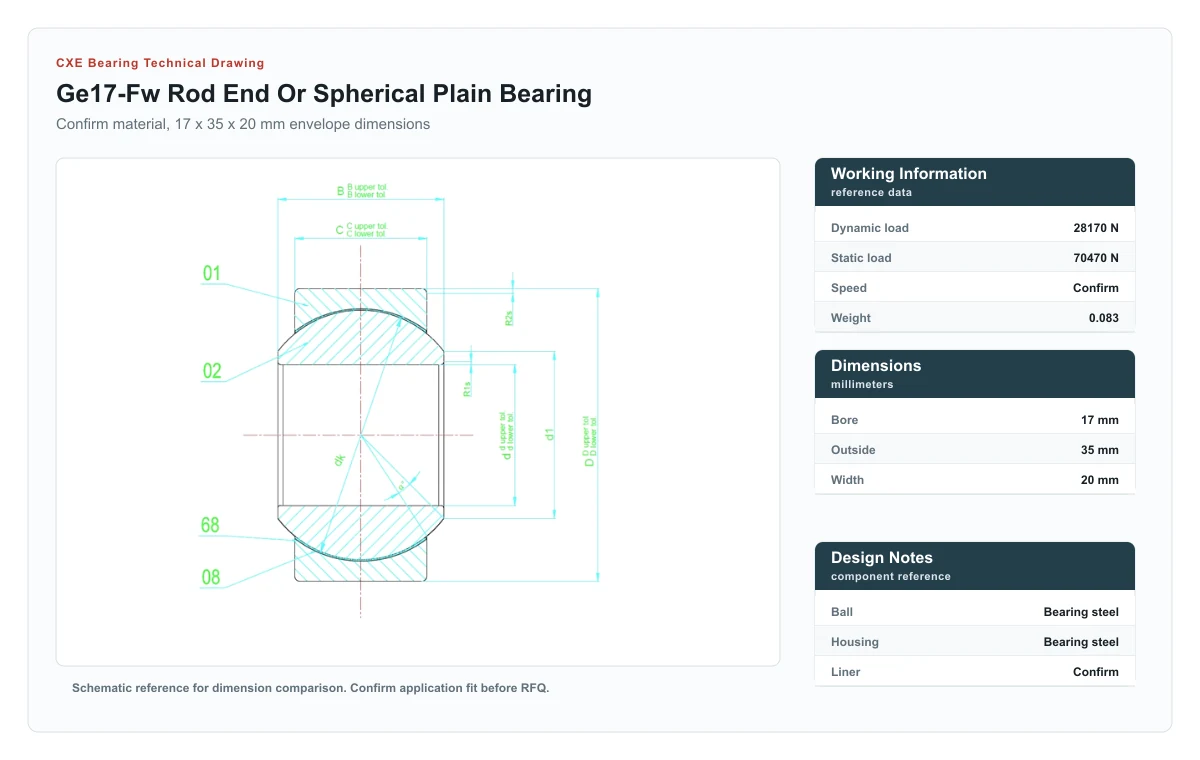
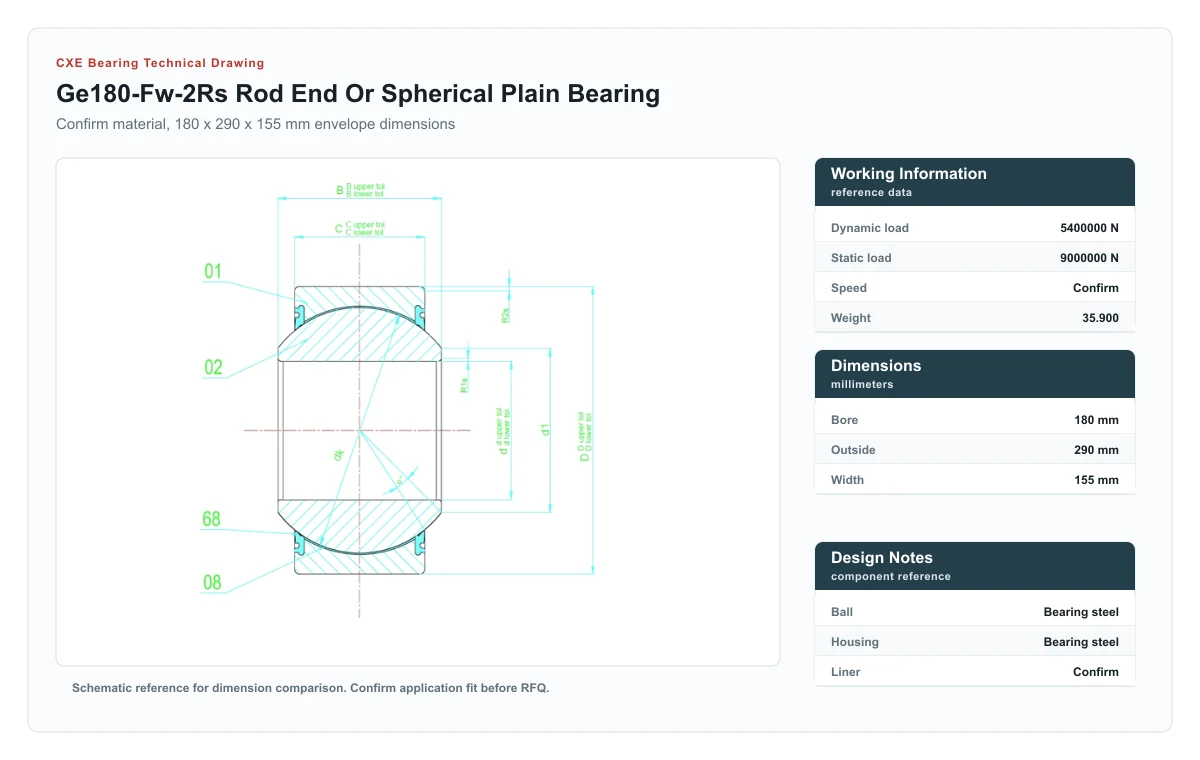
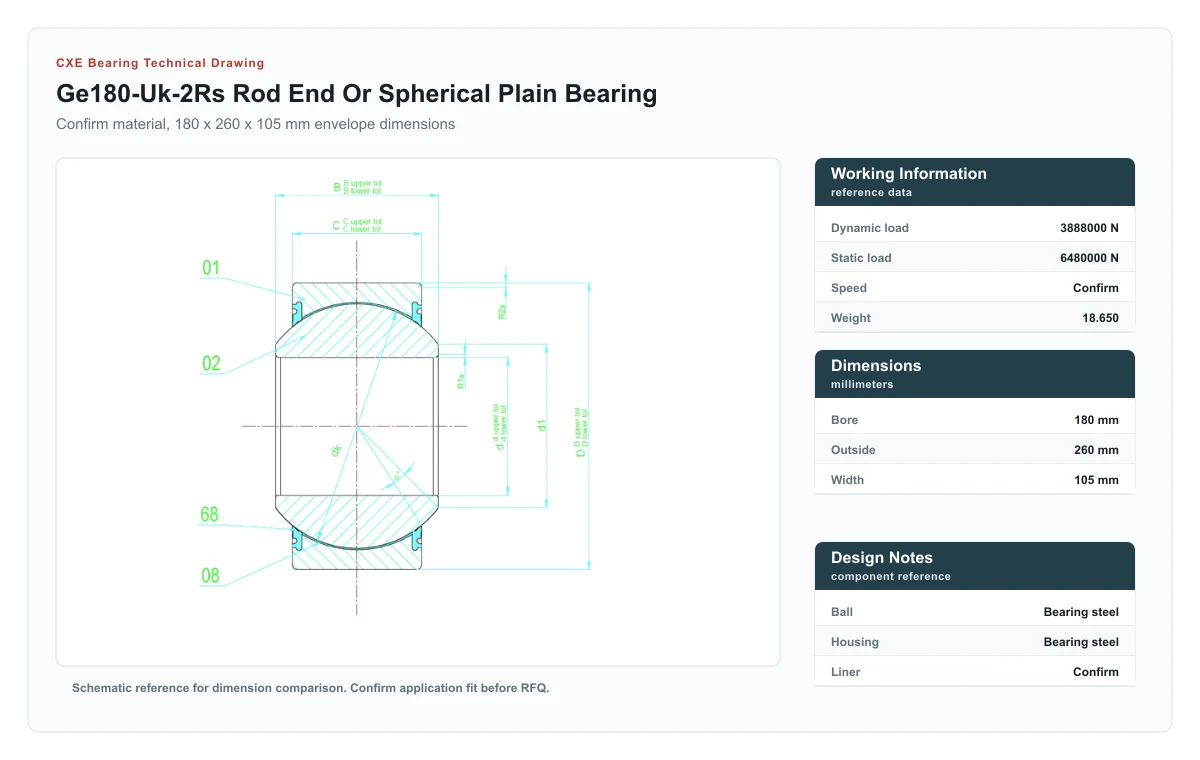
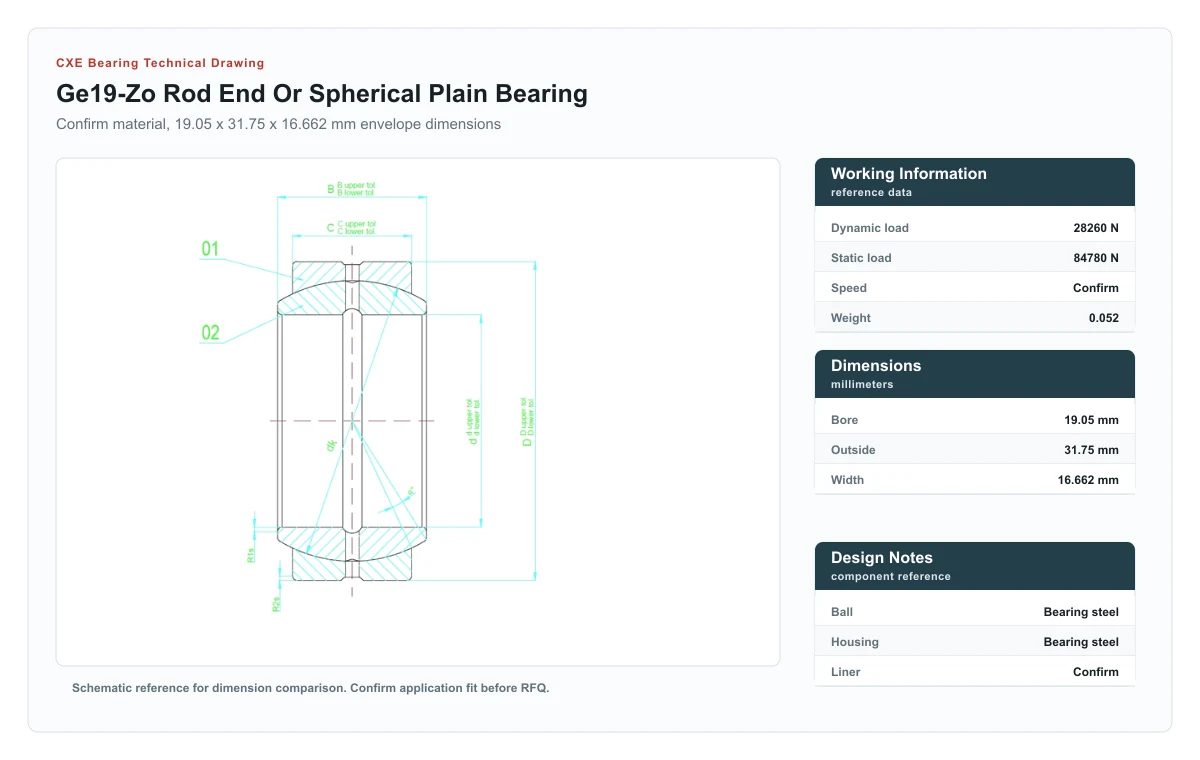
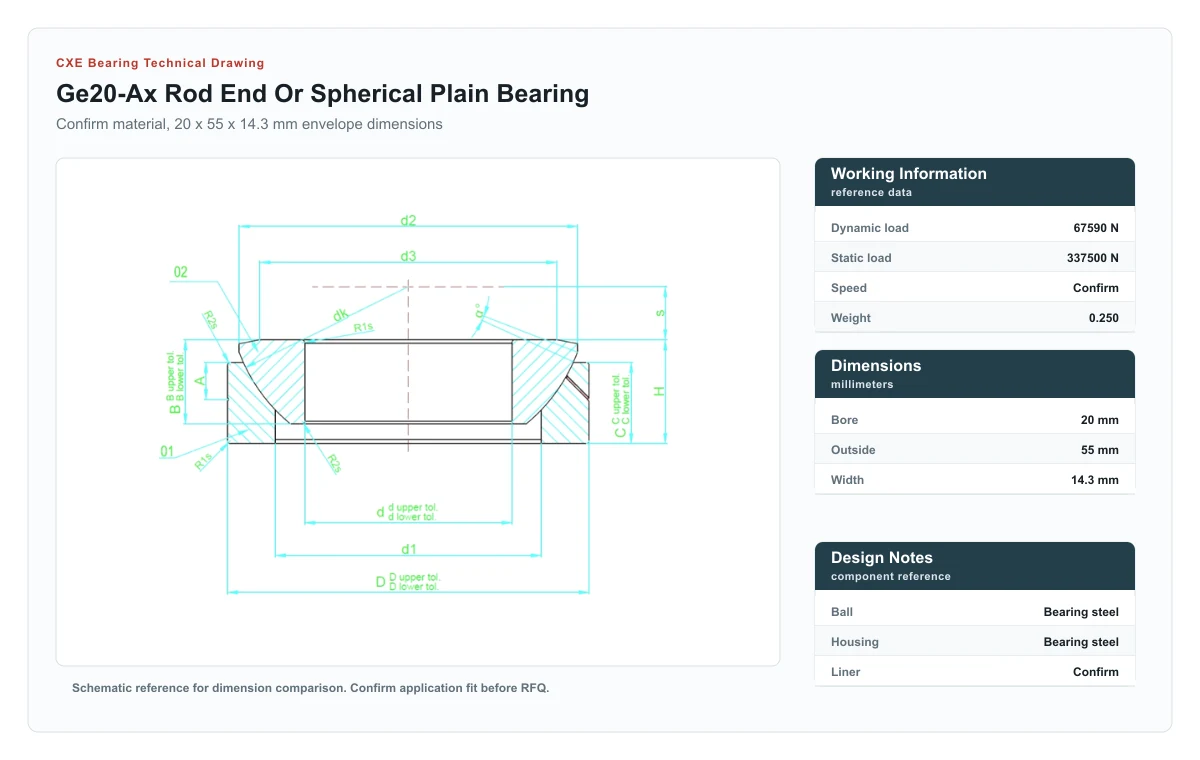
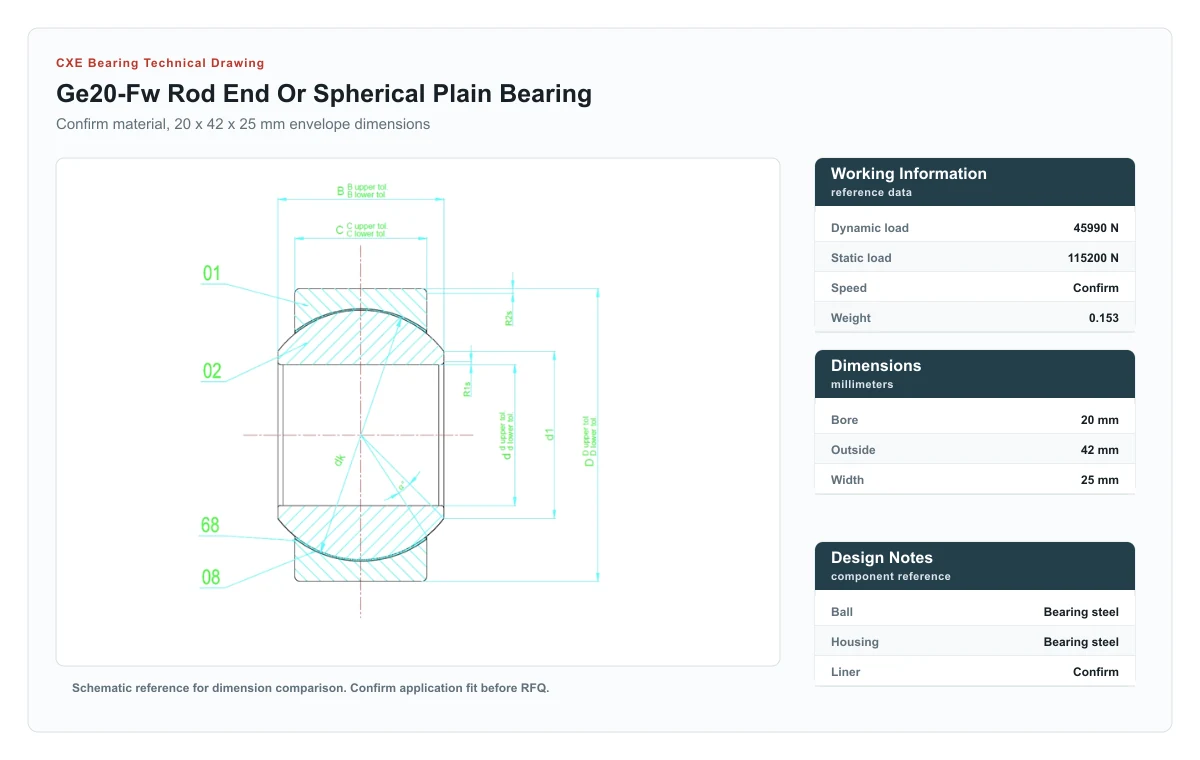
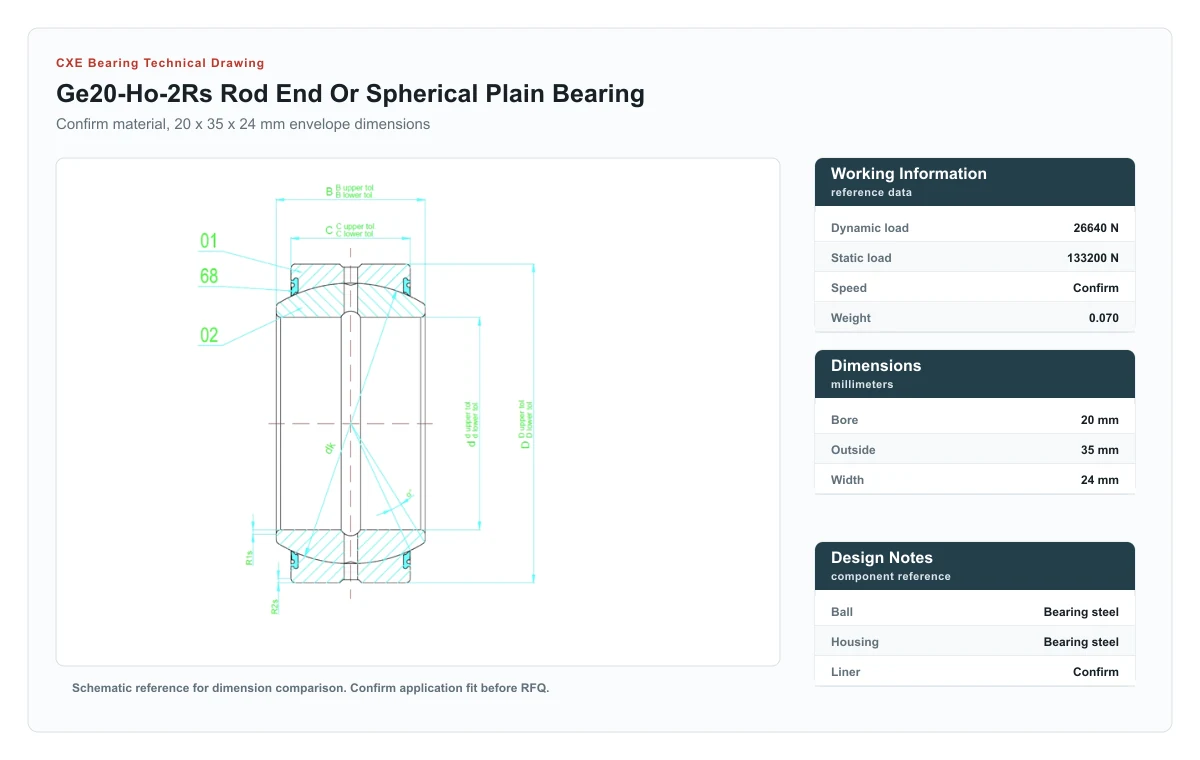
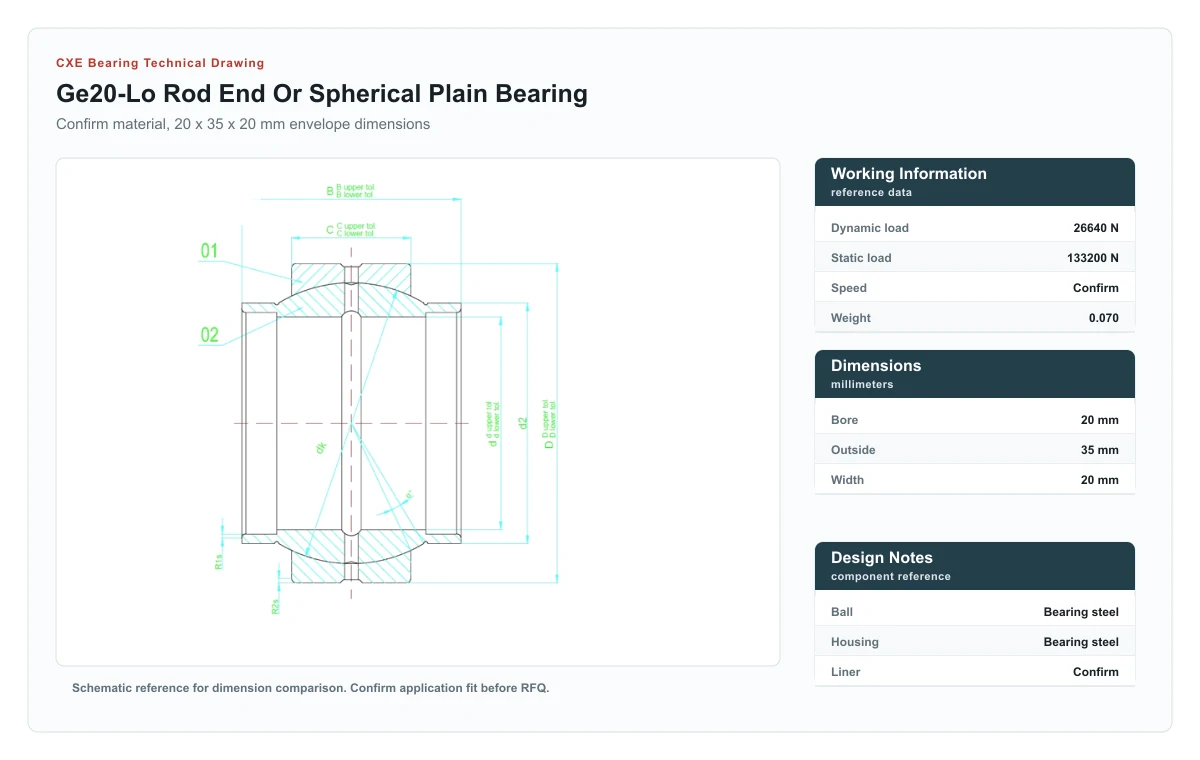
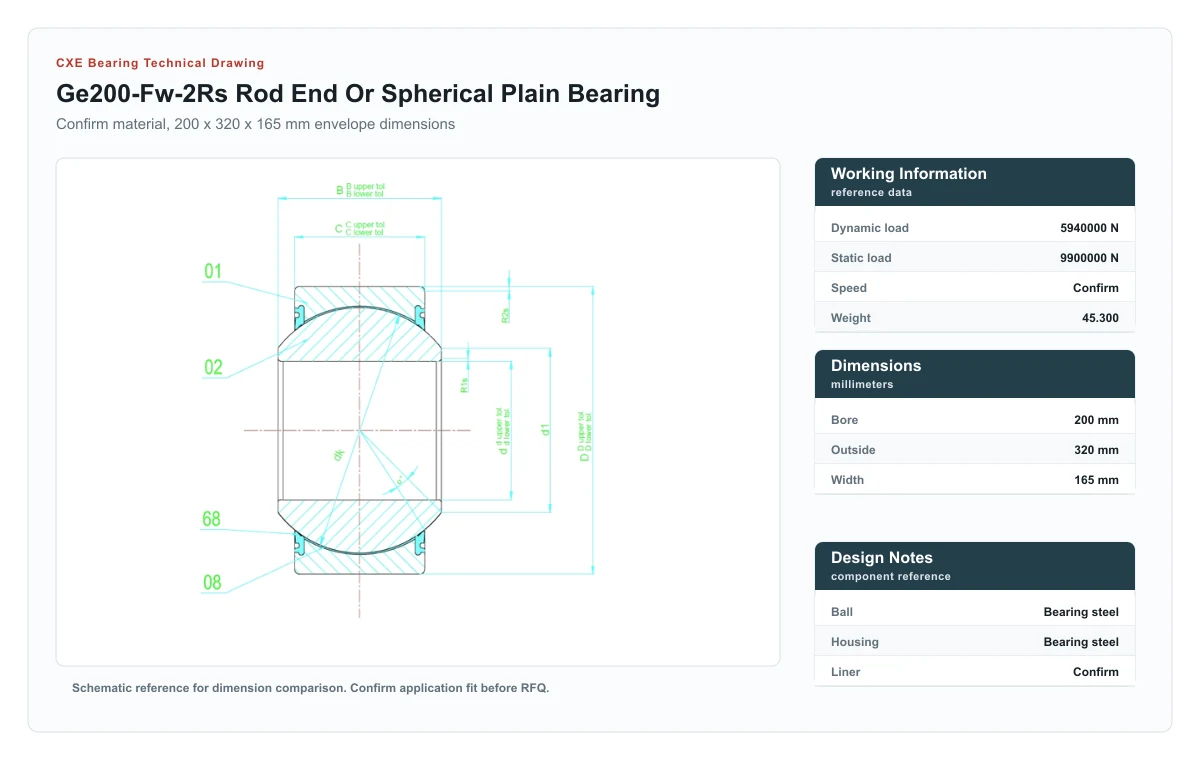
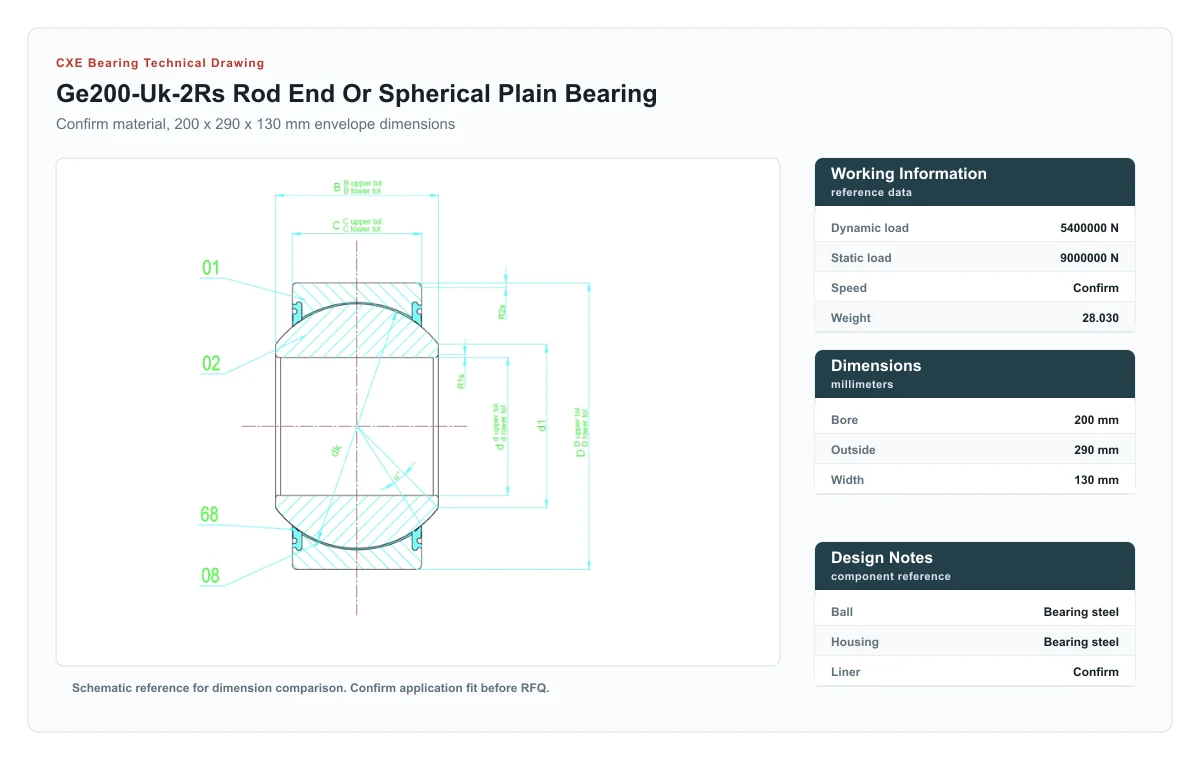
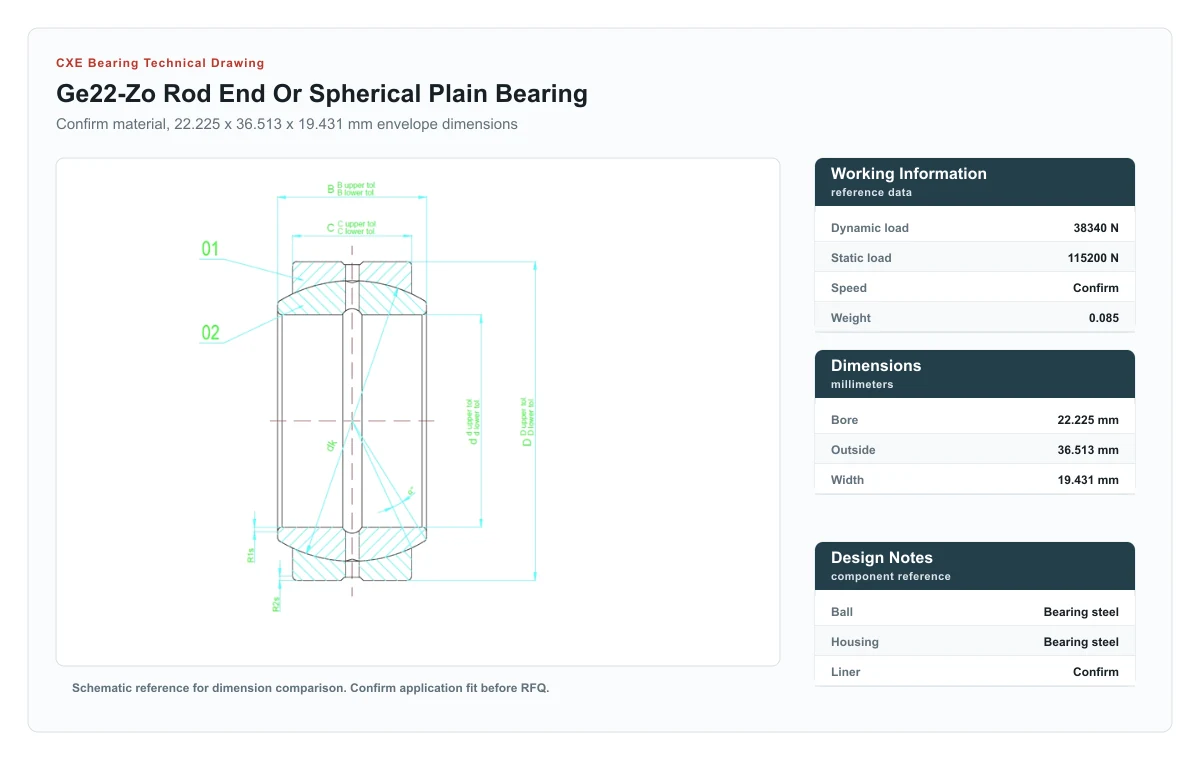
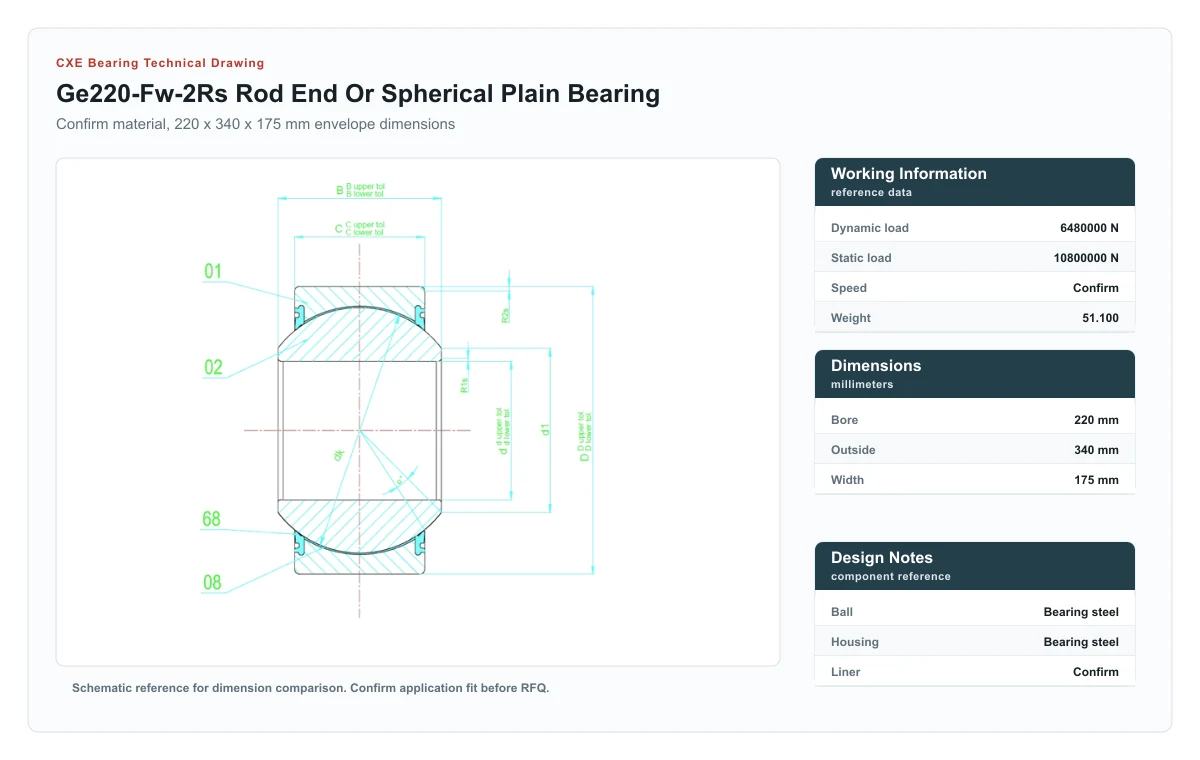
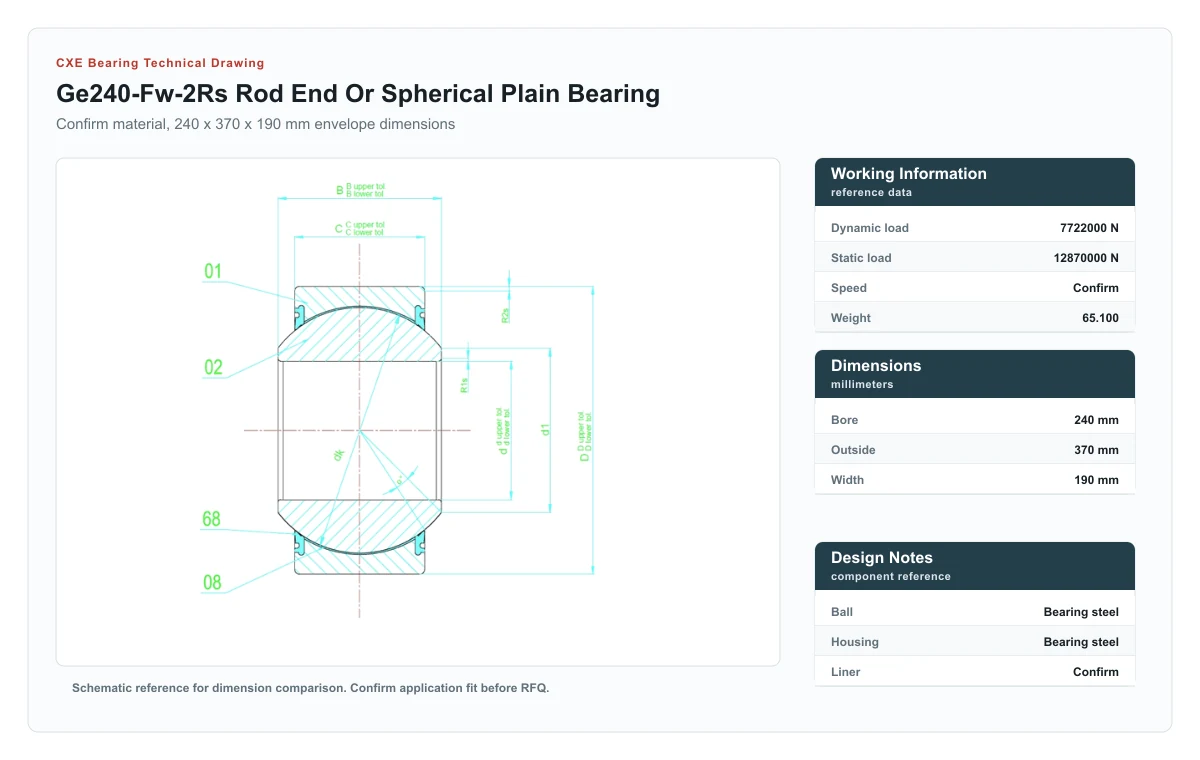
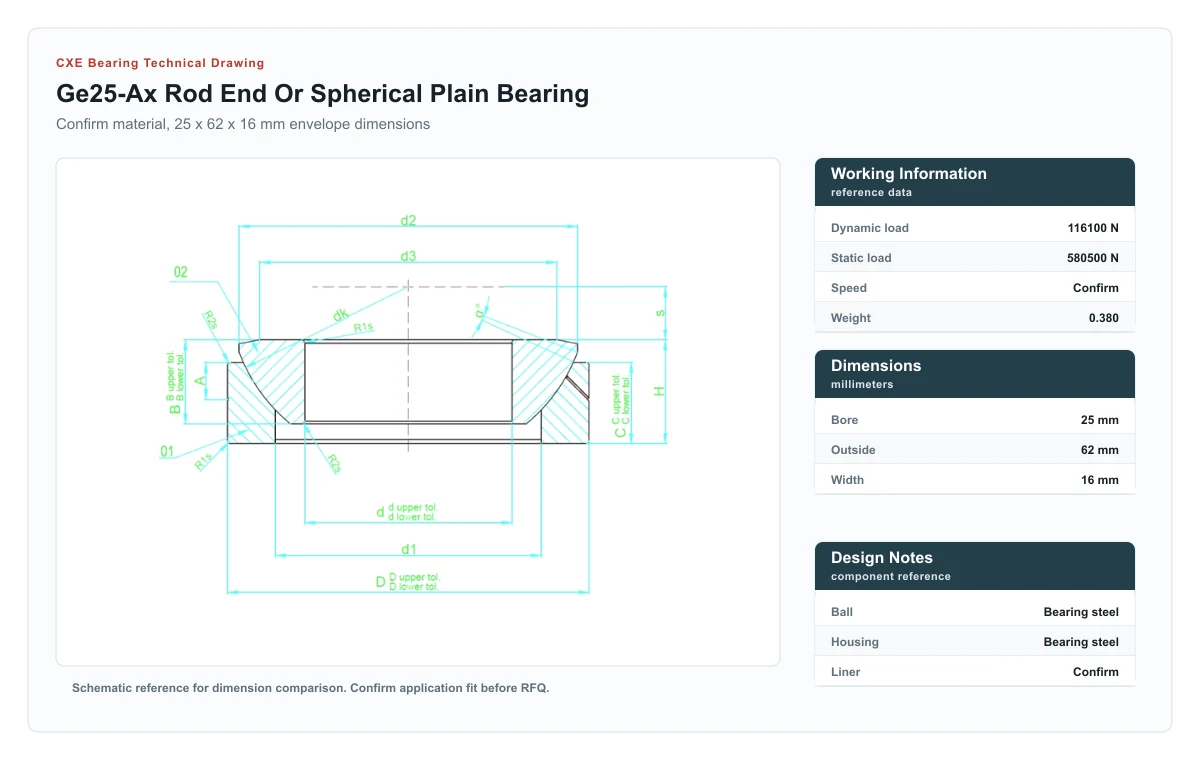
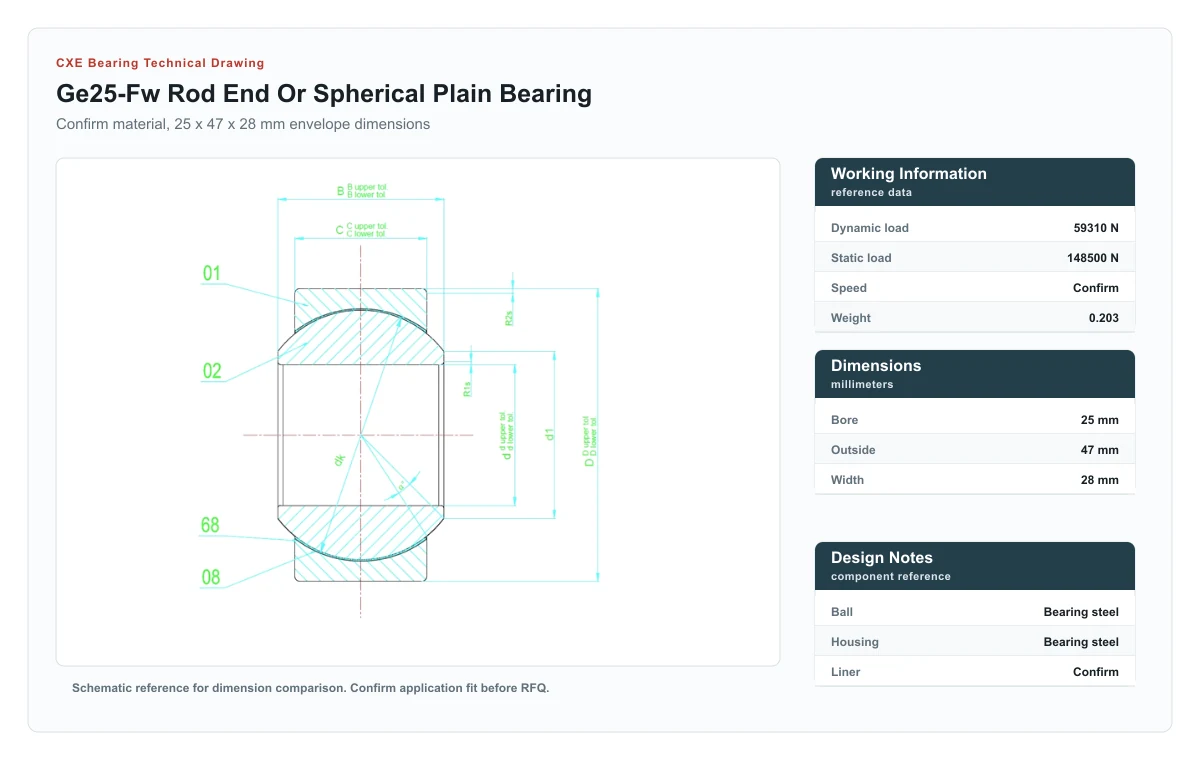
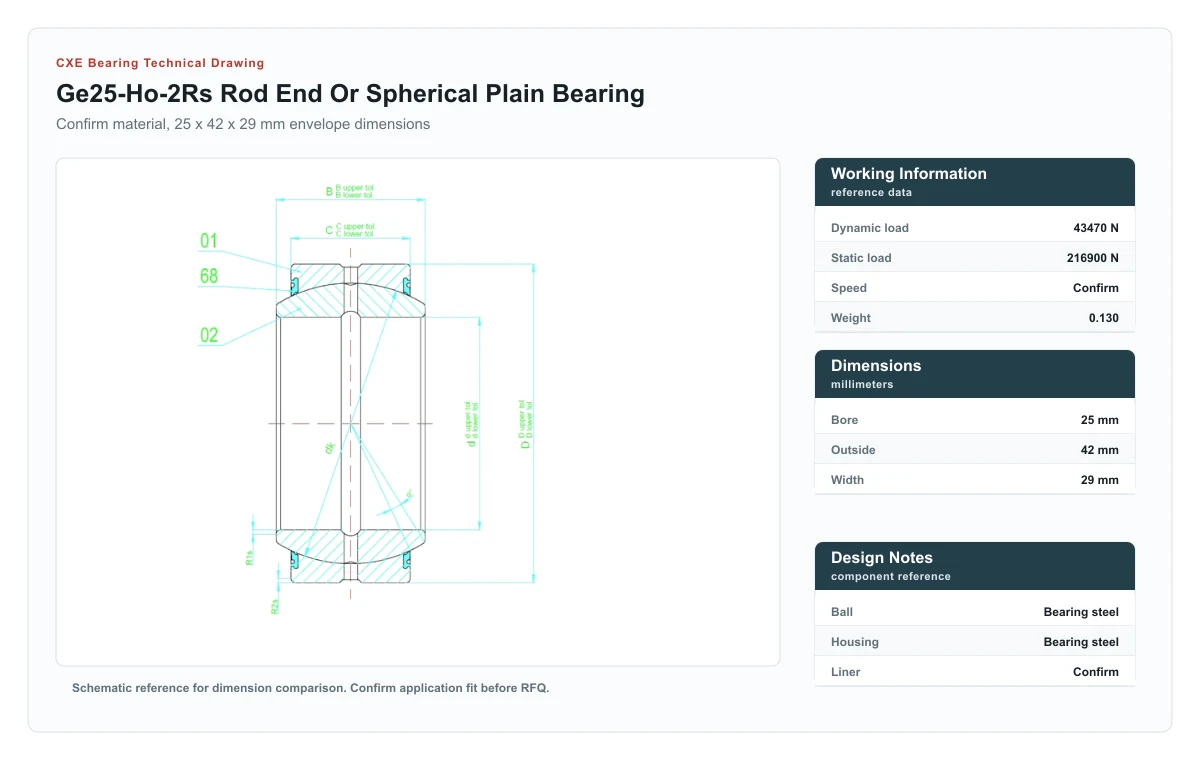
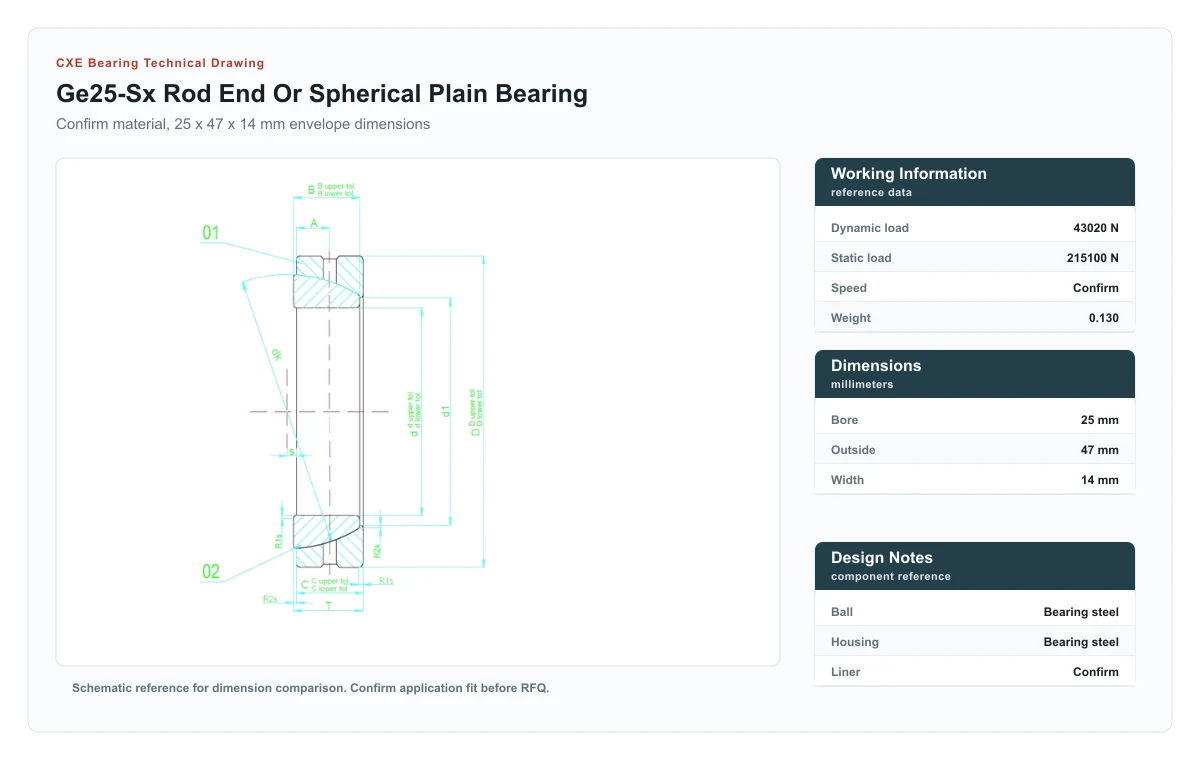
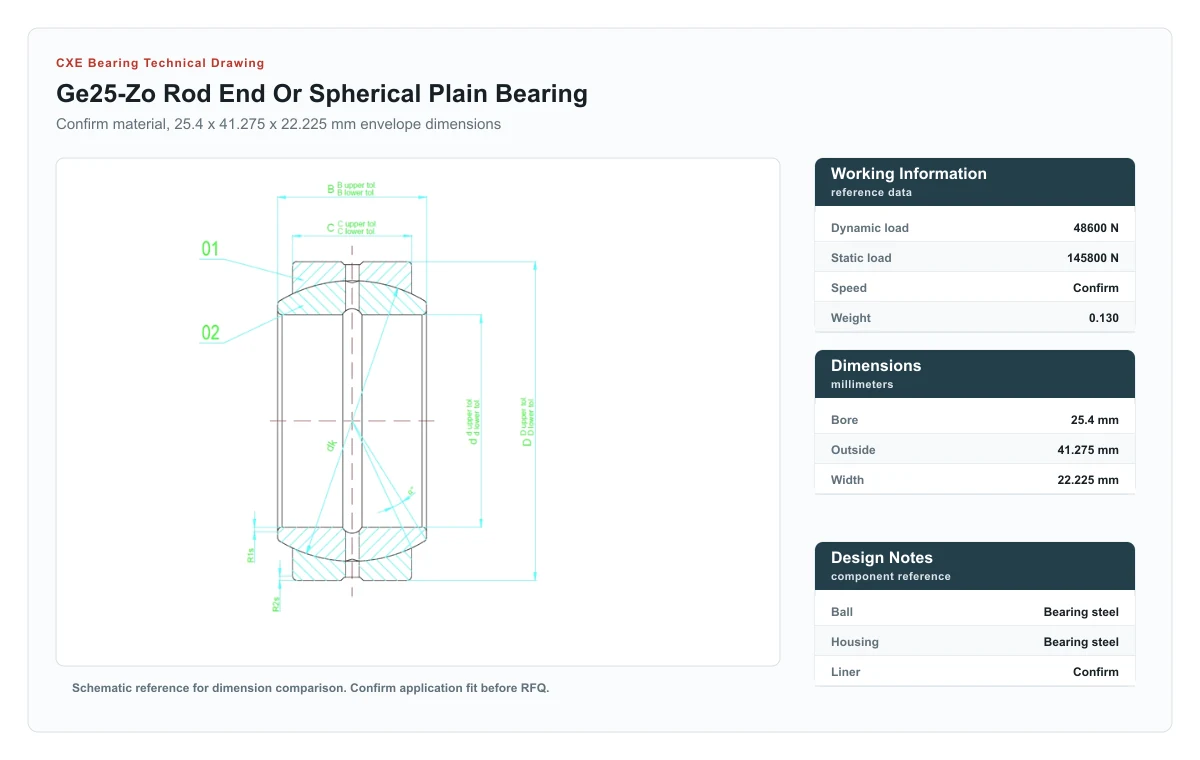
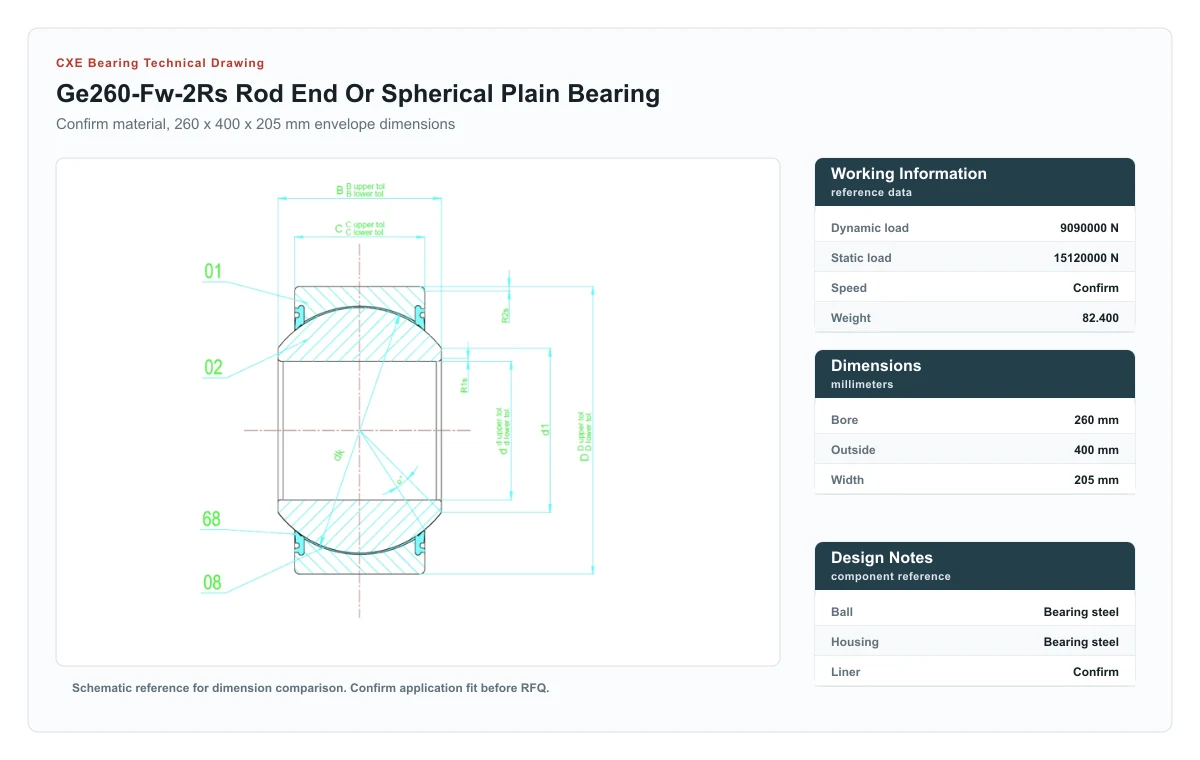
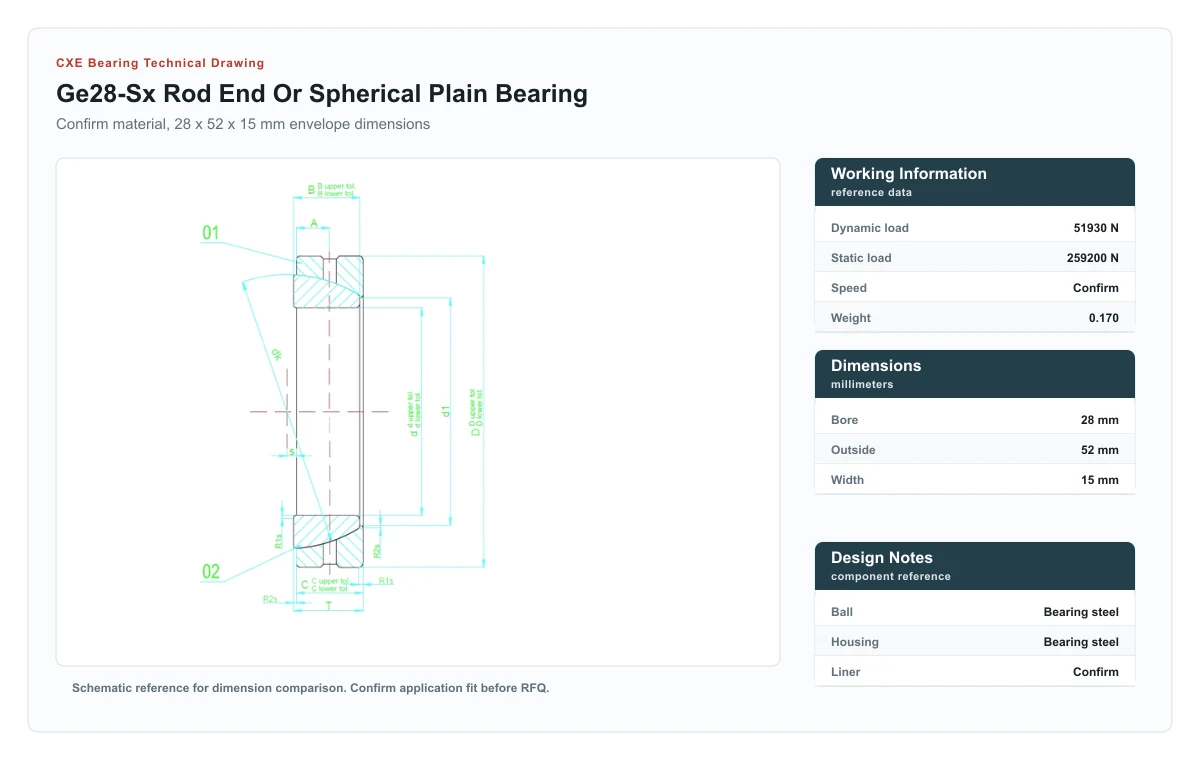
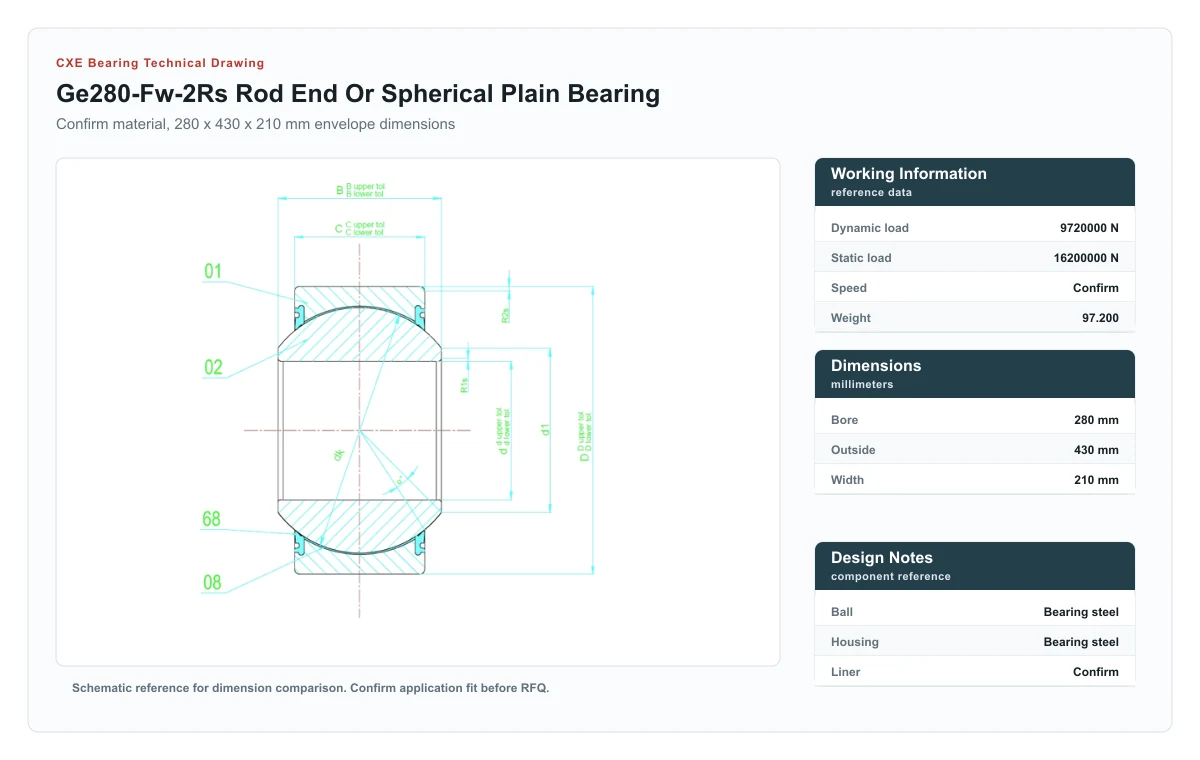
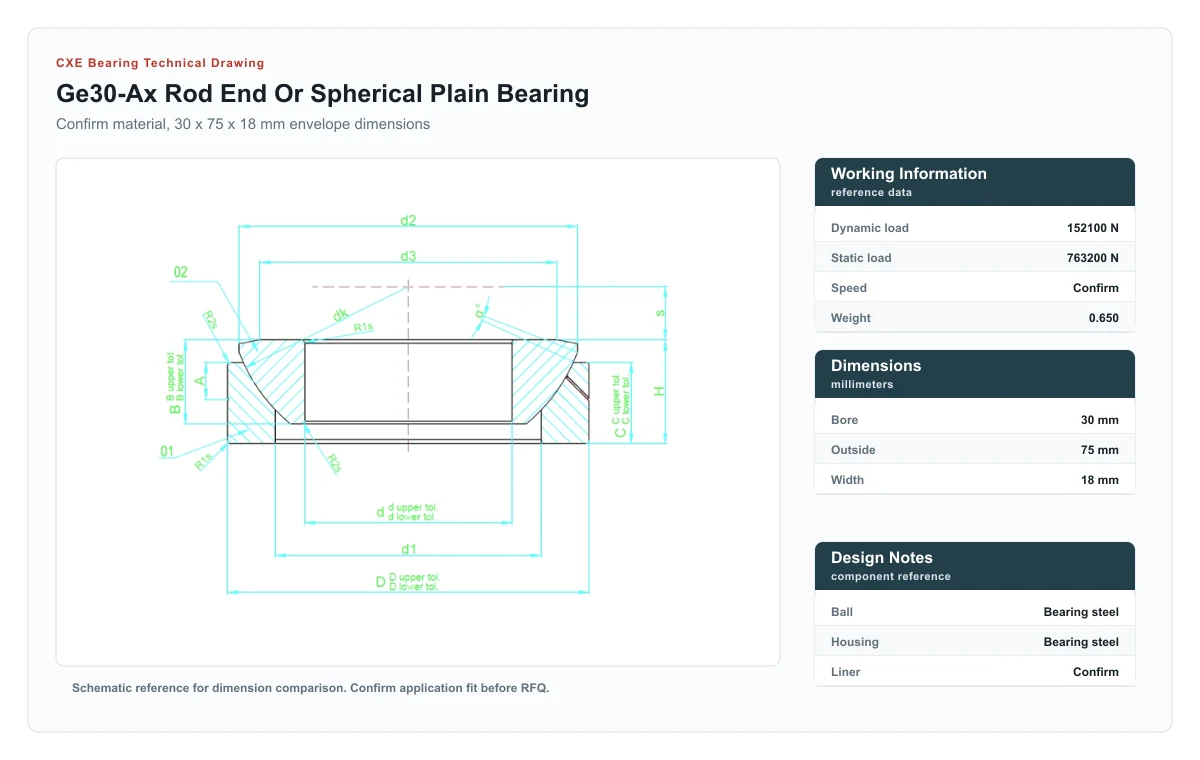
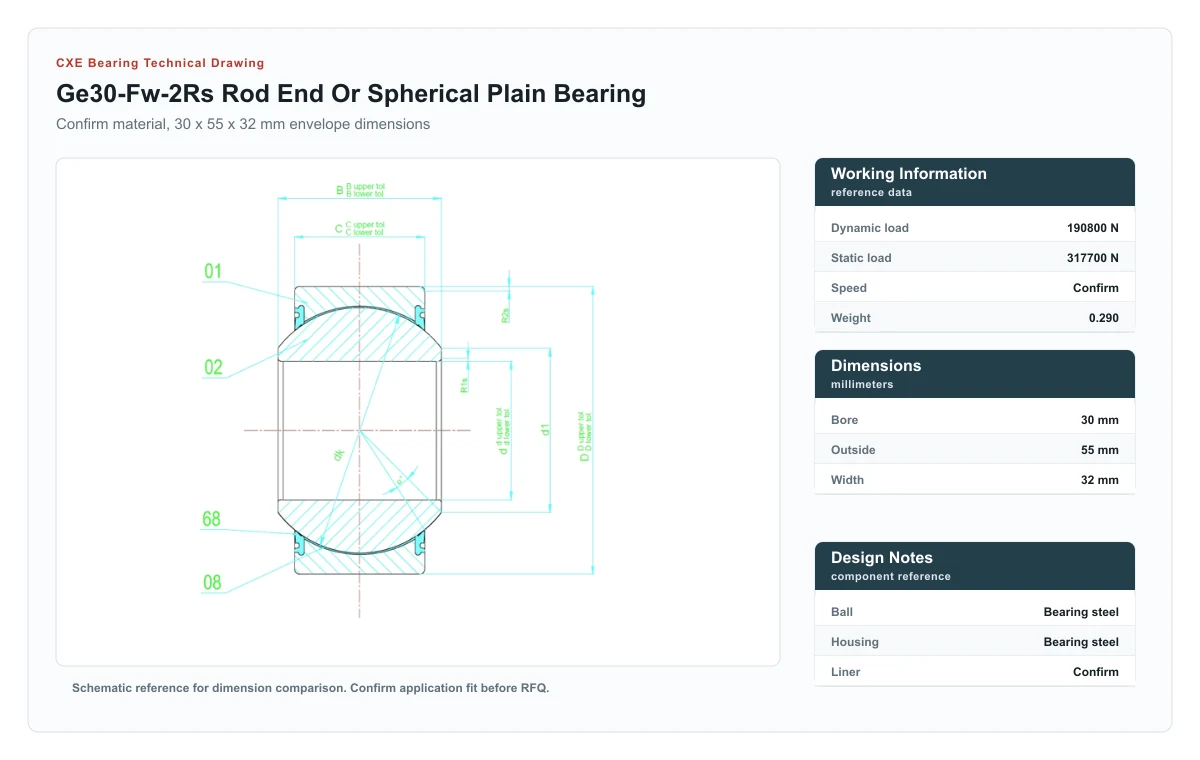
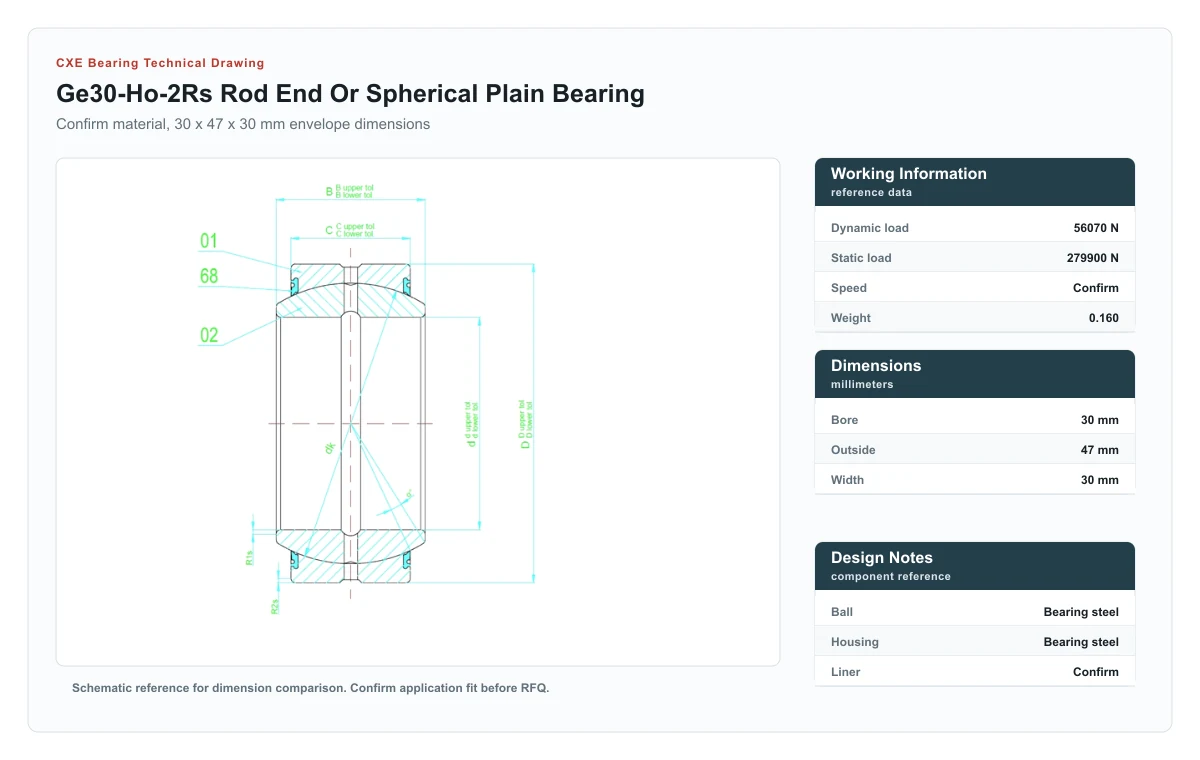
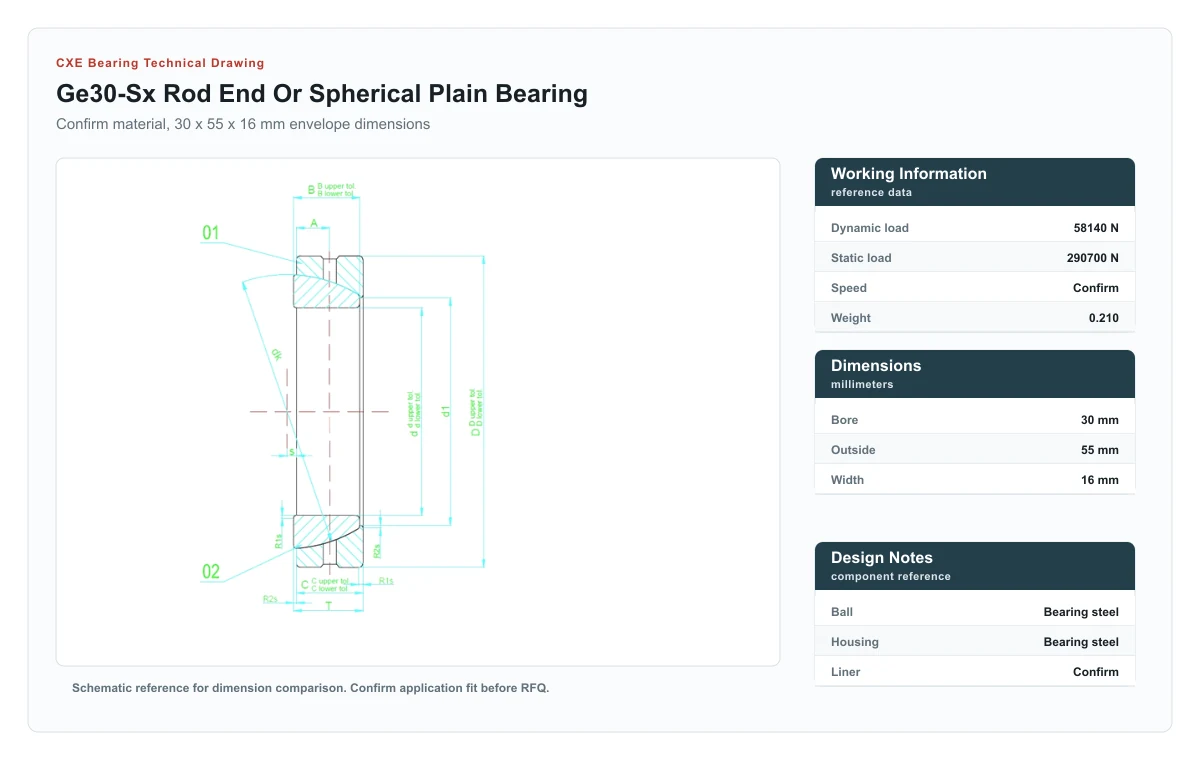
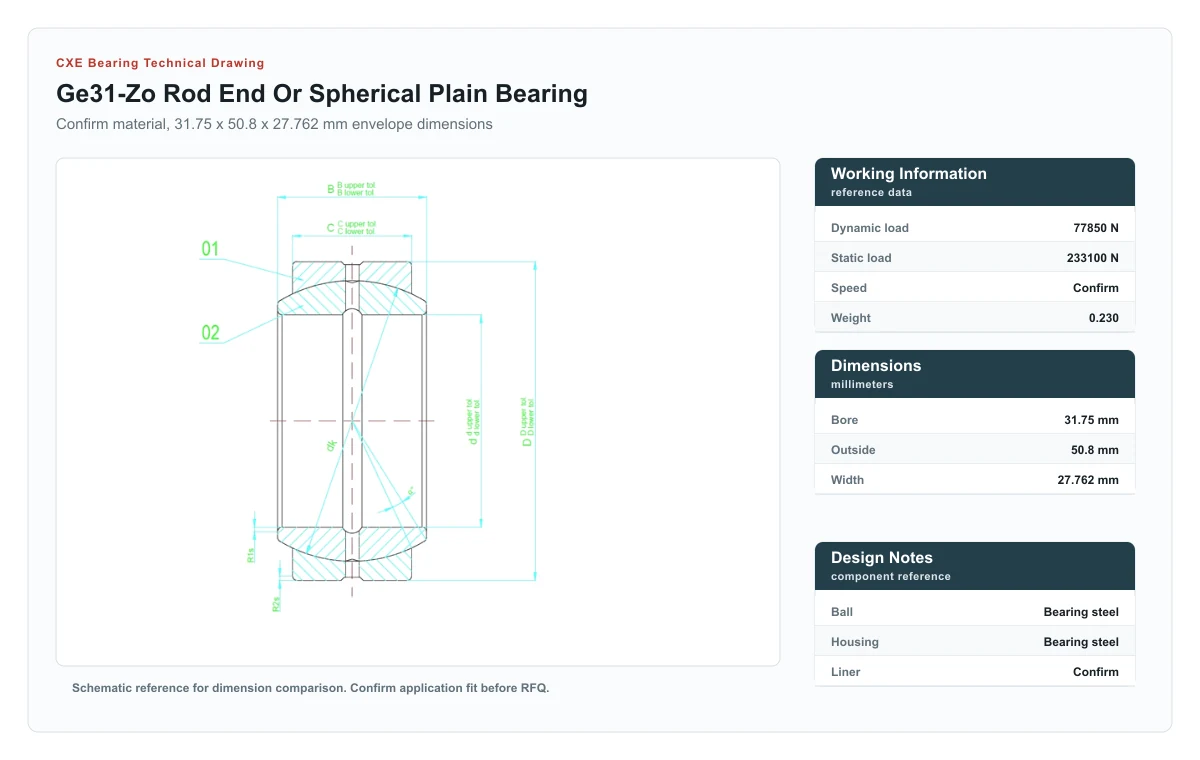
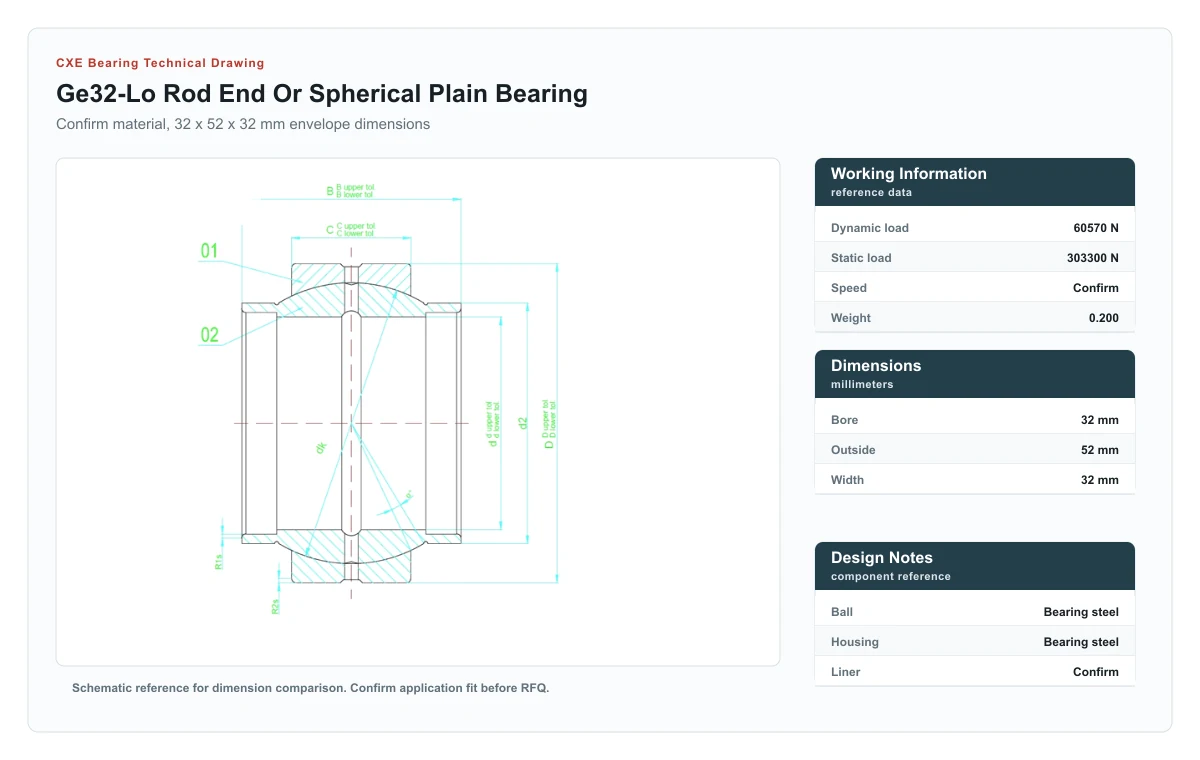
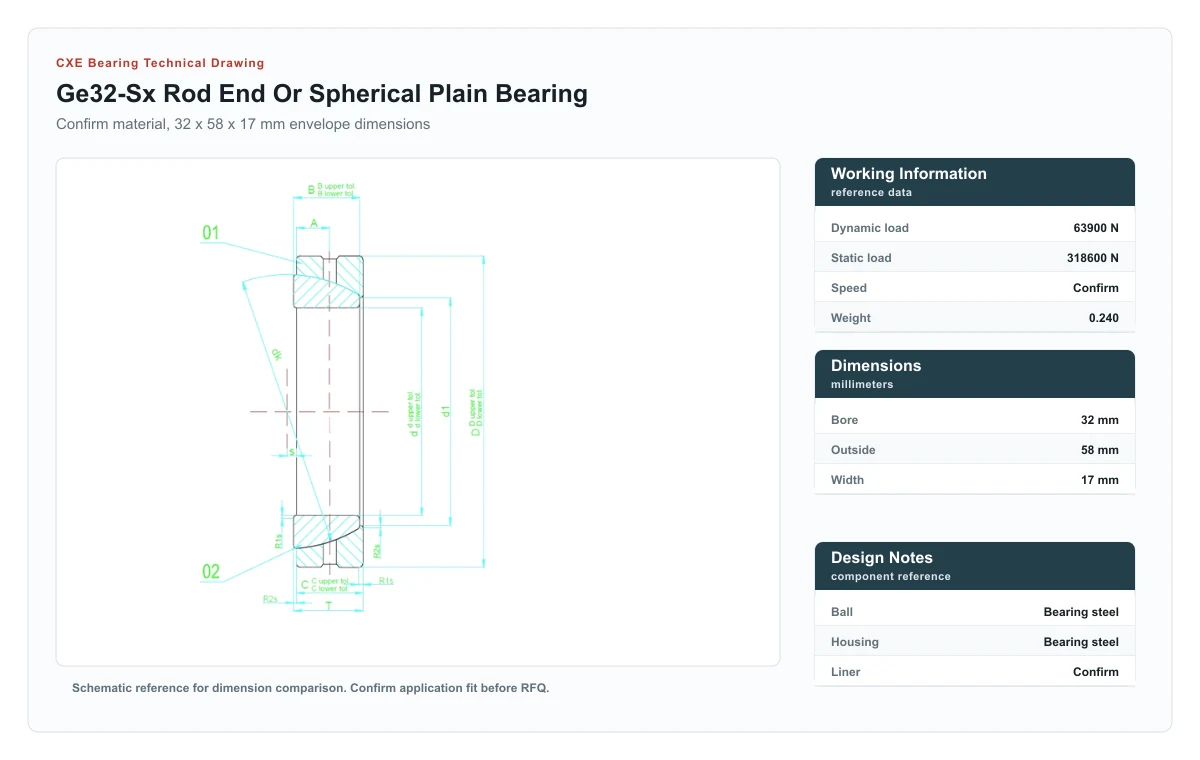
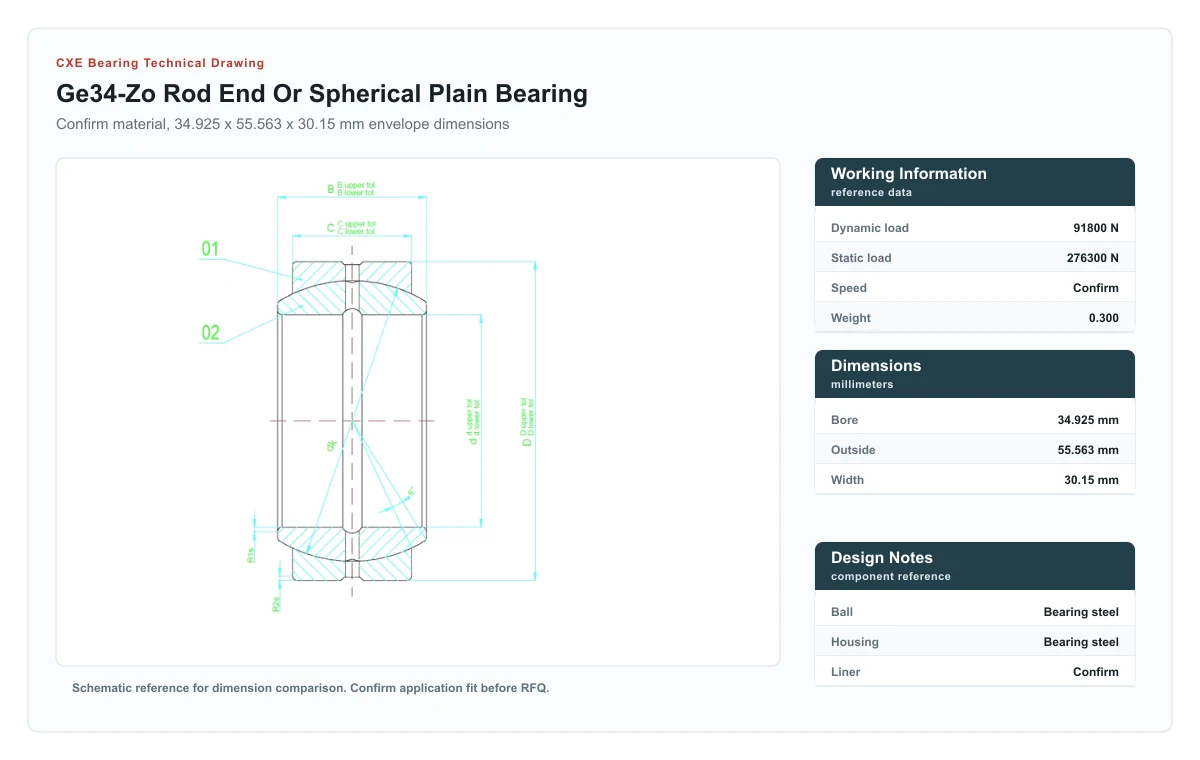
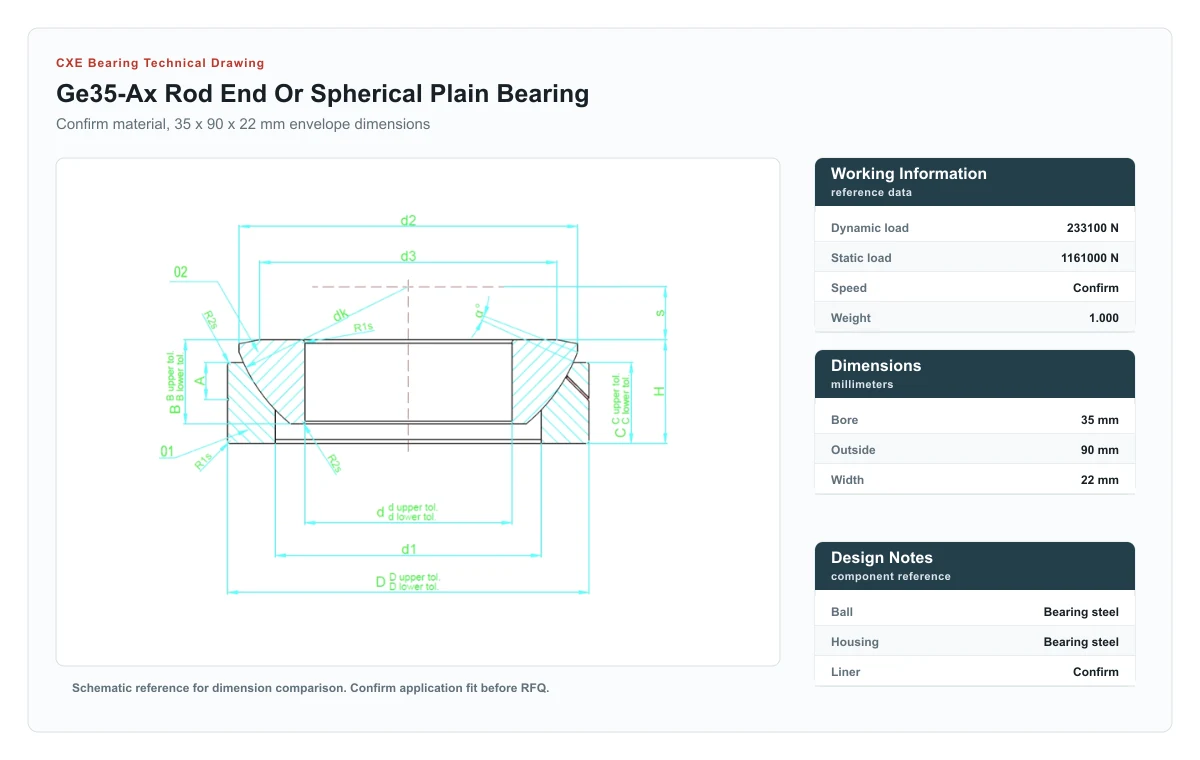
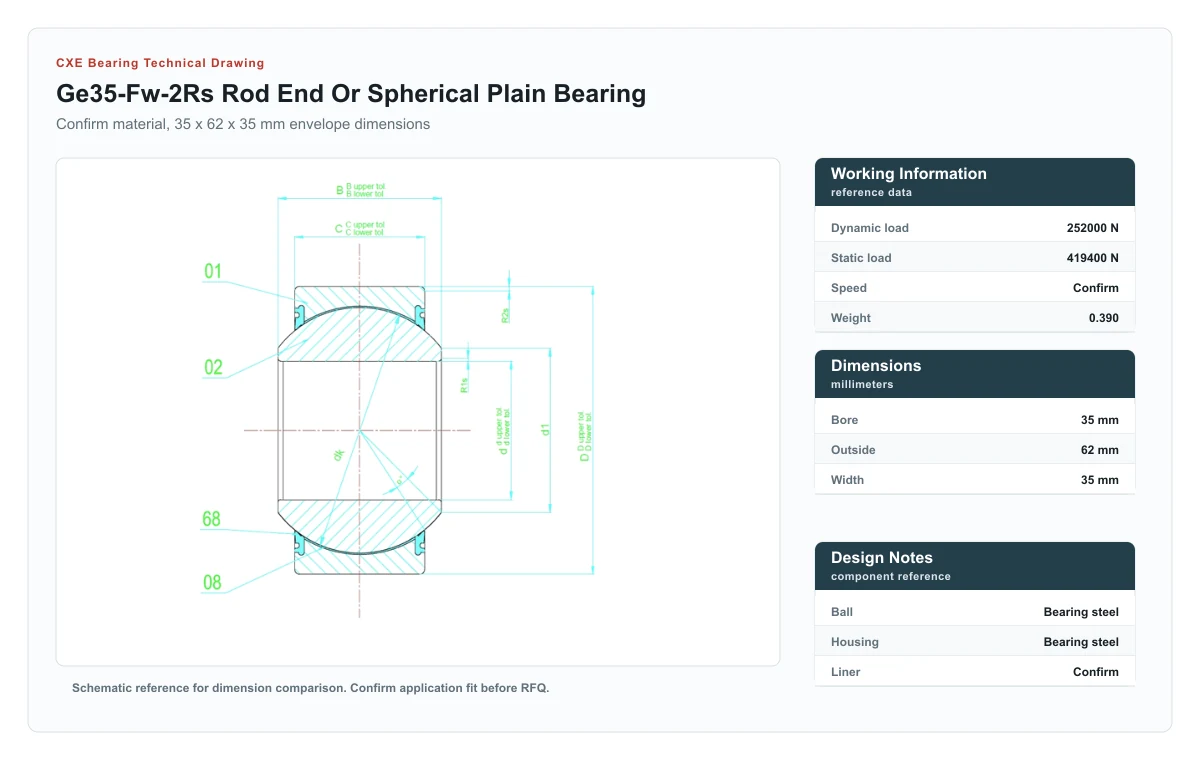
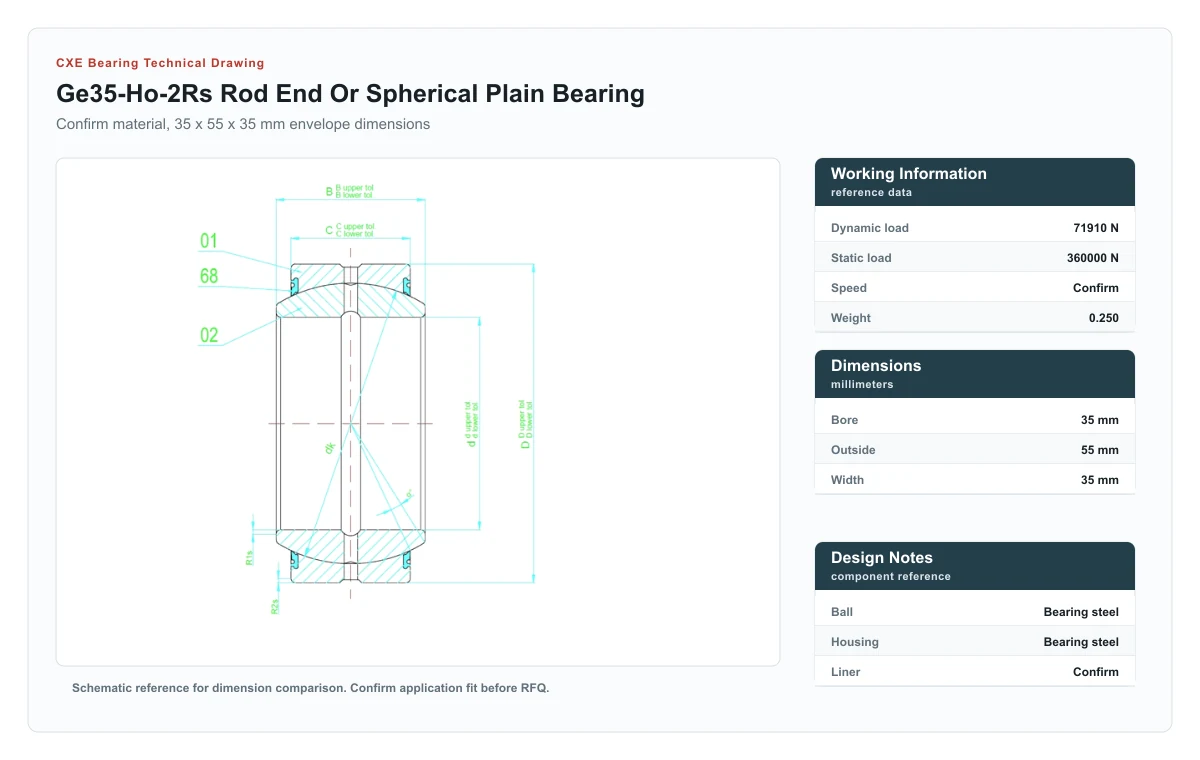
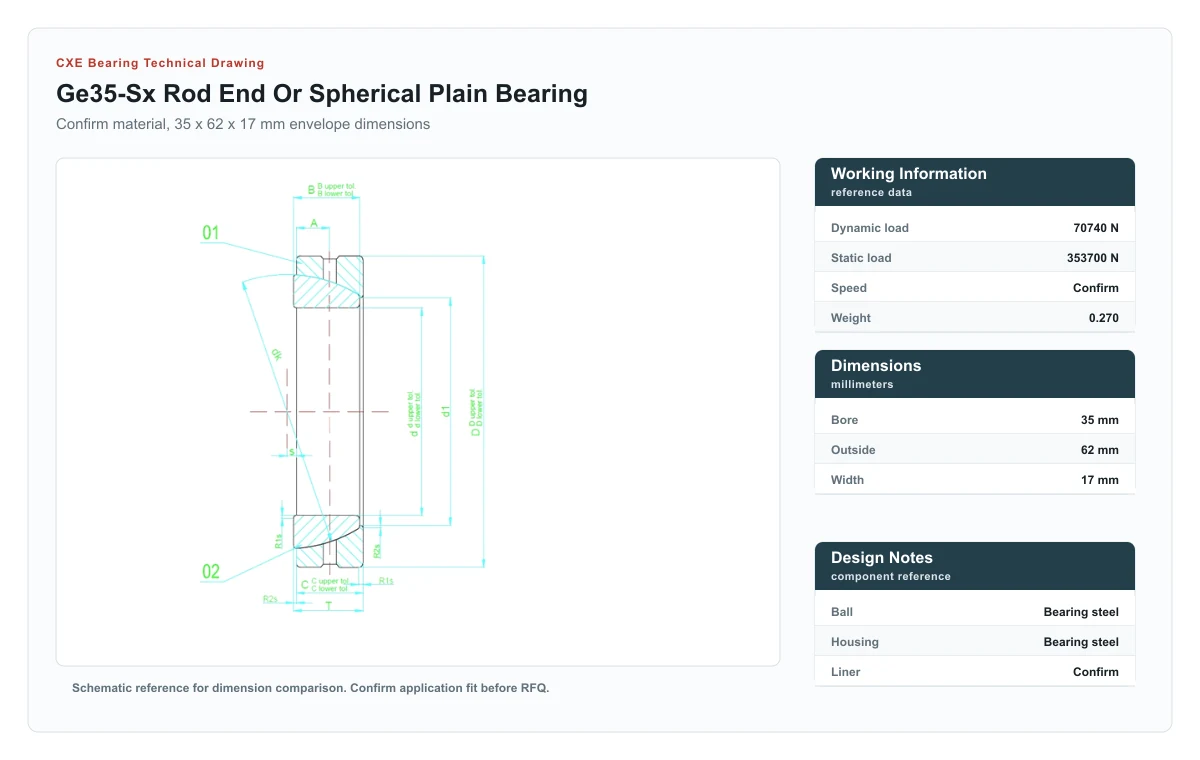
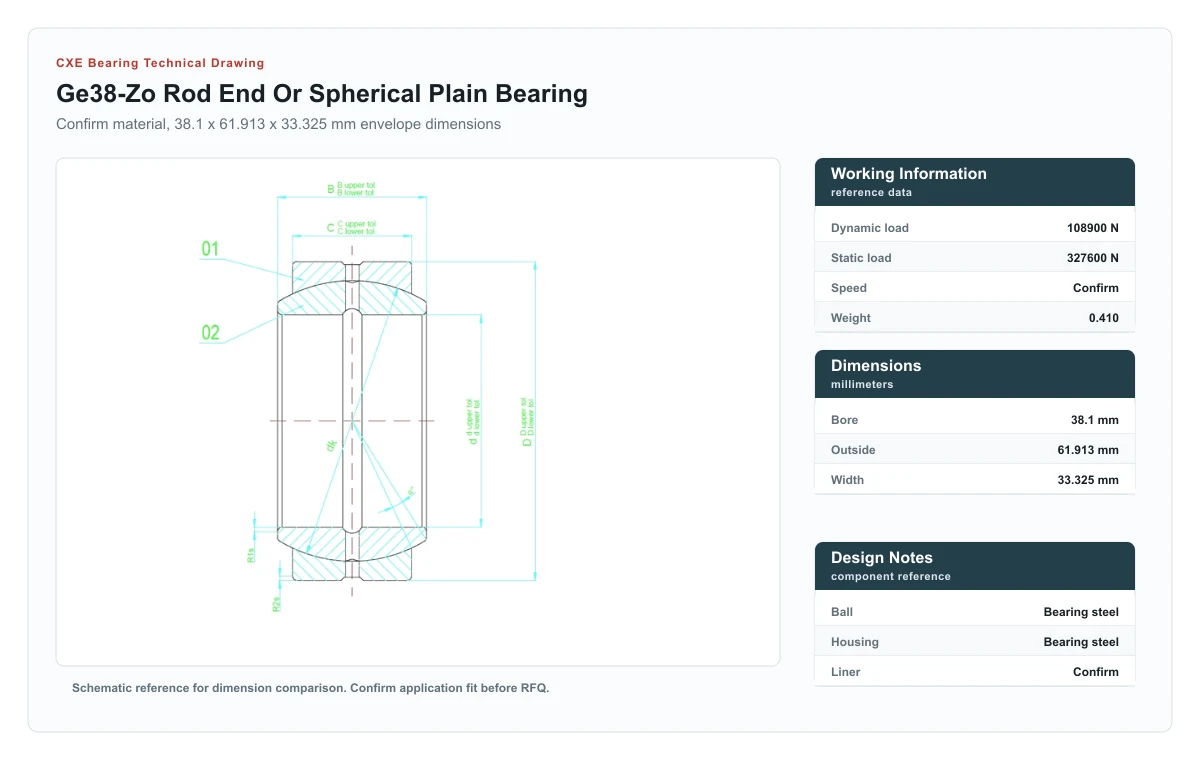
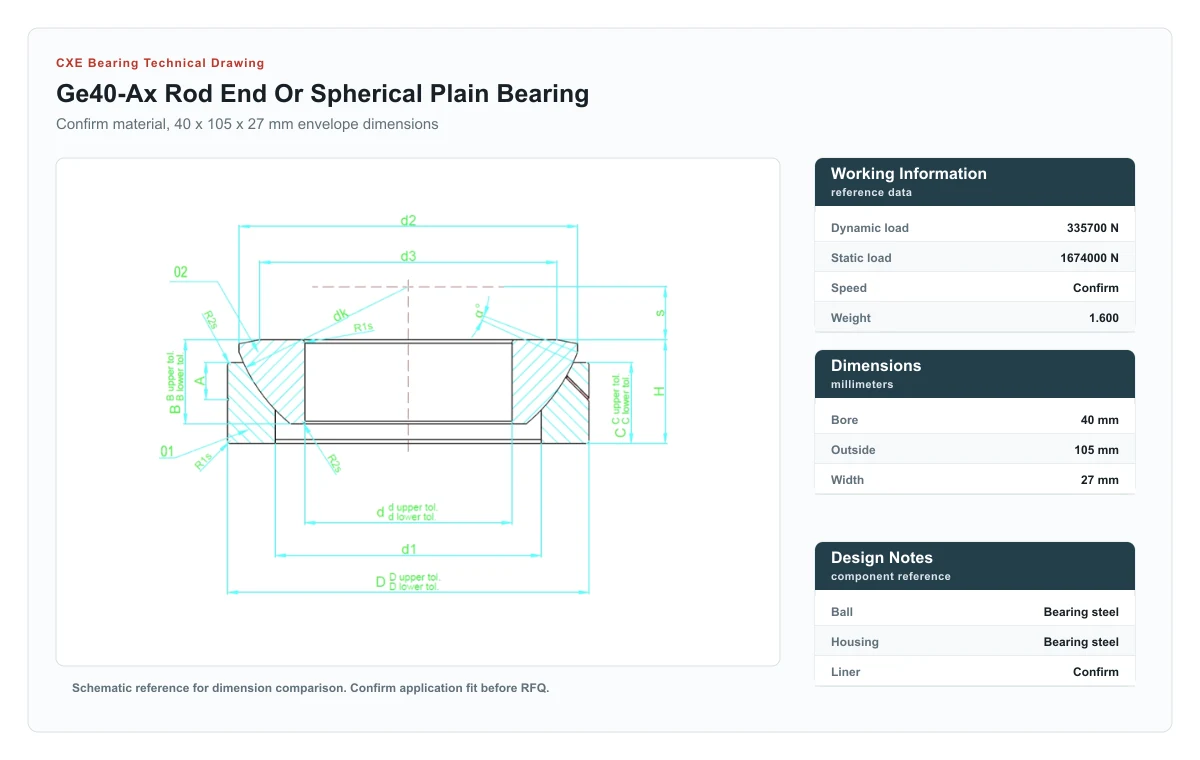
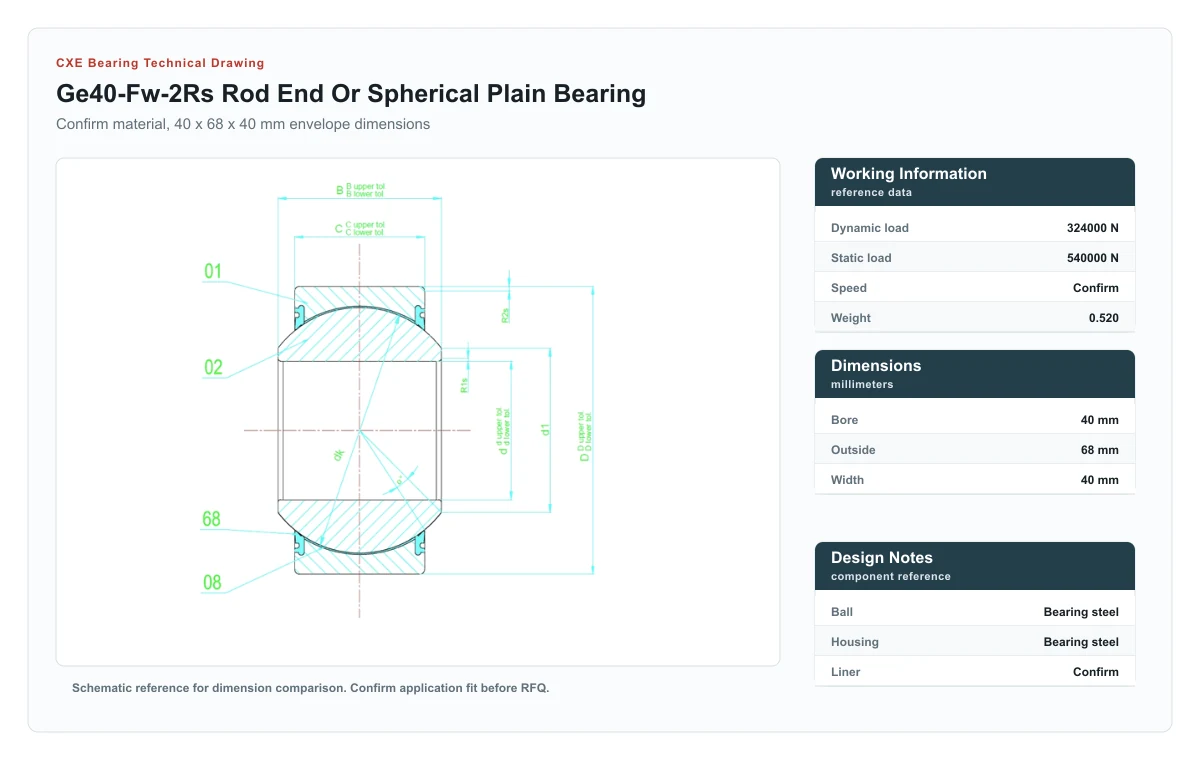
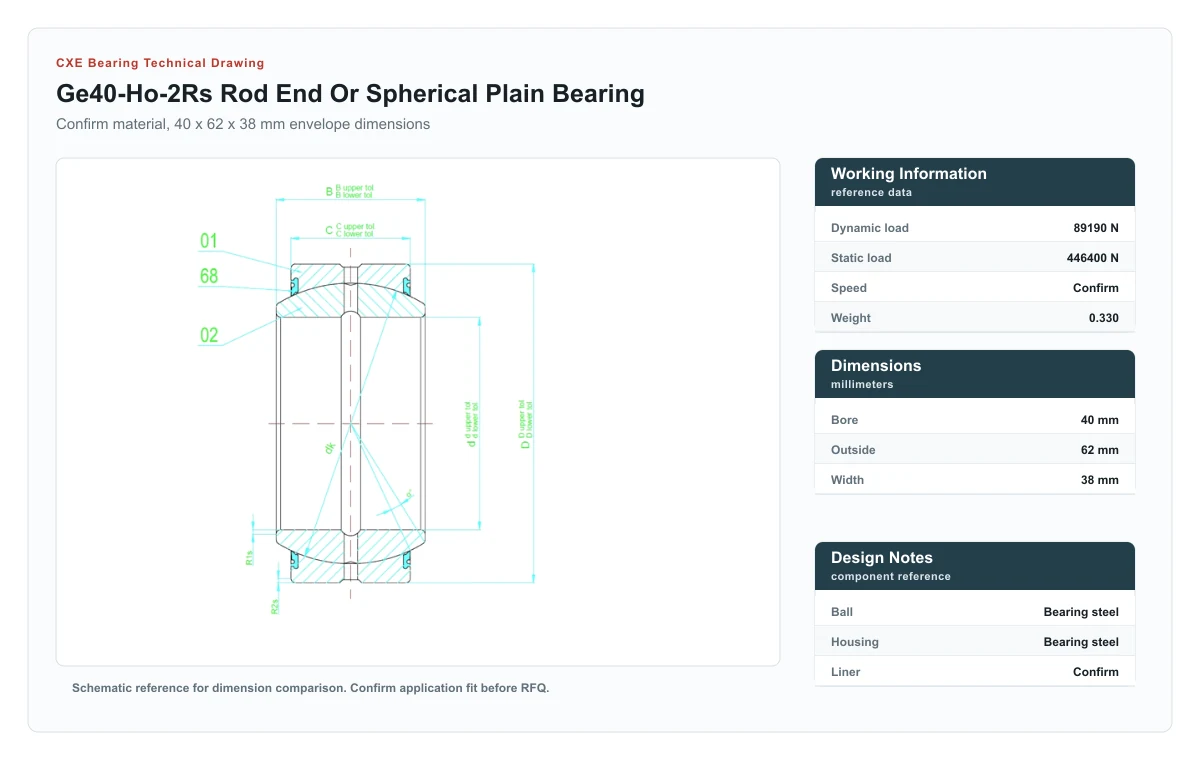
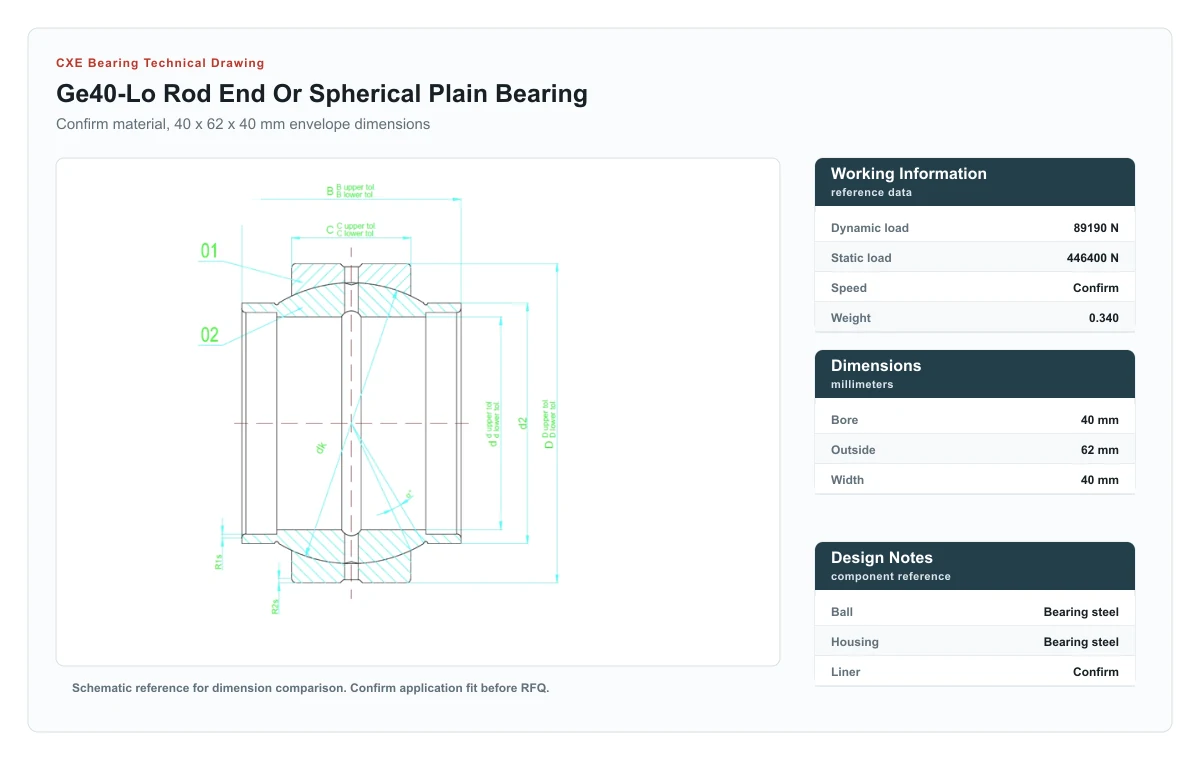
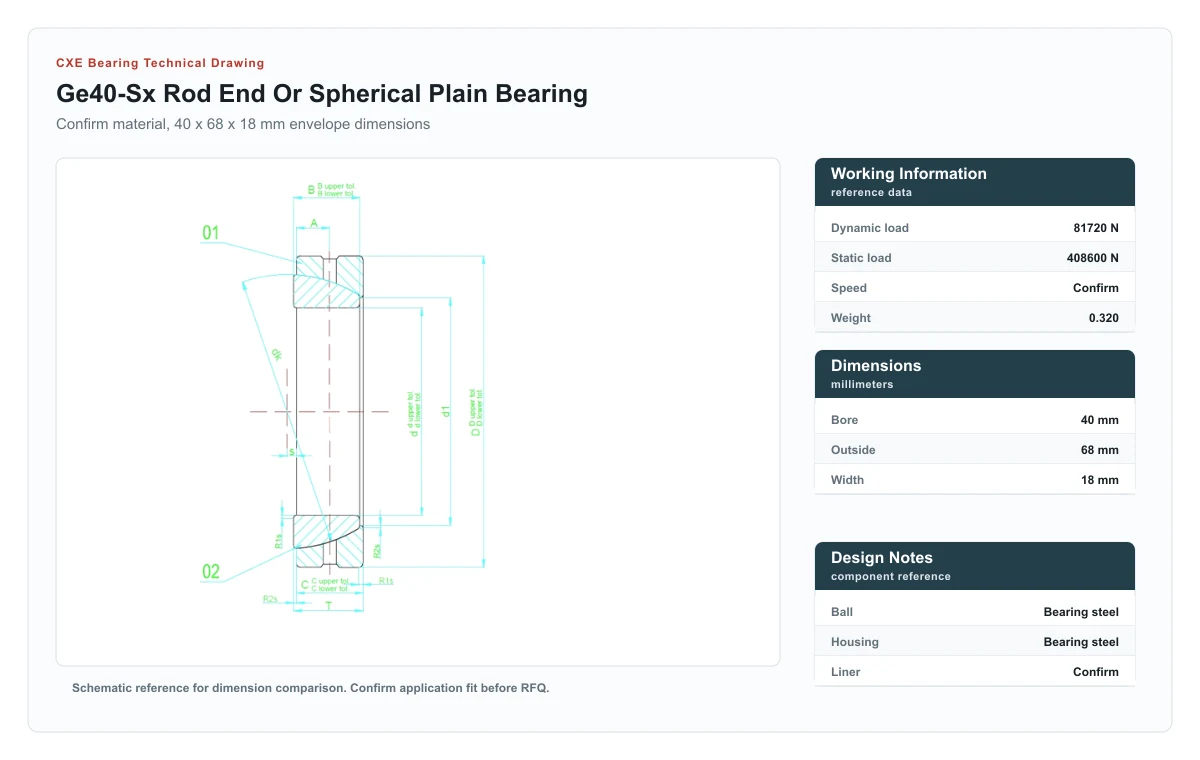
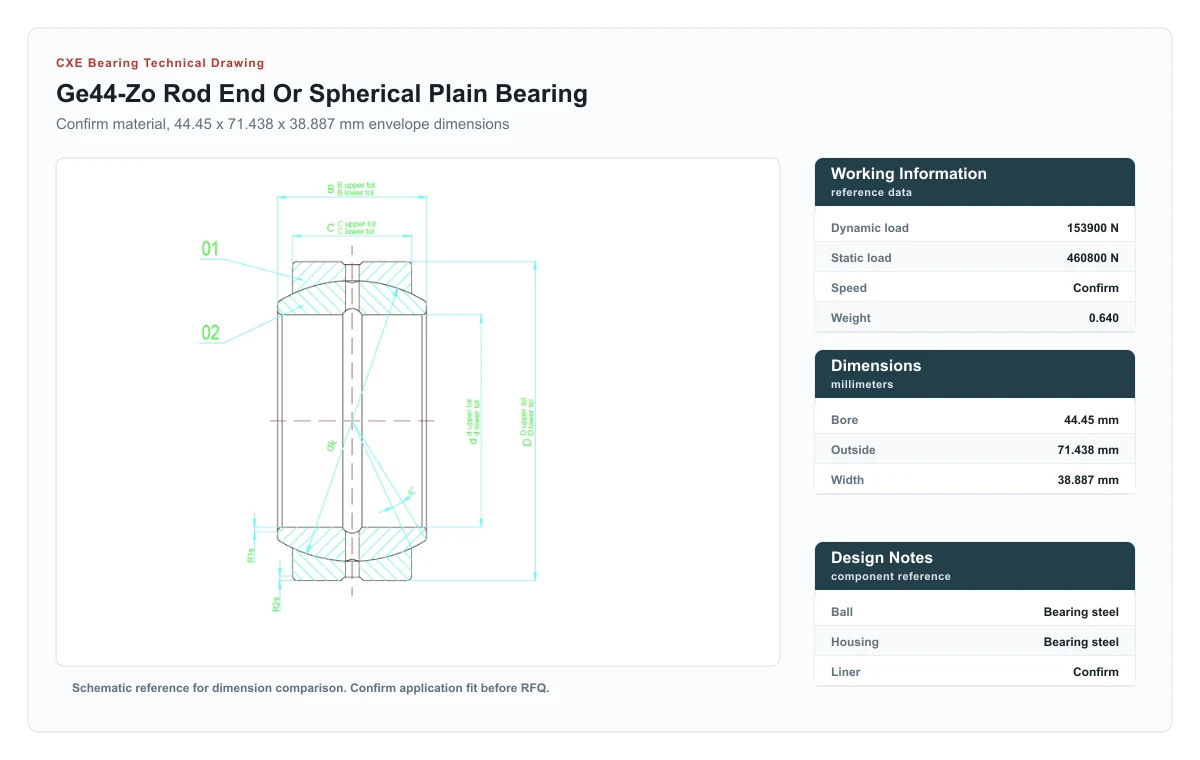
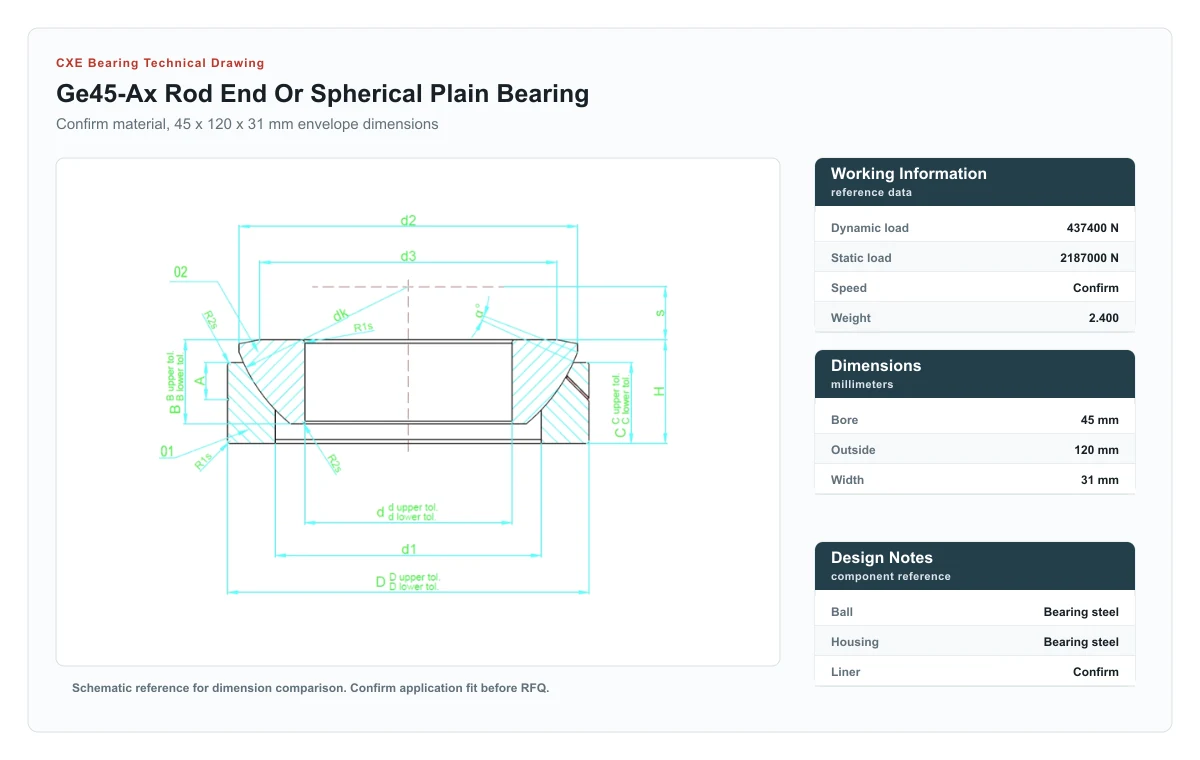
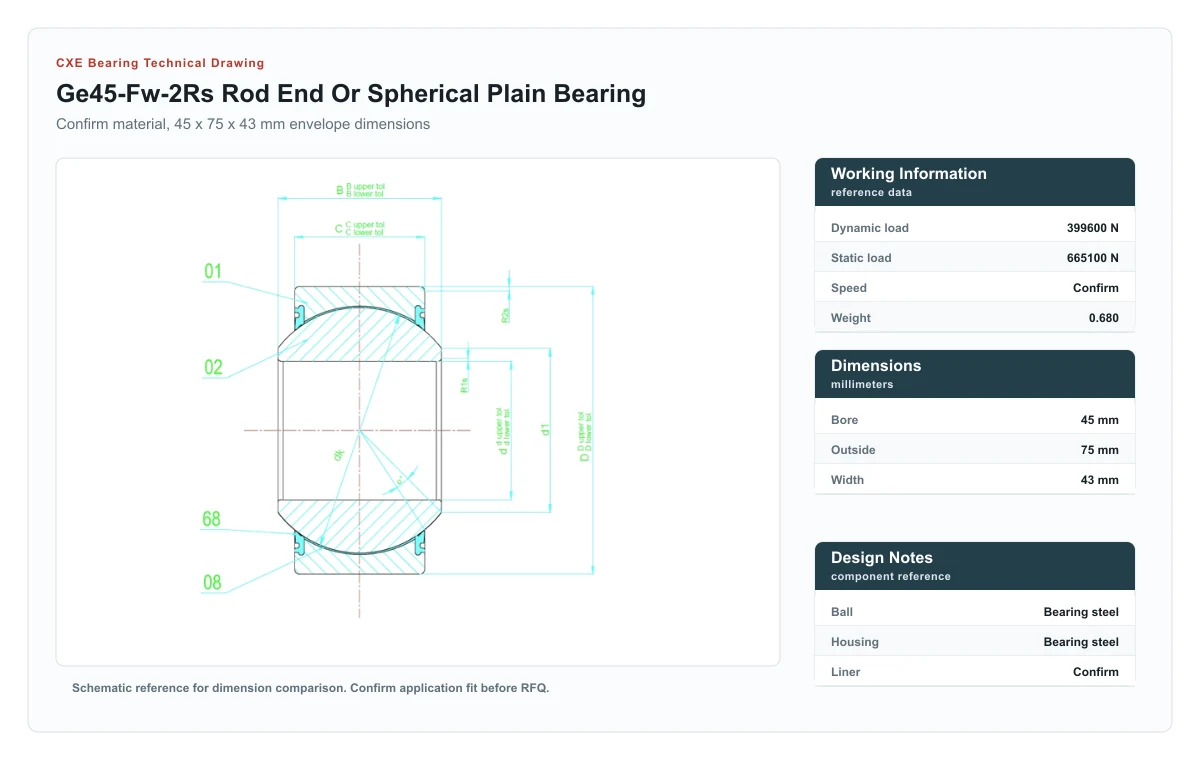
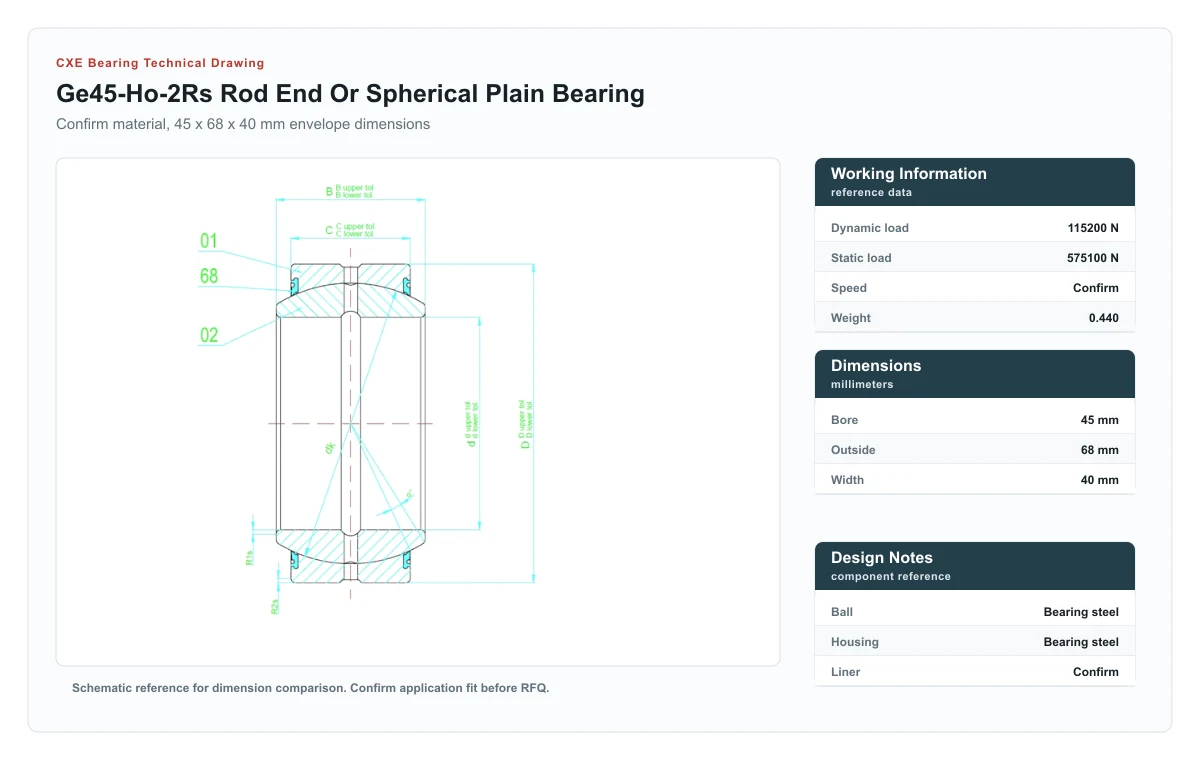
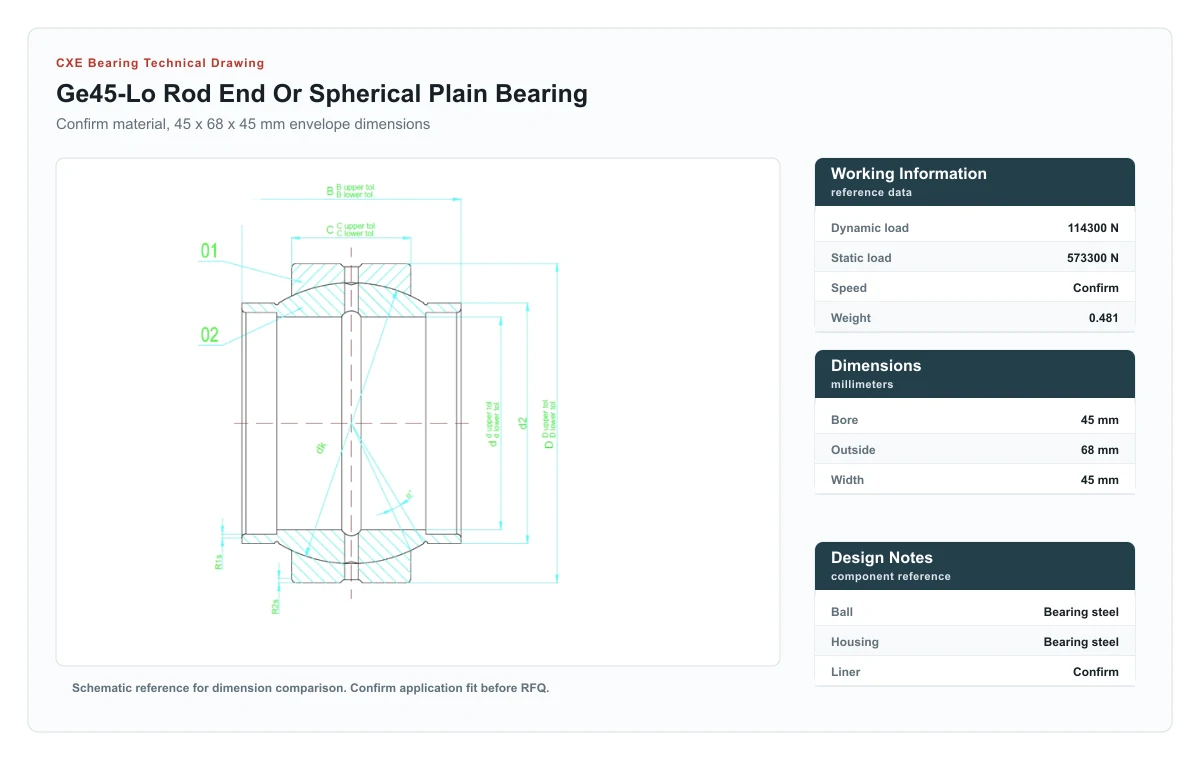
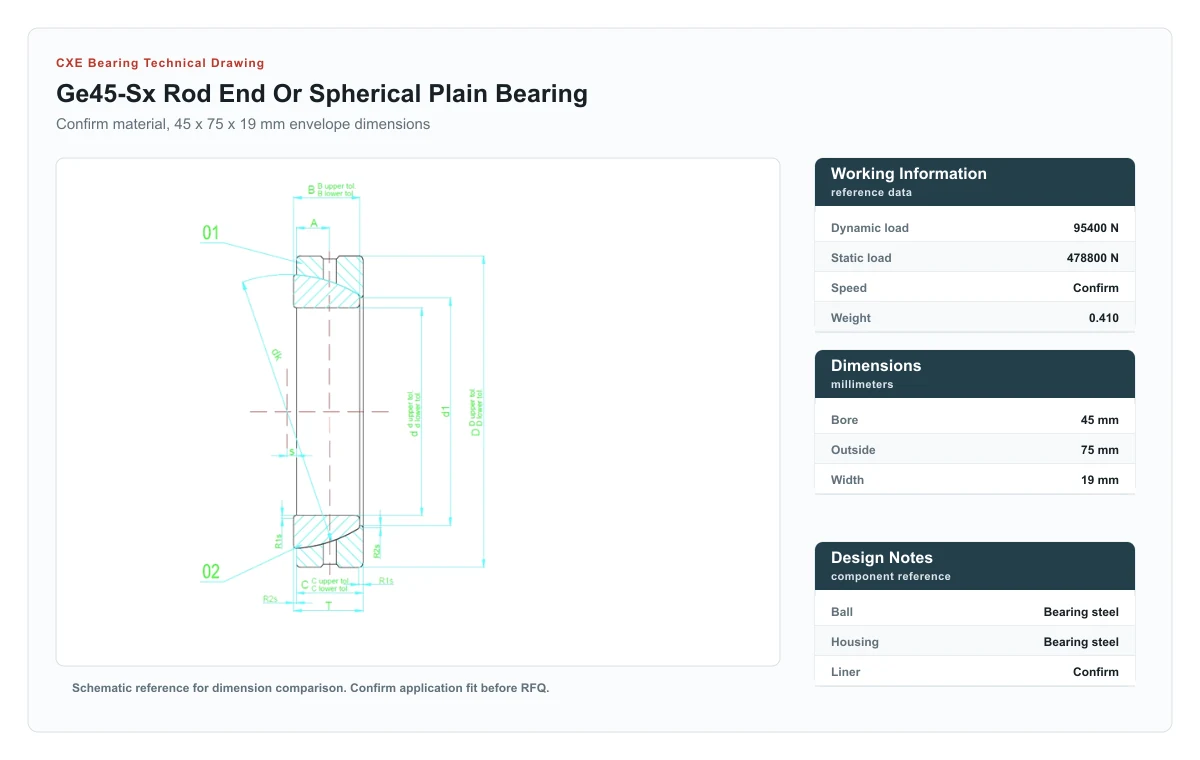
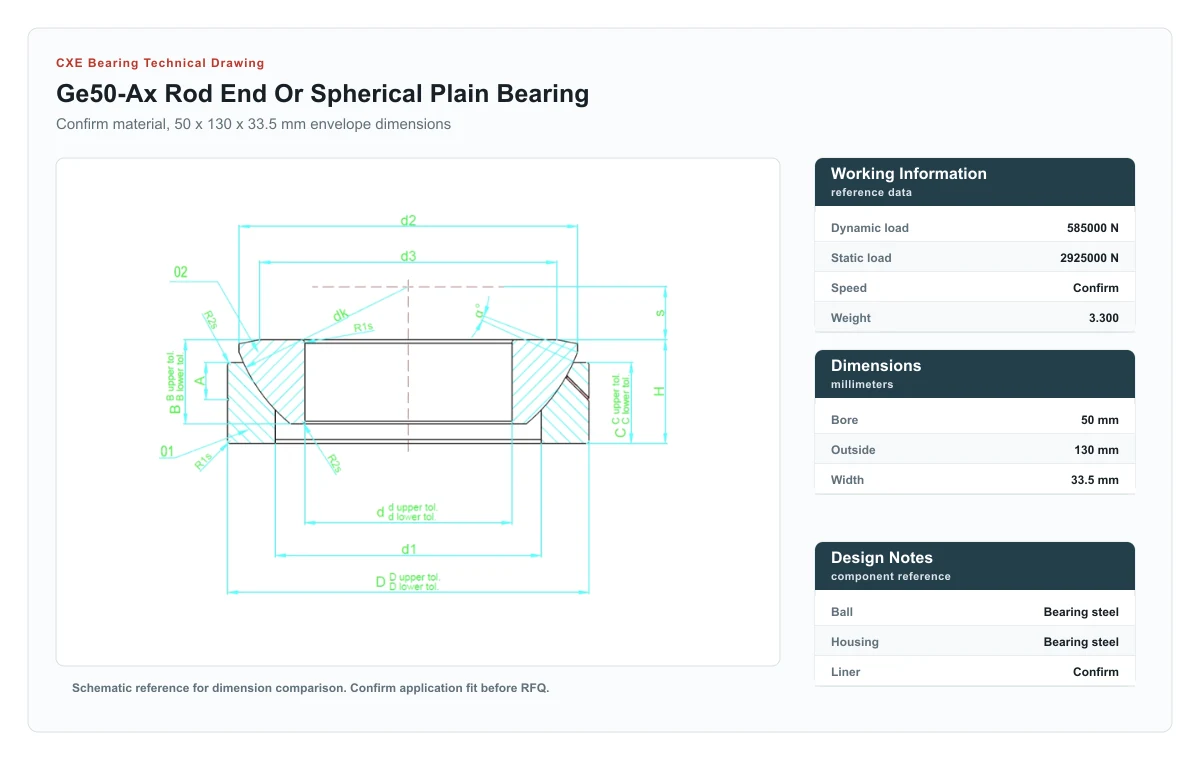
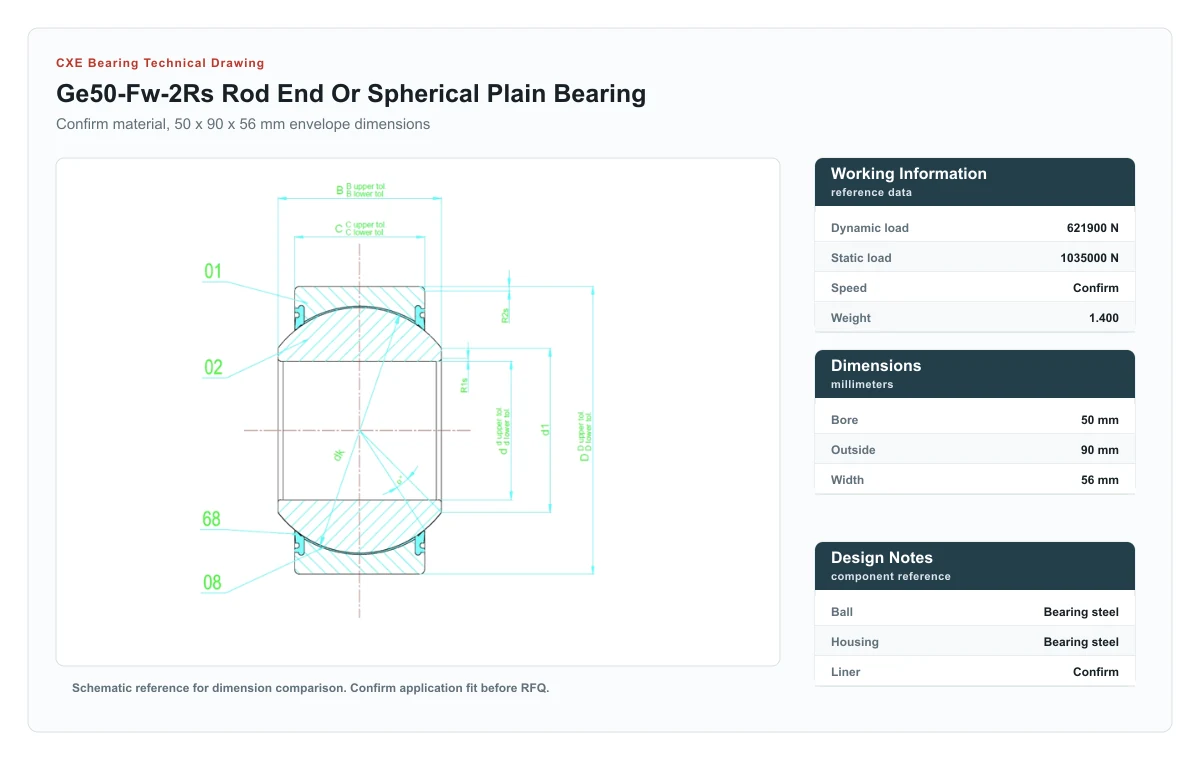
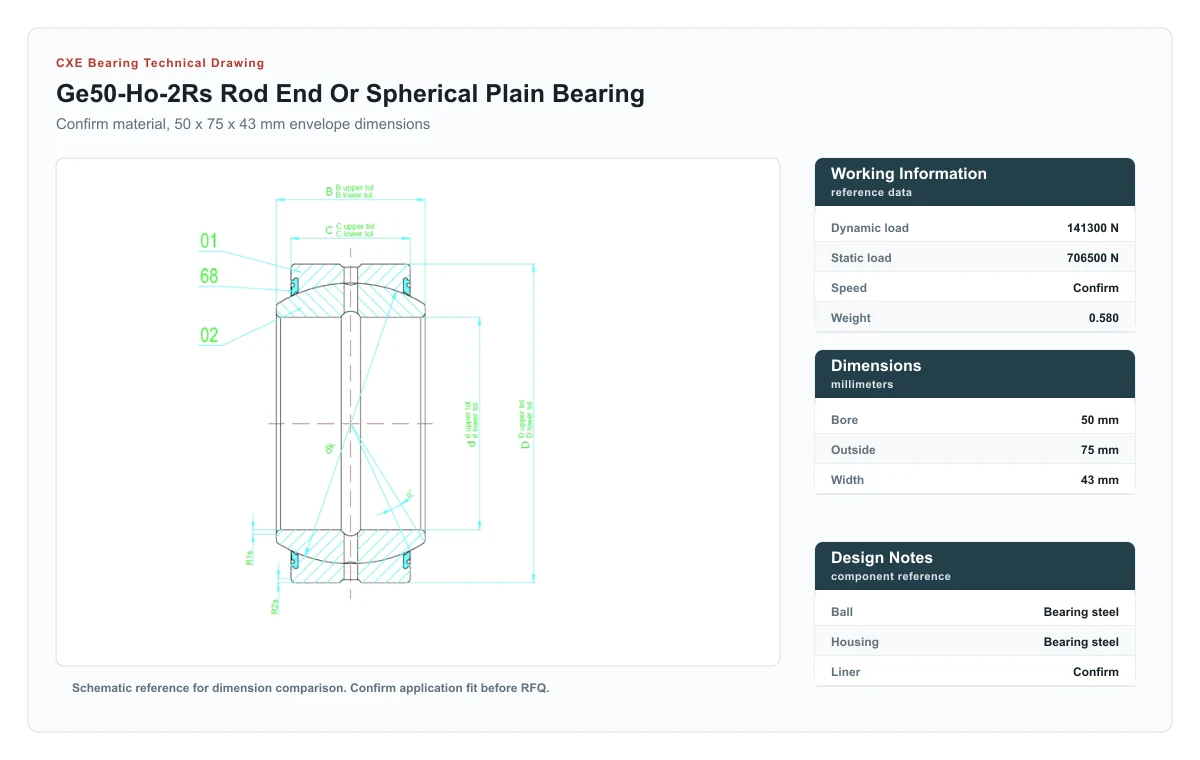
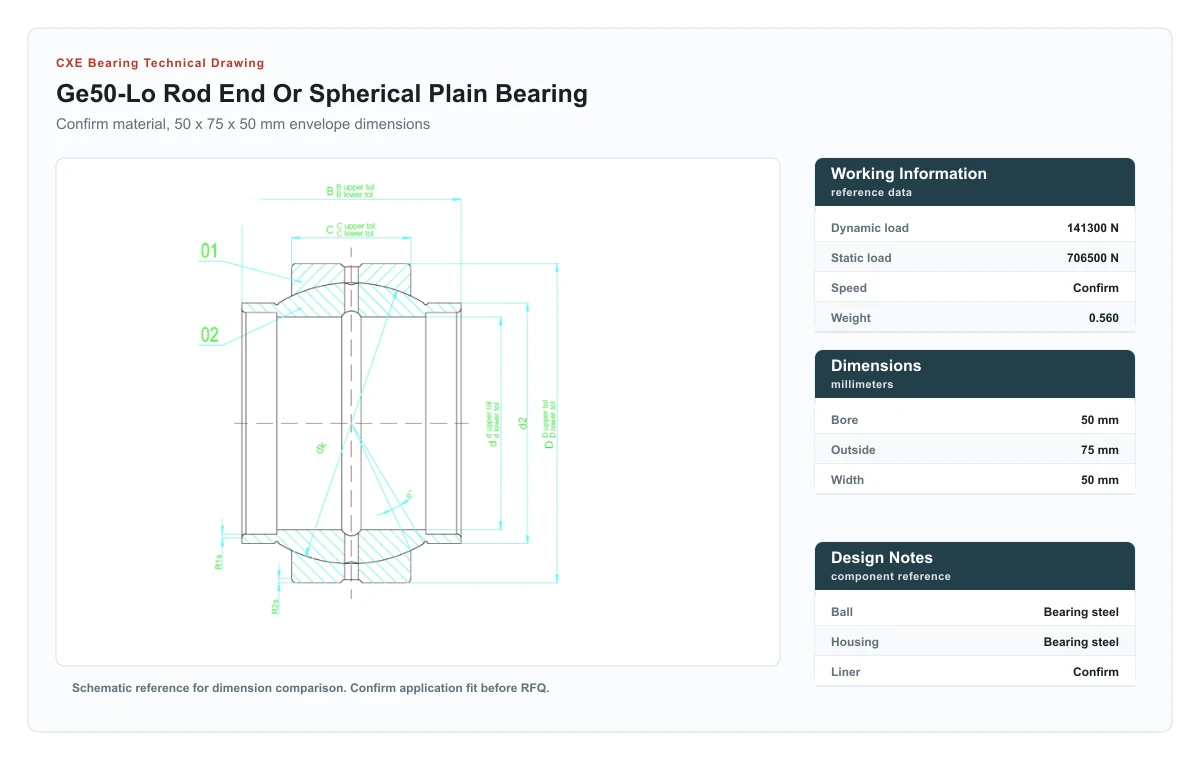
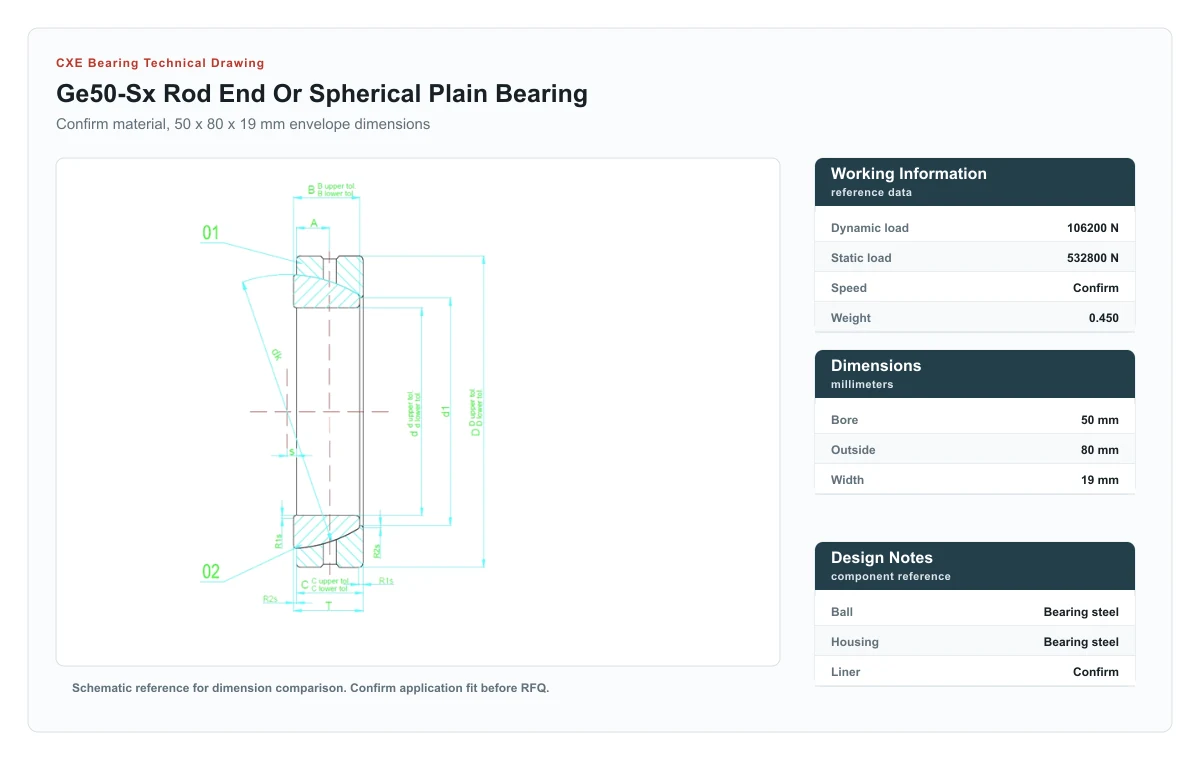
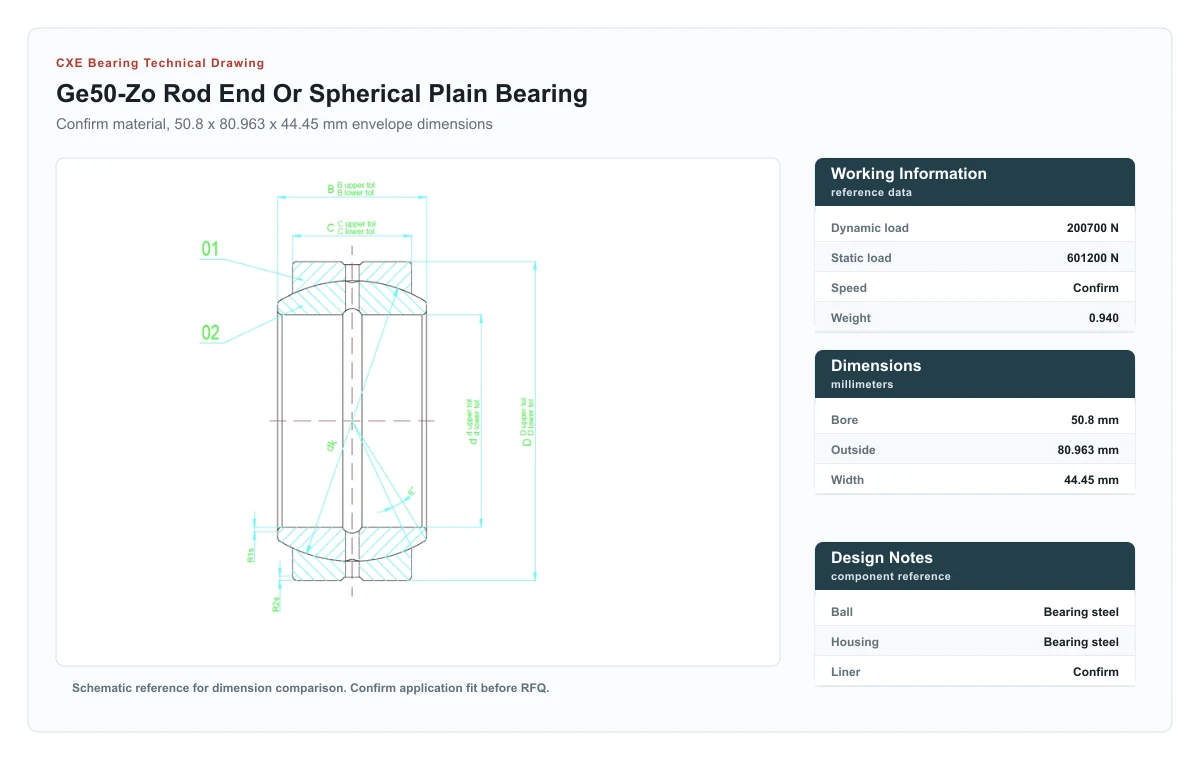
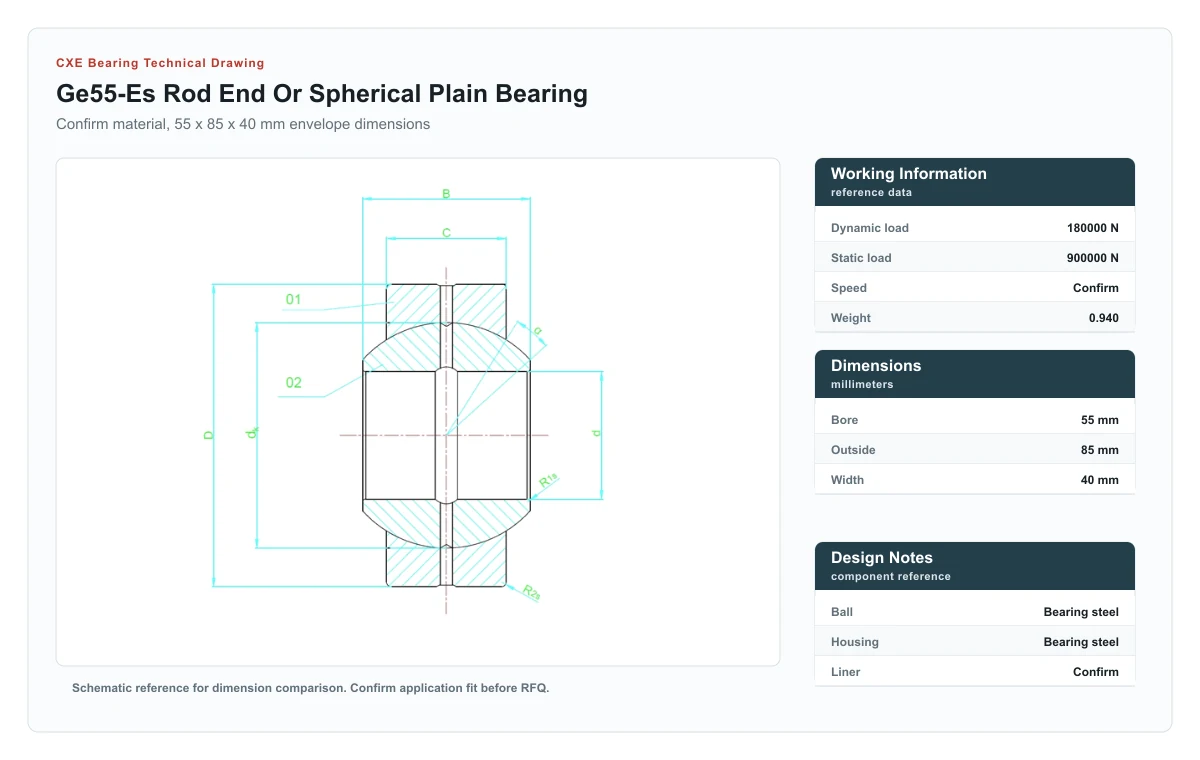
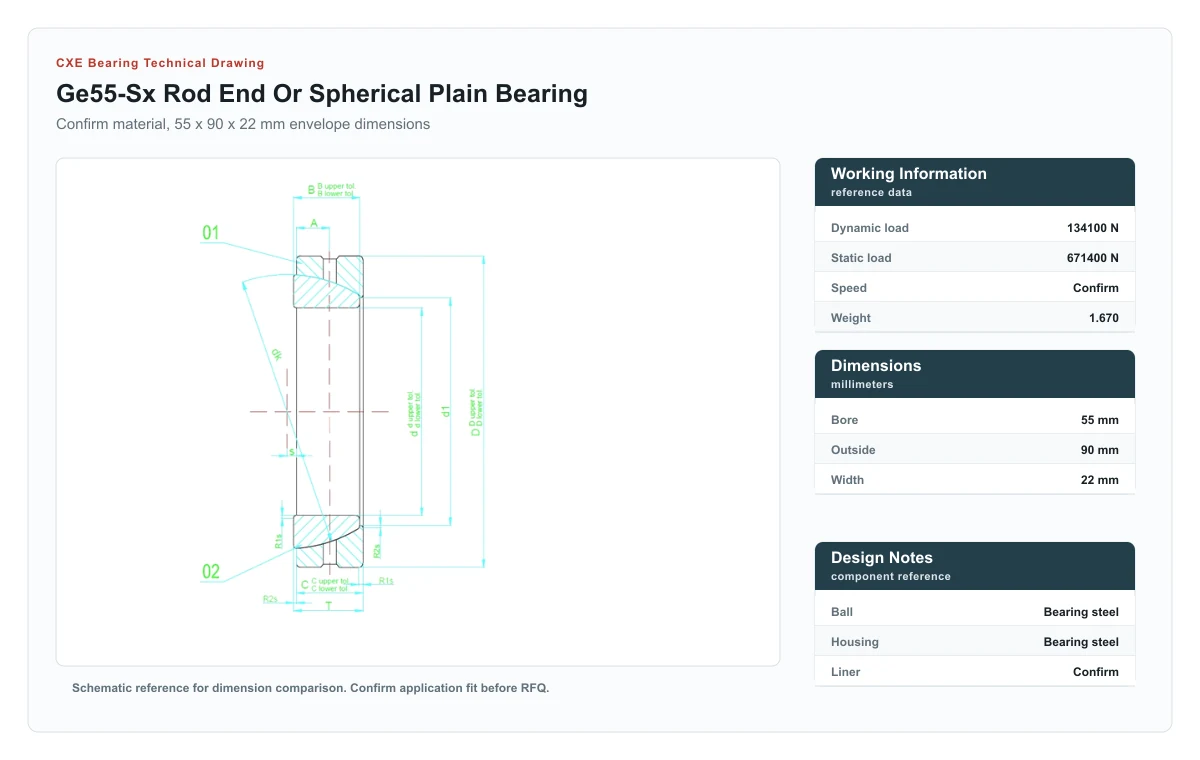
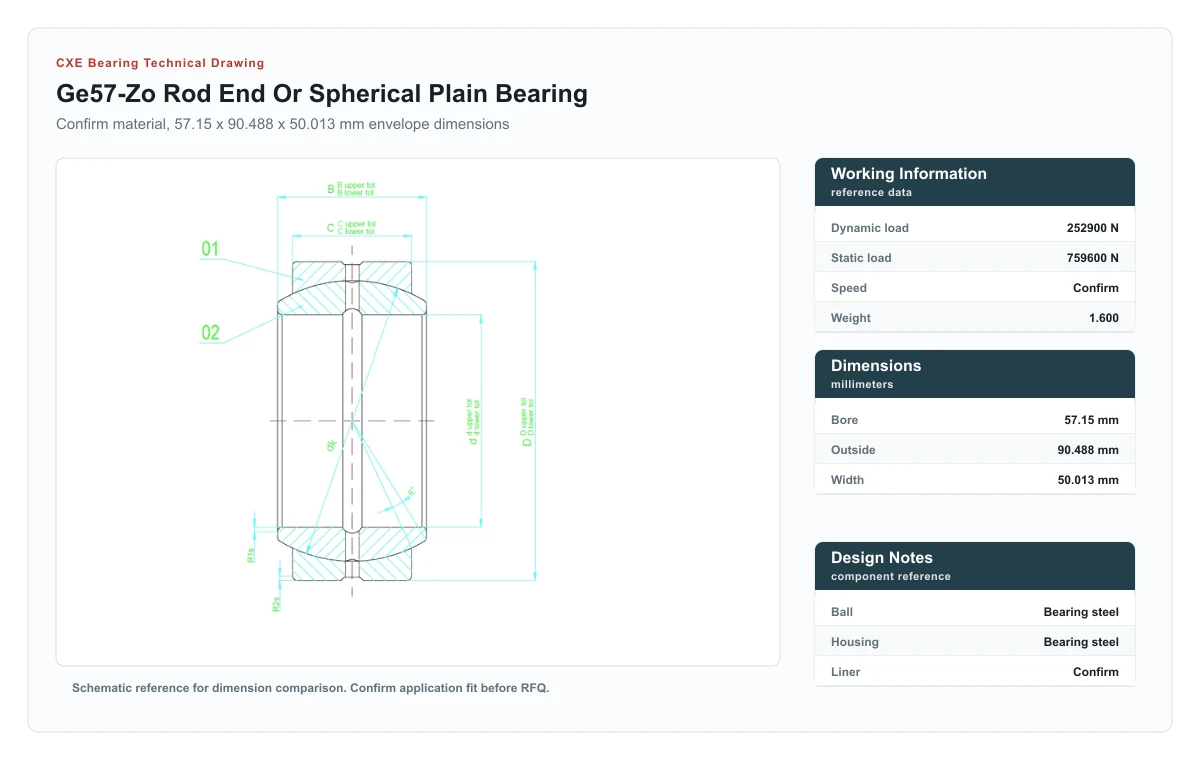
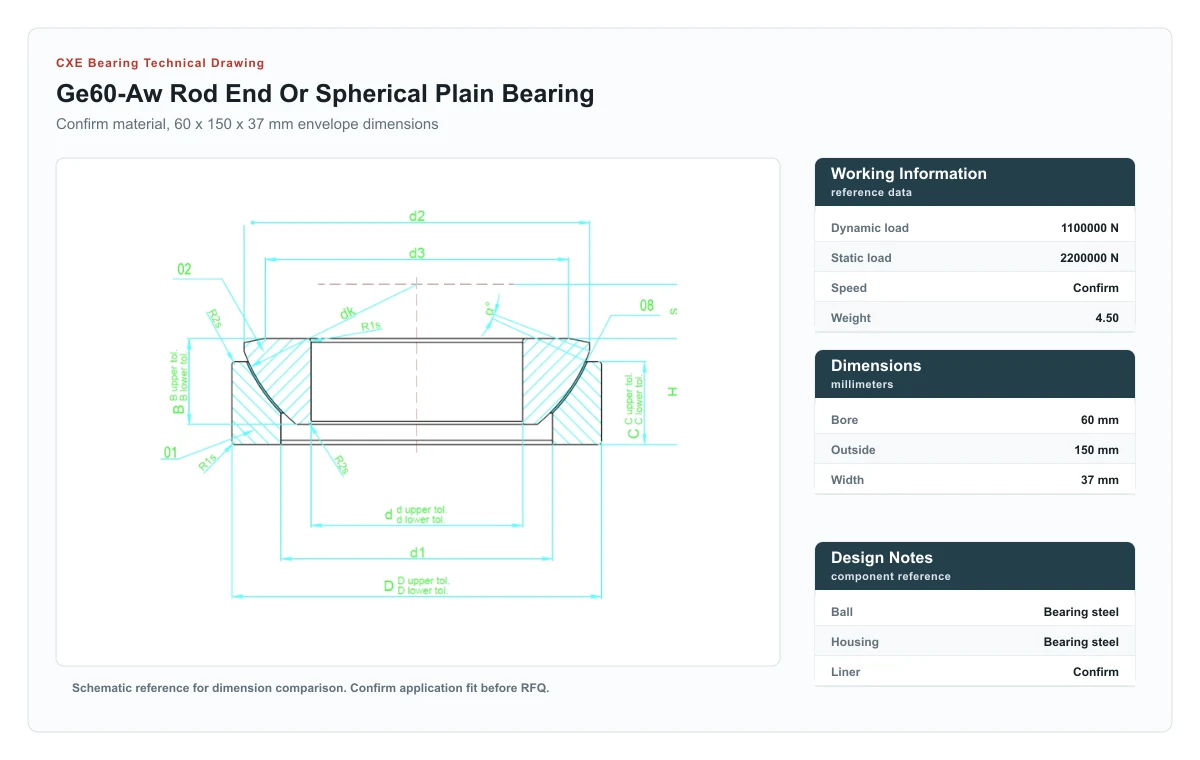
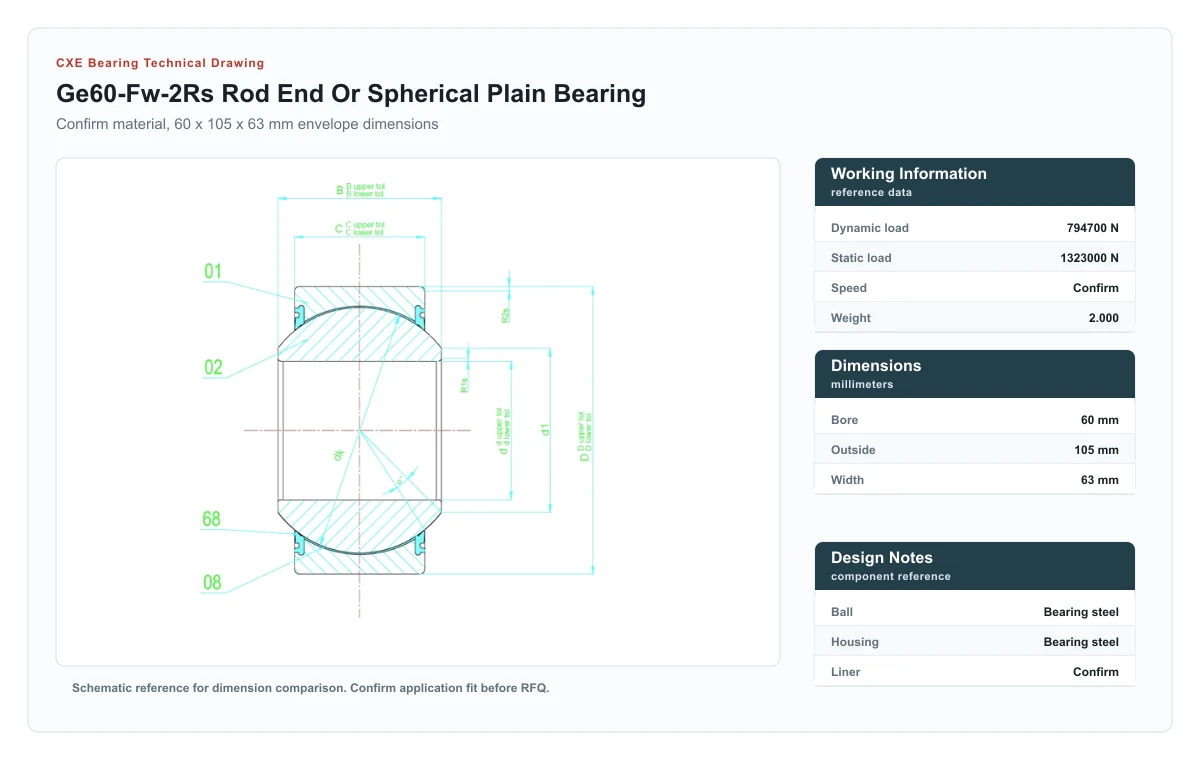
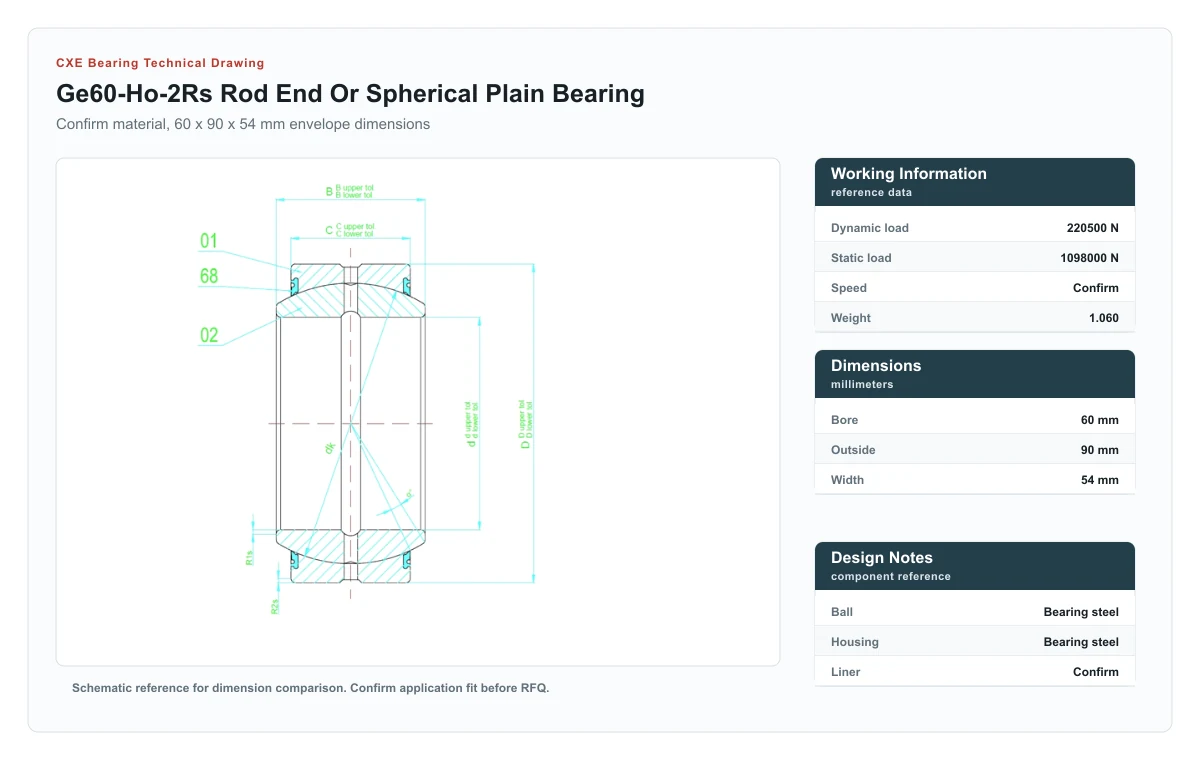
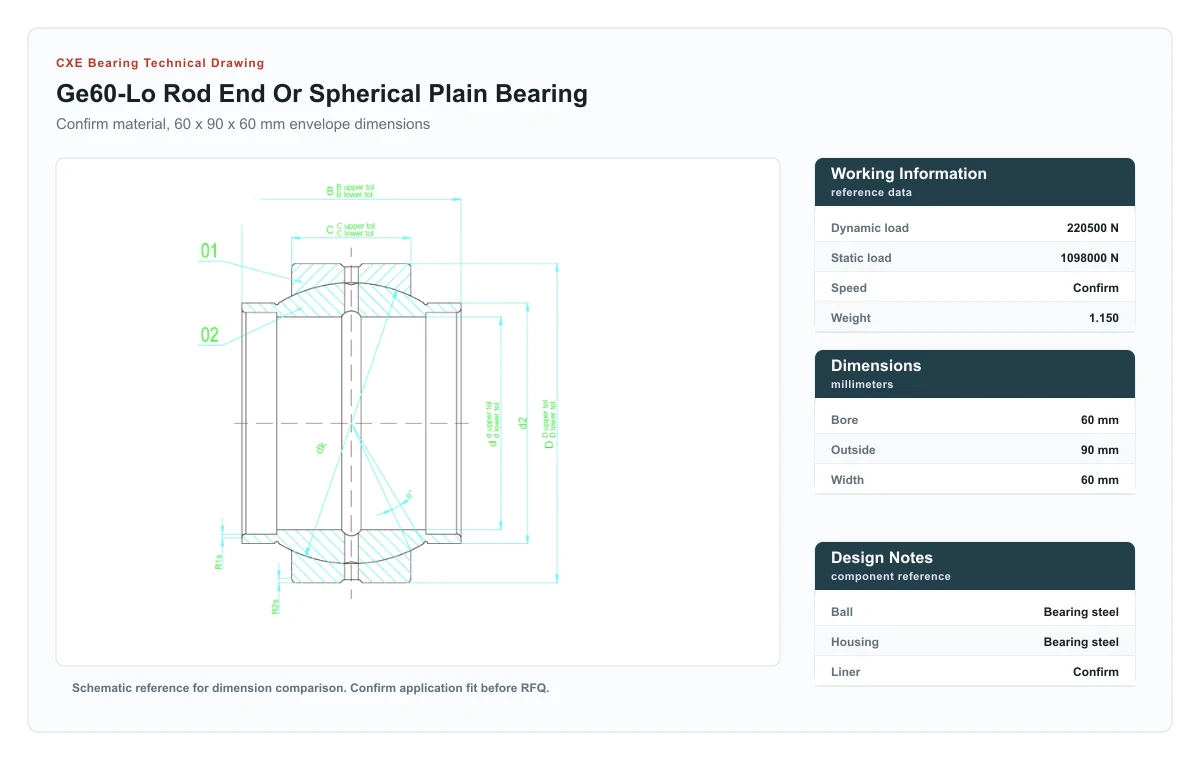
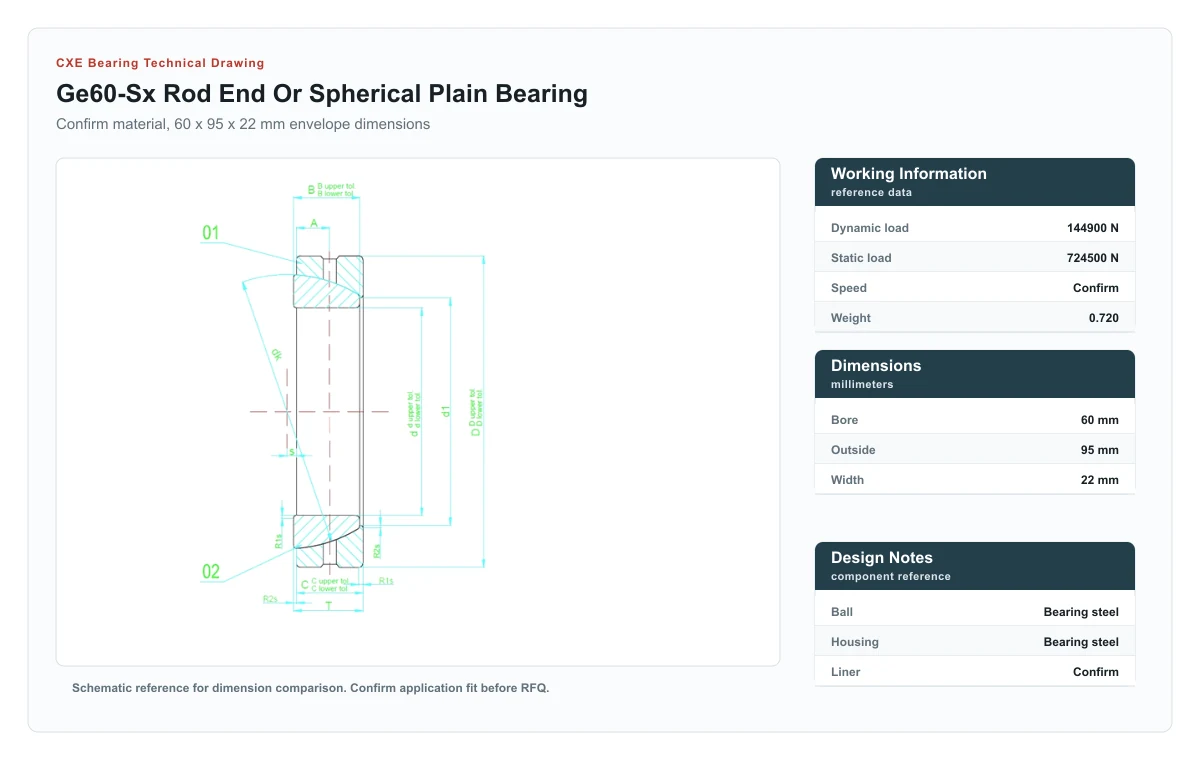
Related Collection Types
Technical Guide Materials, applications, selection notes, and internal reference links for this collection.
Rod ends and spherical plain bearings are used when a joint needs controlled articulation instead of continuous high-speed rotation. Buyers usually review this collection for linkages, cylinders, levers, steering mechanisms, agricultural equipment, construction machinery, automation fixtures, and general mechanical joints where angular movement, oscillation, or misalignment must be accommodated.
This category is different from a normal ball bearing. A rod end or spherical plain bearing is selected by thread, bore, housing style, ball material, liner, lubrication, load direction, and articulation requirement. The right product depends on the joint geometry and operating conditions, not only on the bore diameter.
Common Applications
Rod ends are often used at the end of a linkage or actuator where threaded attachment and angular movement are both required. Spherical plain bearings are used inside housings or brackets where the joint needs to pivot, tilt, or oscillate under load. Typical applications include hydraulic cylinder ends, steering systems, control rods, suspension links, agricultural linkages, packaging machines, and custom fixtures.
These bearings are useful for oscillating or articulating motion, but they are not meant to replace high-speed radial ball bearings. If the position requires continuous rotation at rpm, compare deep groove ball bearings or another rolling bearing family instead.
How To Choose
Start with the joint type. A male rod end, female rod end, two-piece spherical plain bearing, maintenance-free lined bearing, and lubricated steel-on-steel bearing can all serve different purposes. Confirm whether the joint needs a threaded shank, a press-fit outer ring, a PTFE-style liner, relubrication, or special corrosion resistance.
| Selection point | What to confirm |
|---|---|
| Product style | Male rod end, female rod end, spherical plain bearing, or special joint |
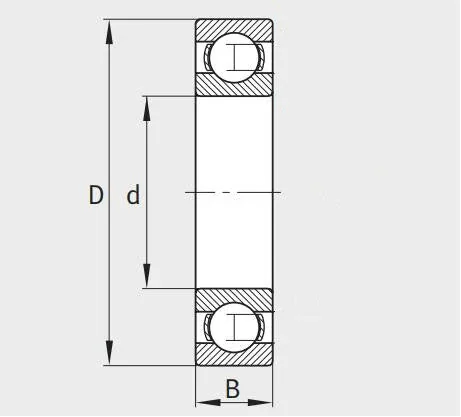
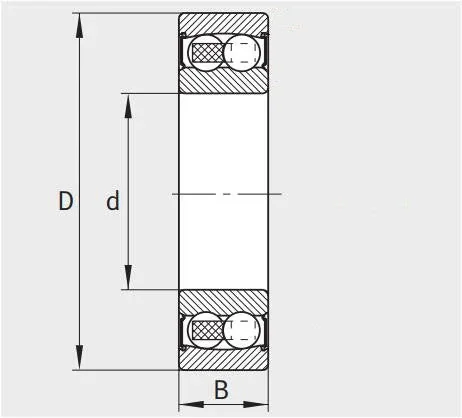
| Dimensions | Bore, outside diameter, width, ball width, thread size, shank length, and head size |
| Thread | Male or female, left-hand or right-hand, metric or inch |
| Load direction | Radial load, axial load, alternating load, shock, or vibration |
| Motion | Oscillation angle, articulation, slow pivoting, or linkage movement |
| Lubrication | Maintenance-free liner, grease fitting, relubrication path, and contamination risk |
| Environment | Dust, water, outdoor use, chemicals, temperature, or corrosion exposure |
If corrosion is a major factor, compare stainless steel rod end options with the current collection. If the application is mainly a rotating shaft support, use metric ball bearings or chrome steel bearings instead.
Material, Load, Speed, And Temperature Notes
Rod ends and spherical plain bearings often work under oscillating load, shock, and imperfect alignment. The joint should be reviewed for load direction, lubrication, contamination, and movement angle. A bearing that is correct by bore can still be wrong if the thread hand, shank length, liner type, or load direction does not match the machine.
Material choice depends on strength, corrosion exposure, and maintenance plan. Chrome steel or bearing steel paths may fit protected industrial equipment. Stainless options may be considered for wet, outdoor, or washdown-adjacent equipment. Maintenance-free liners can reduce relubrication needs in some applications, while steel-on-steel designs may require grease and routine inspection.
These products are generally not selected by high rpm limits like ball bearings. The more important questions are articulation angle, surface pressure, shock load, wear pattern, lubrication, and whether the joint is exposed to dirt or moisture.
Related Collection Paths
Useful related pages include stainless steel rod end bearing for corrosion-sensitive linkage parts, flange bearings when the joint belongs in a mounted support assembly, chrome steel bearings for material comparison, and self-aligning ball bearings chrome steel when a rotating shaft support needs misalignment tolerance.
RFQ Guidance
For a rod end or spherical plain bearing request, send the part number, quantity, bore, thread size, thread direction, housing width, ball width, shank length, lubrication type, load direction, and application photos. If the joint failed, include photos of wear marks, corrosion, thread damage, or liner damage. CXE Bearing can then review whether the request is a rod end, spherical plain bearing, stainless option, lined type, or lubricated design.