
Needle Roller Bearings Overview
Compare representative CXE Bearing products by dimensions, material, and seal type. Use the left navigation to switch collections without returning to the catalog home.
Products In This Collection
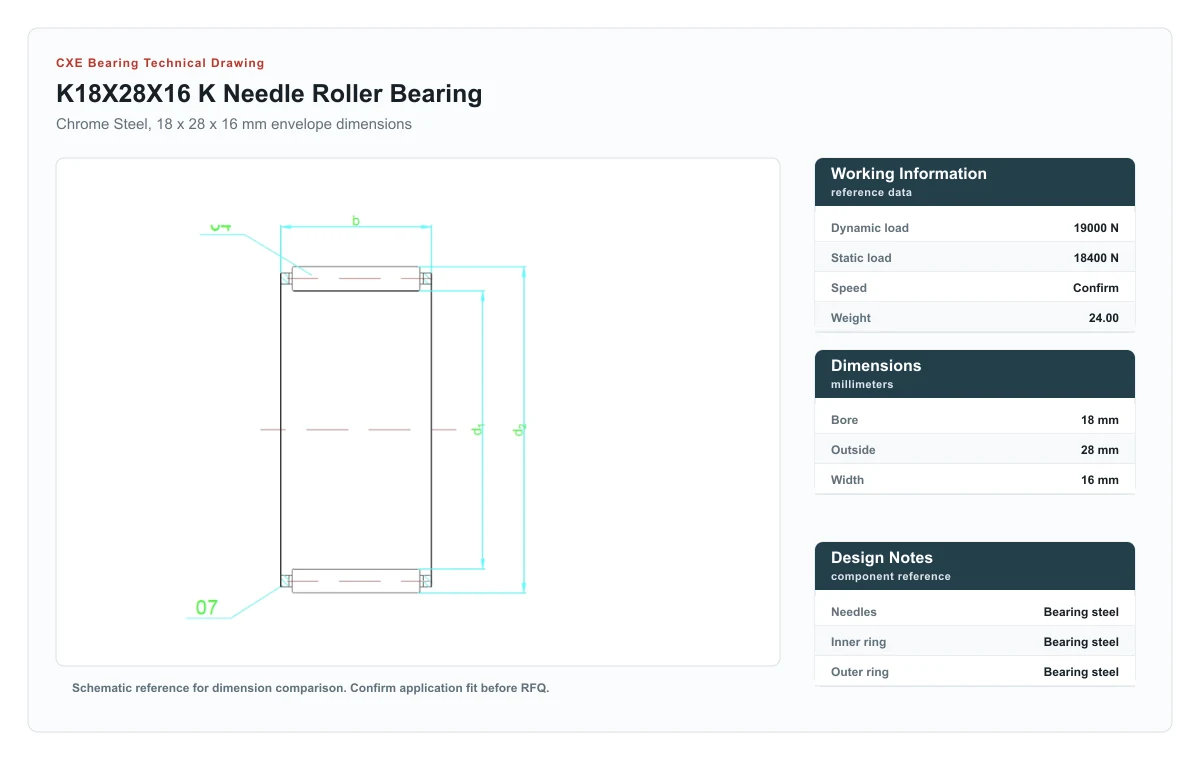
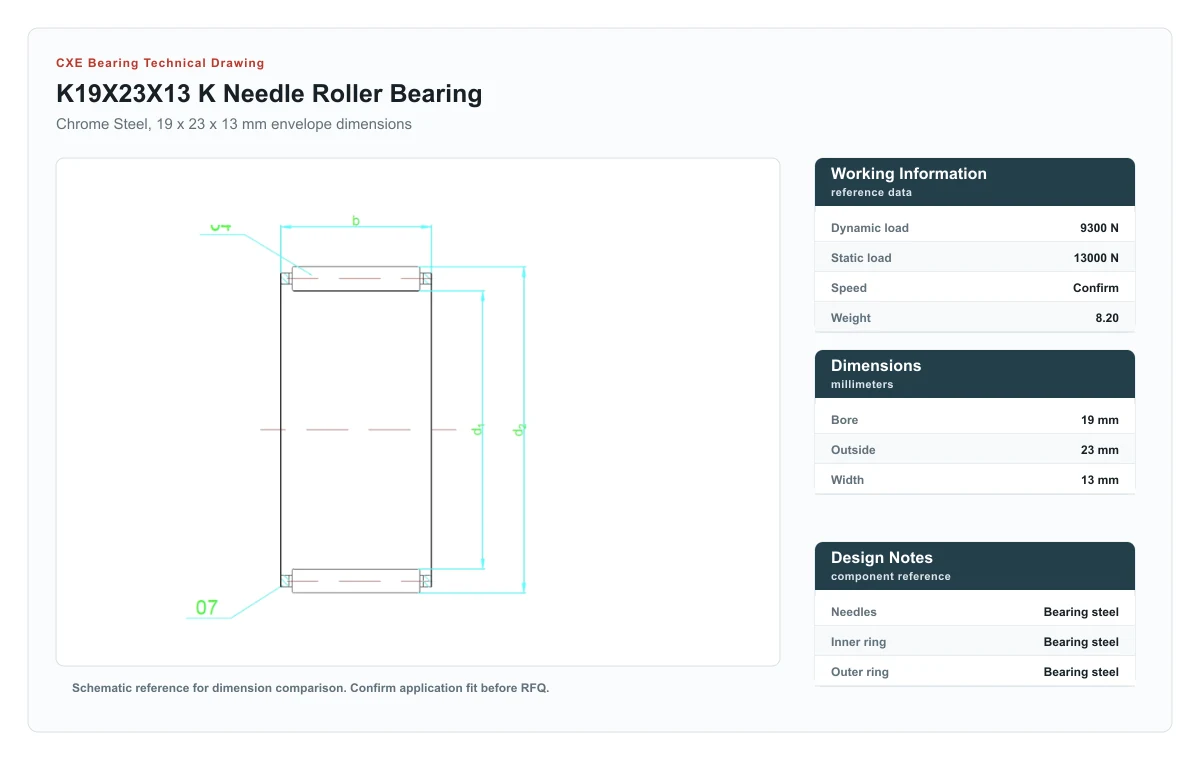
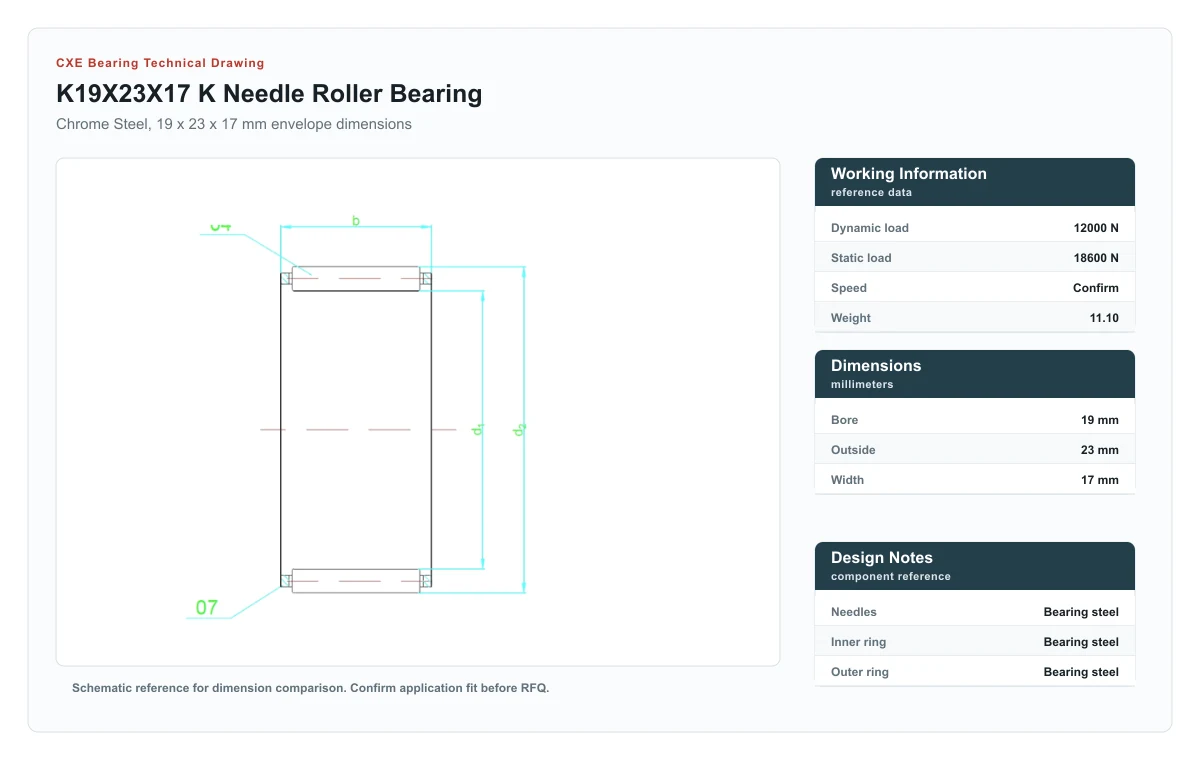
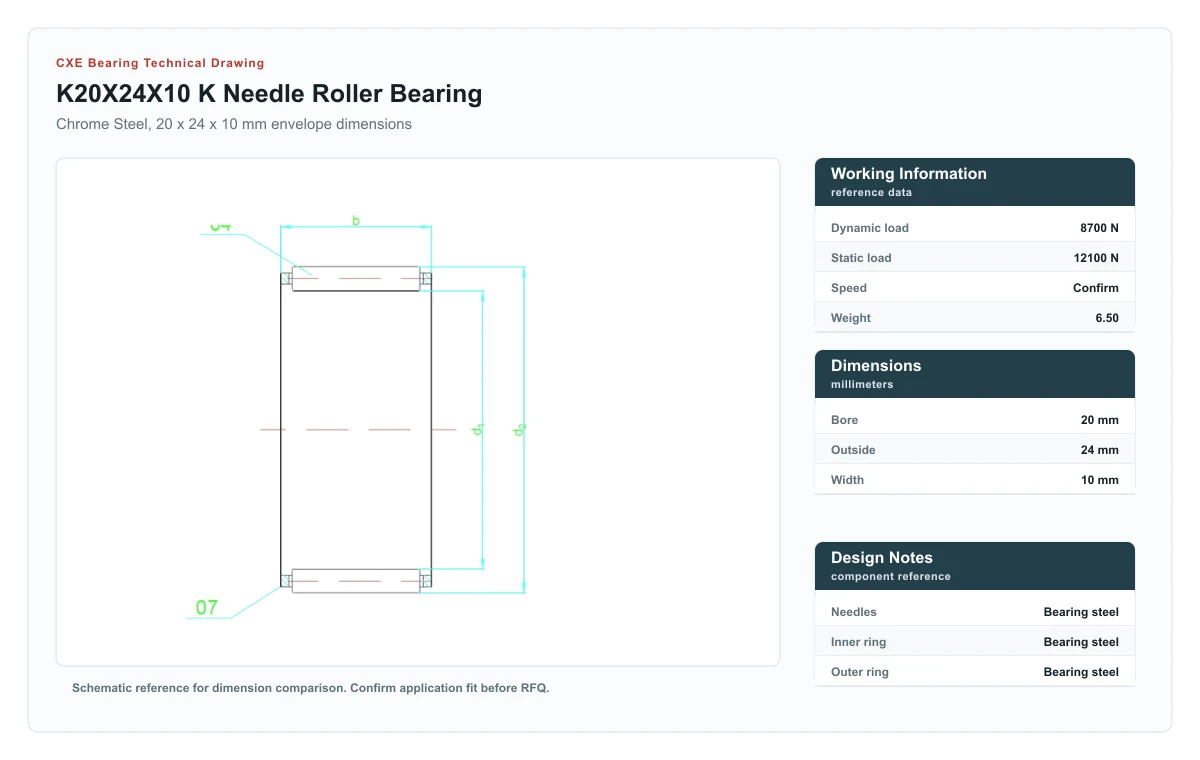
Browse all matching CXE Bearing products in this collection. Each row shows dimensions, material, seal type, public reference price, and the fastest RFQ path.
121-240 / 558 products
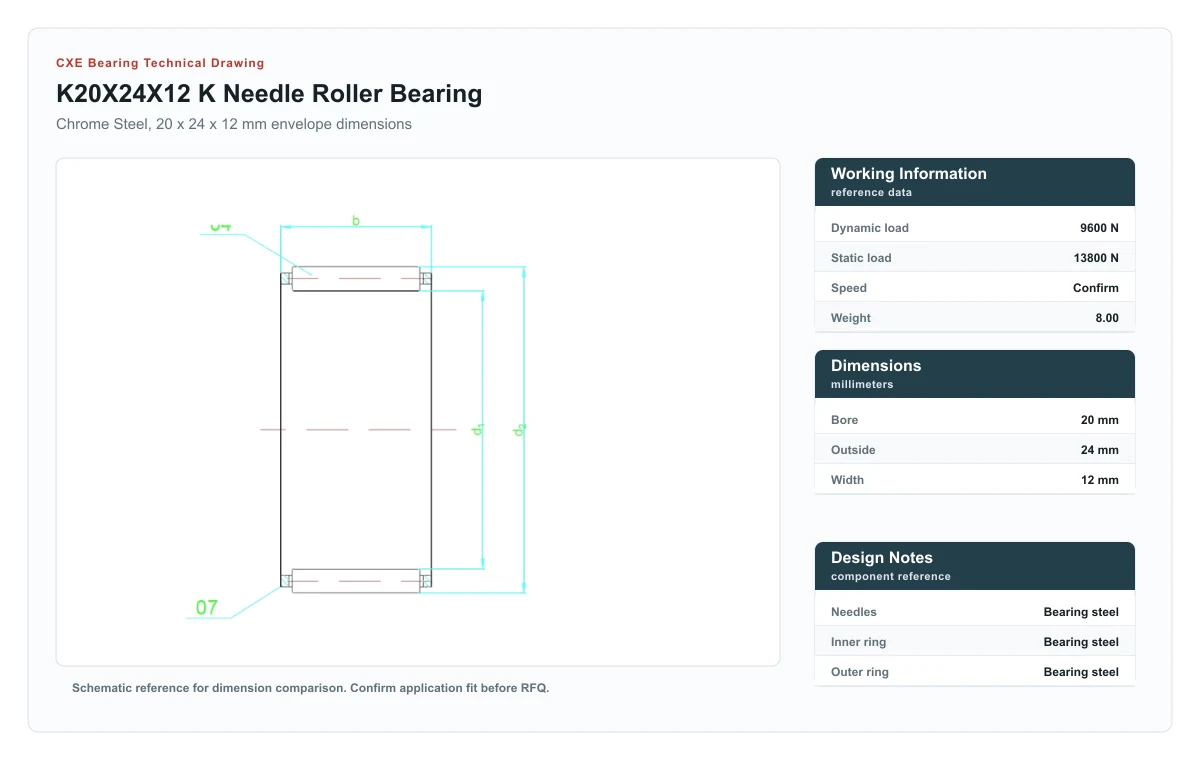
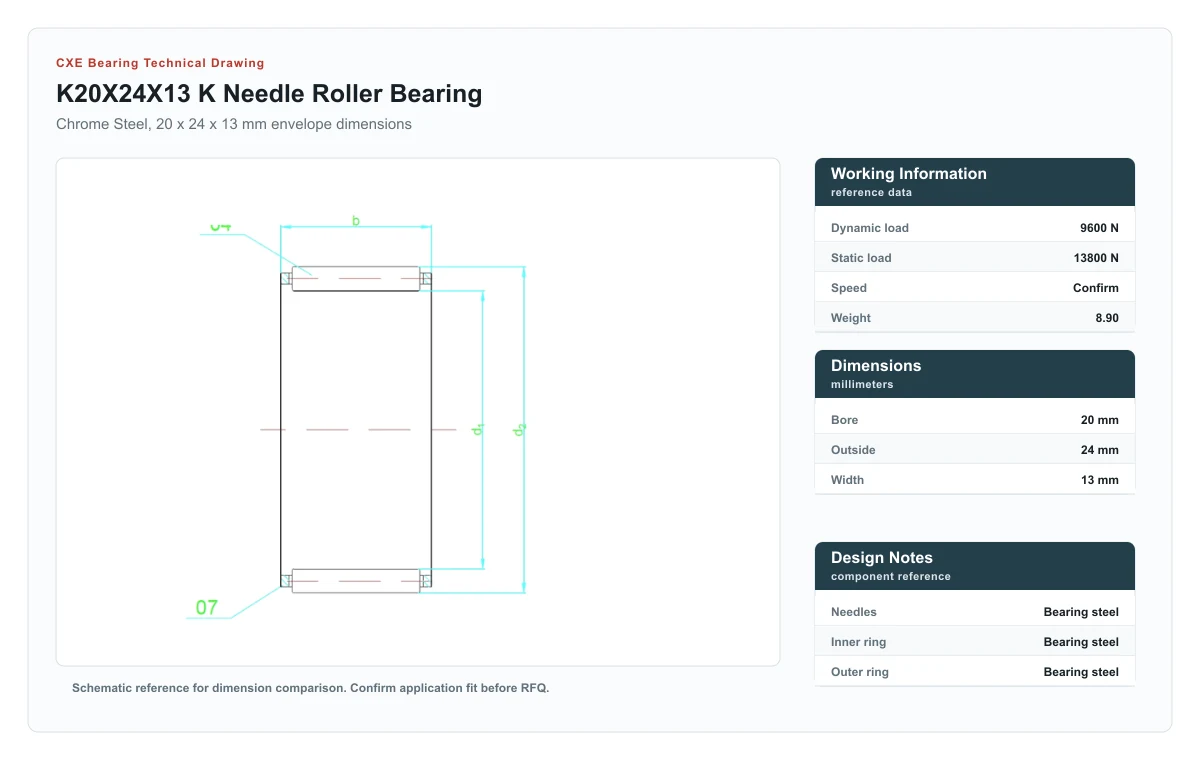
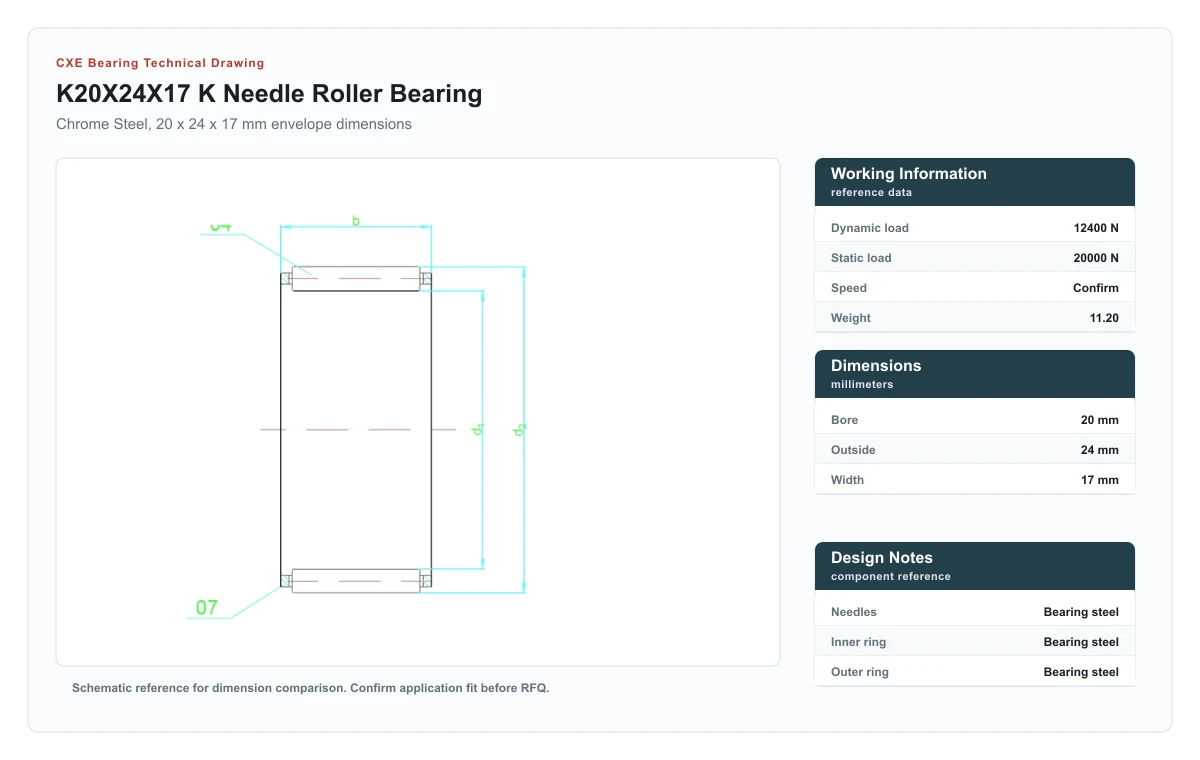
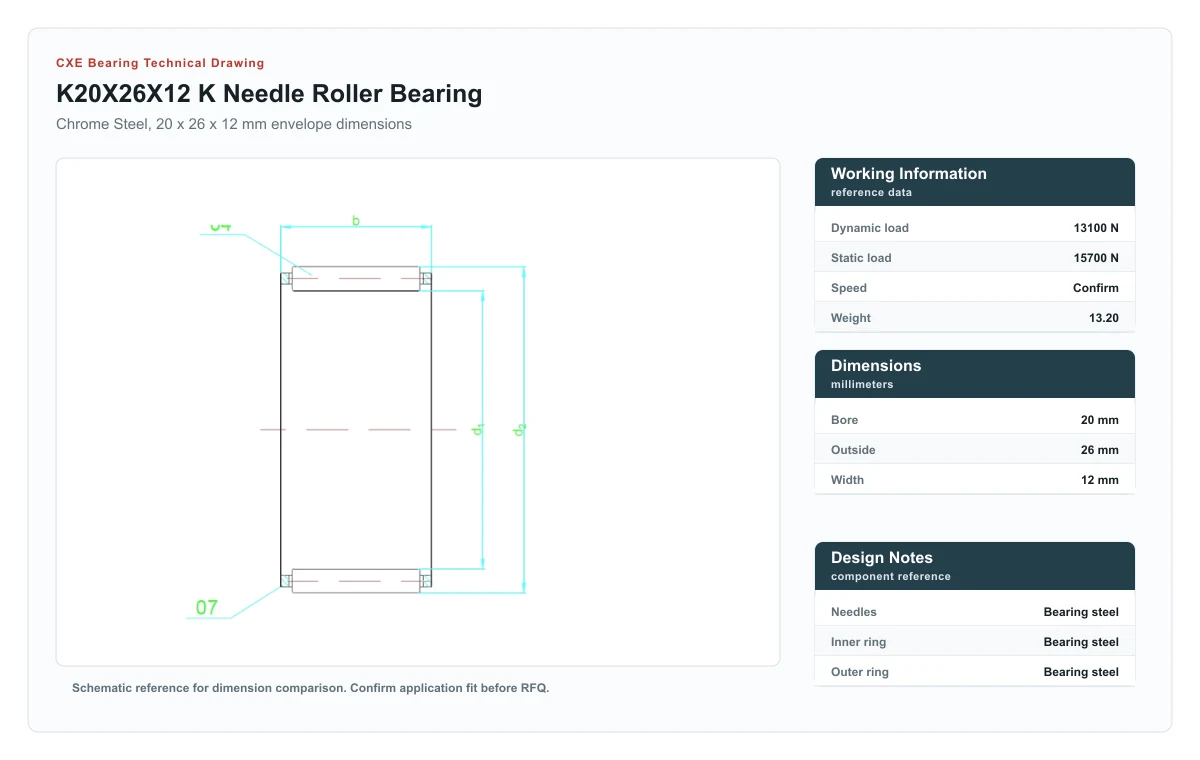
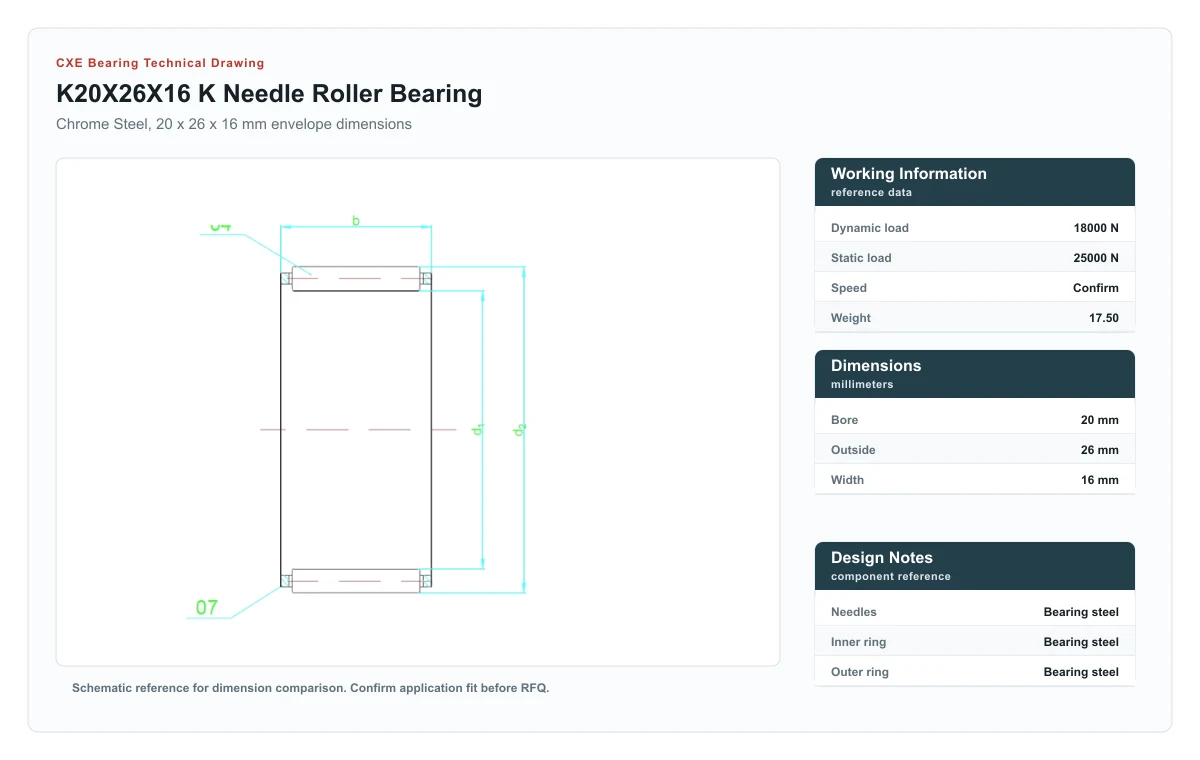
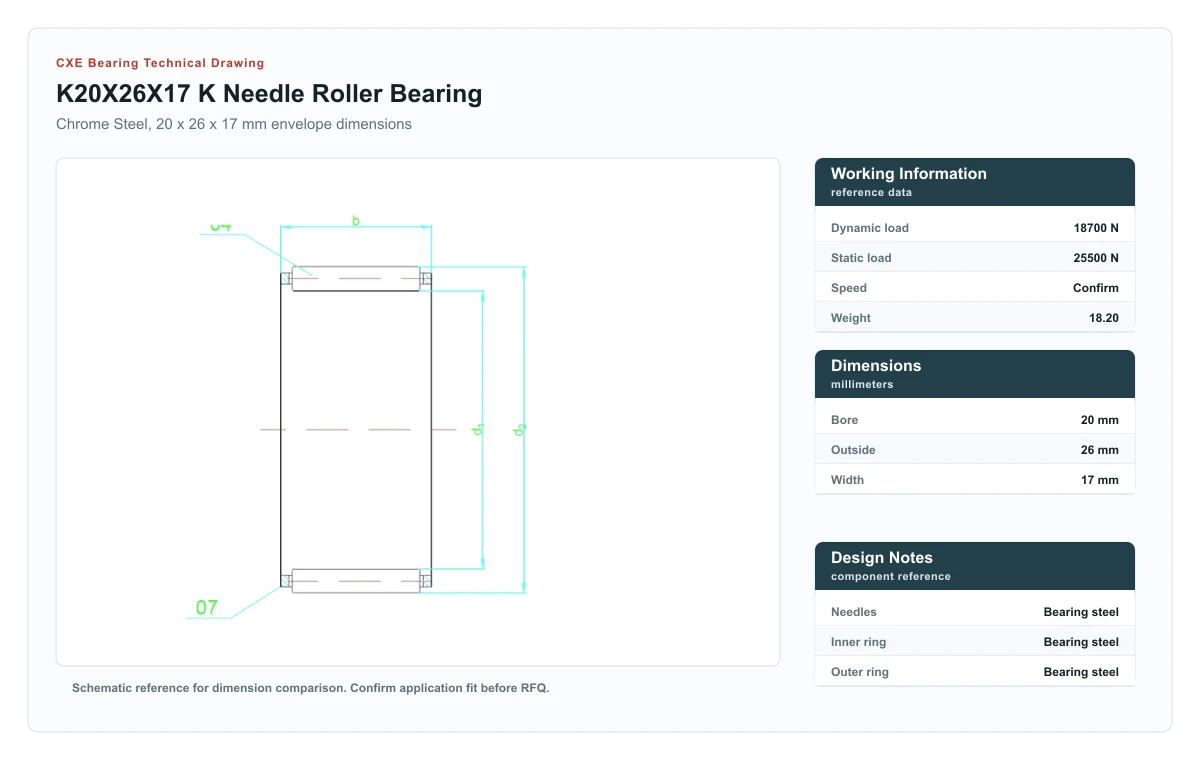
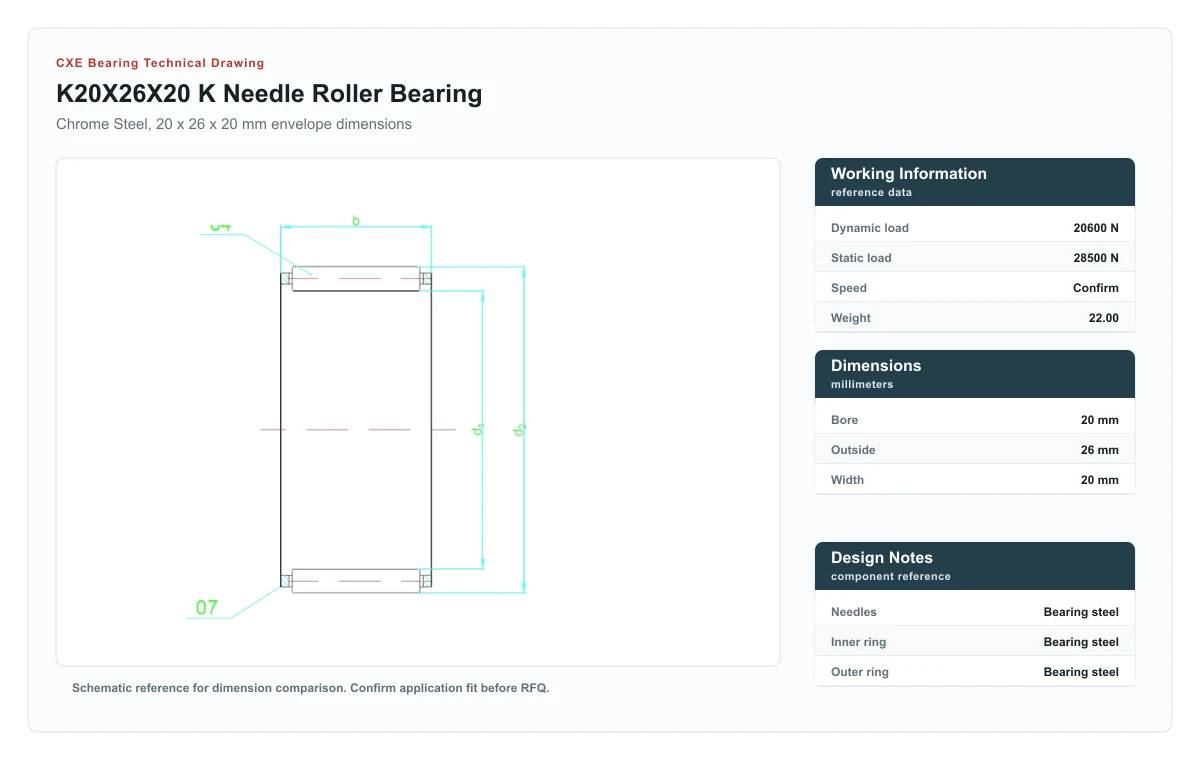
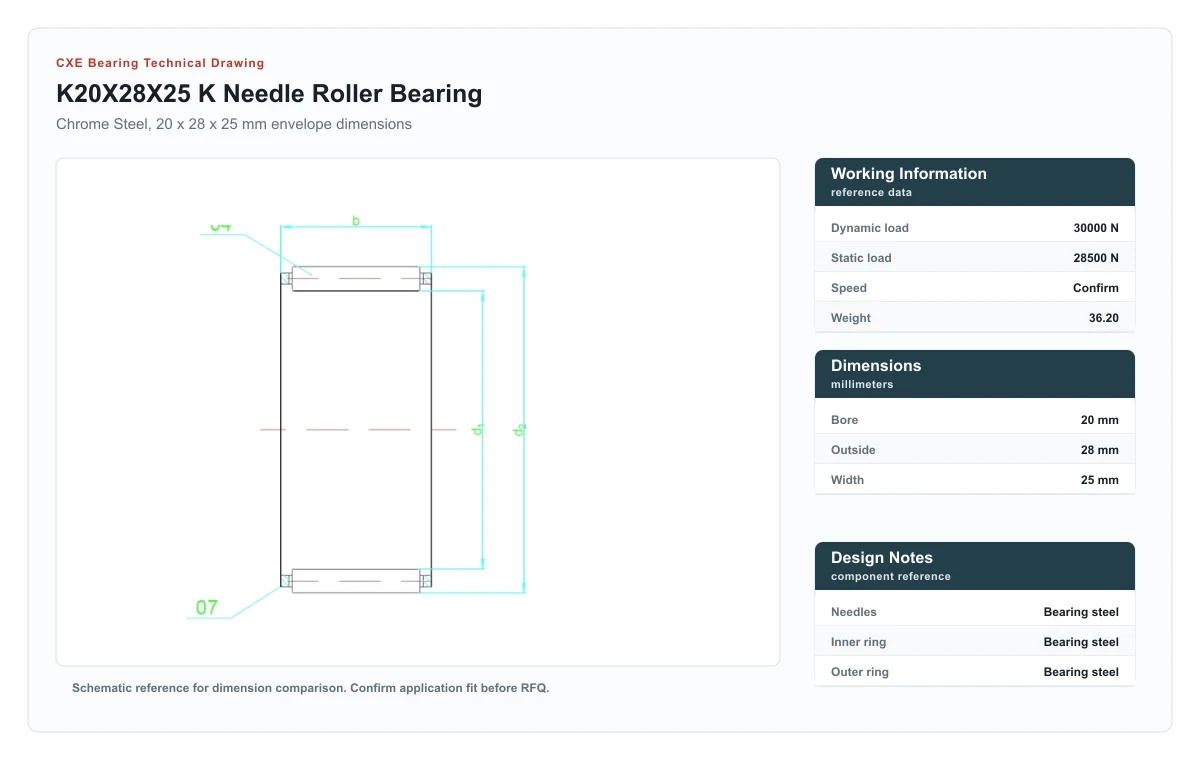
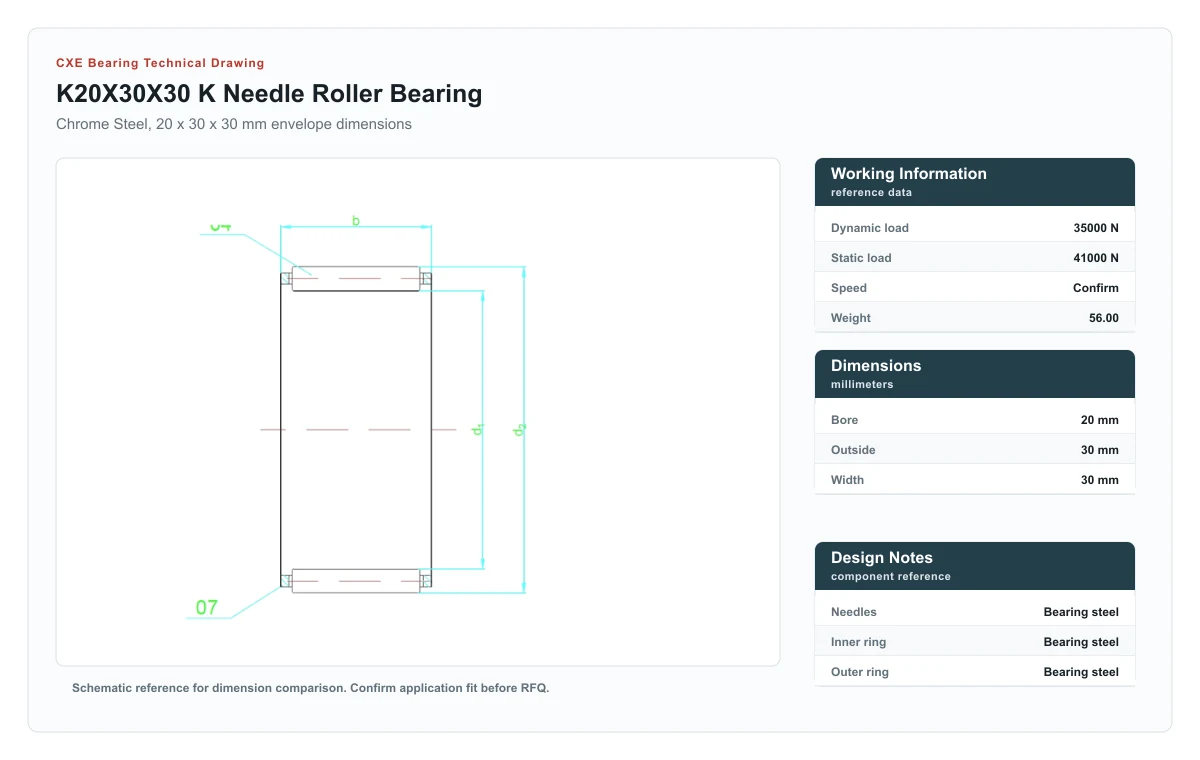
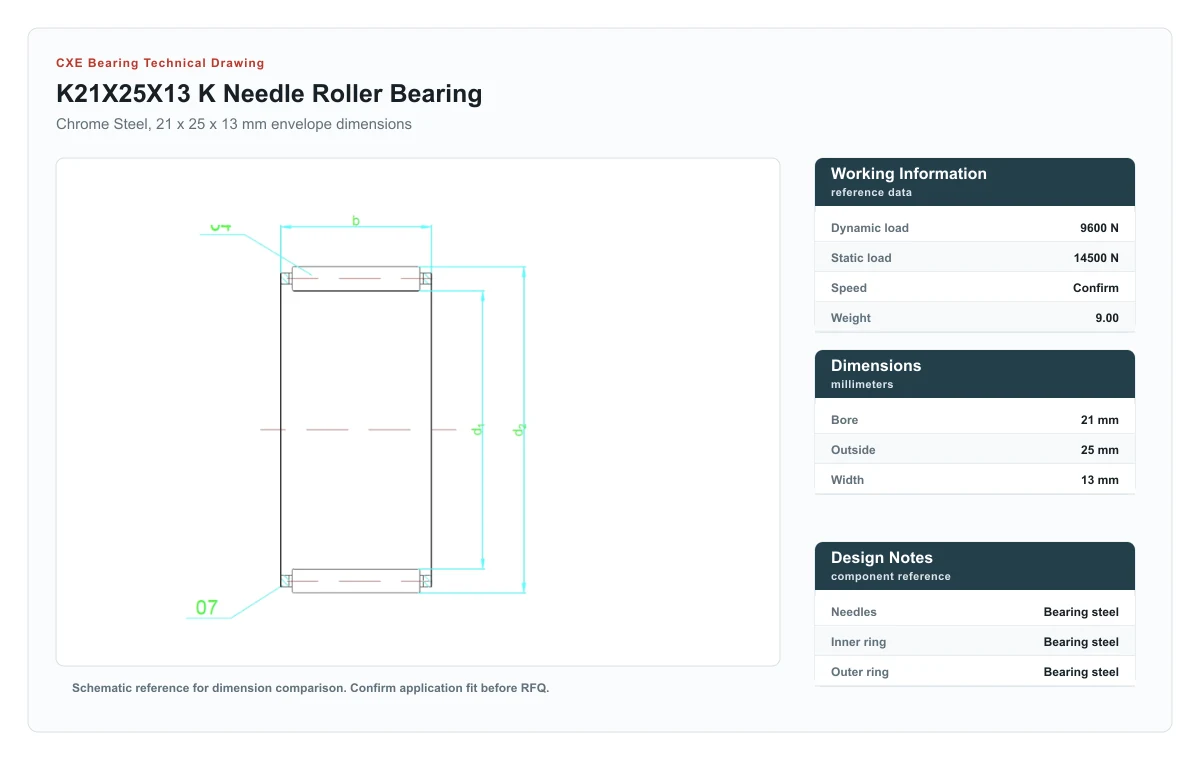
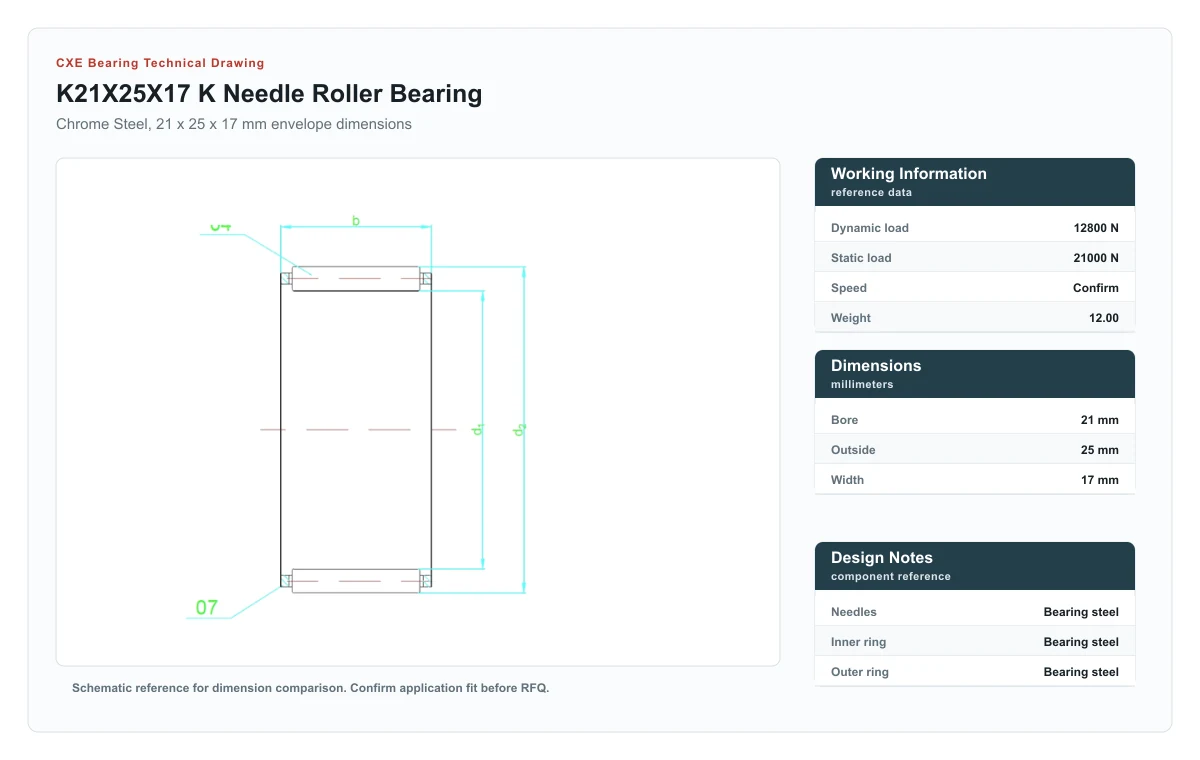
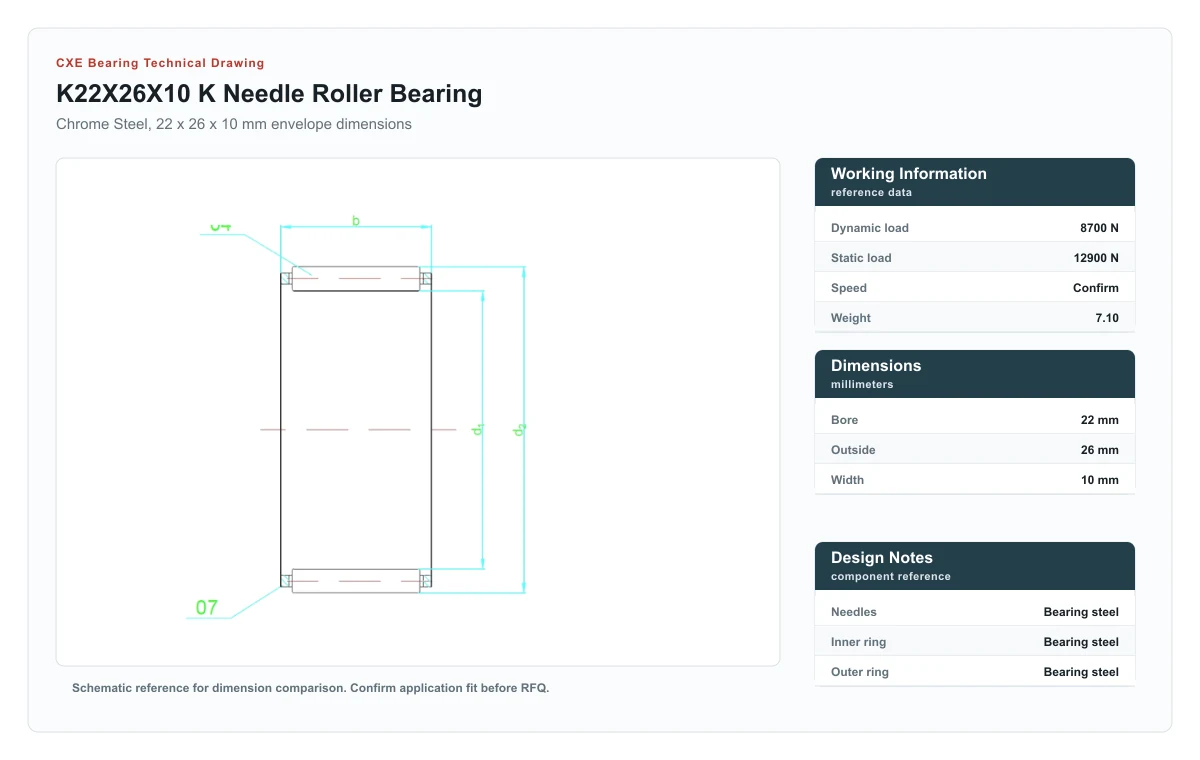
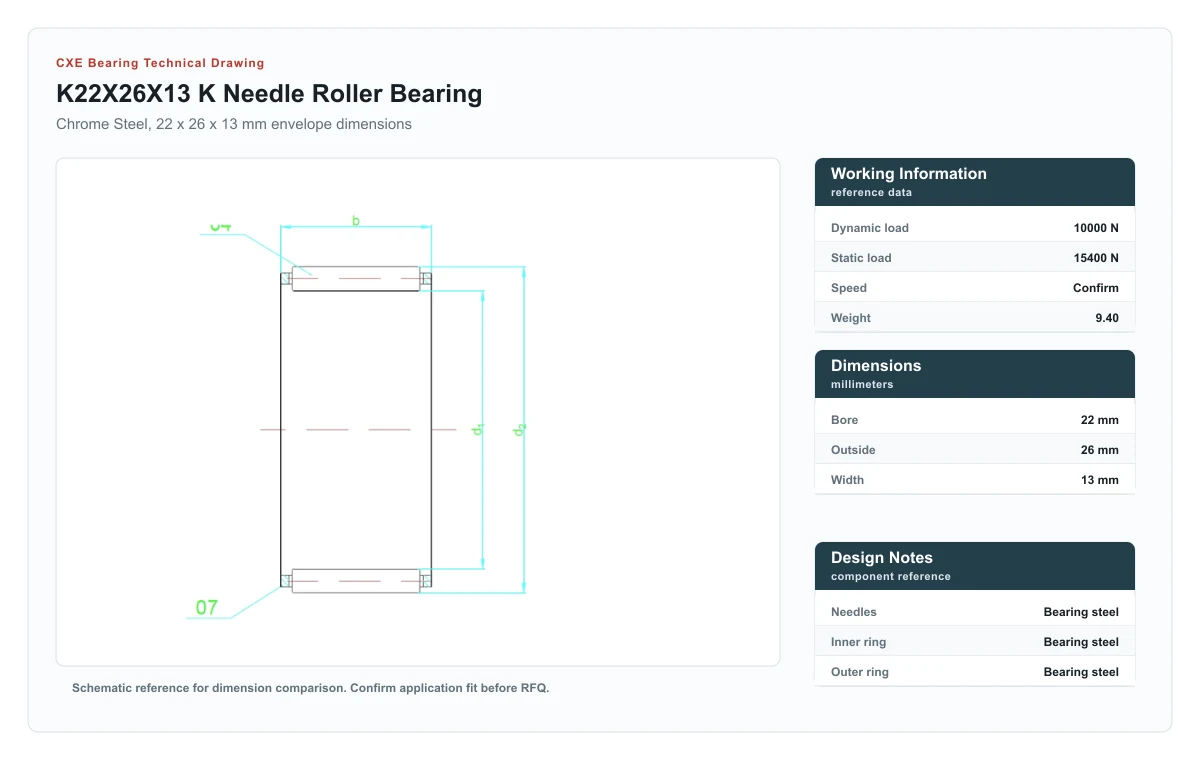
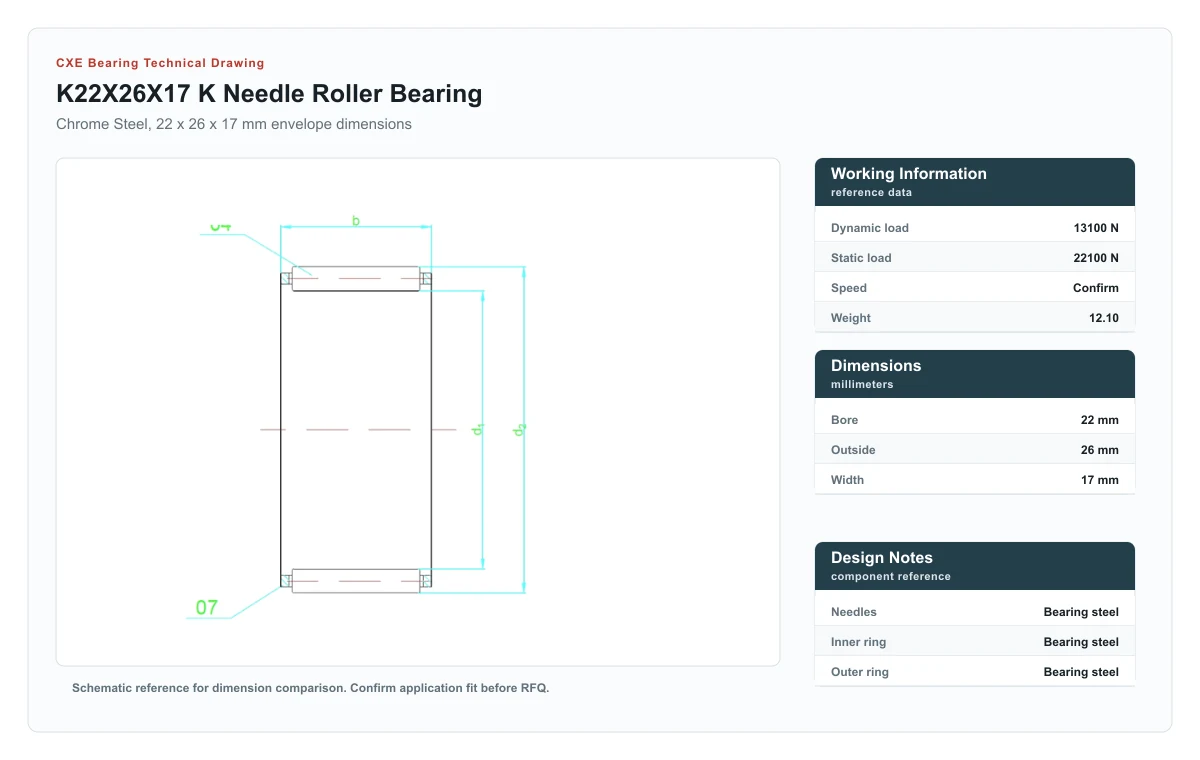
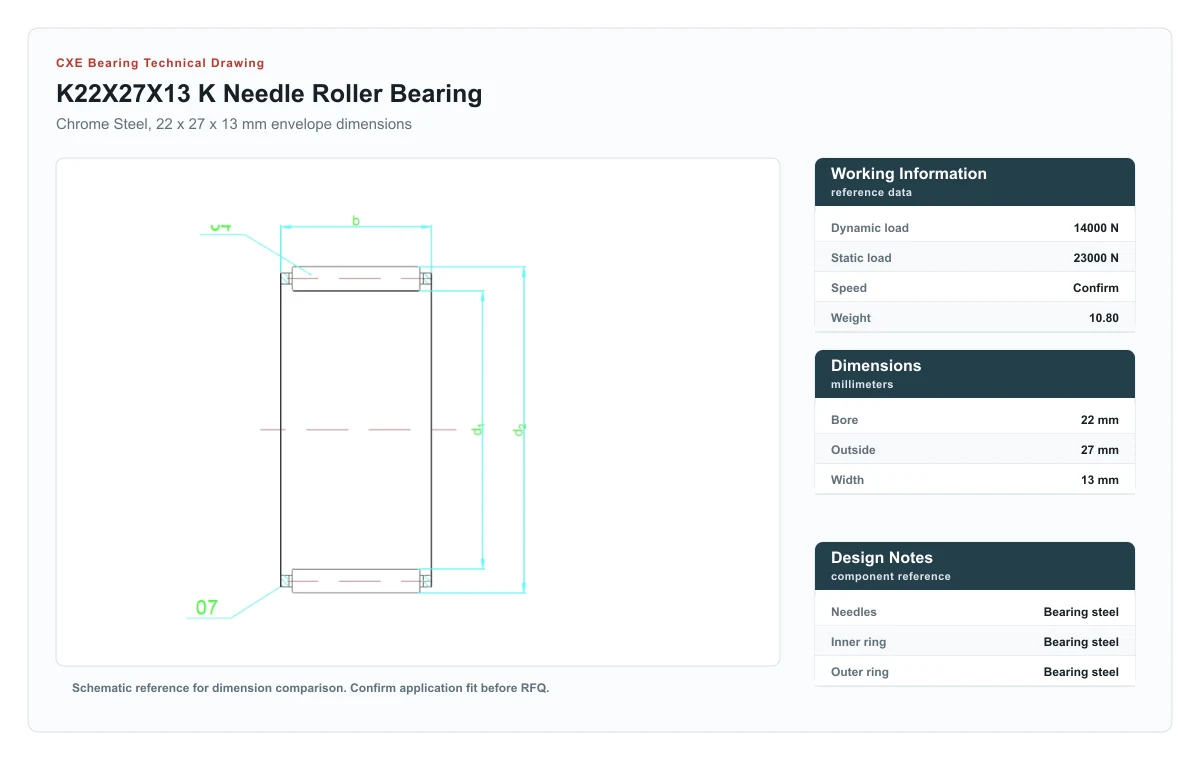
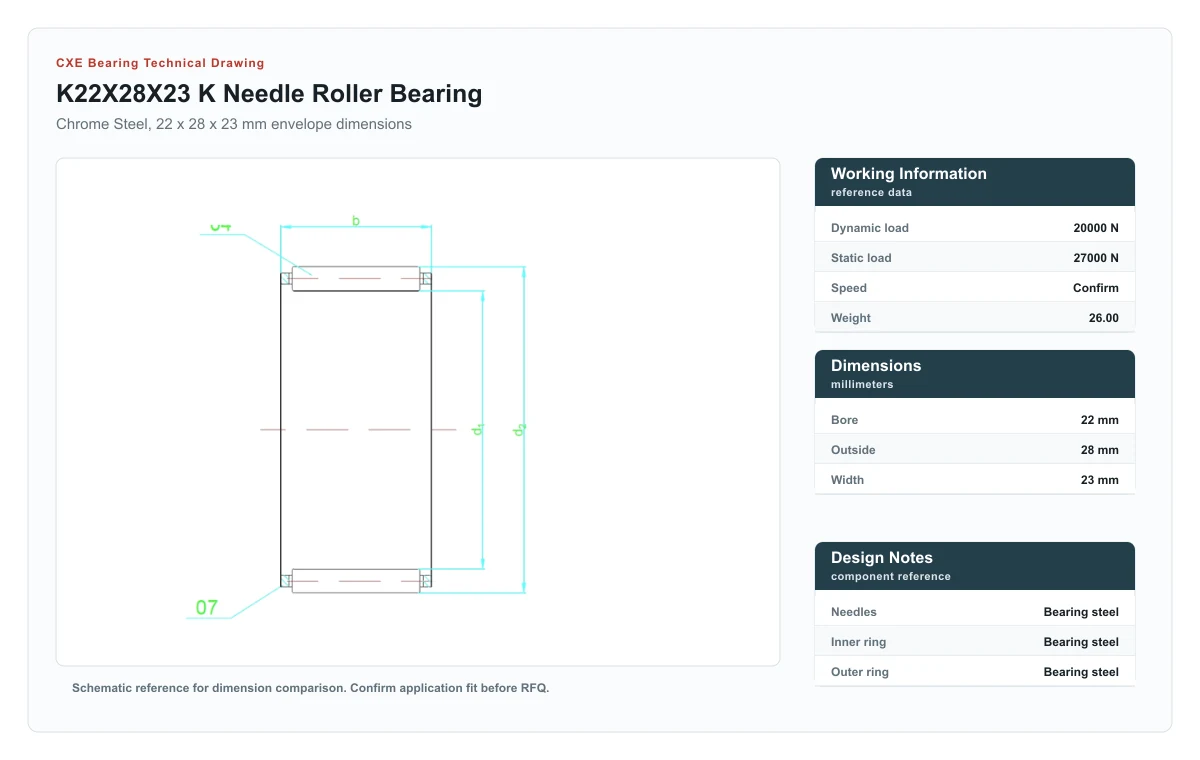
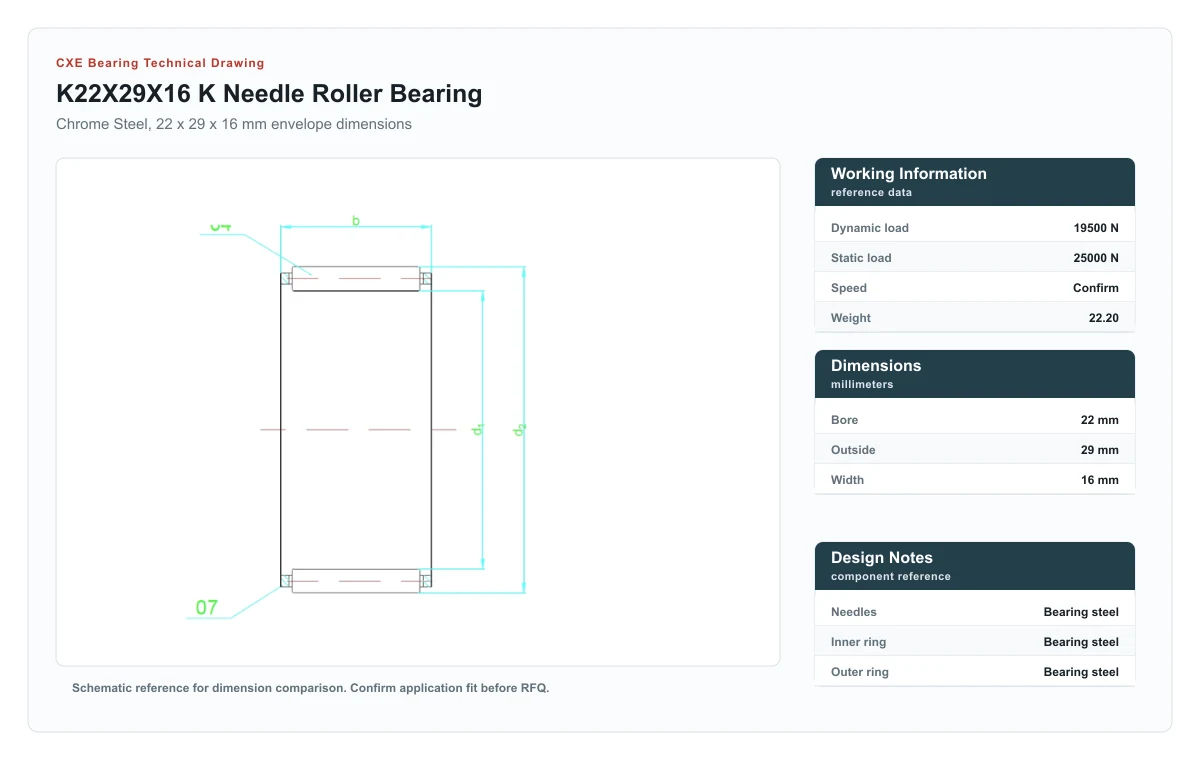
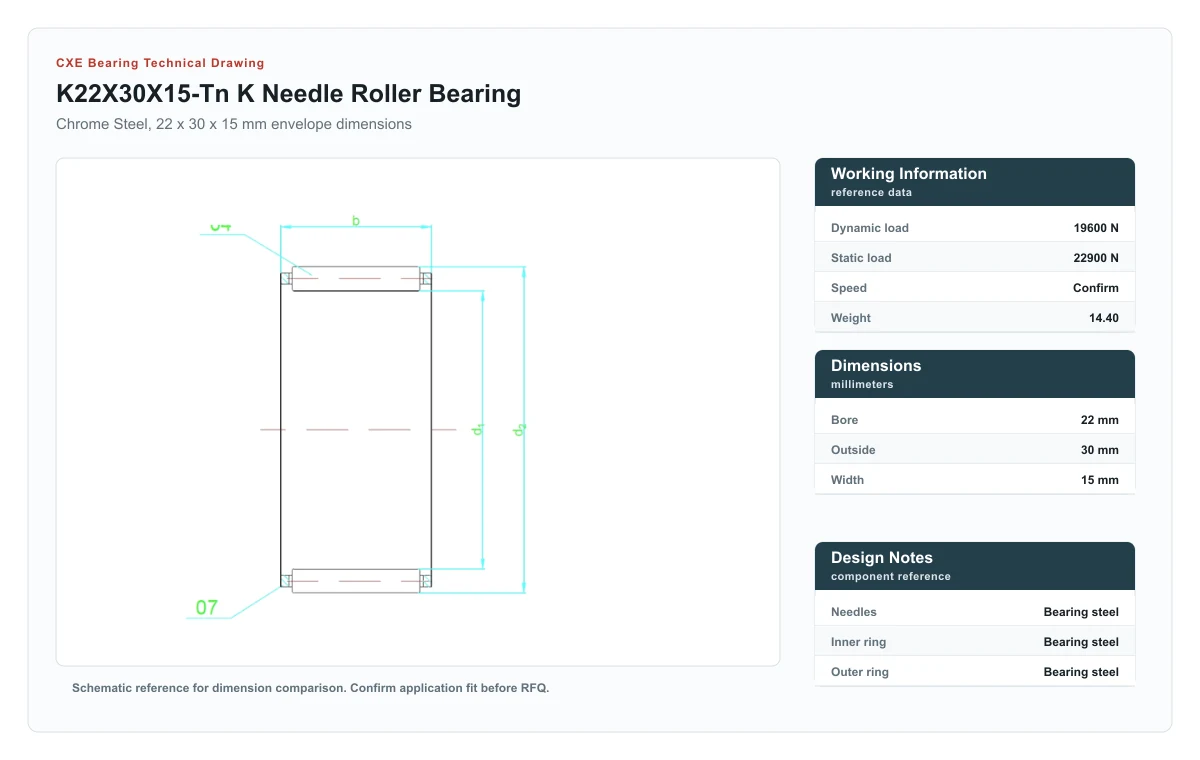
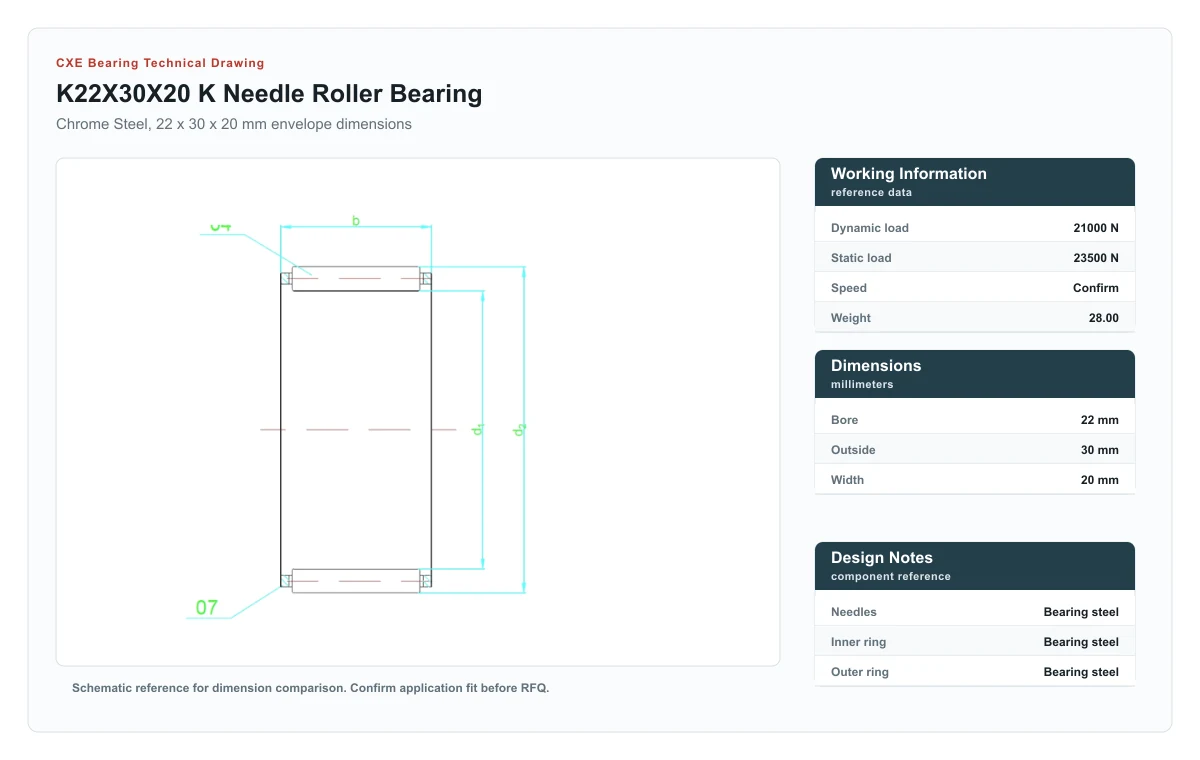
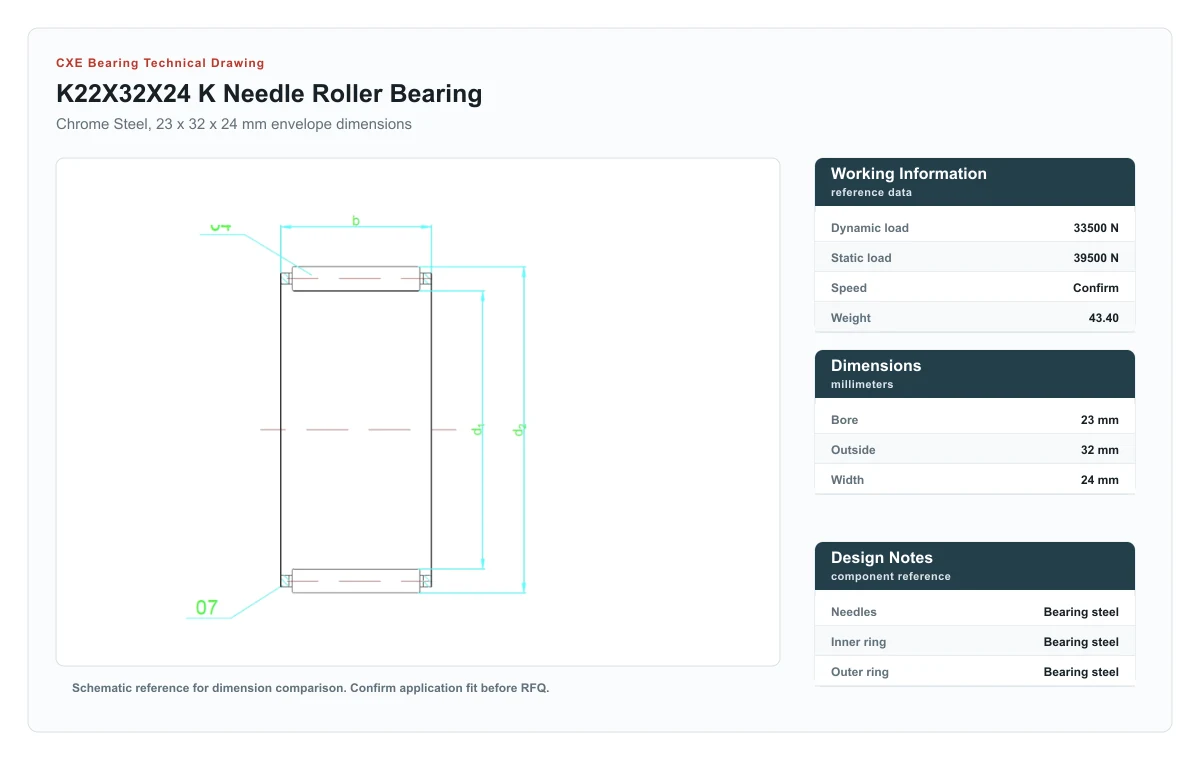
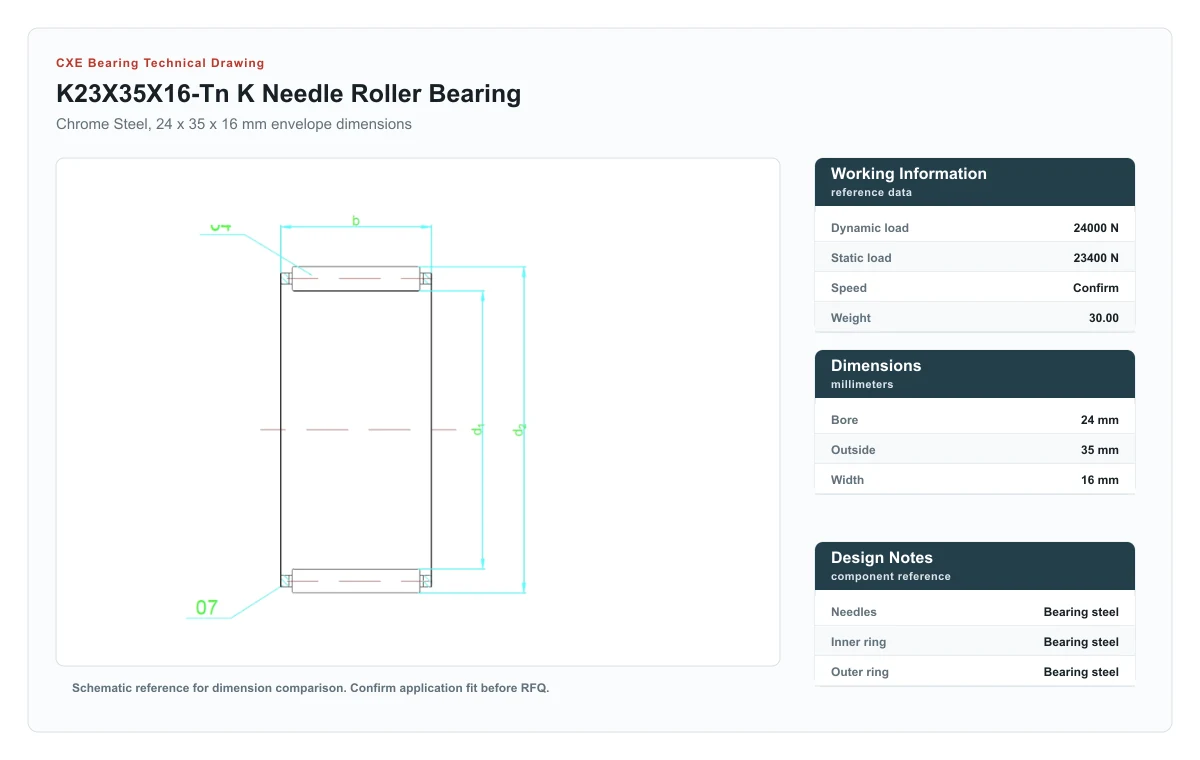
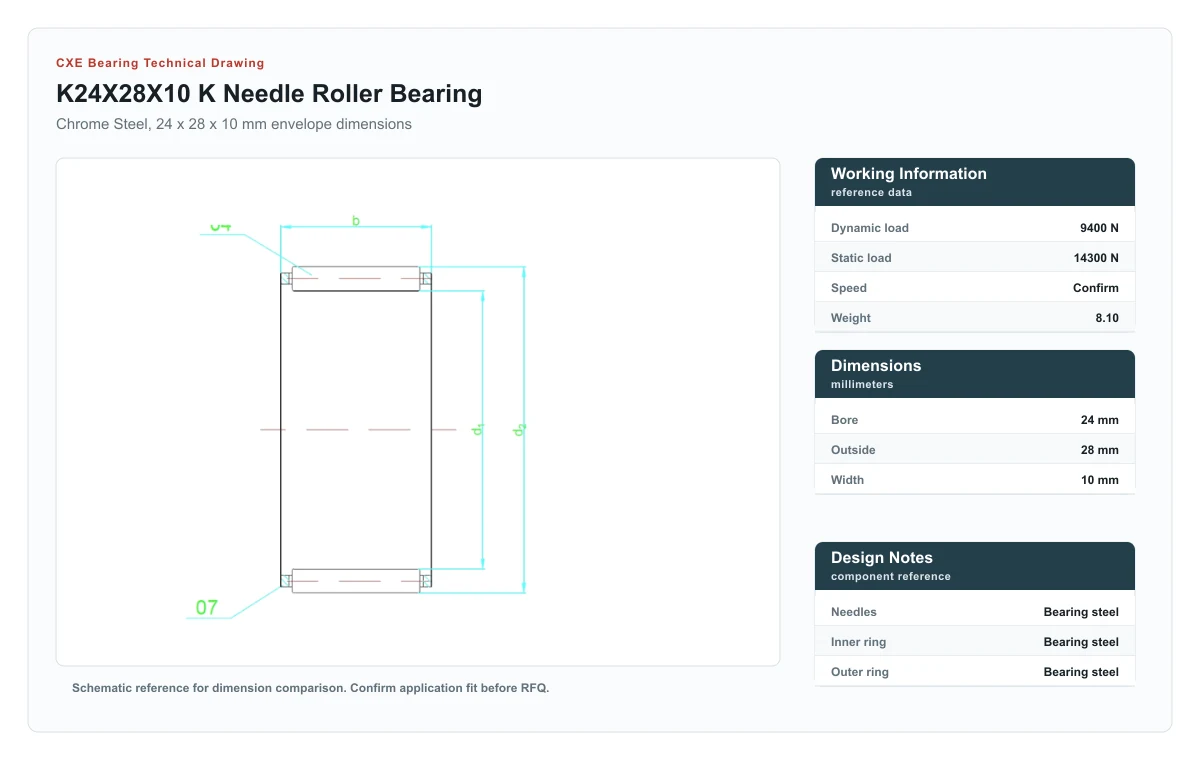
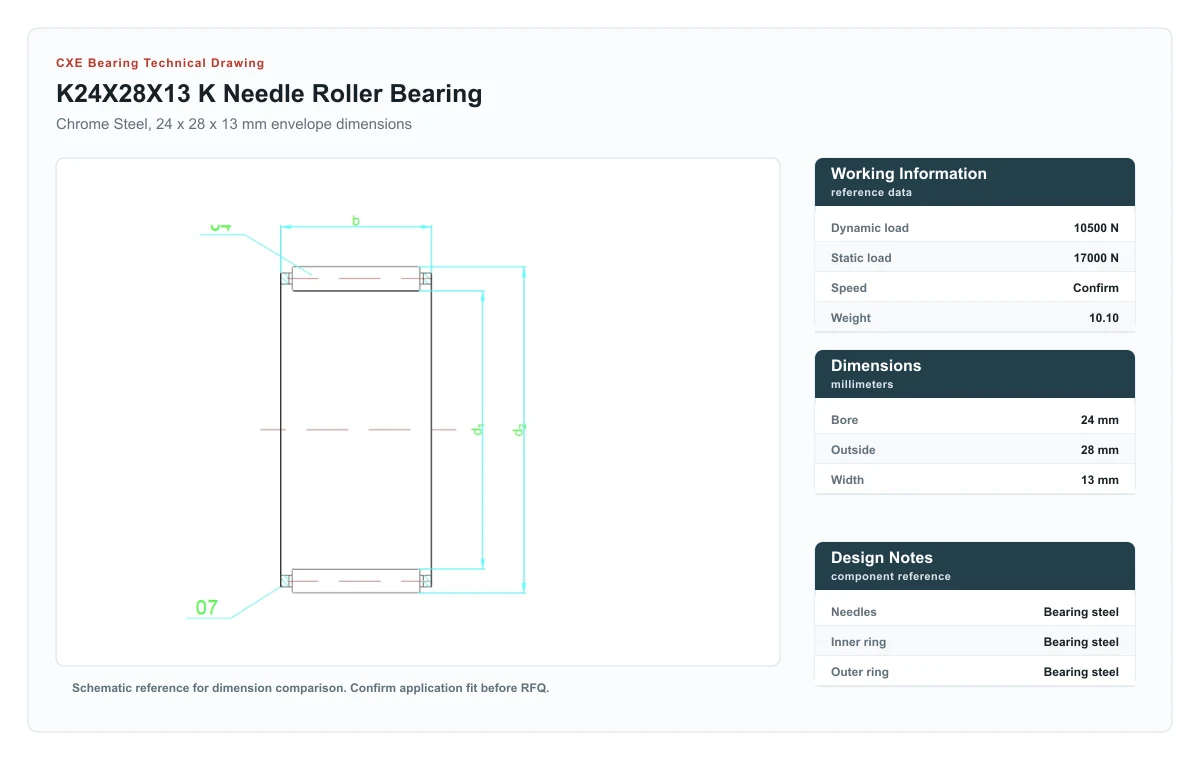
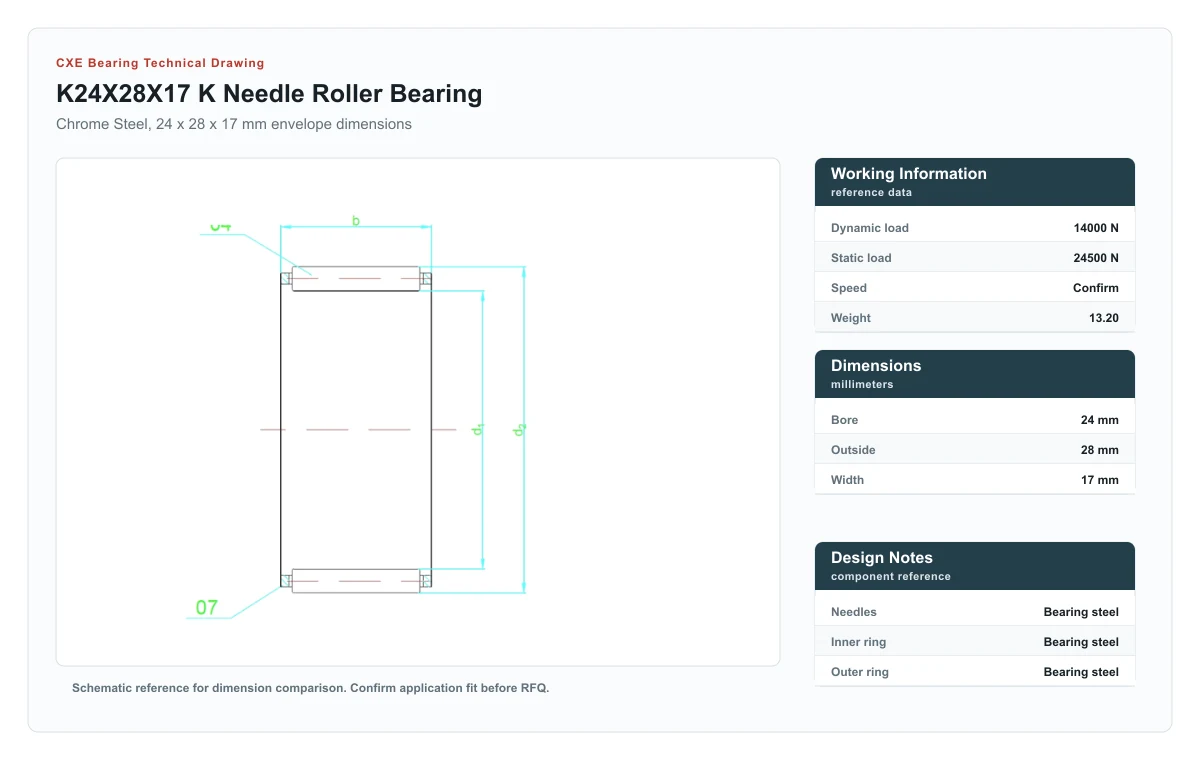
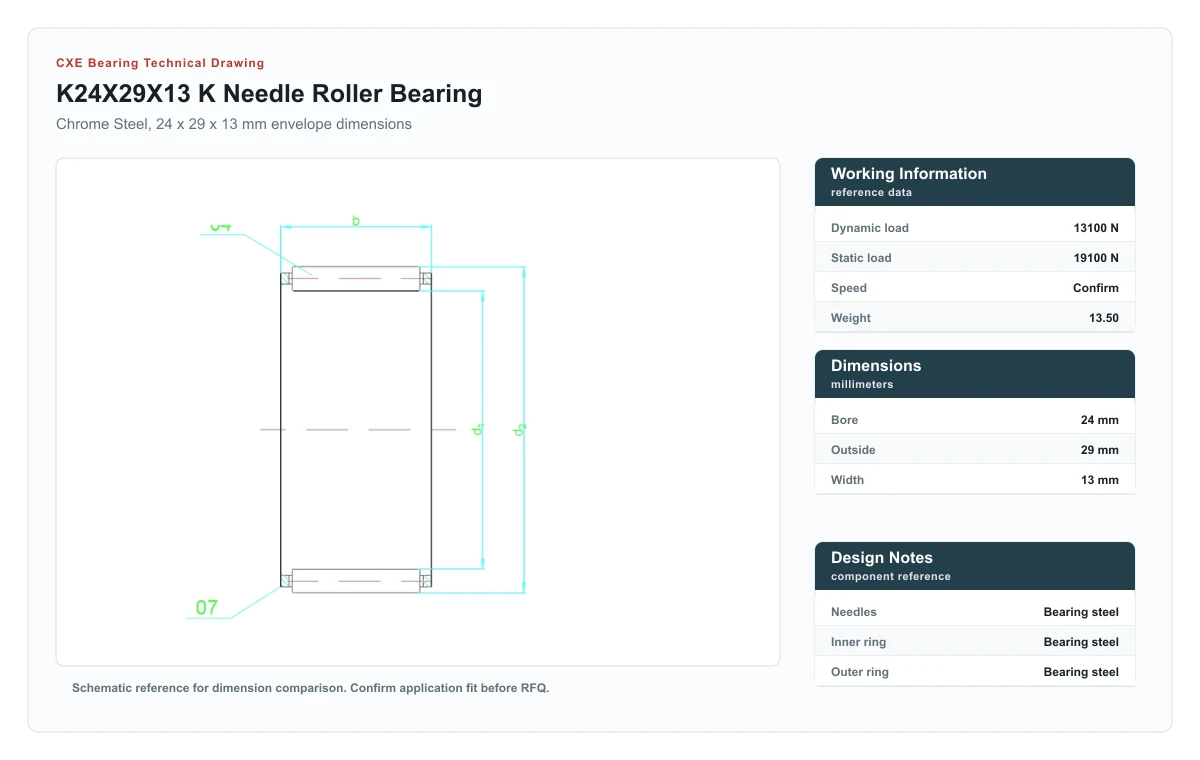
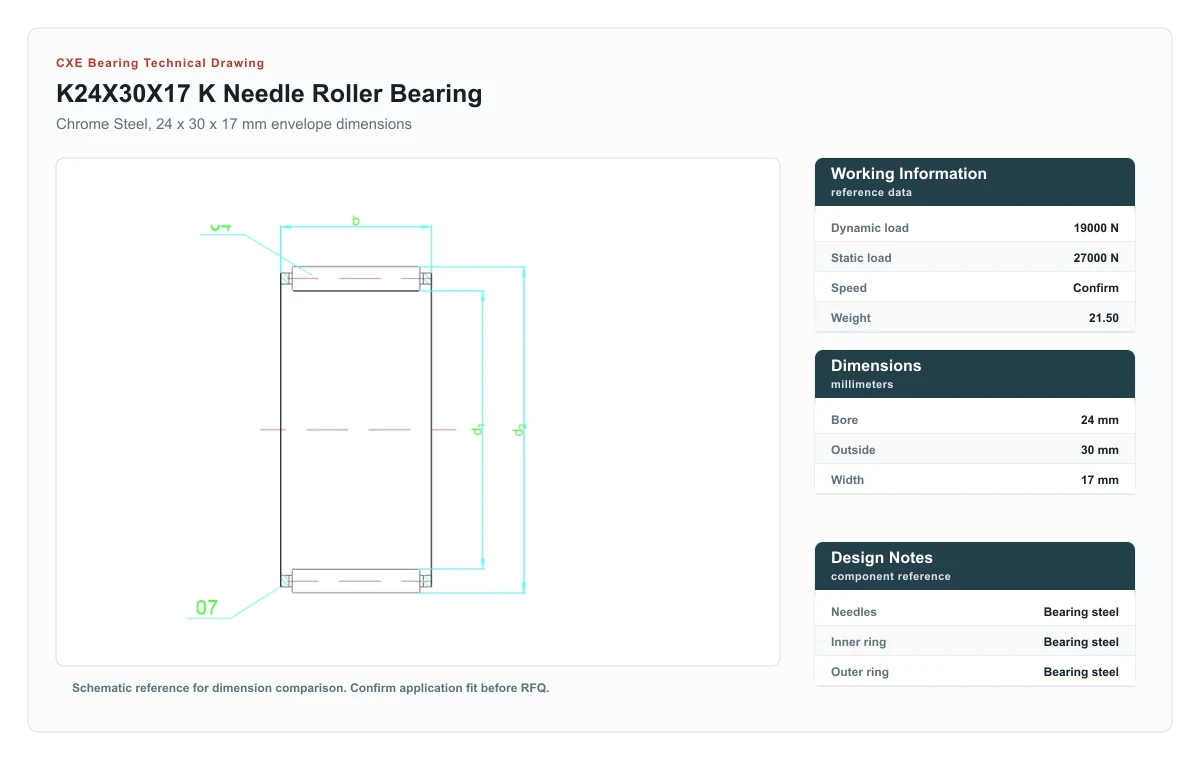
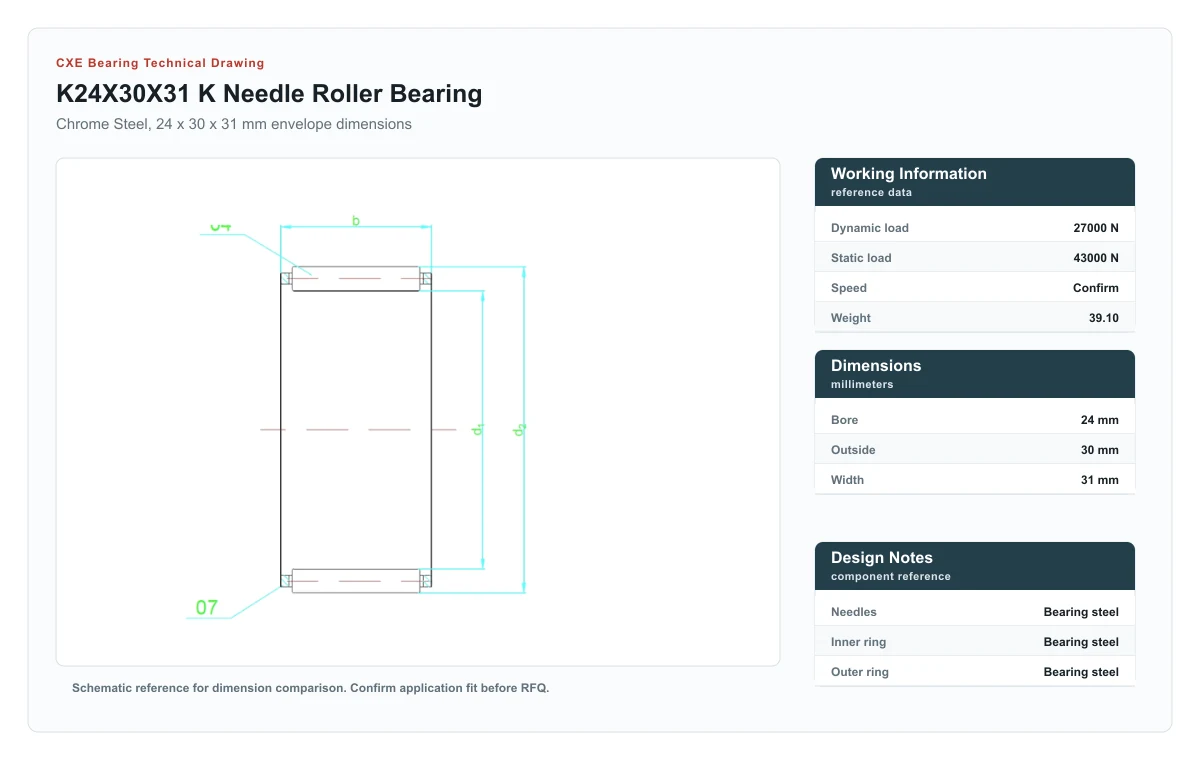
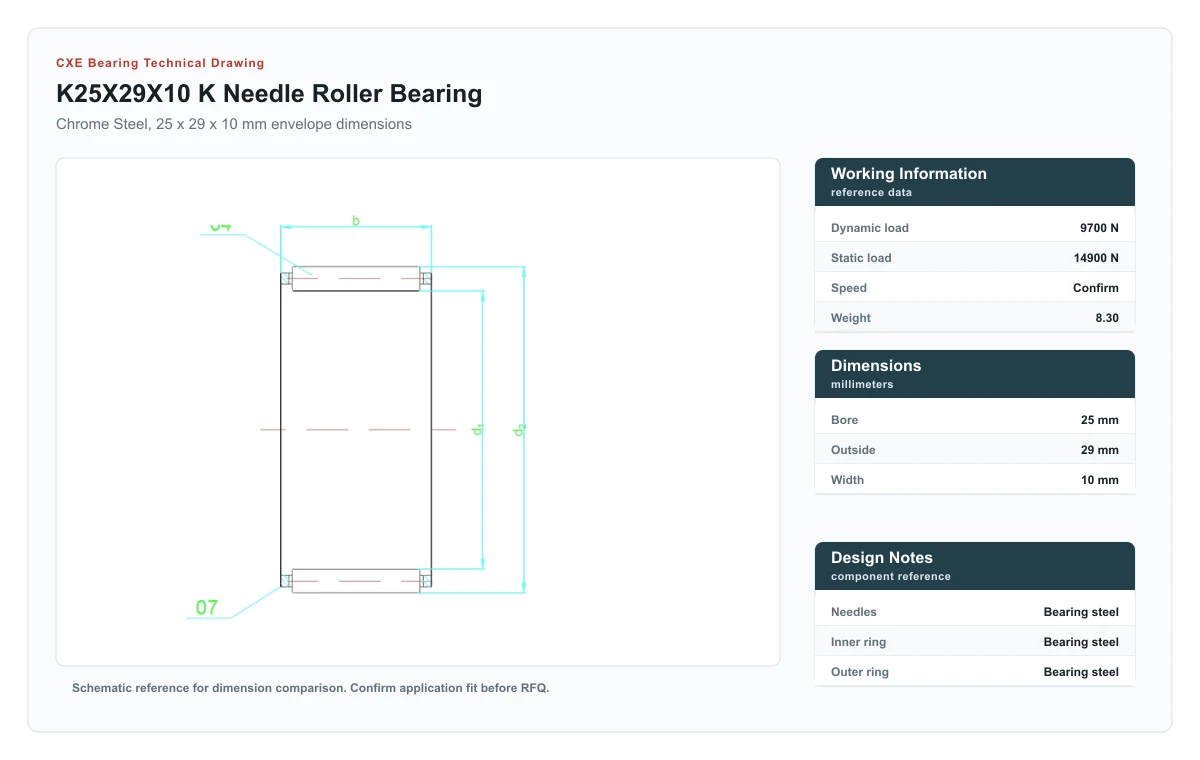
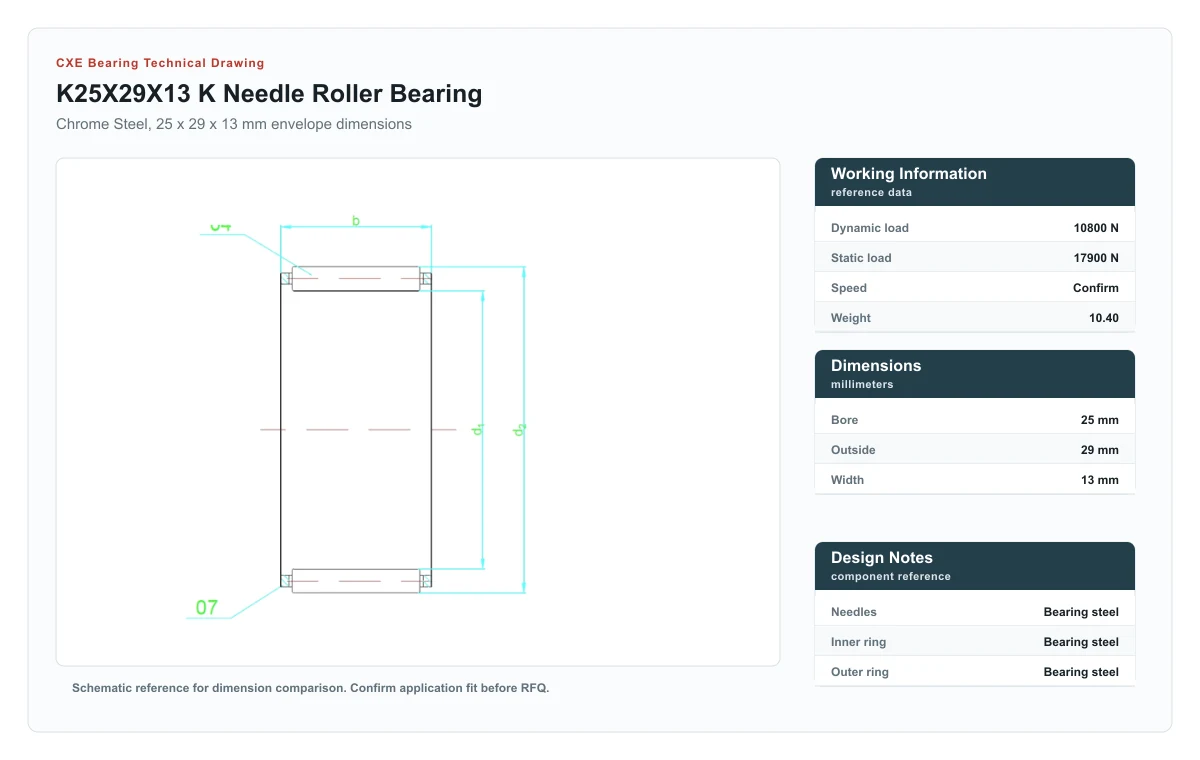
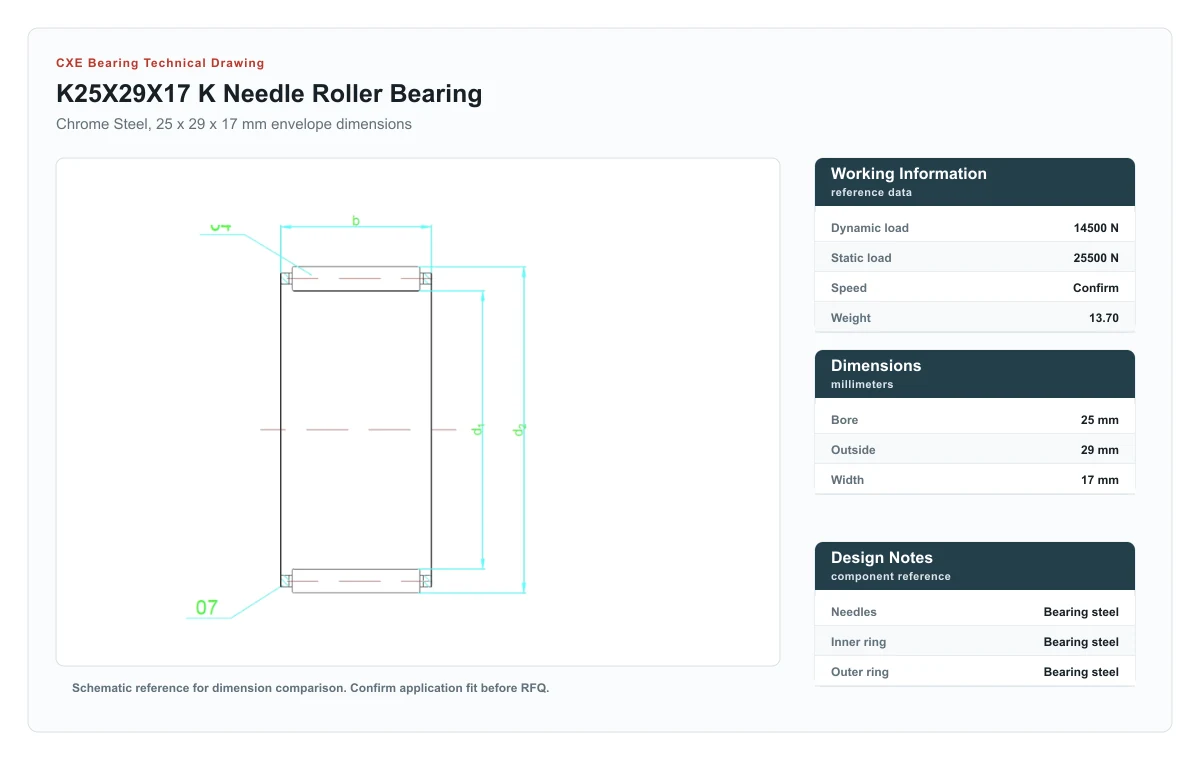
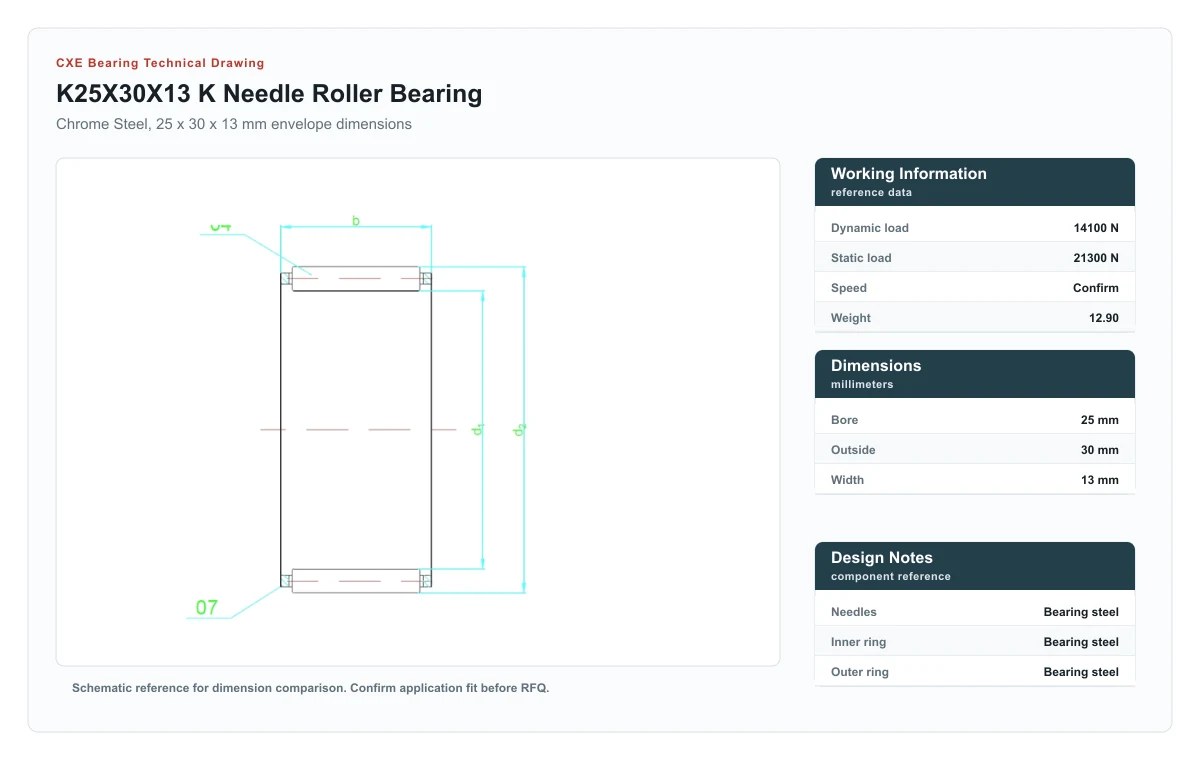
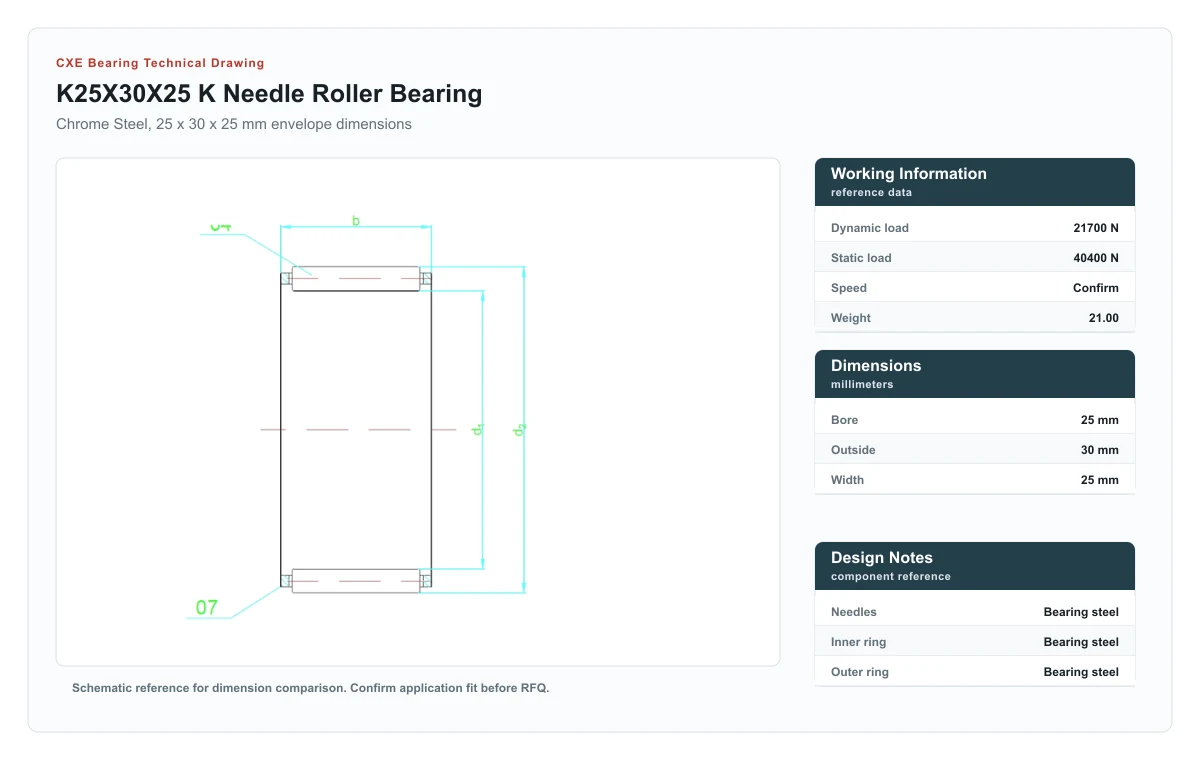
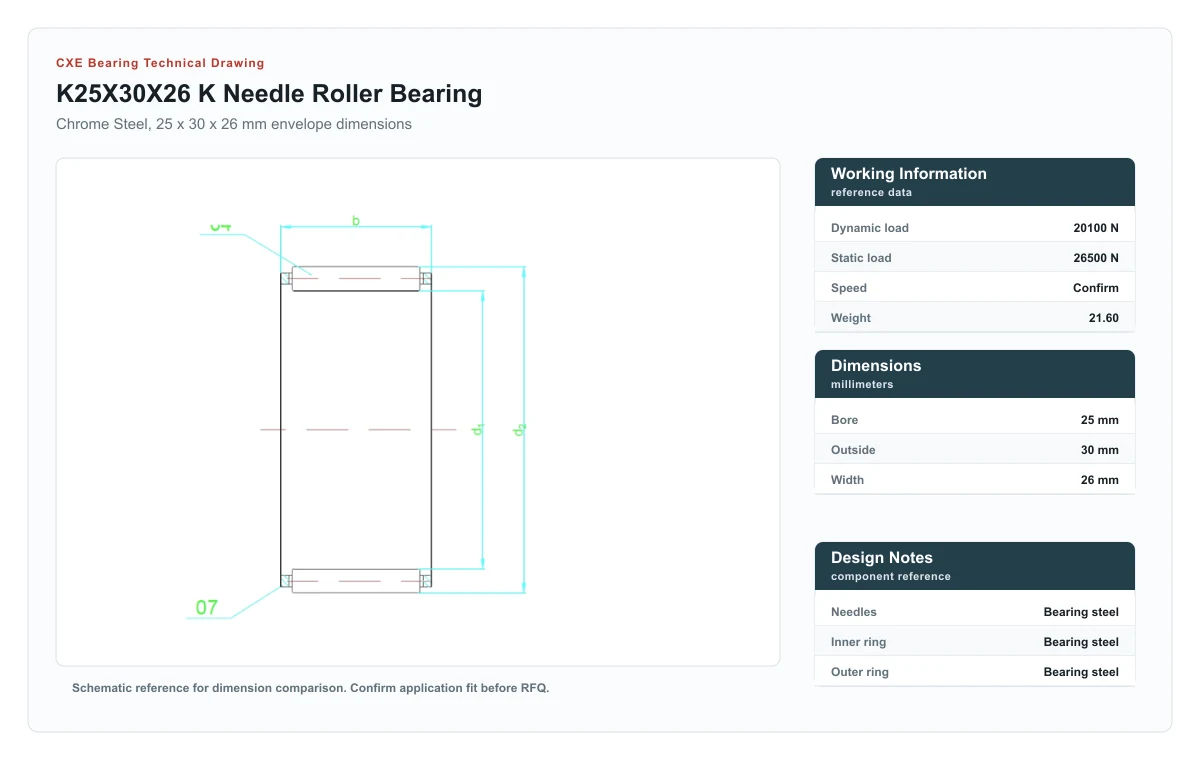
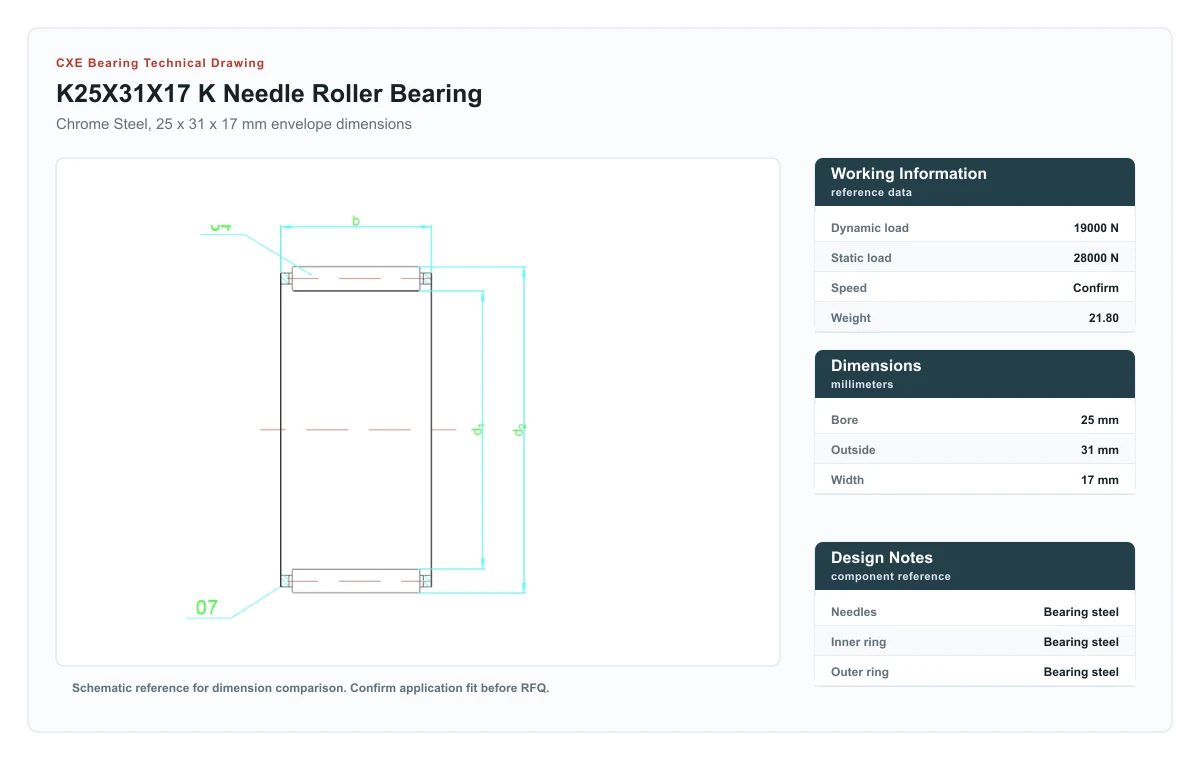
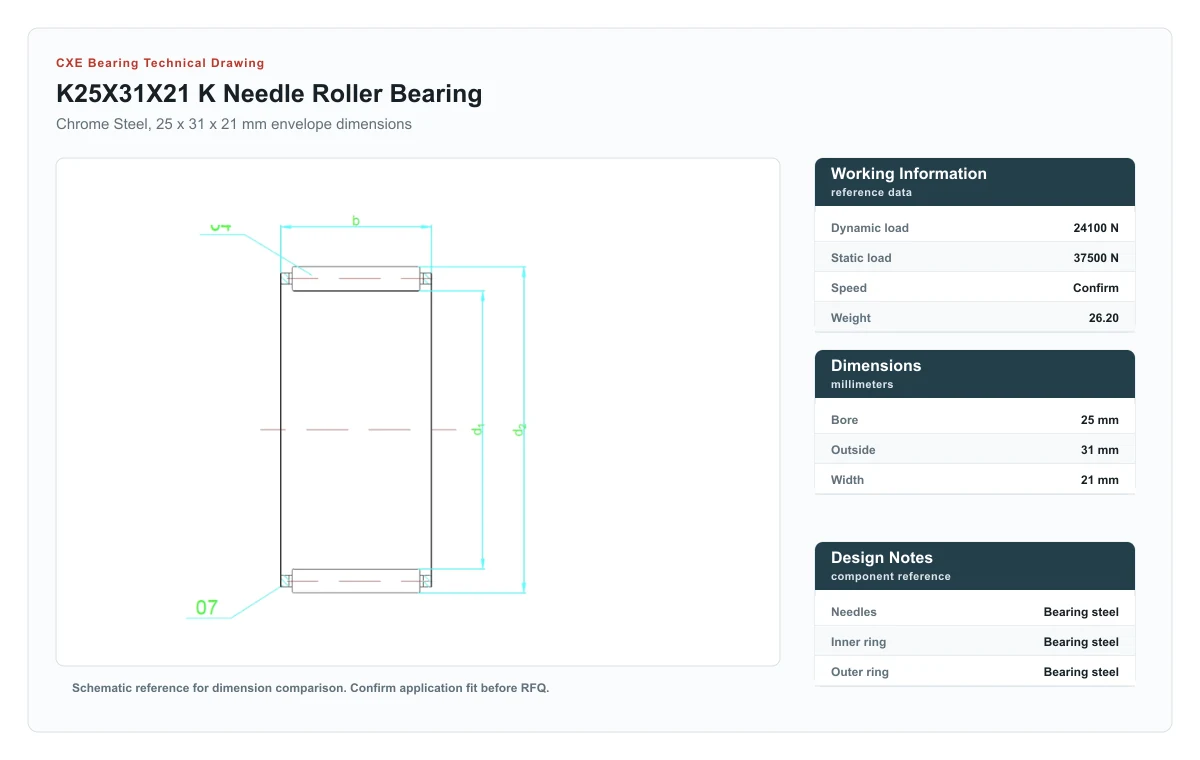
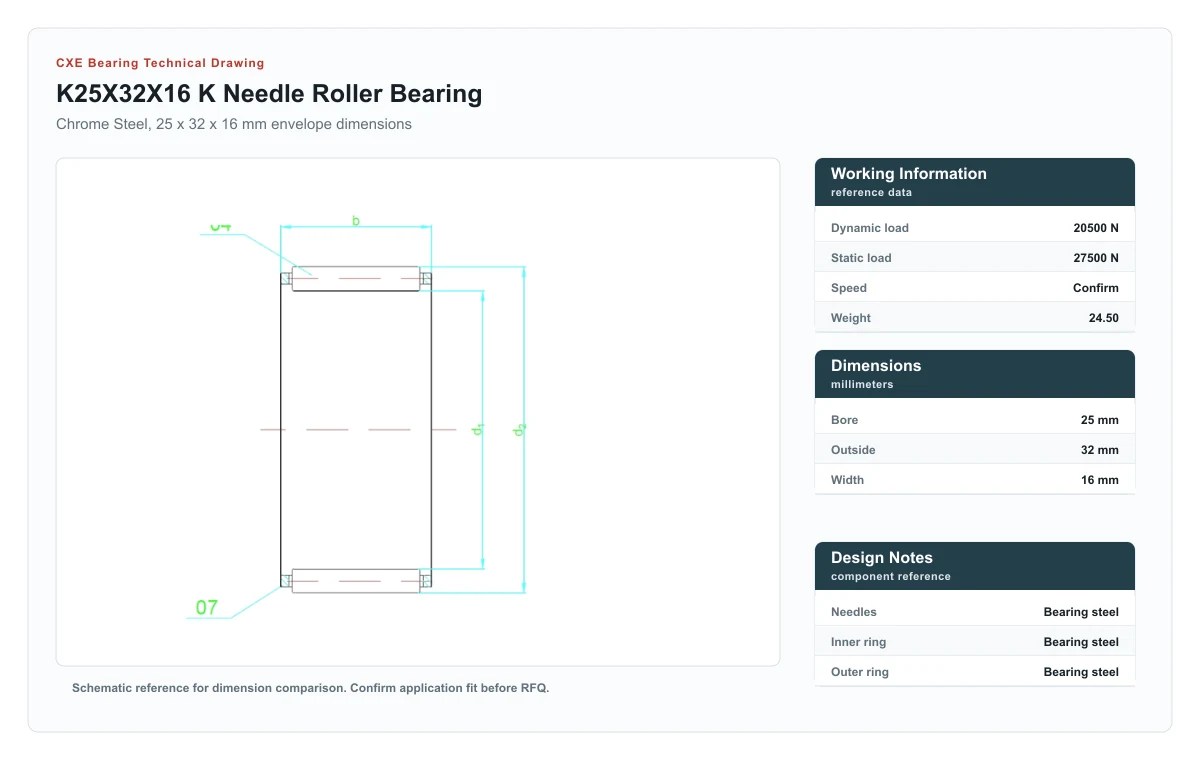
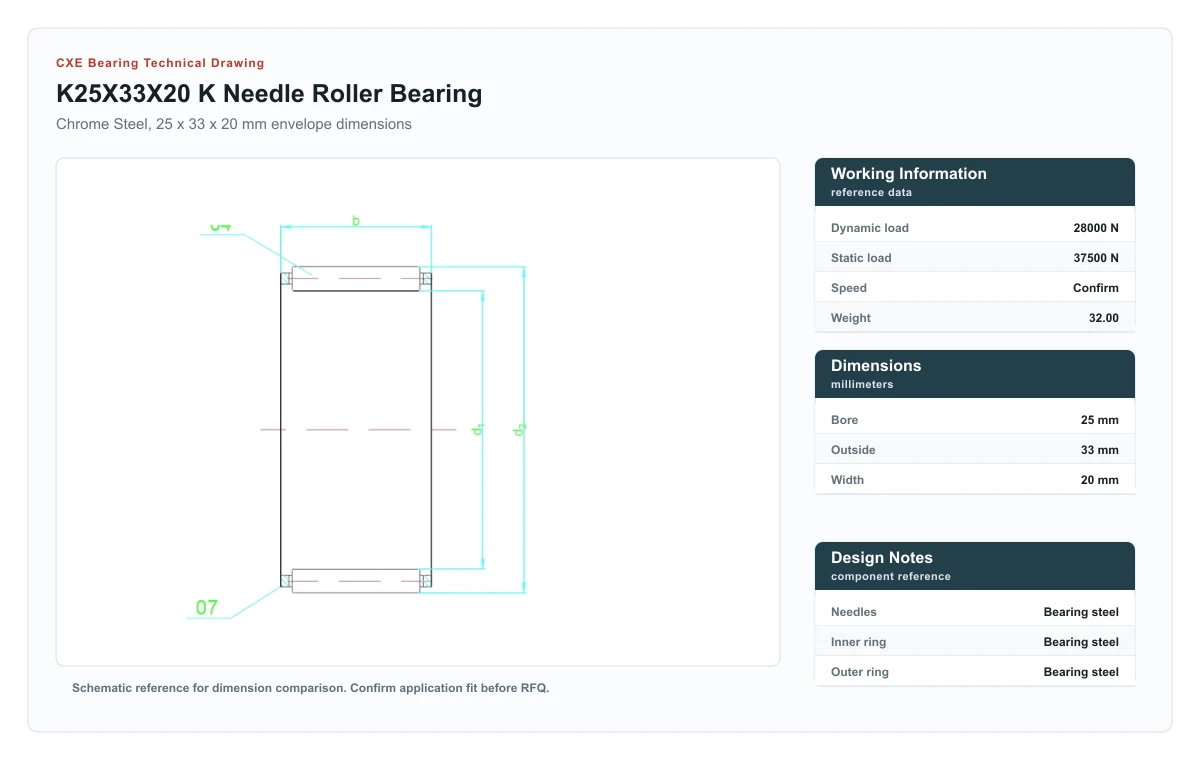
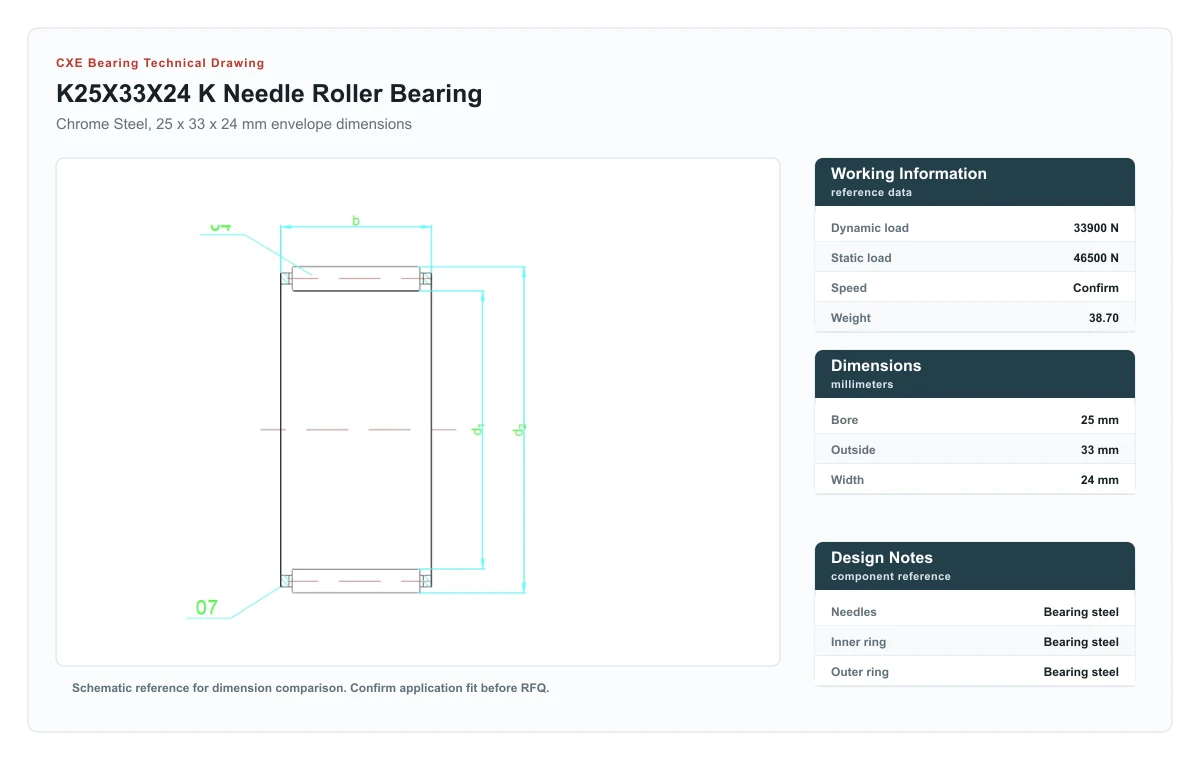
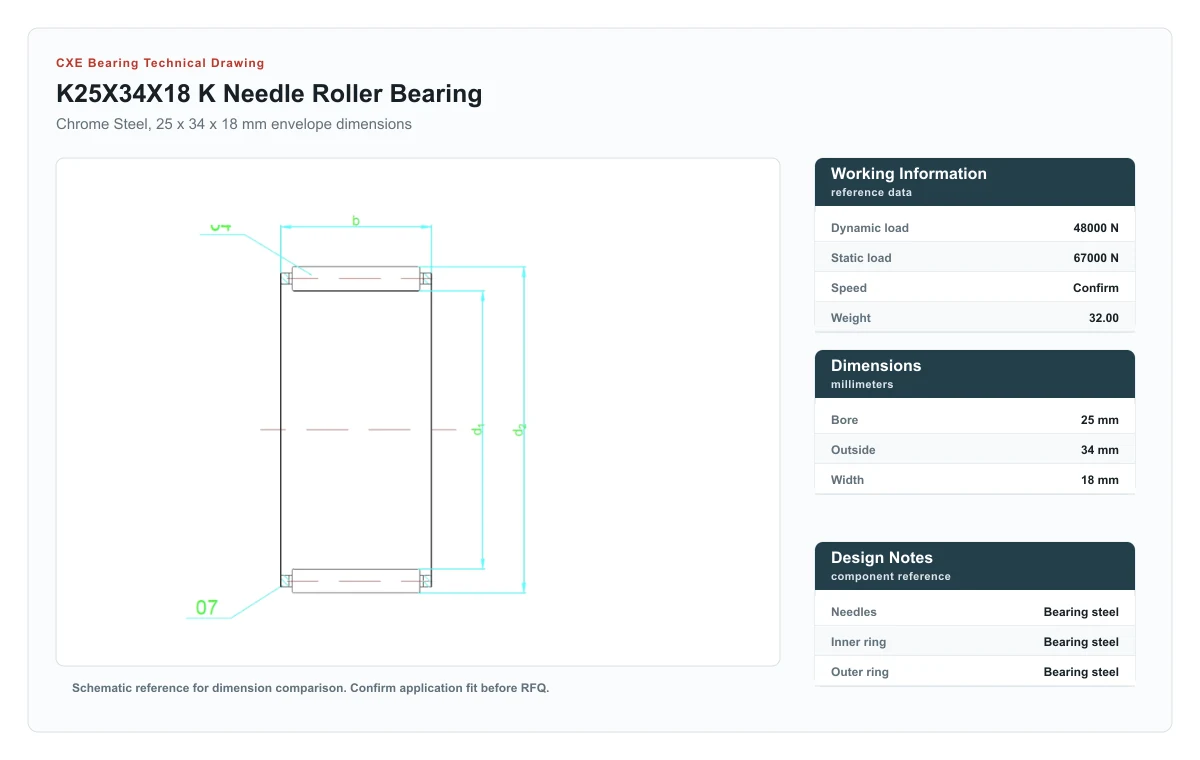
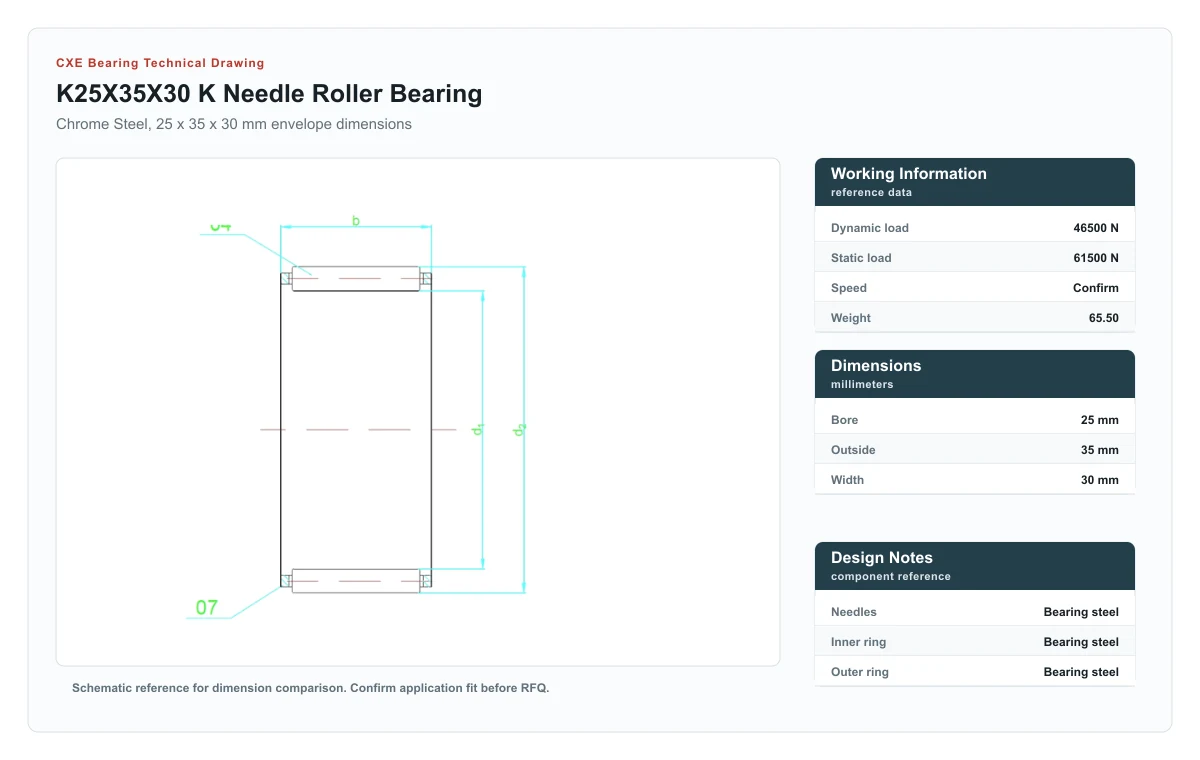
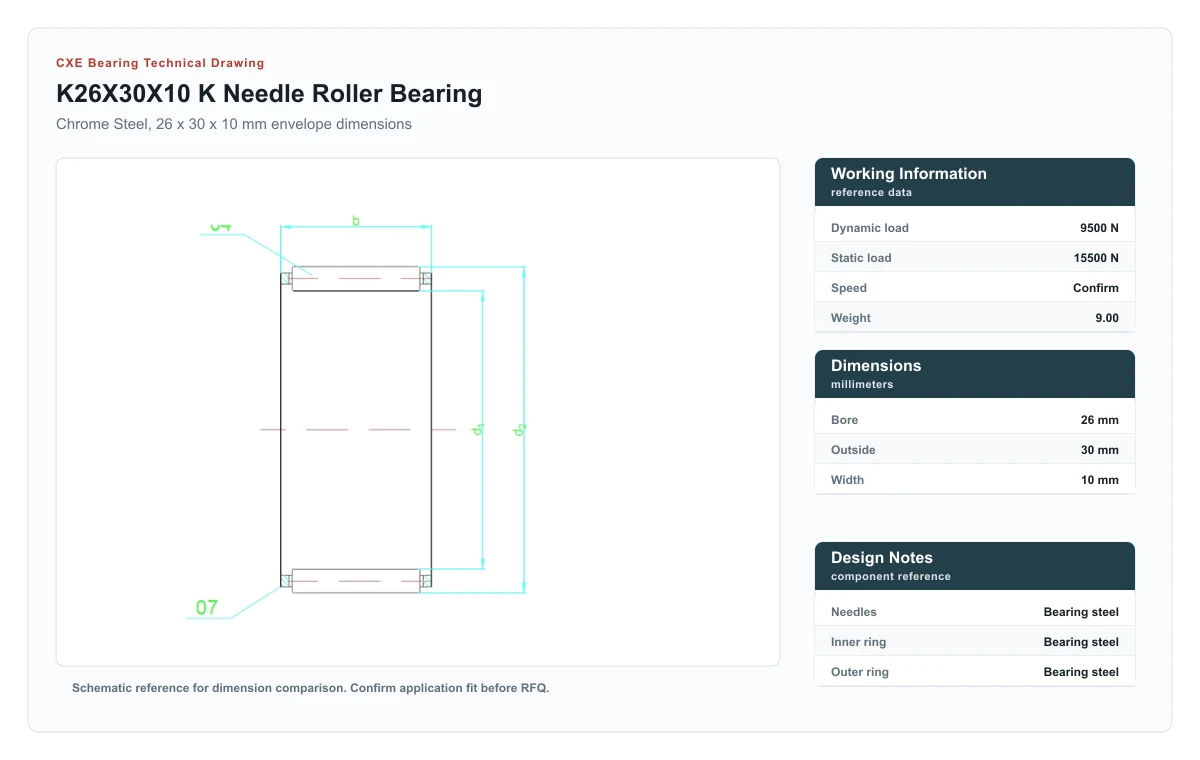
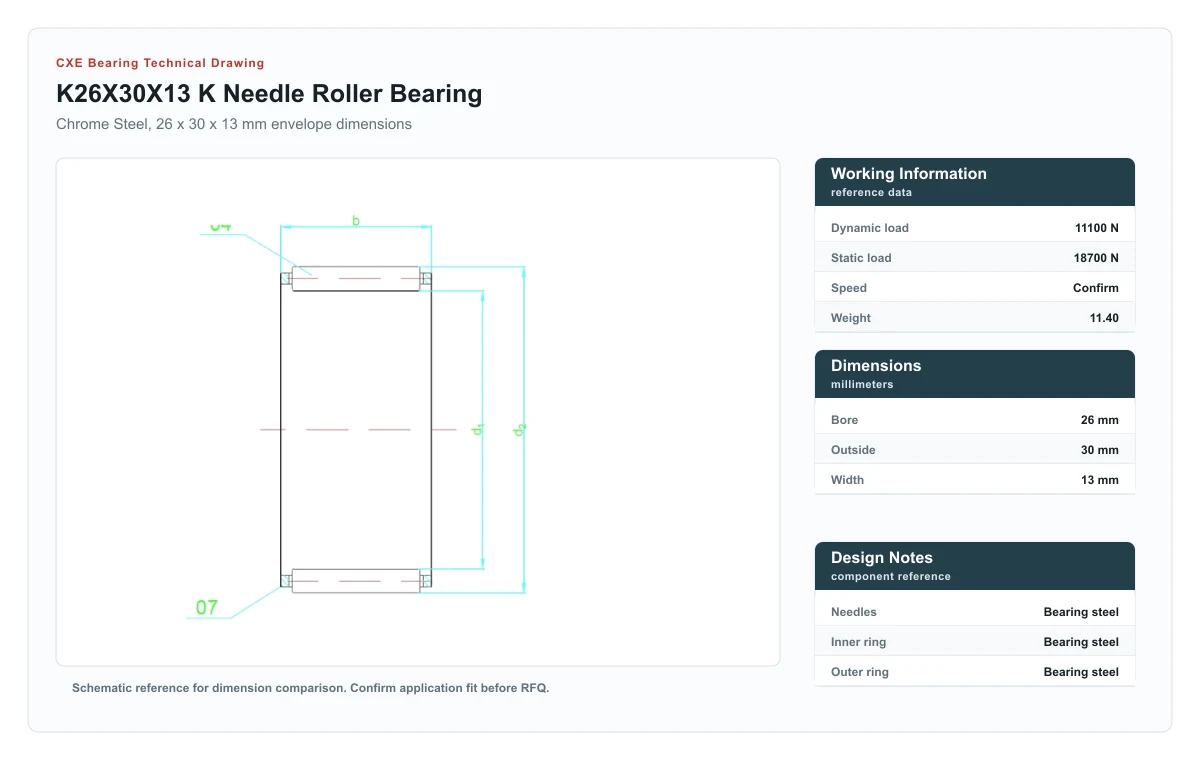
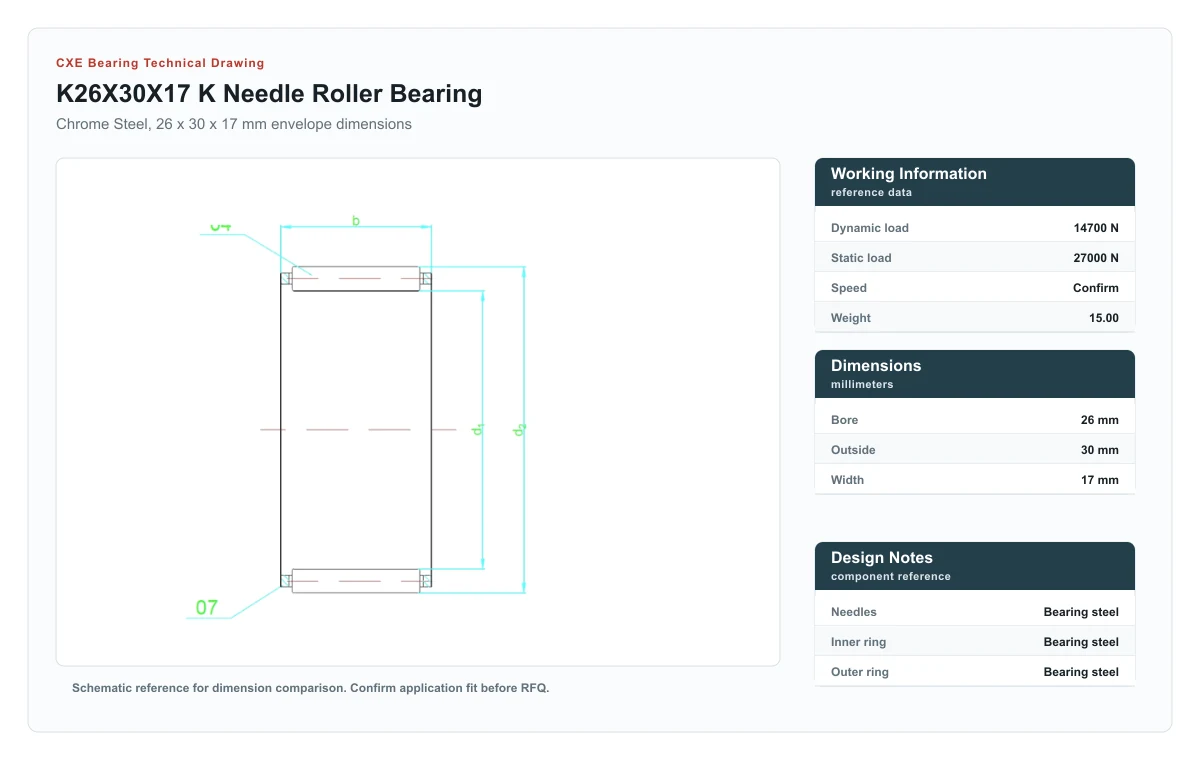
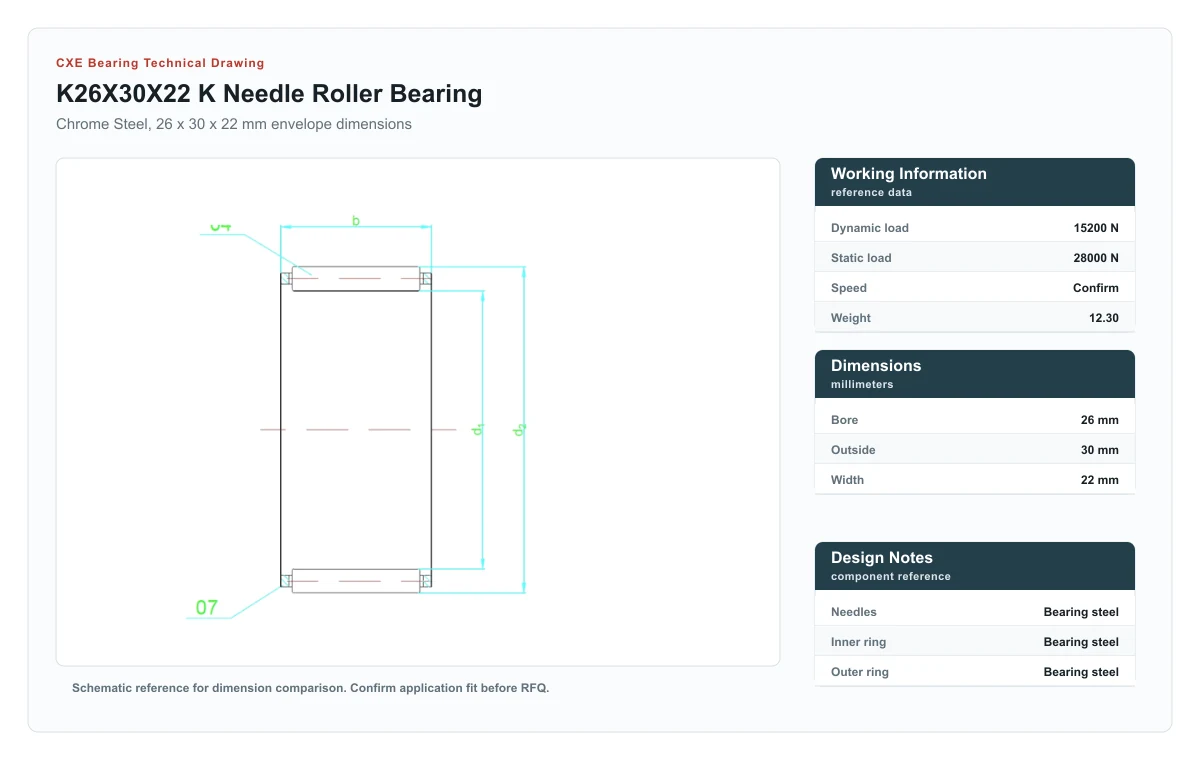
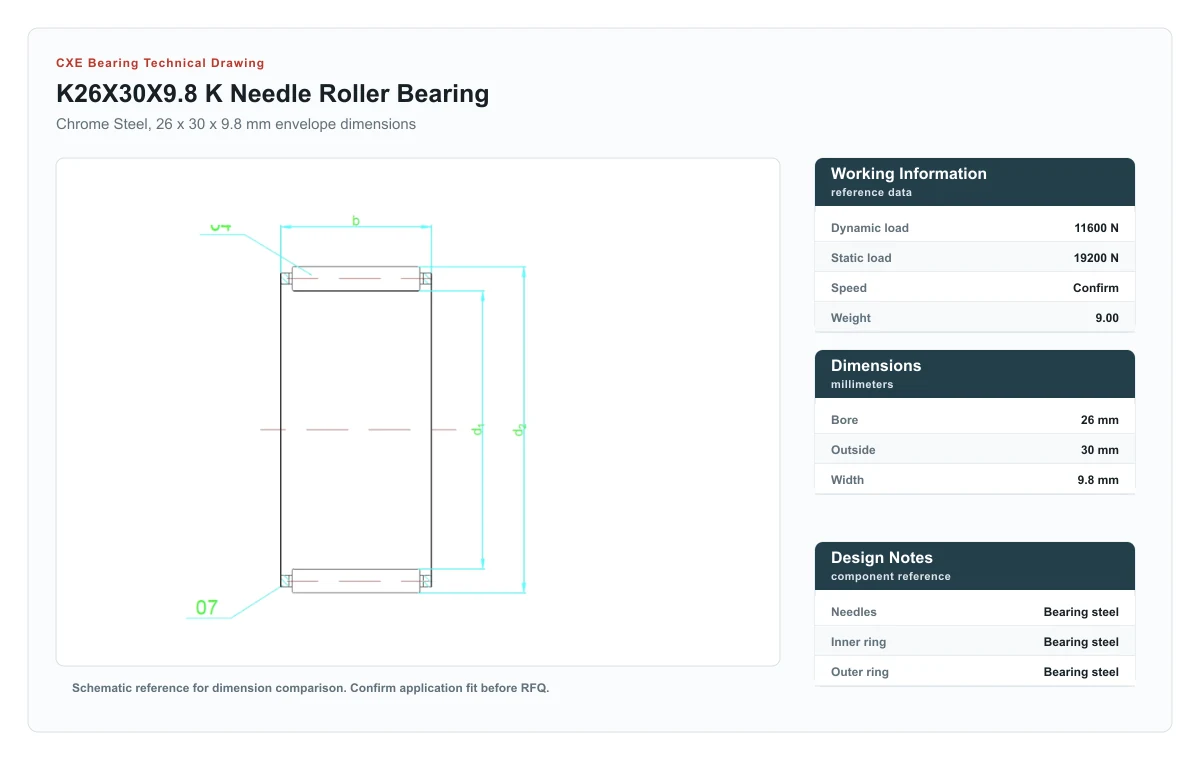
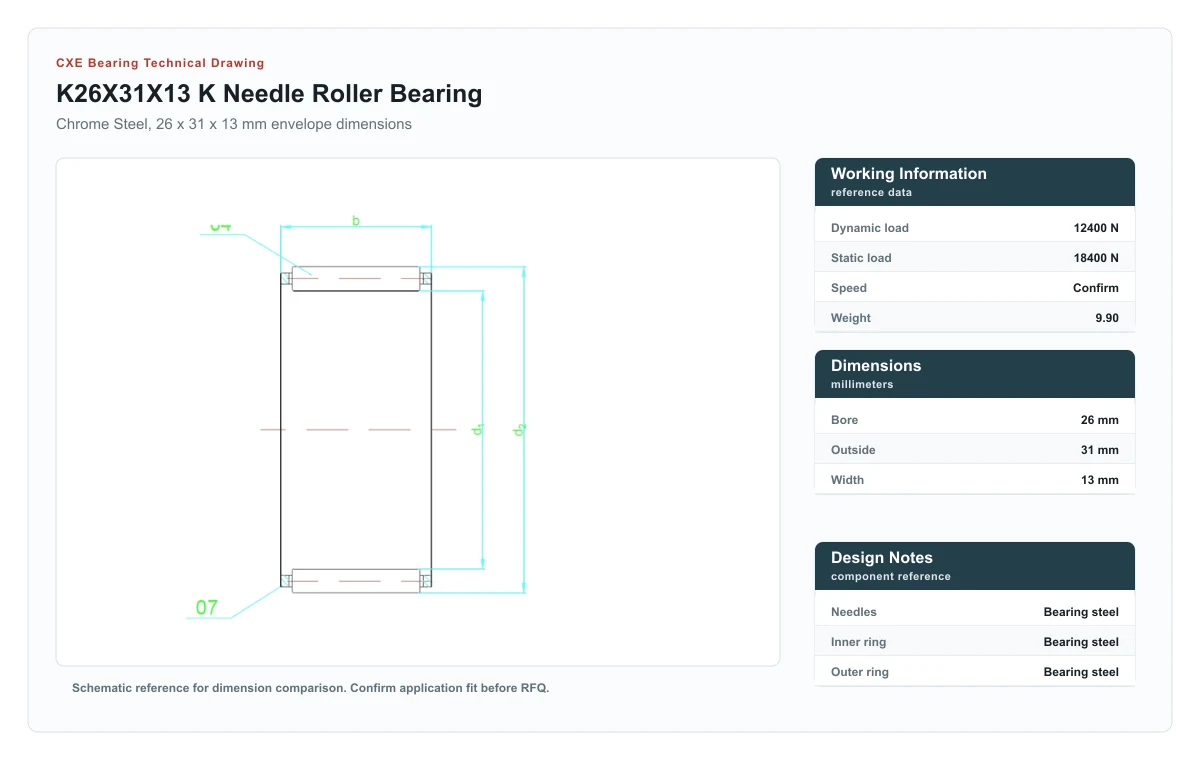
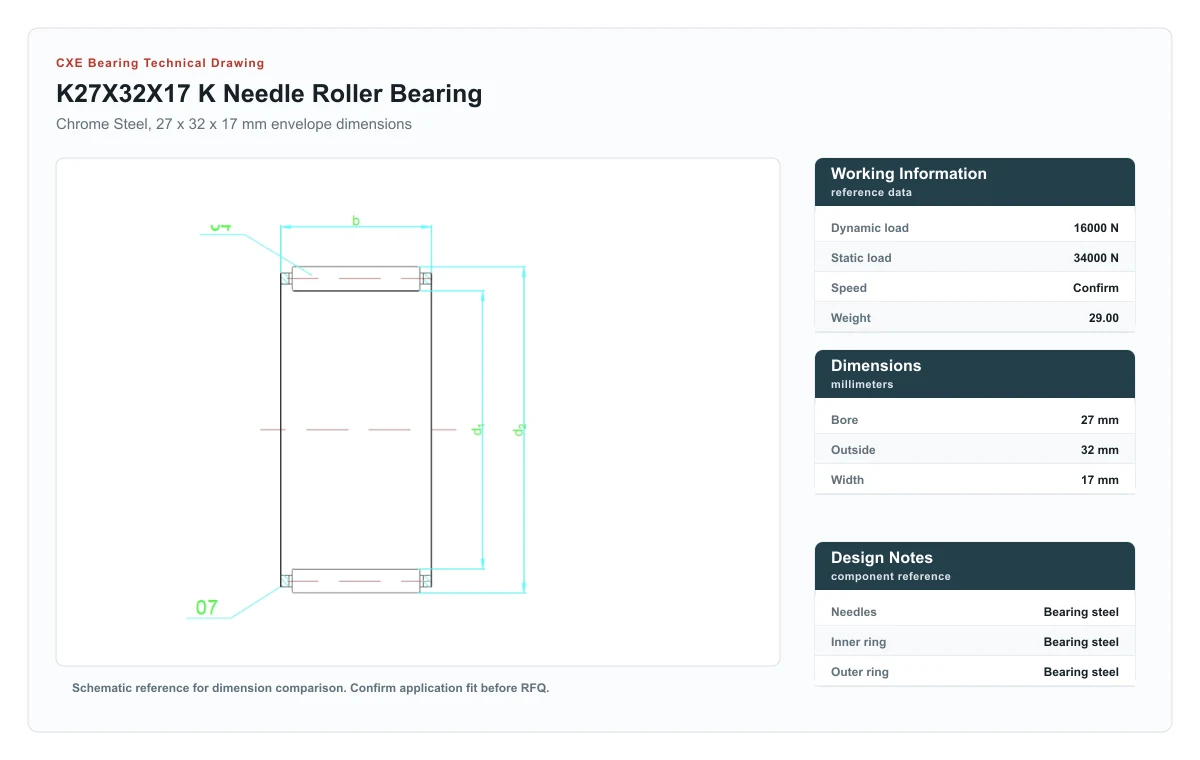
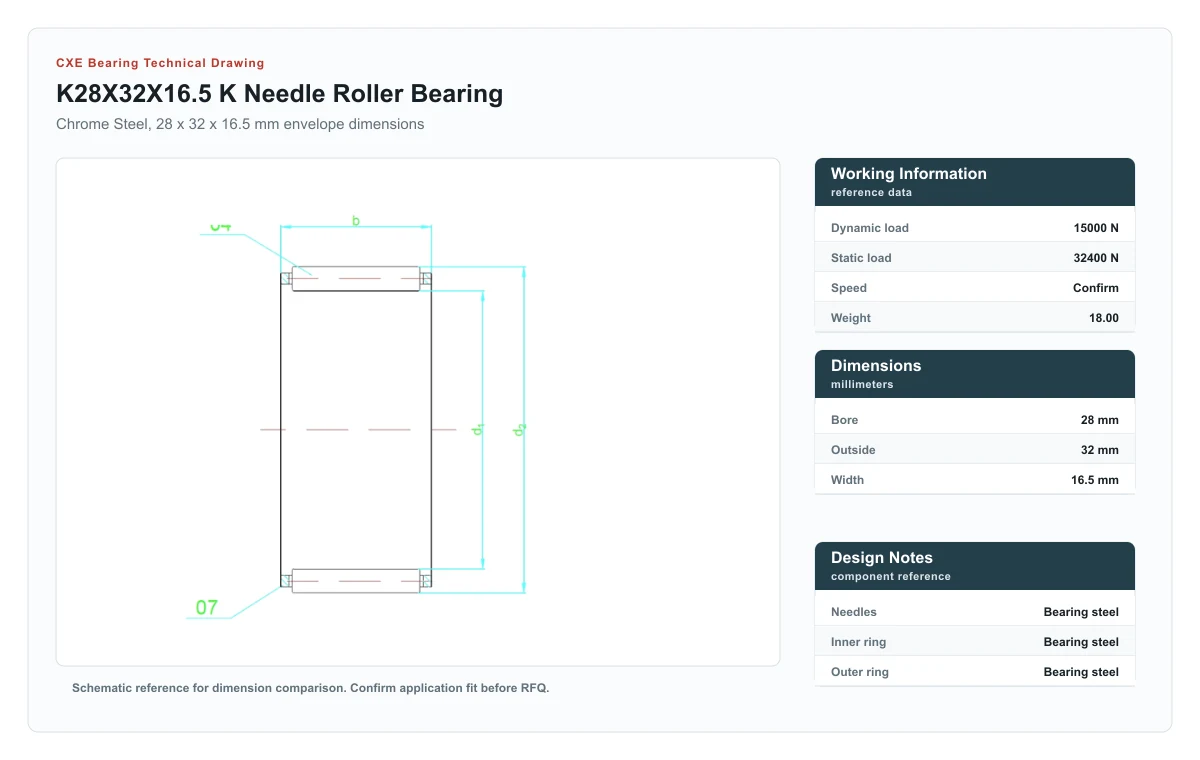
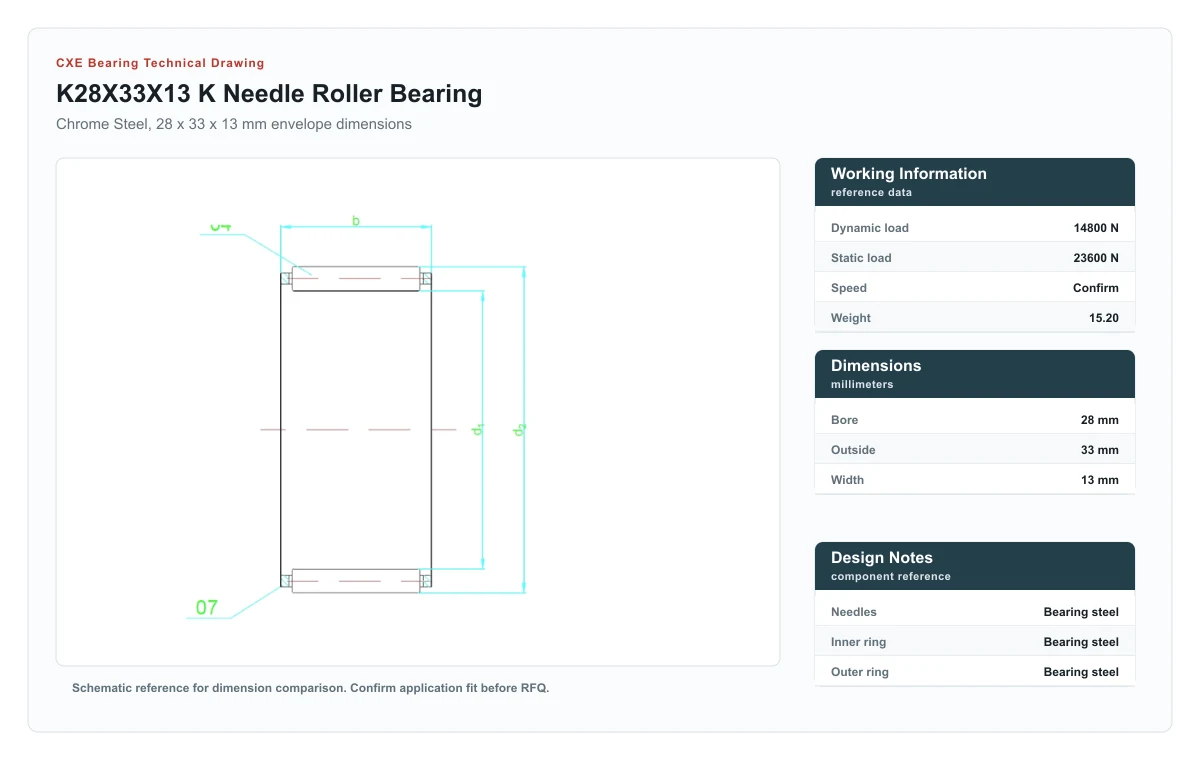
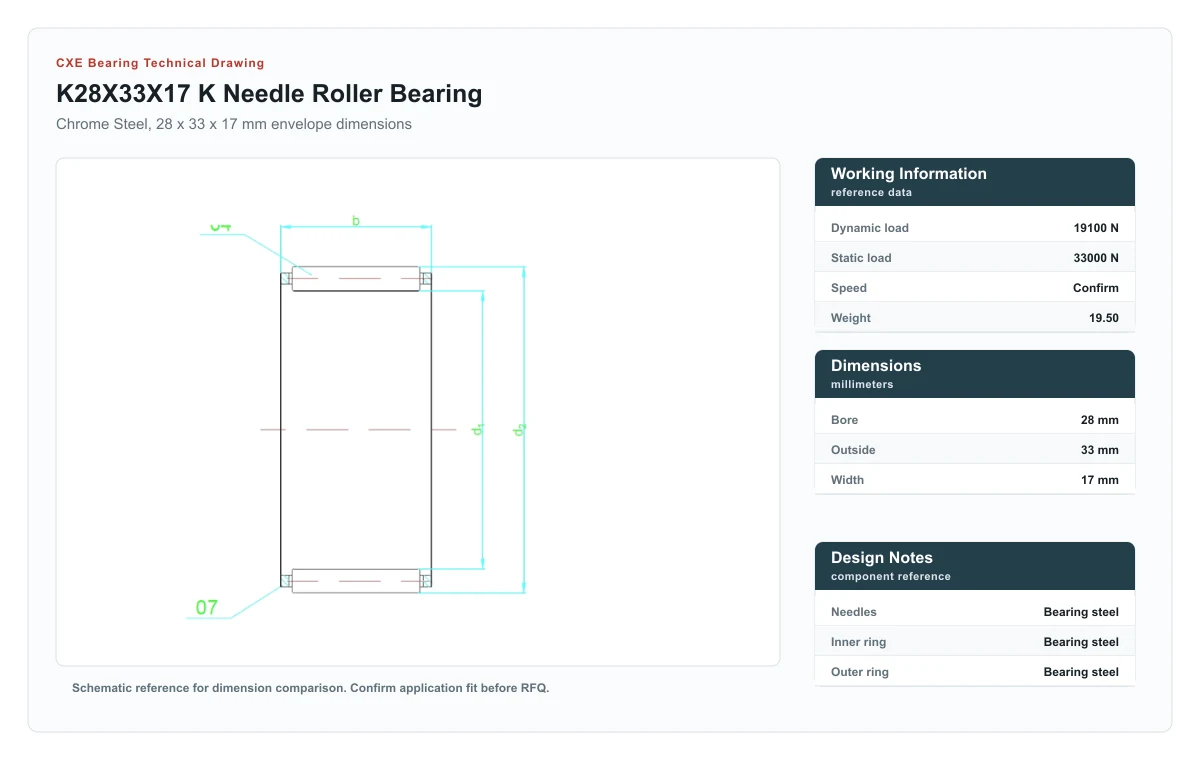
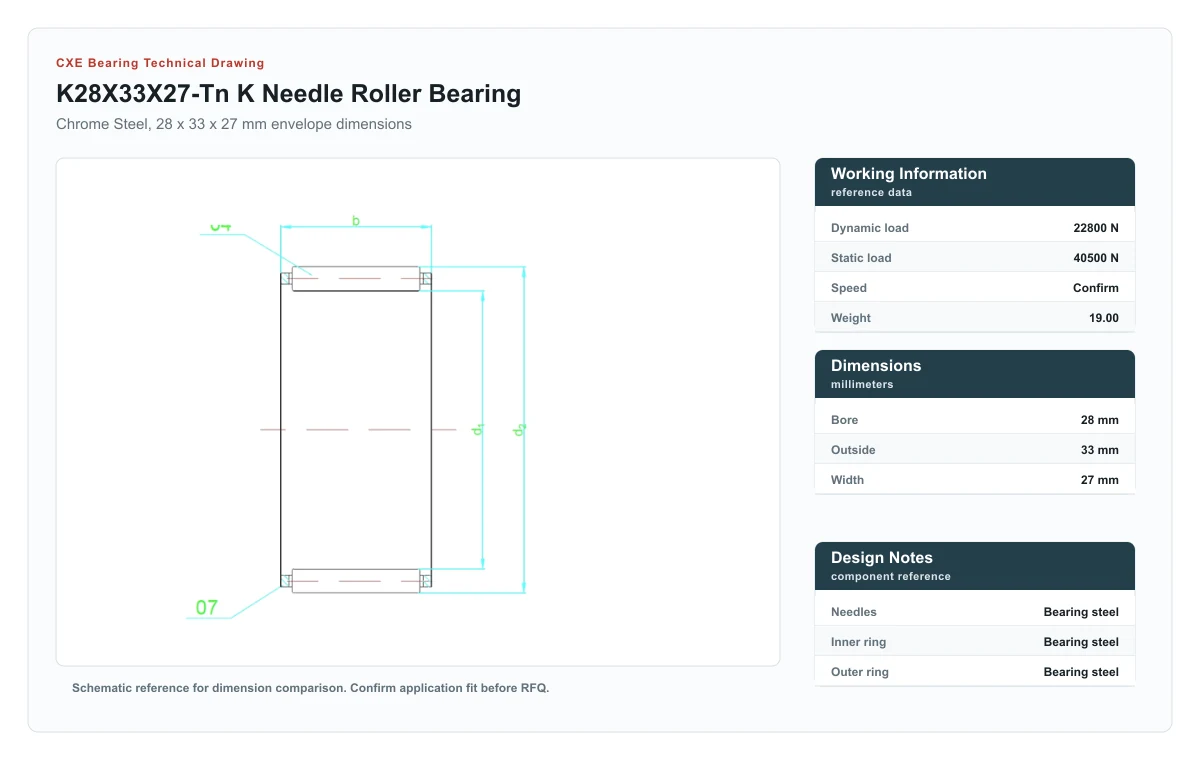
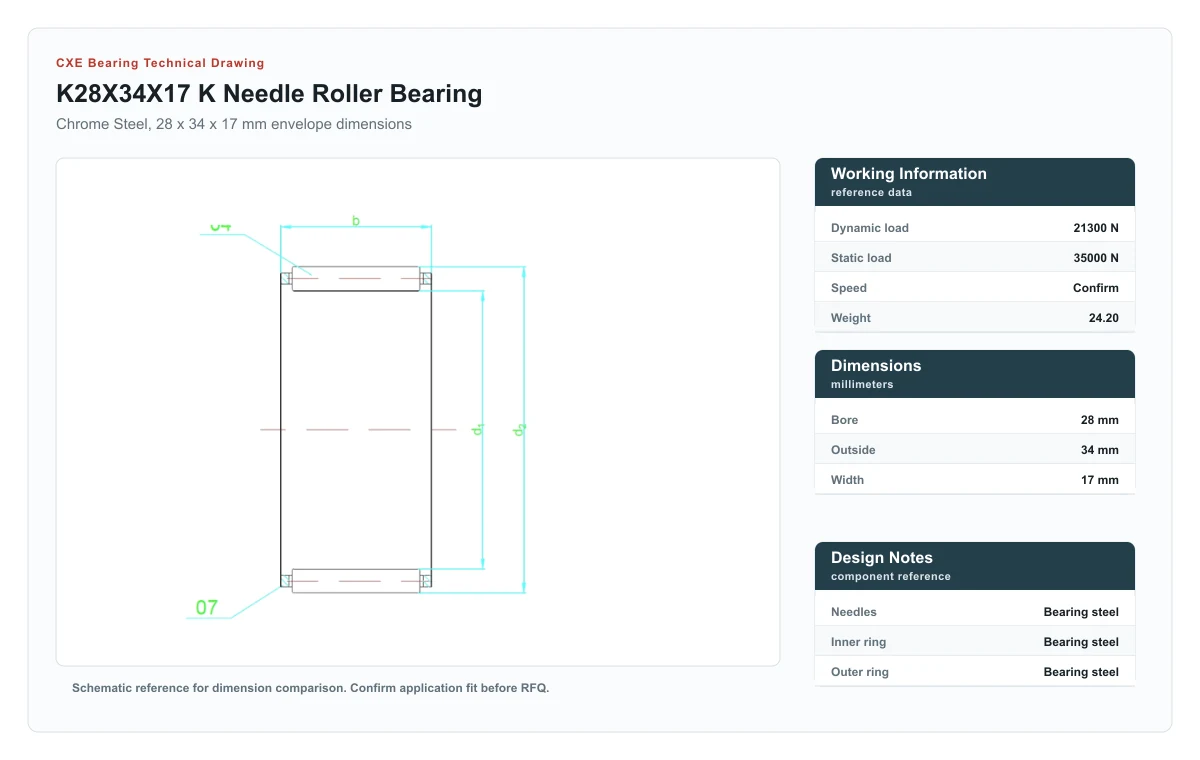
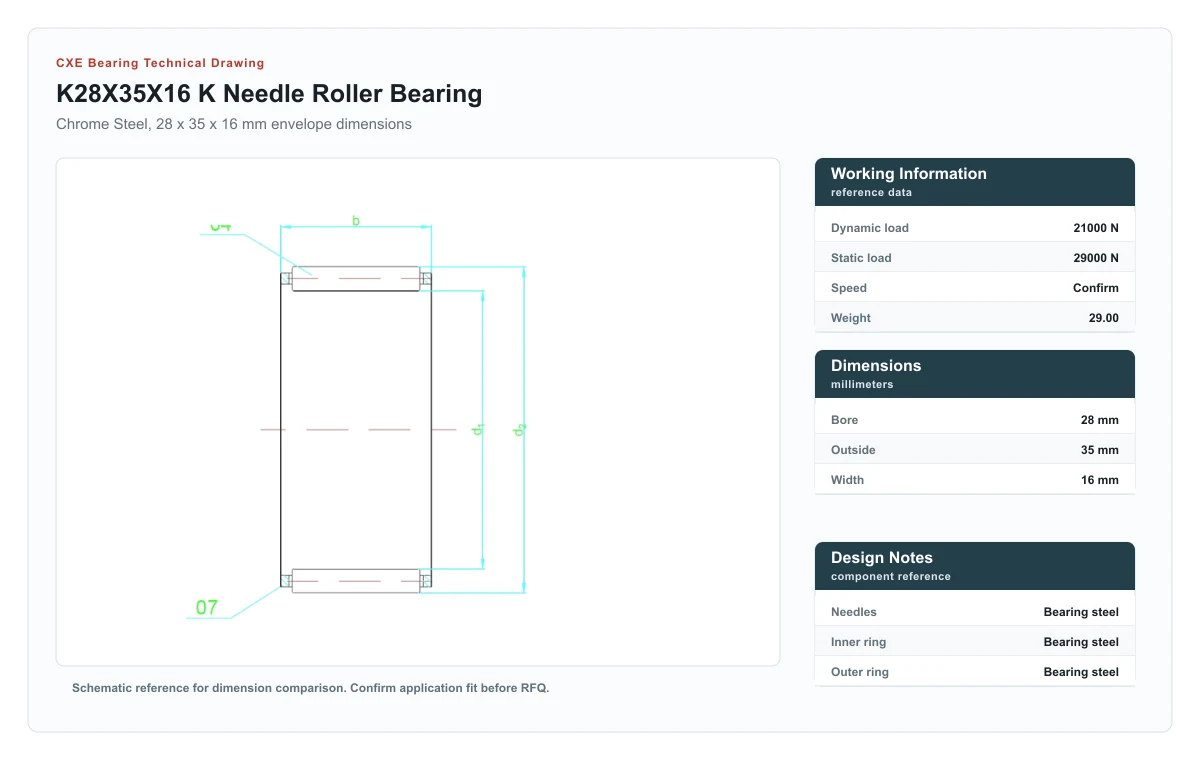
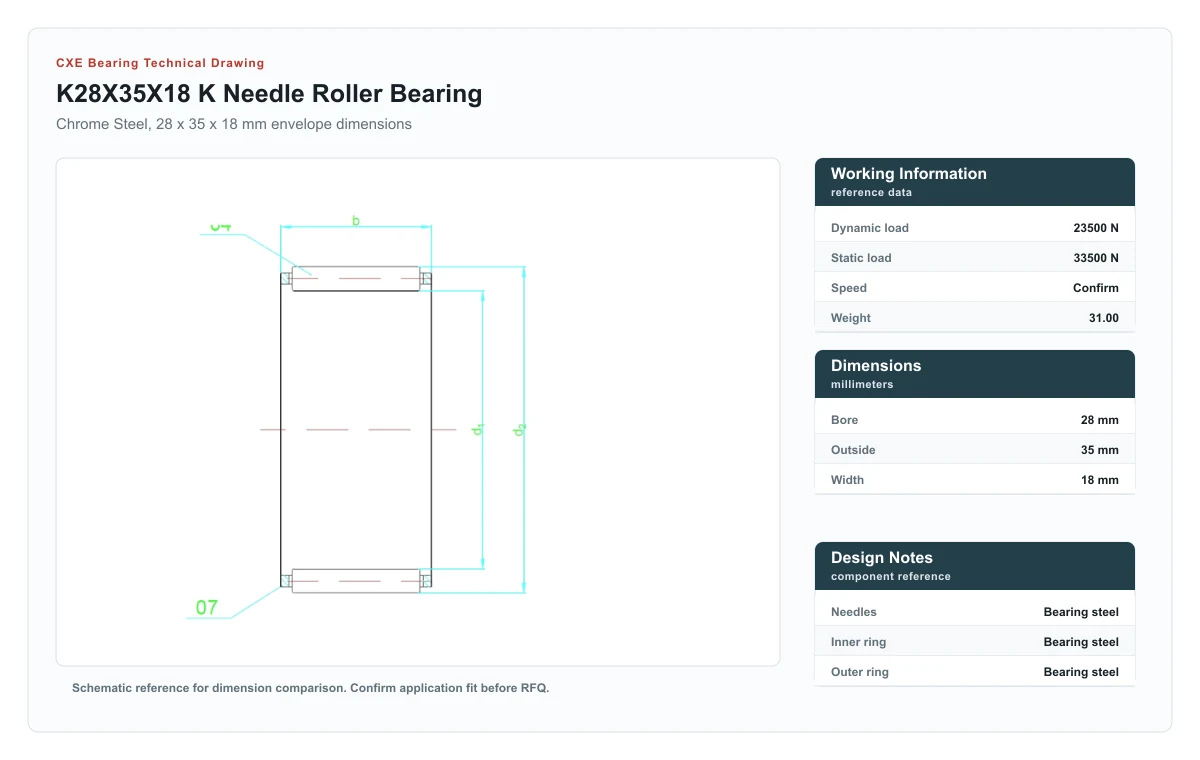
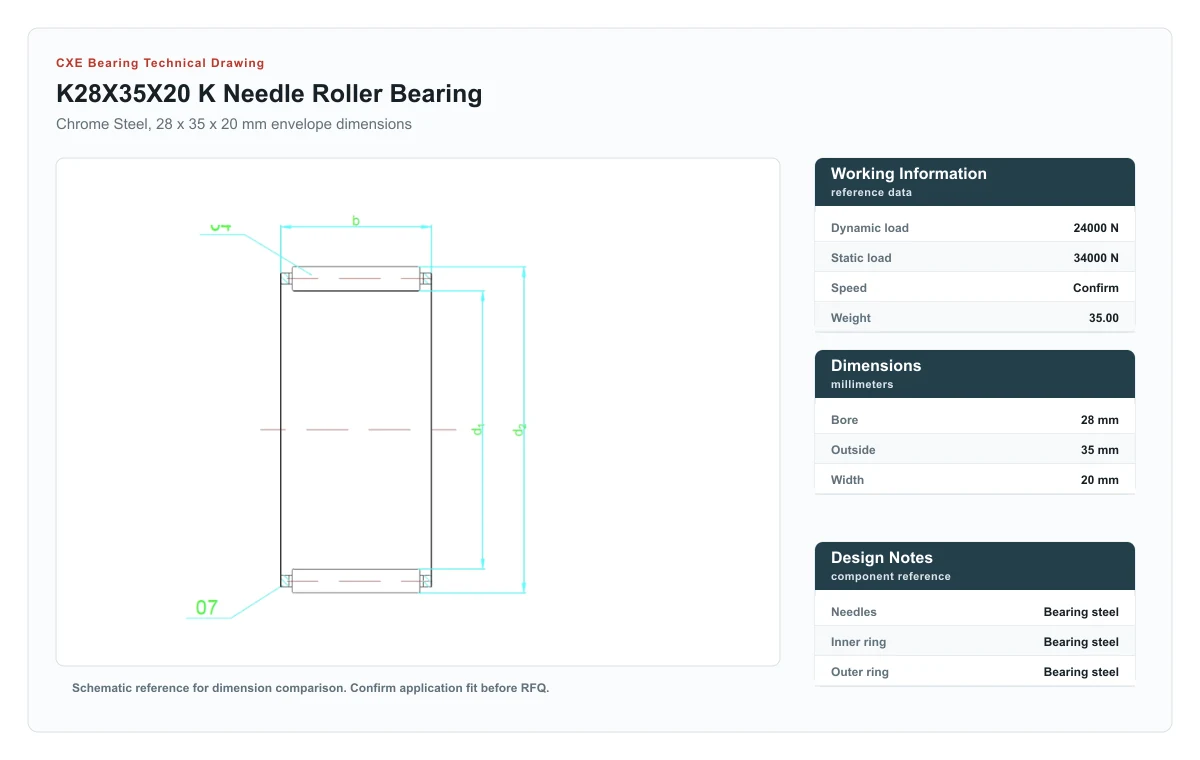
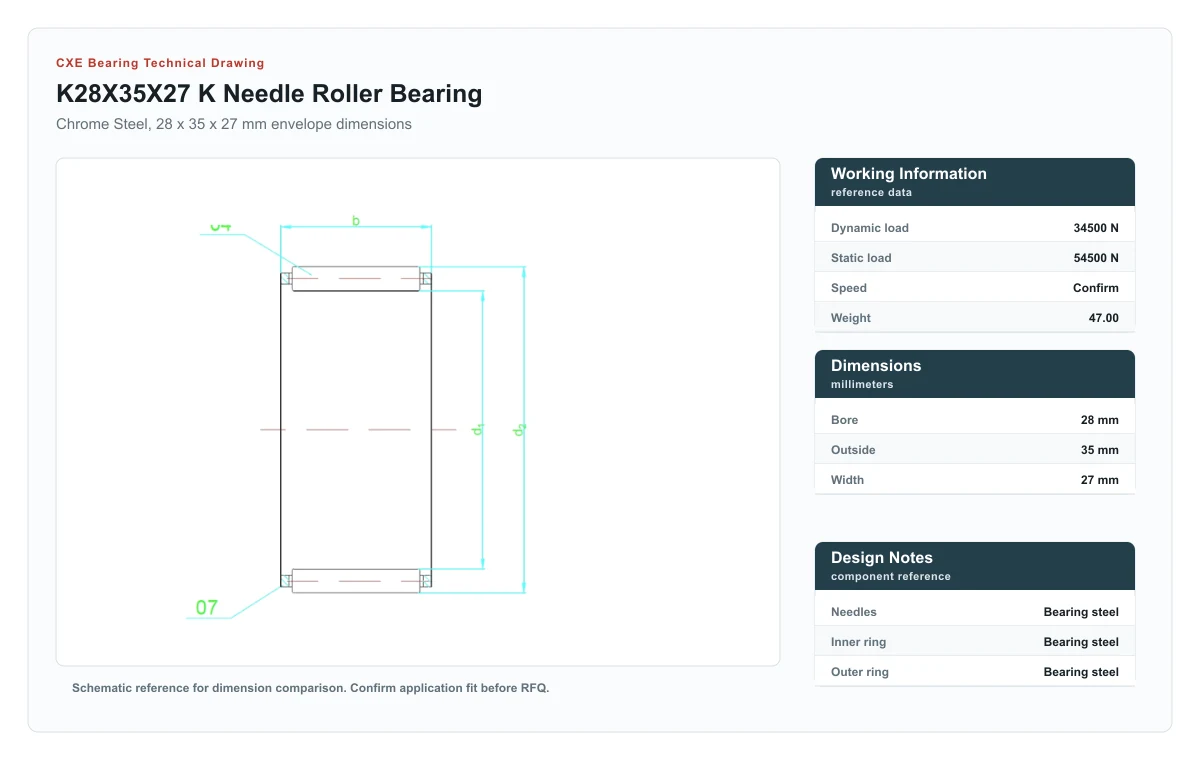
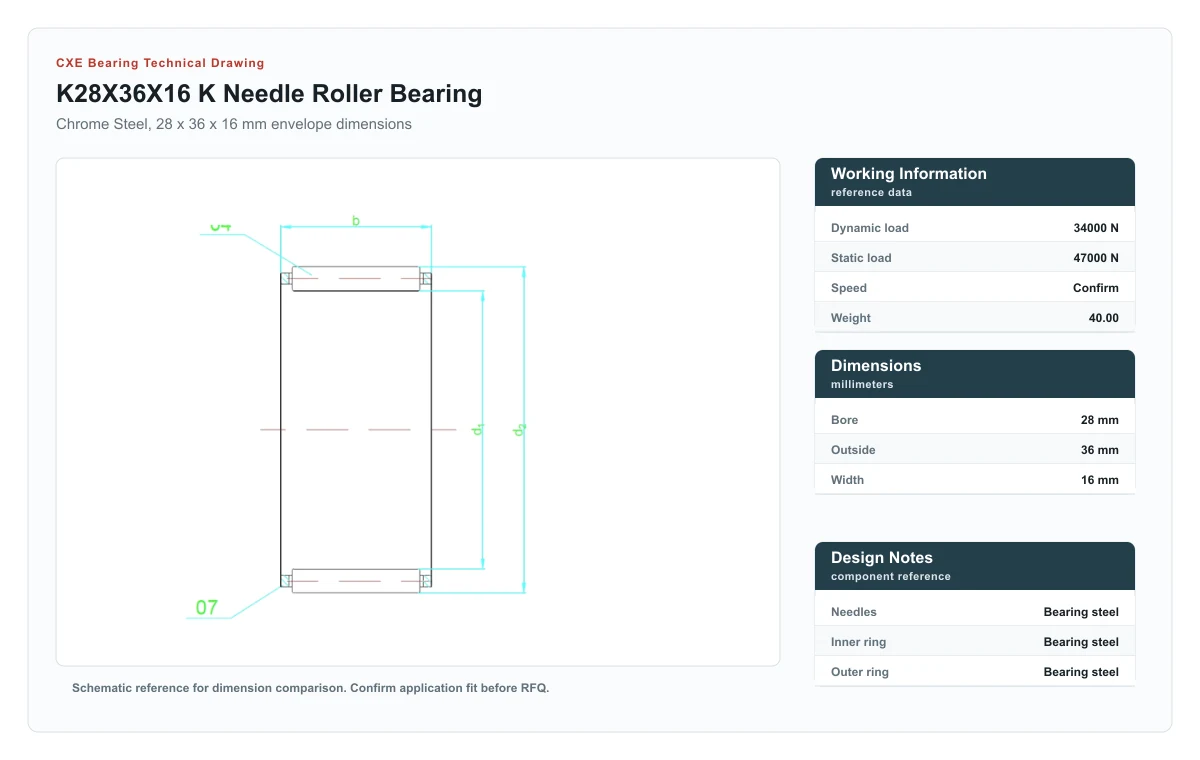
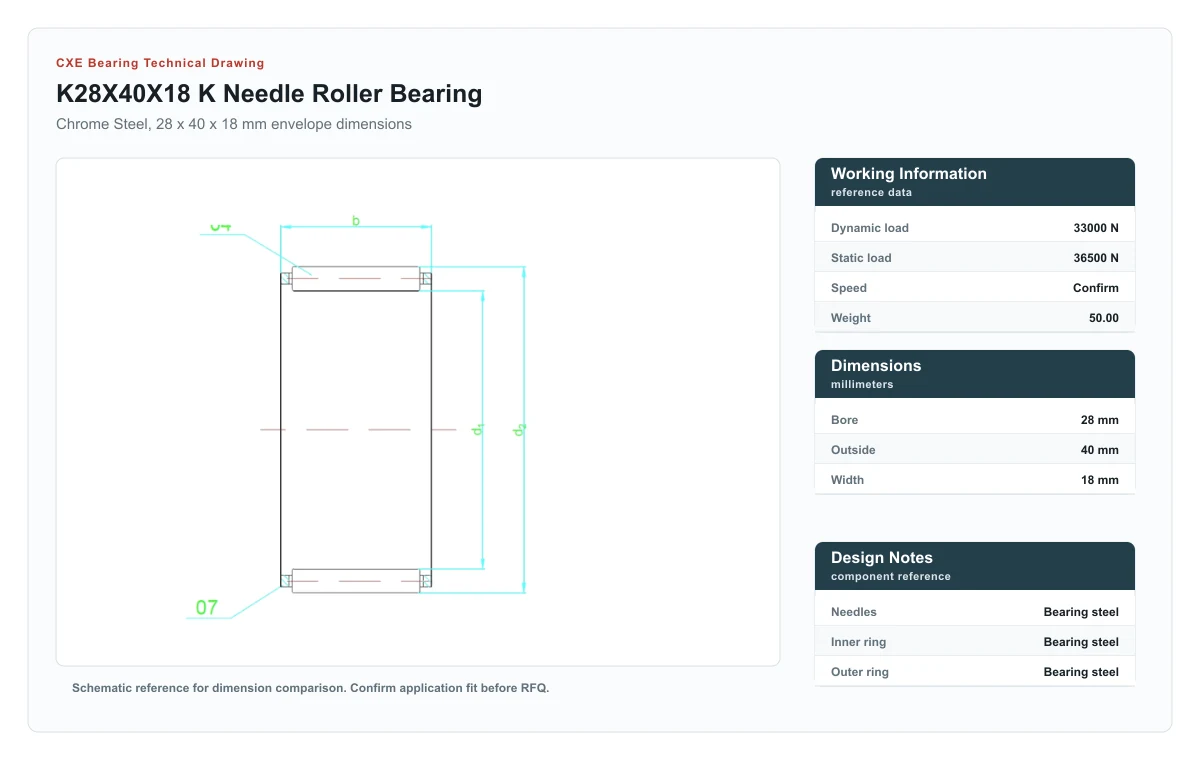
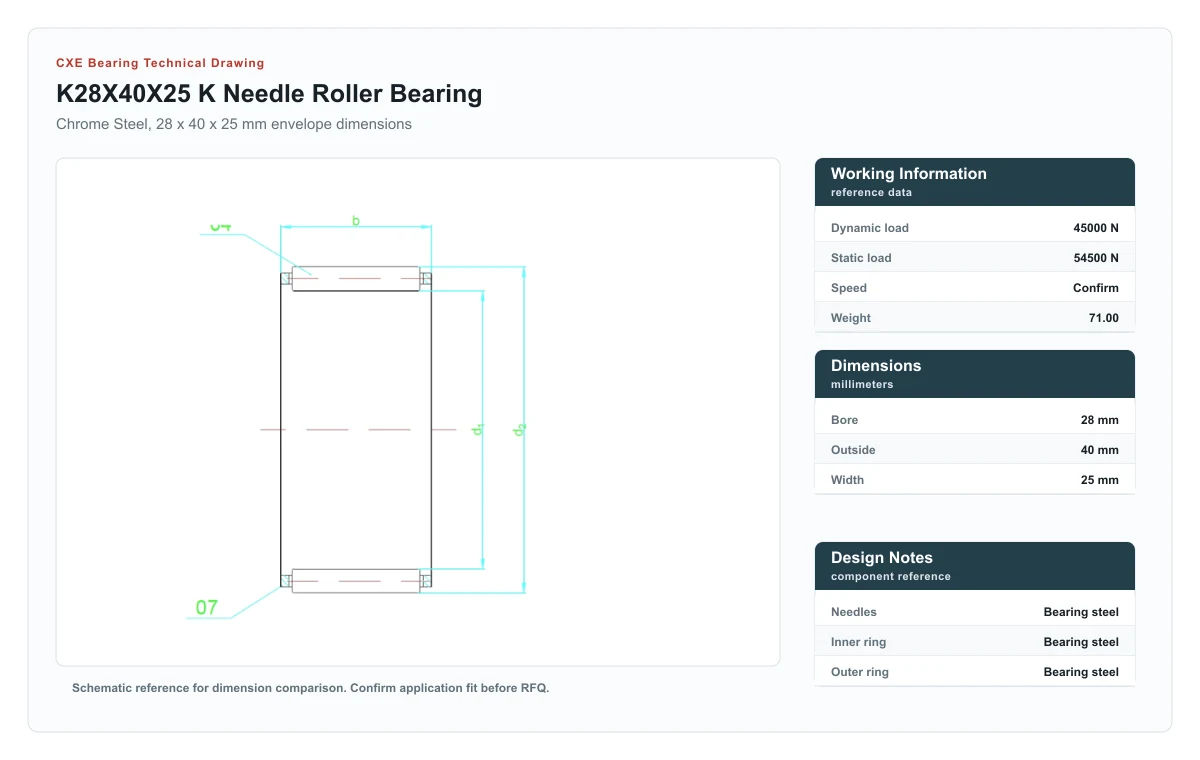
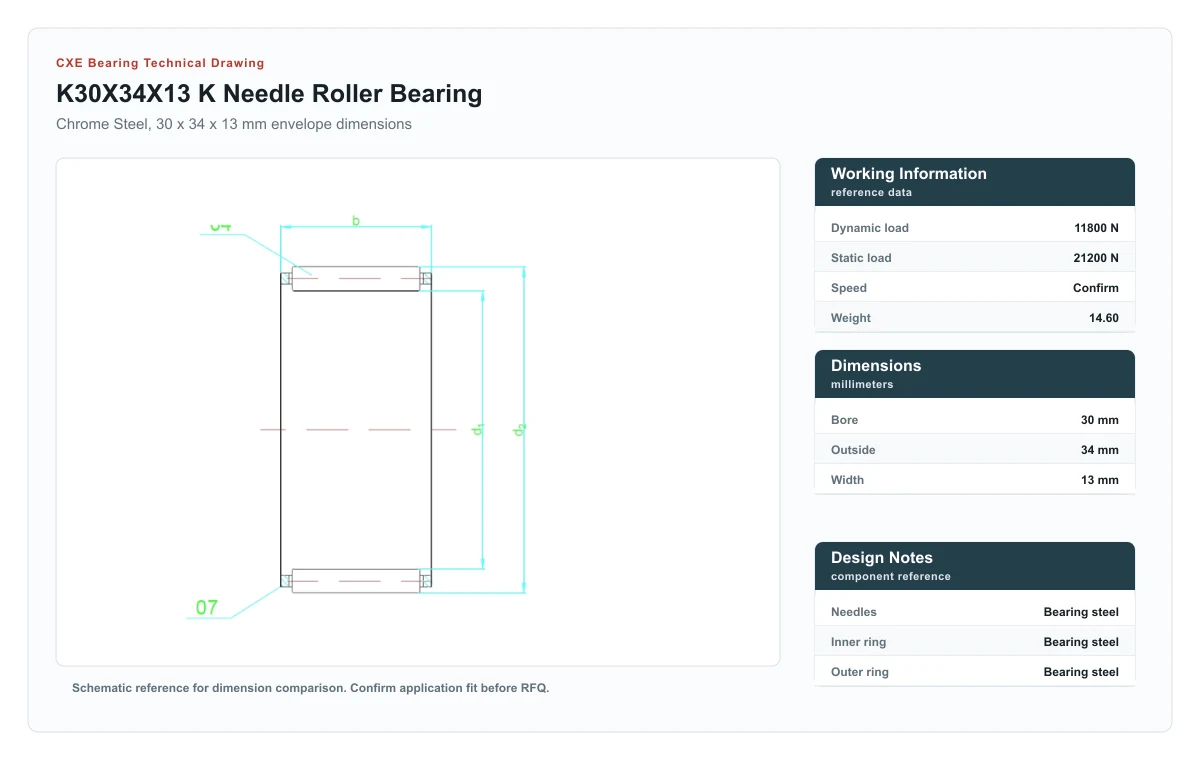
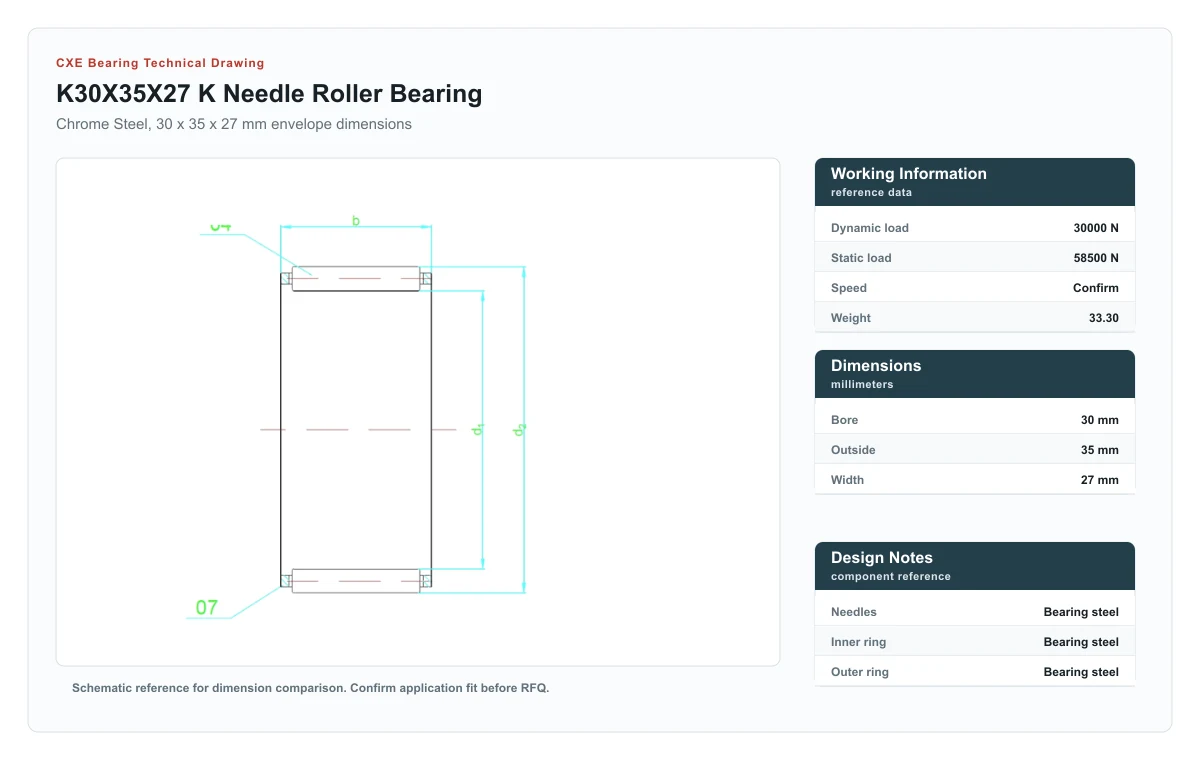
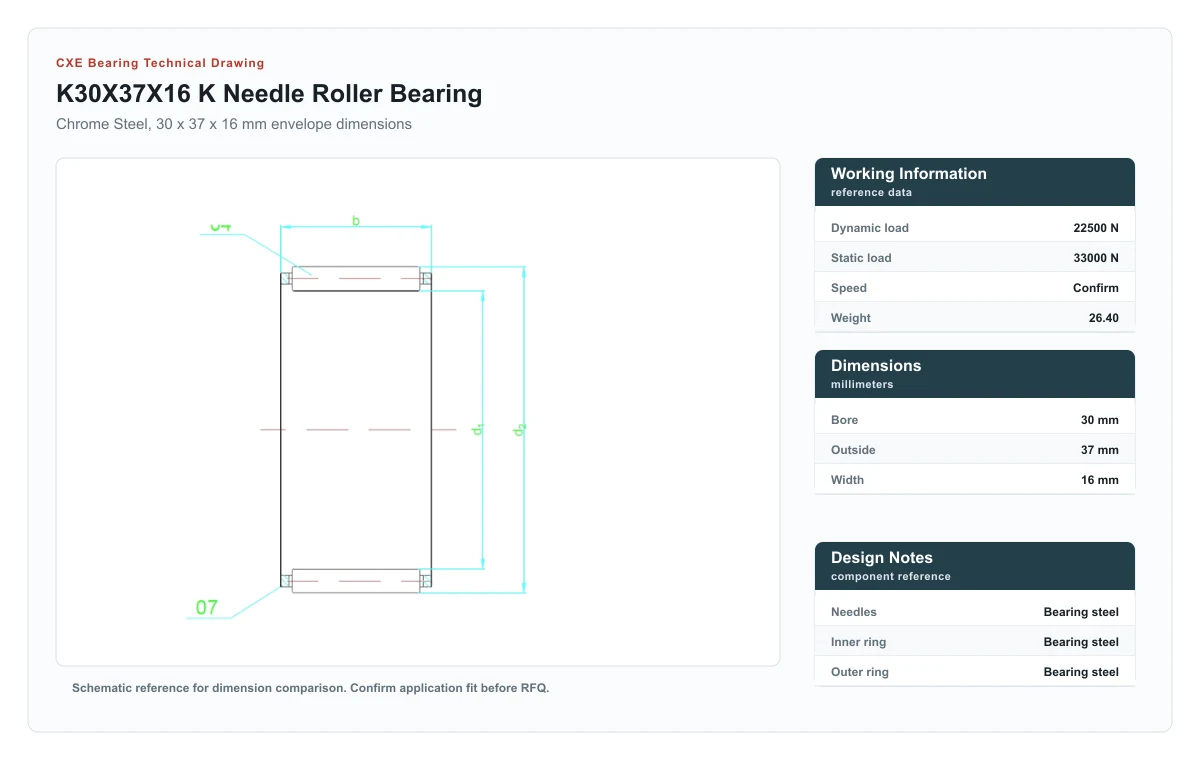
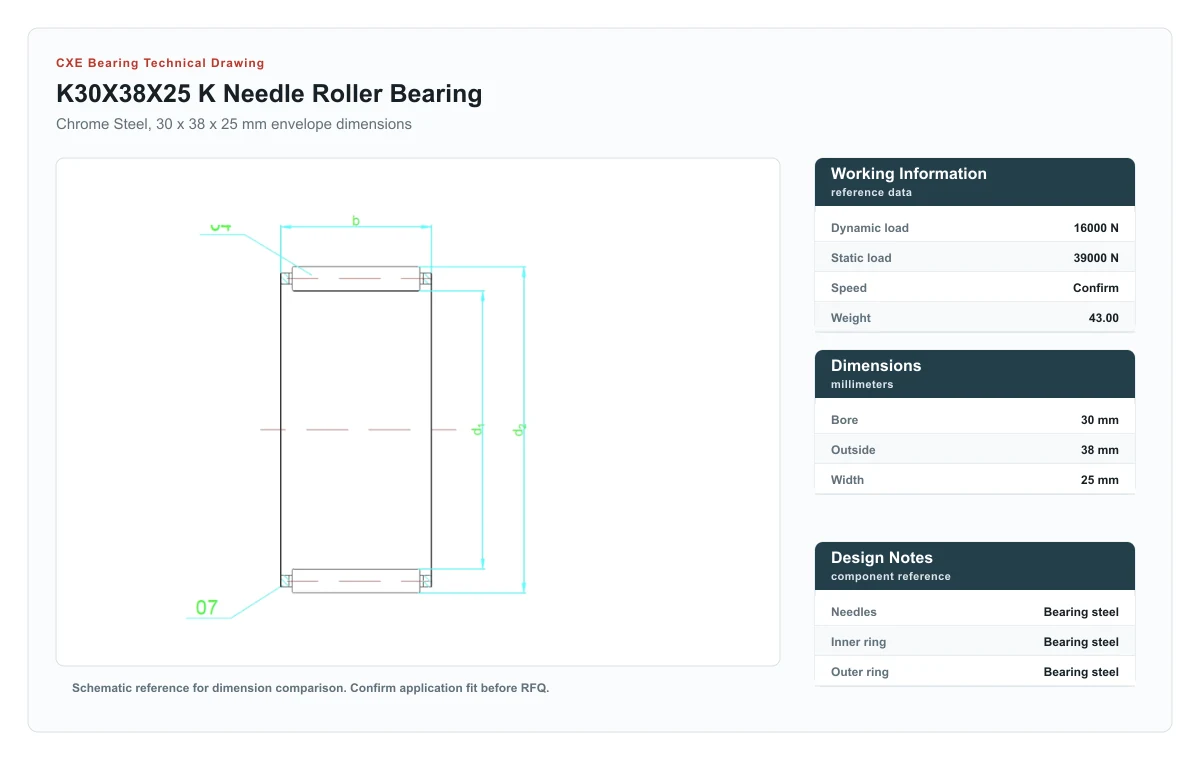
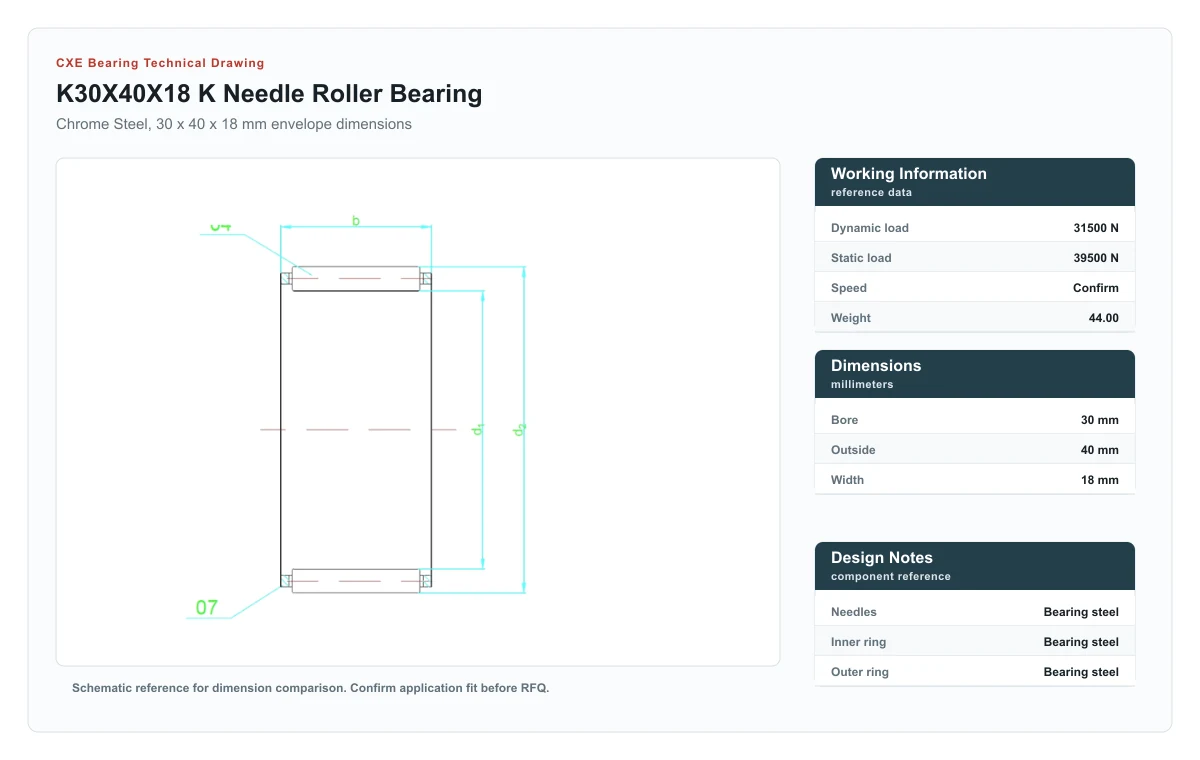
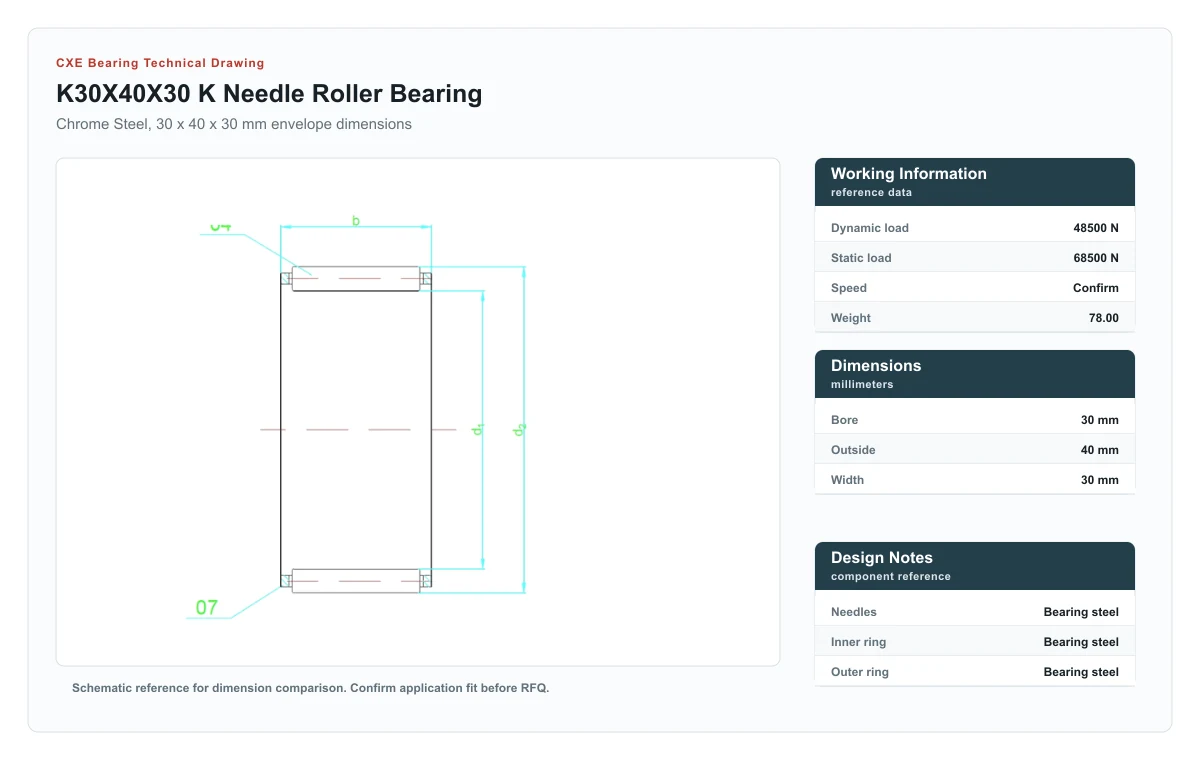
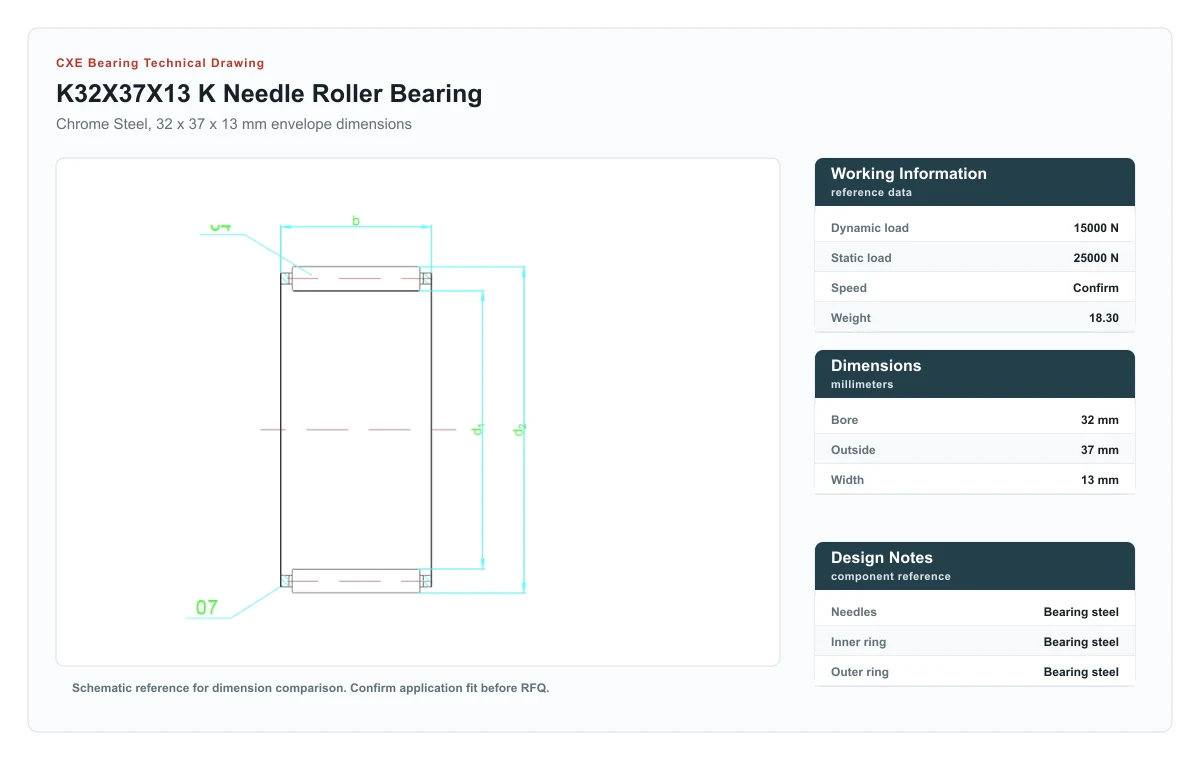
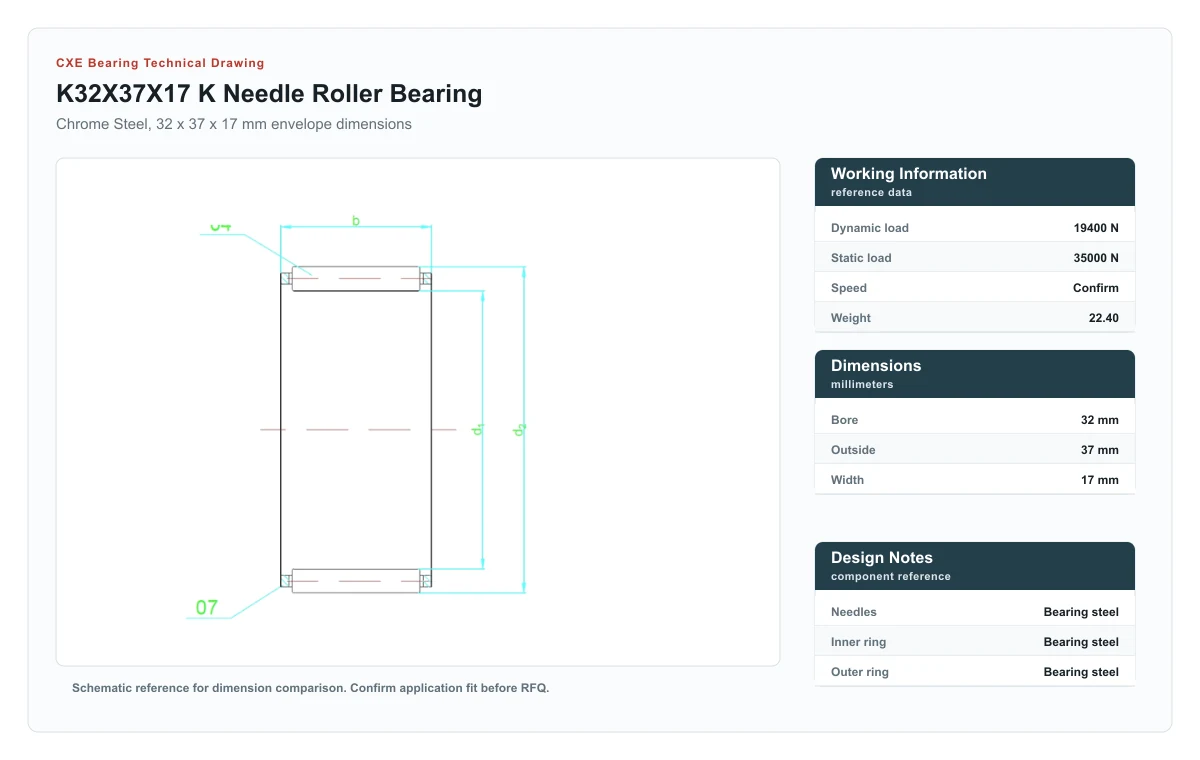
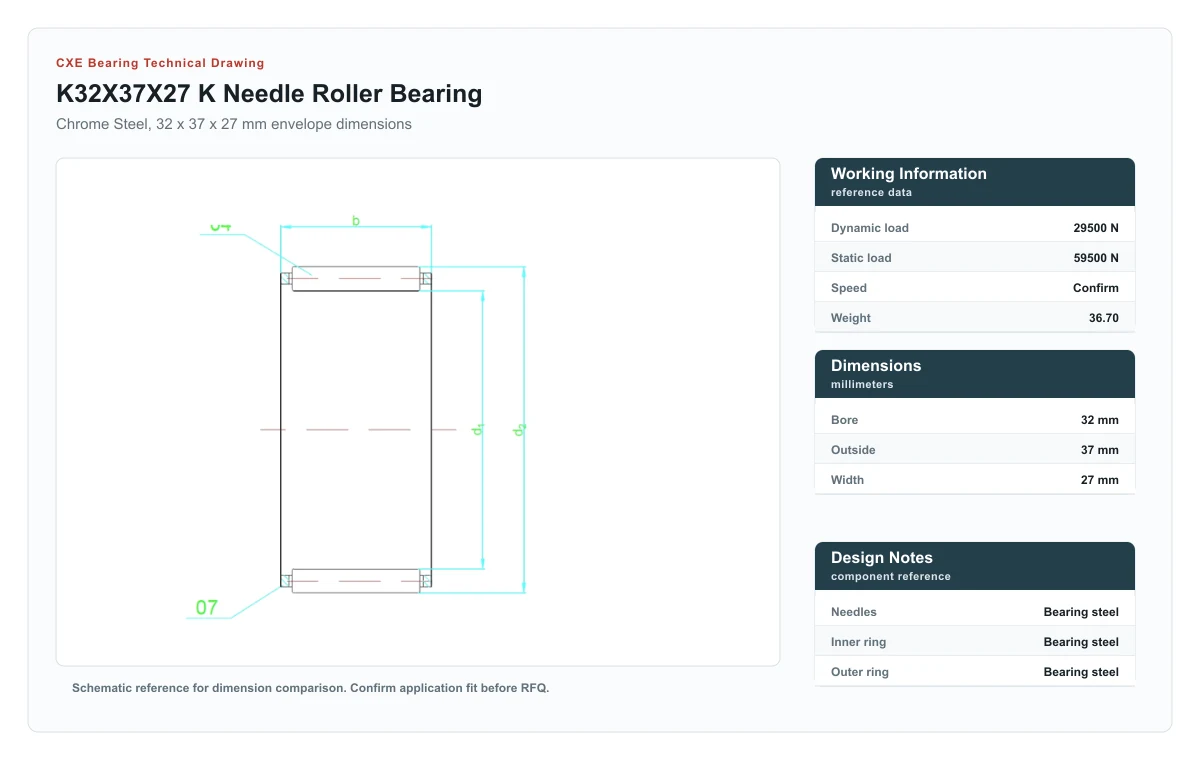
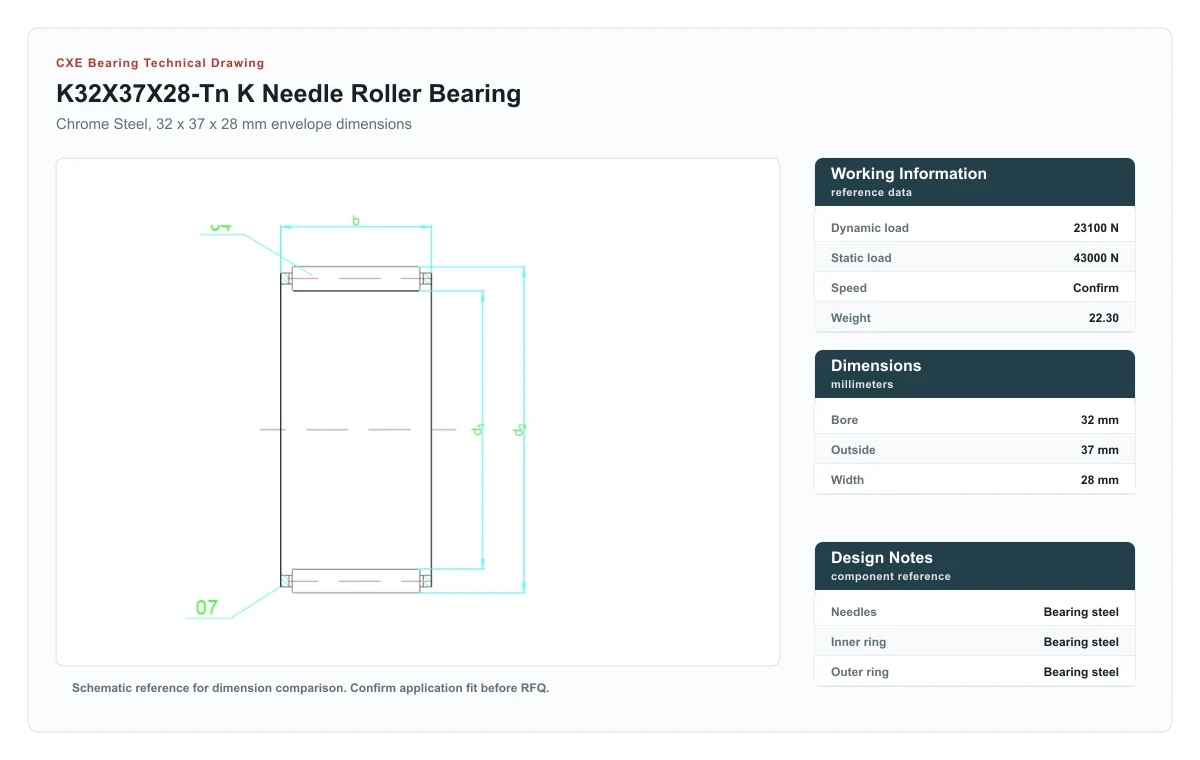
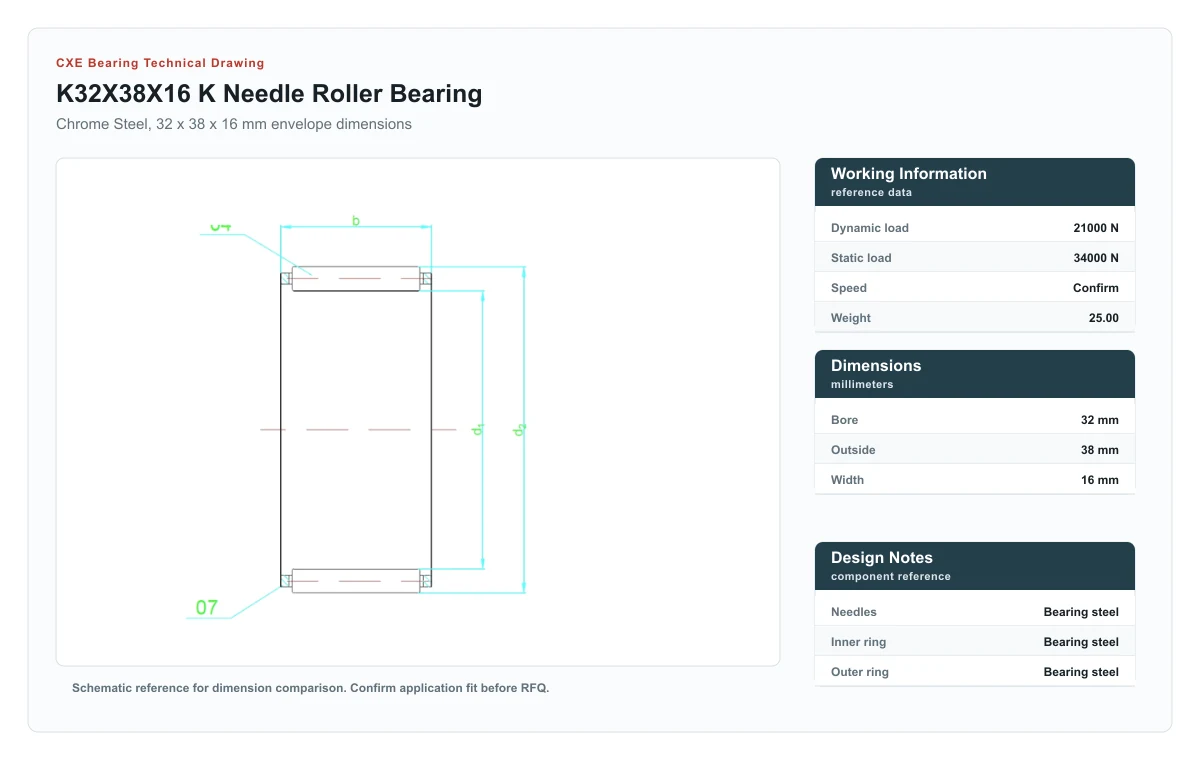
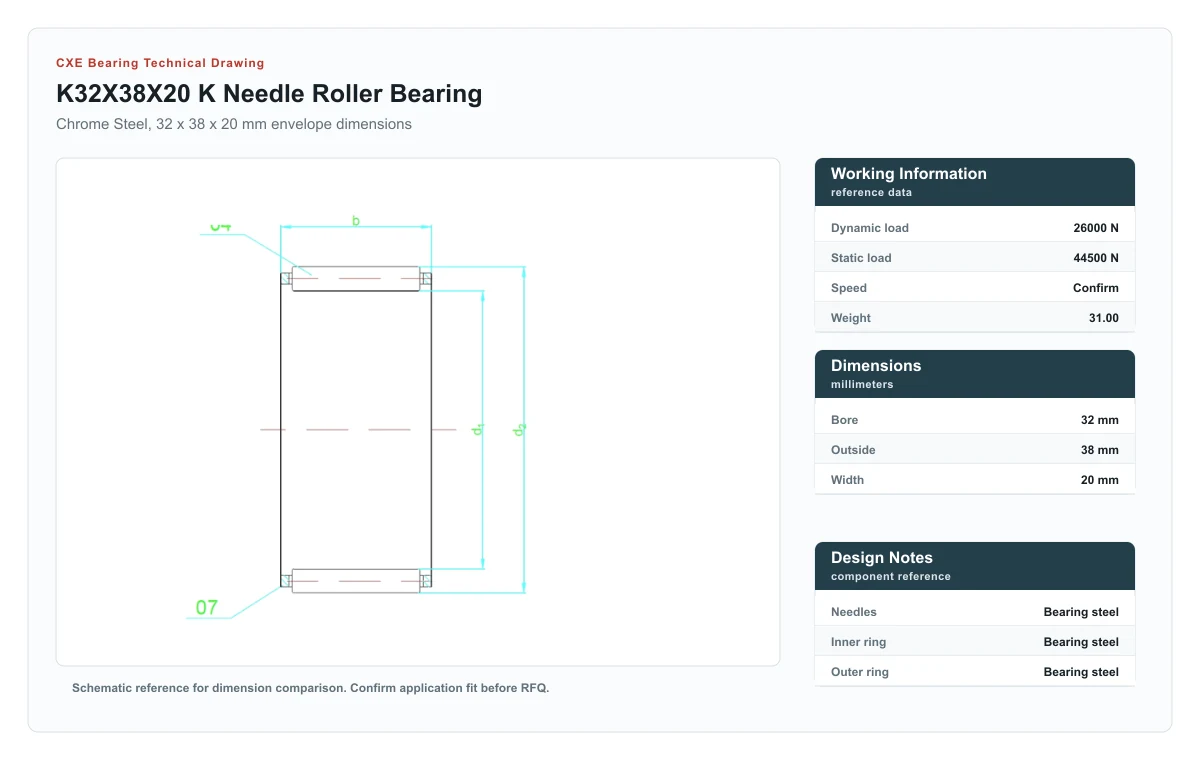
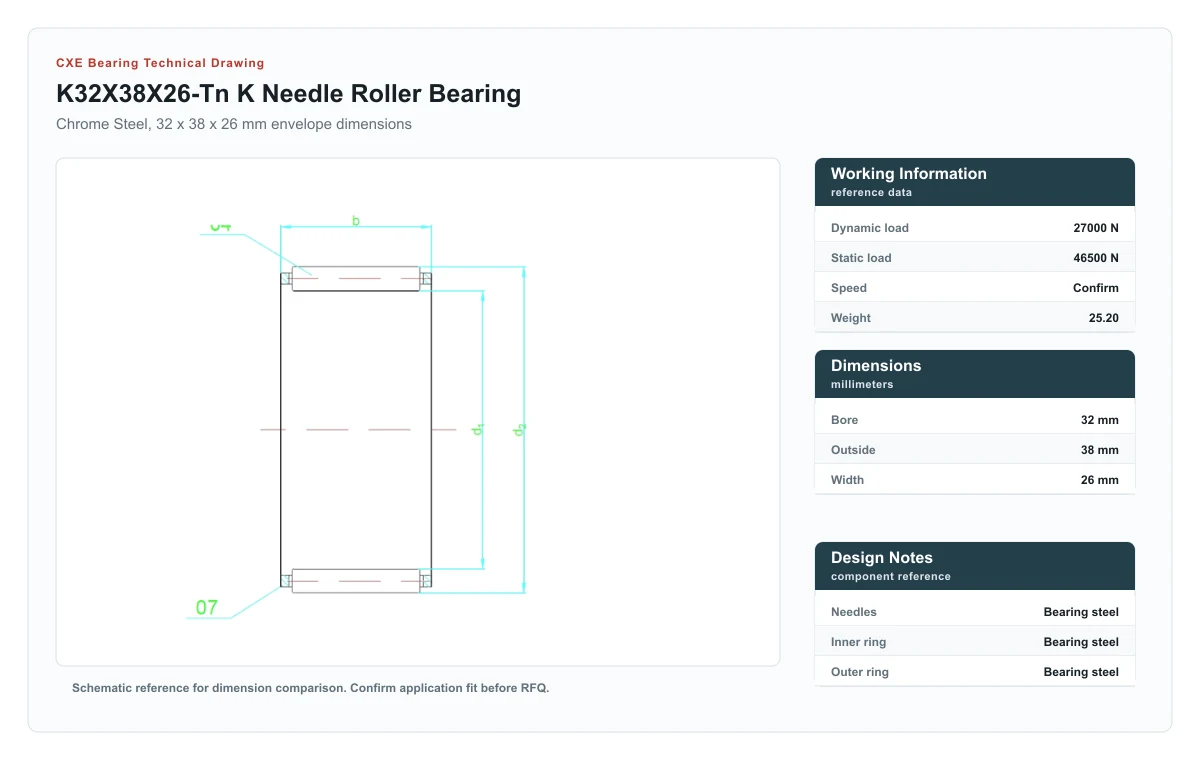
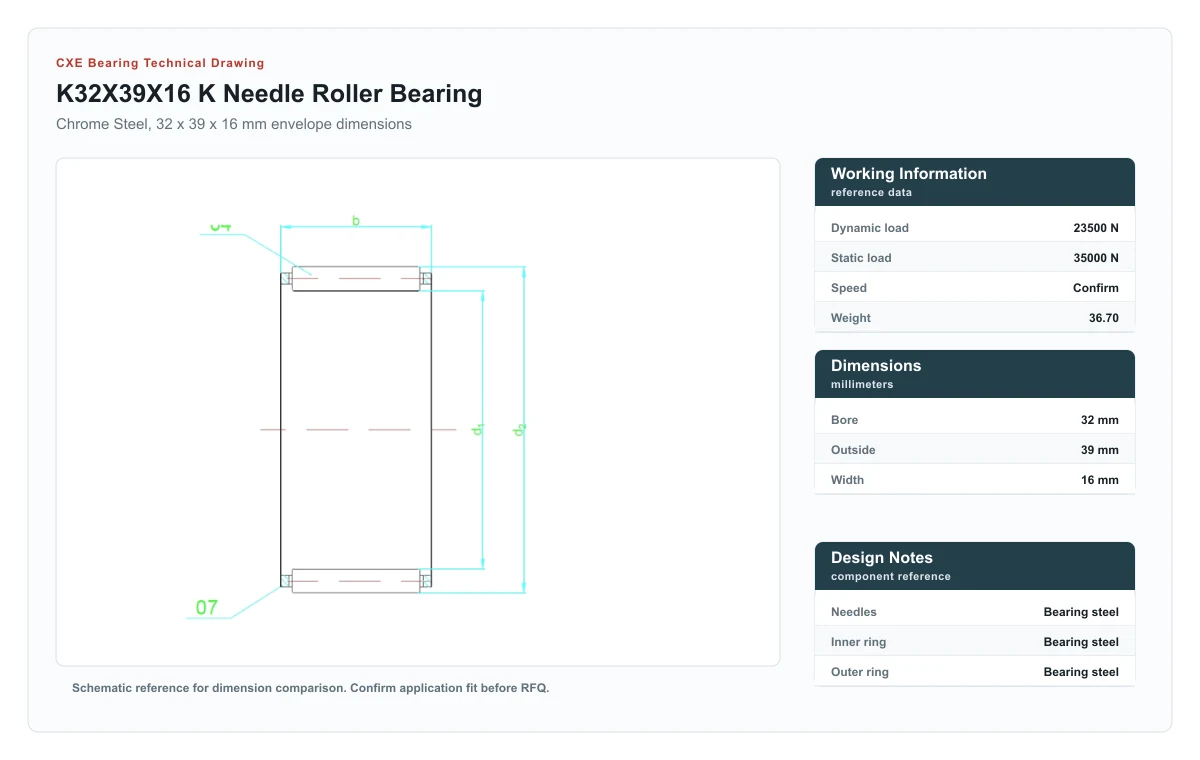
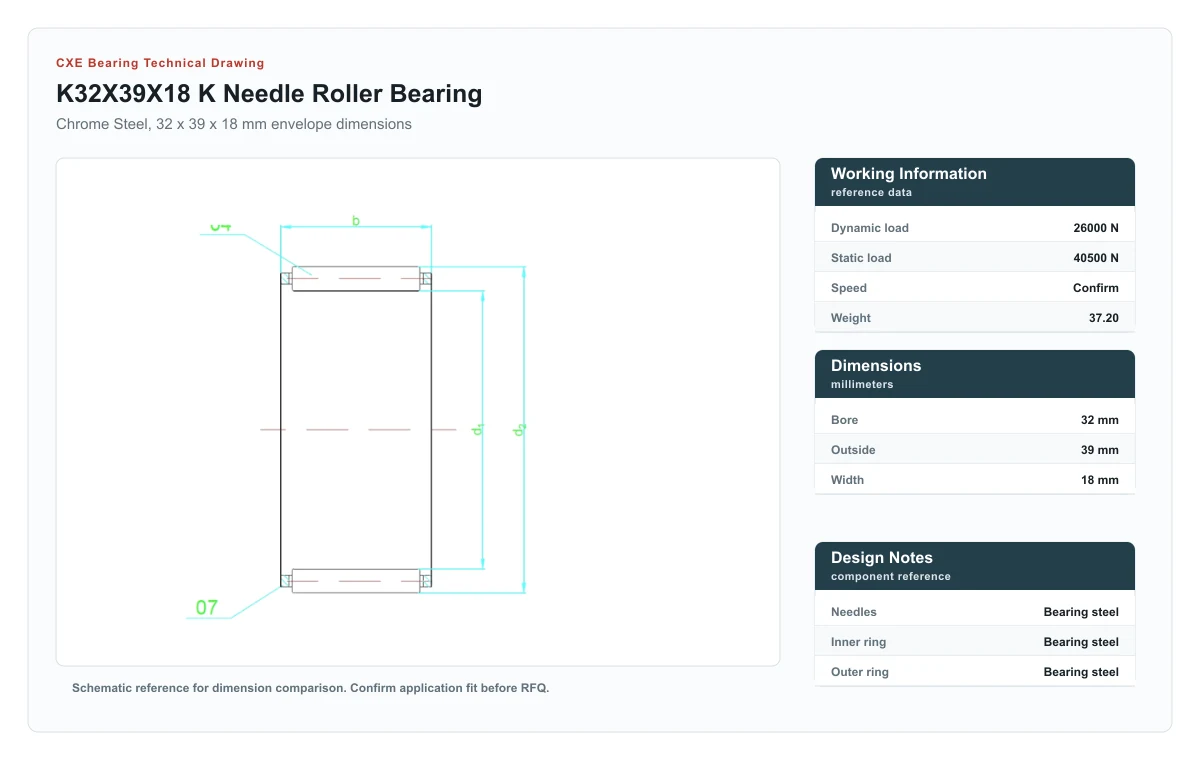
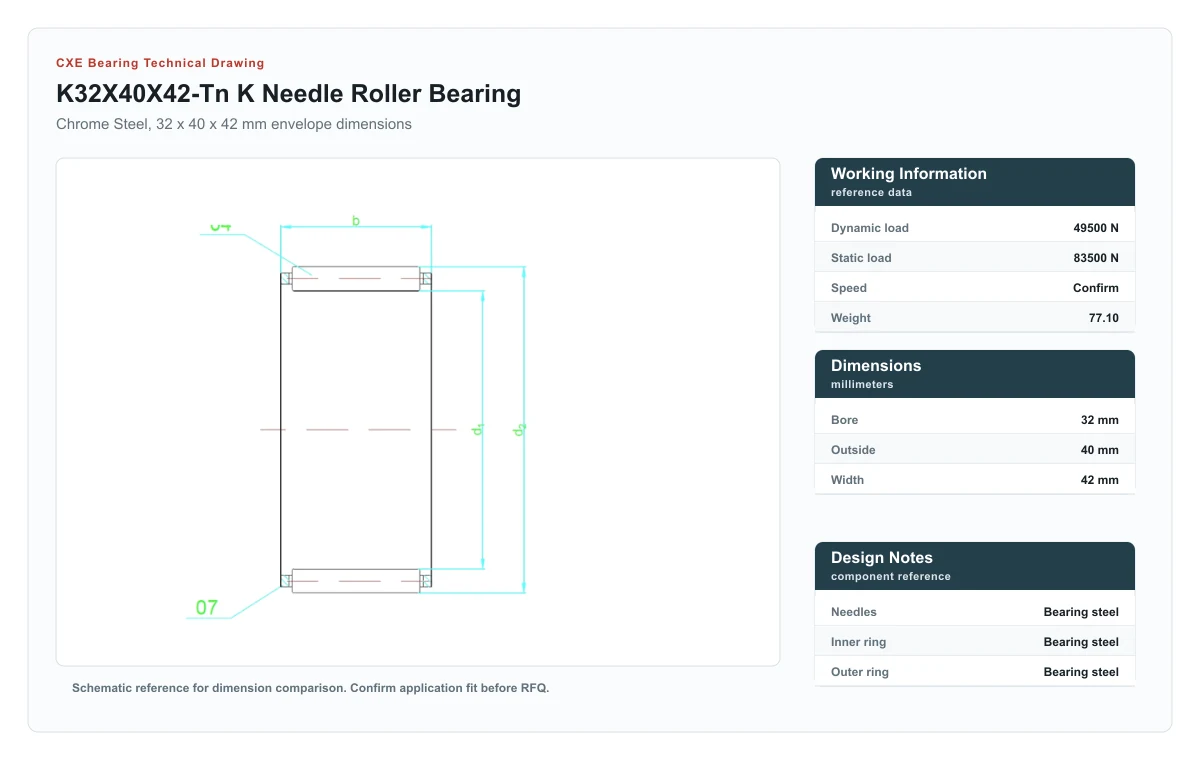
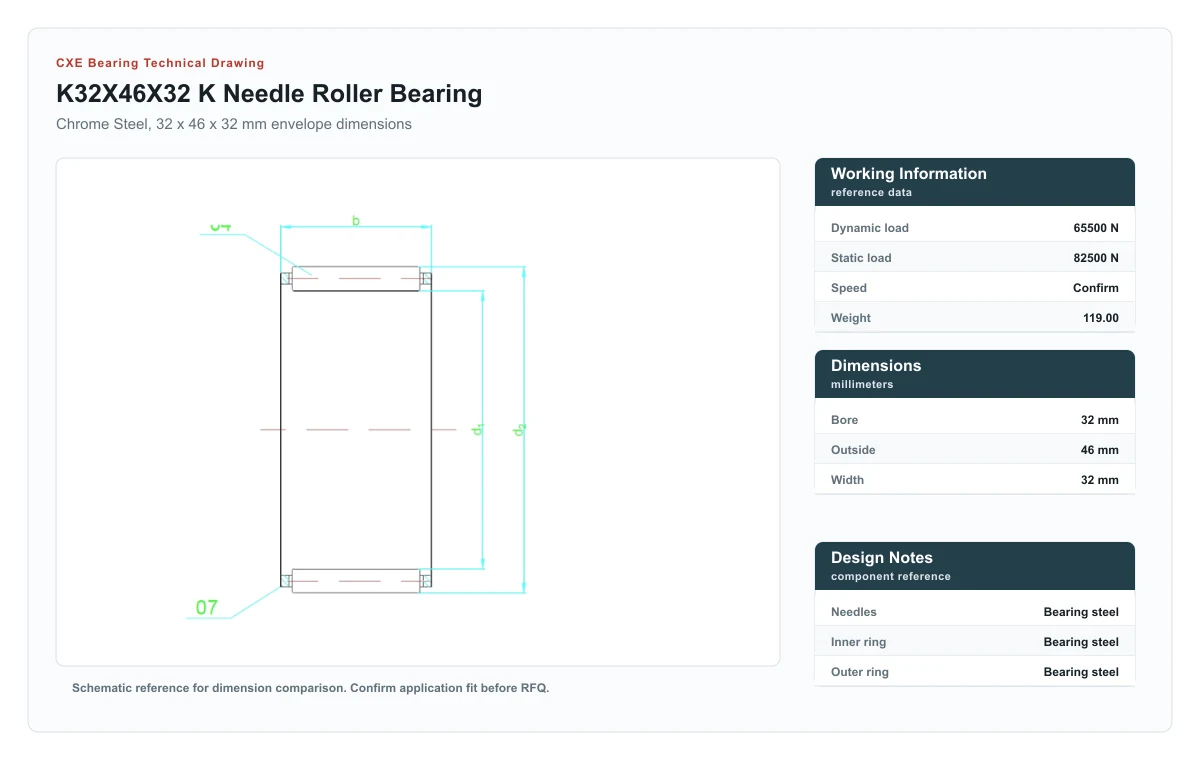
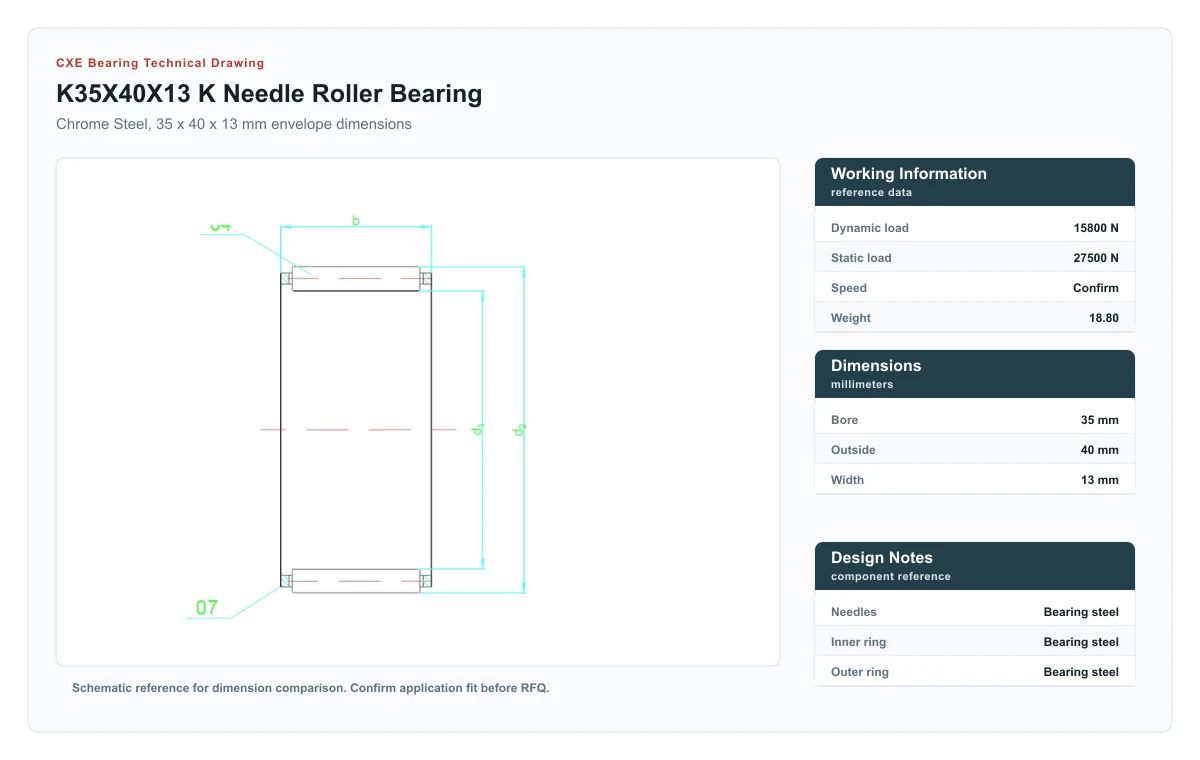
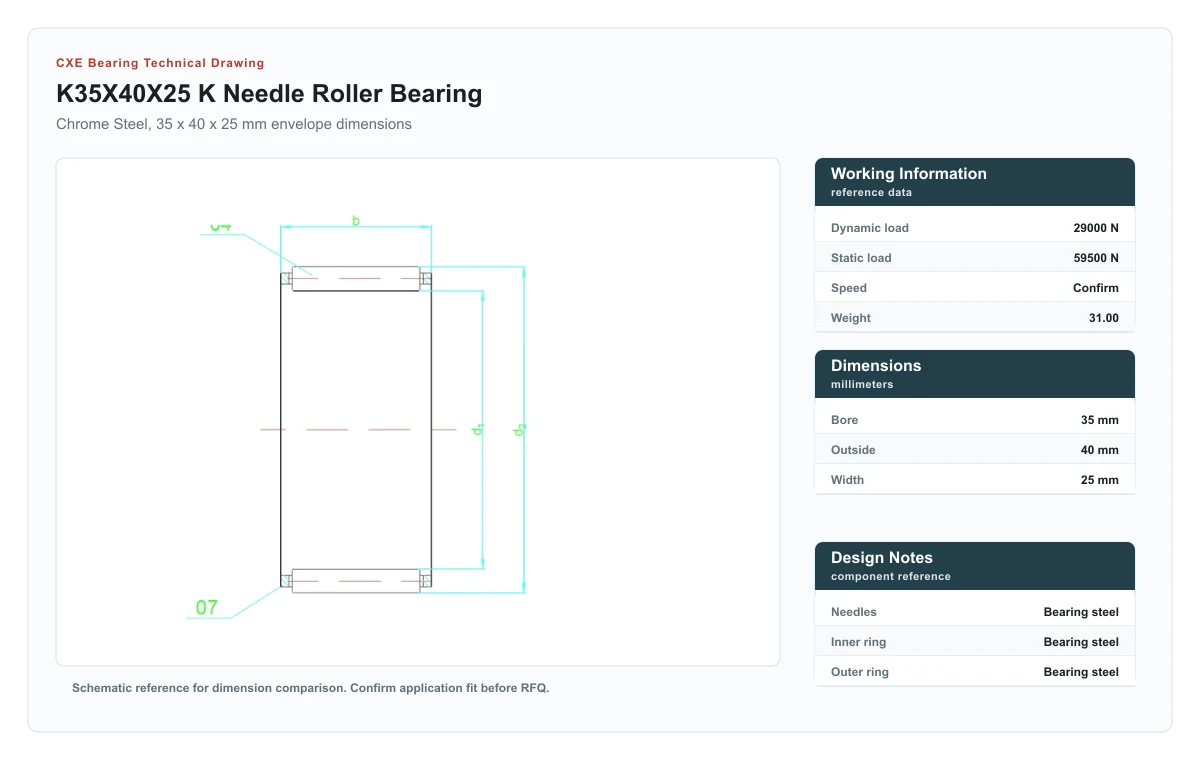
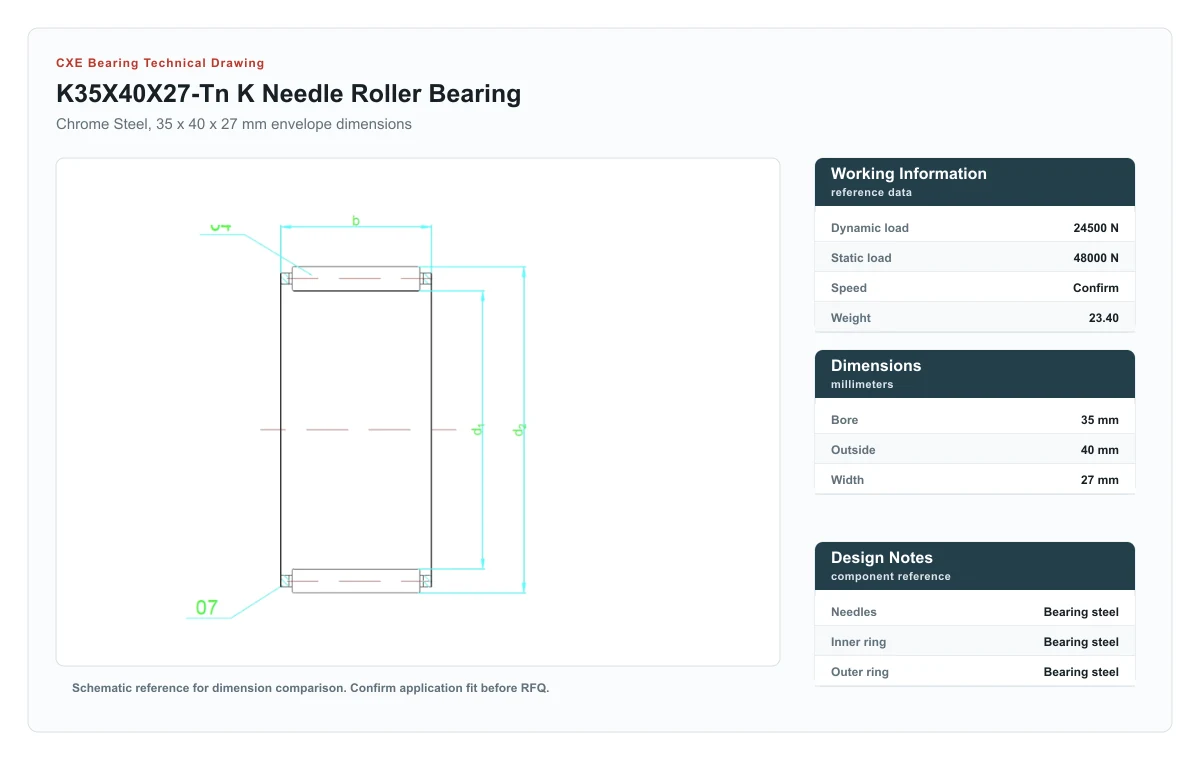
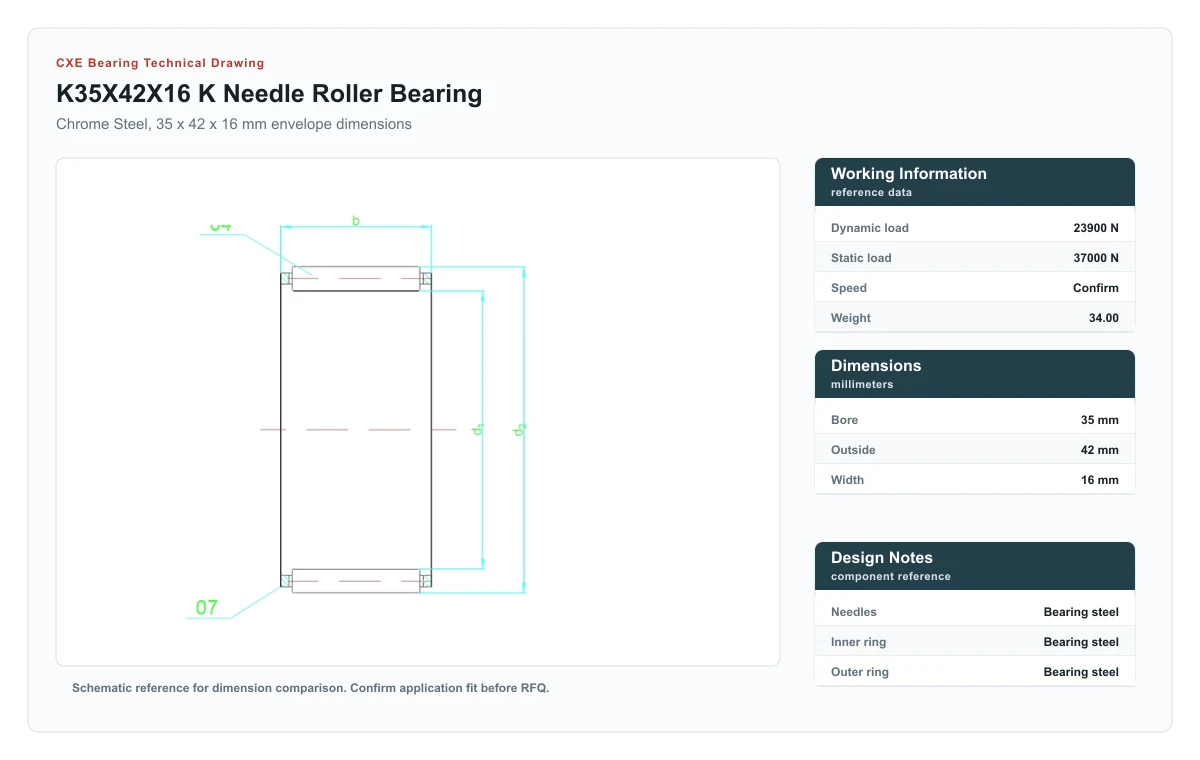
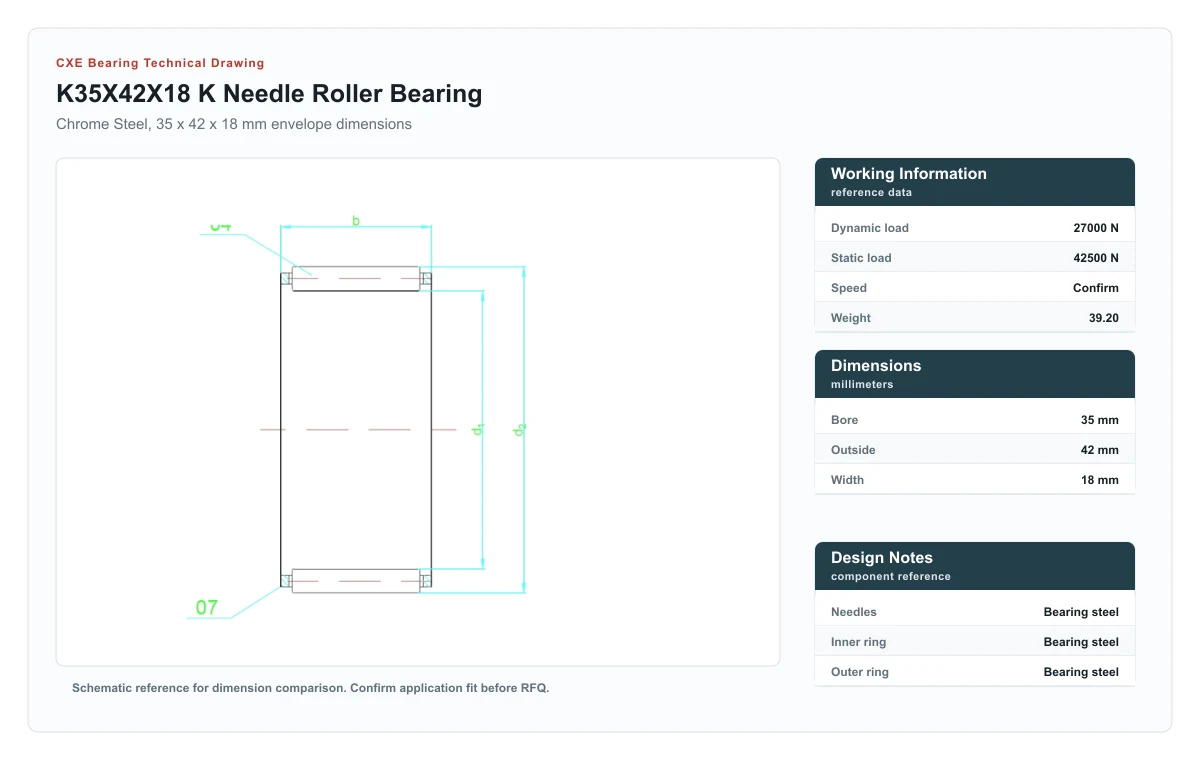
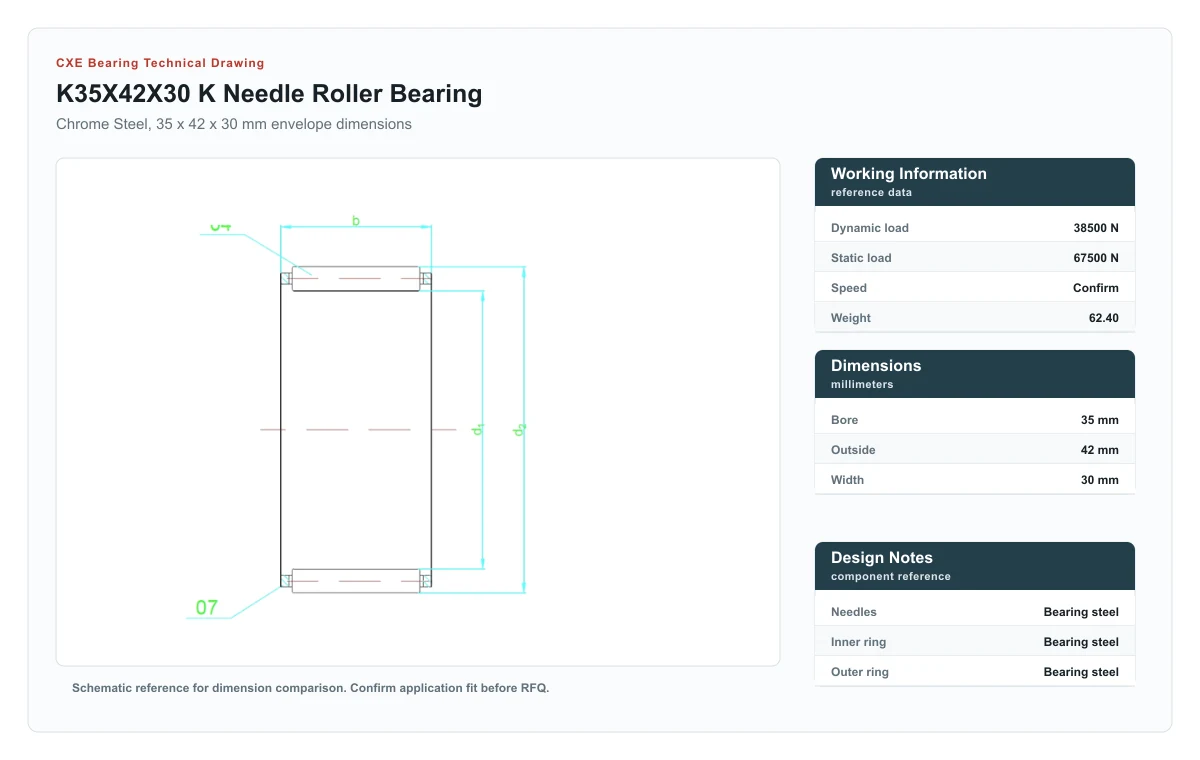
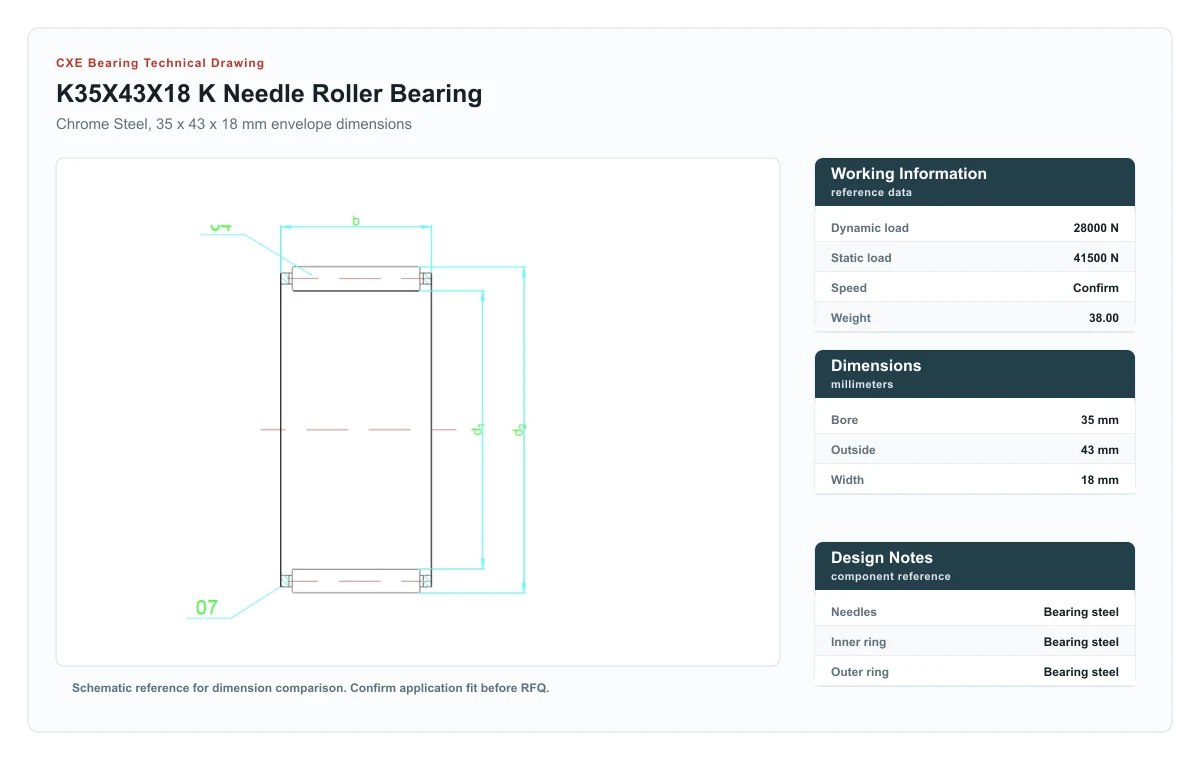
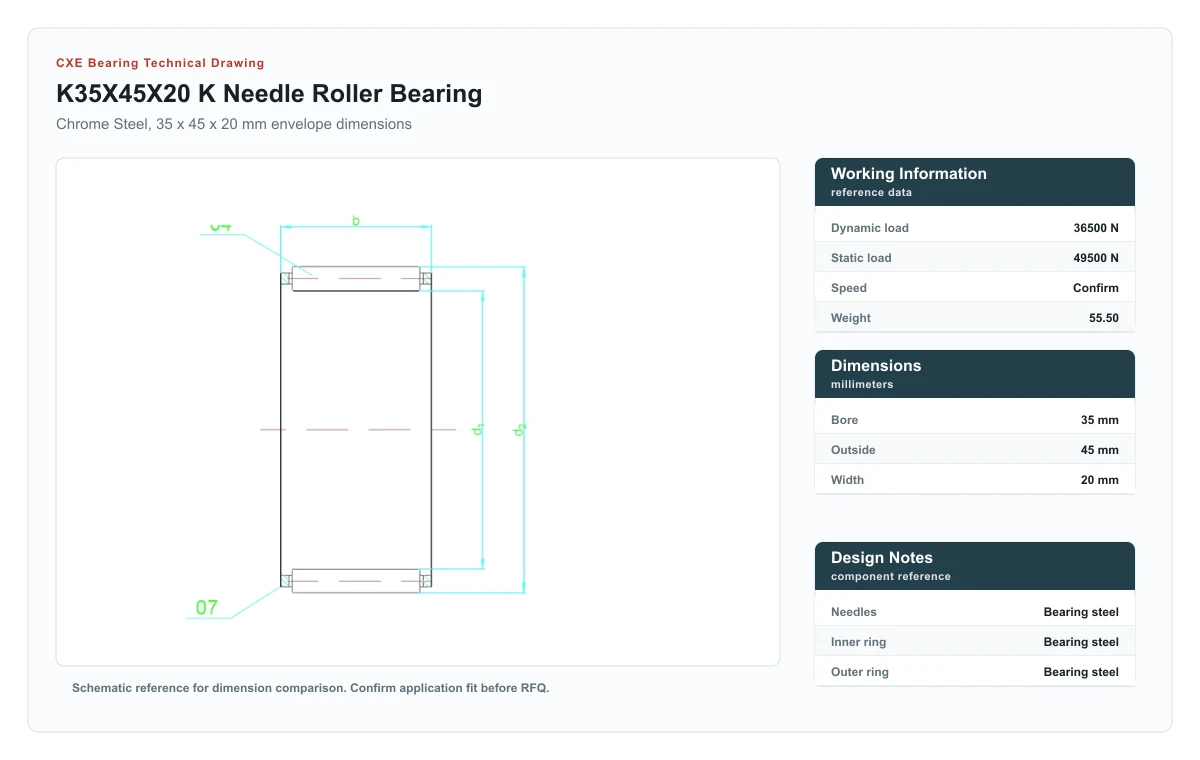
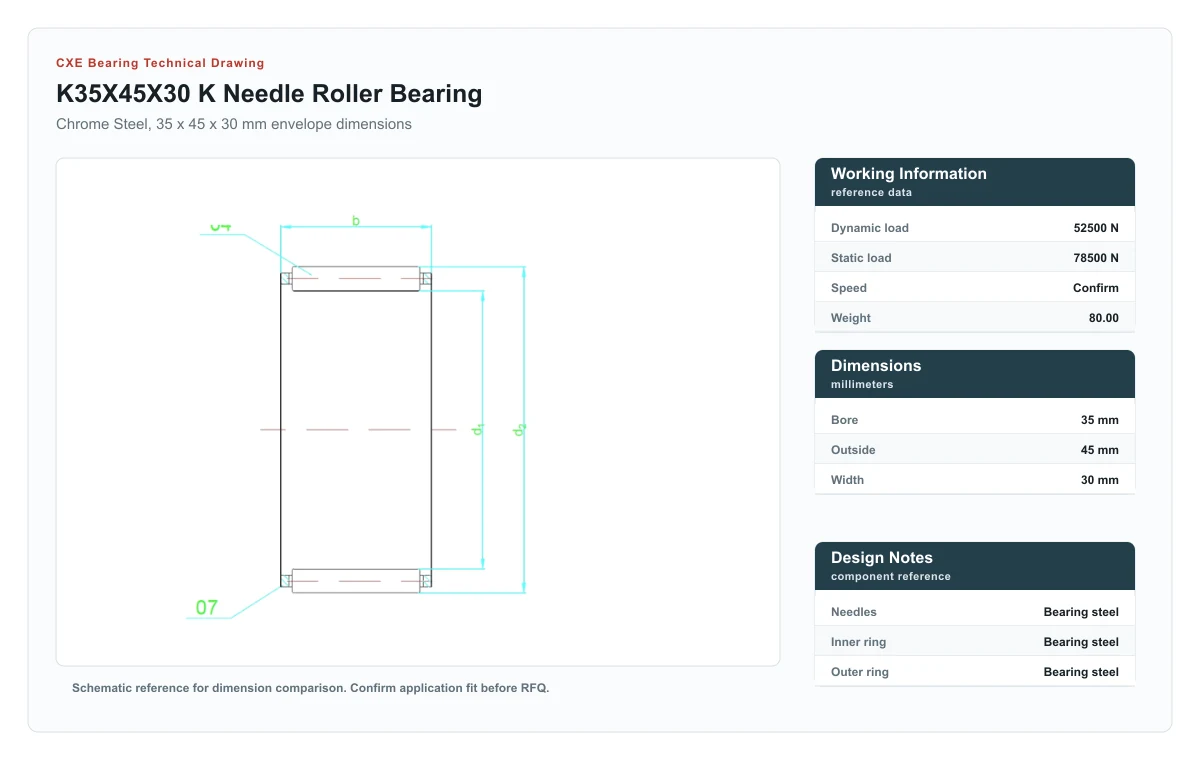
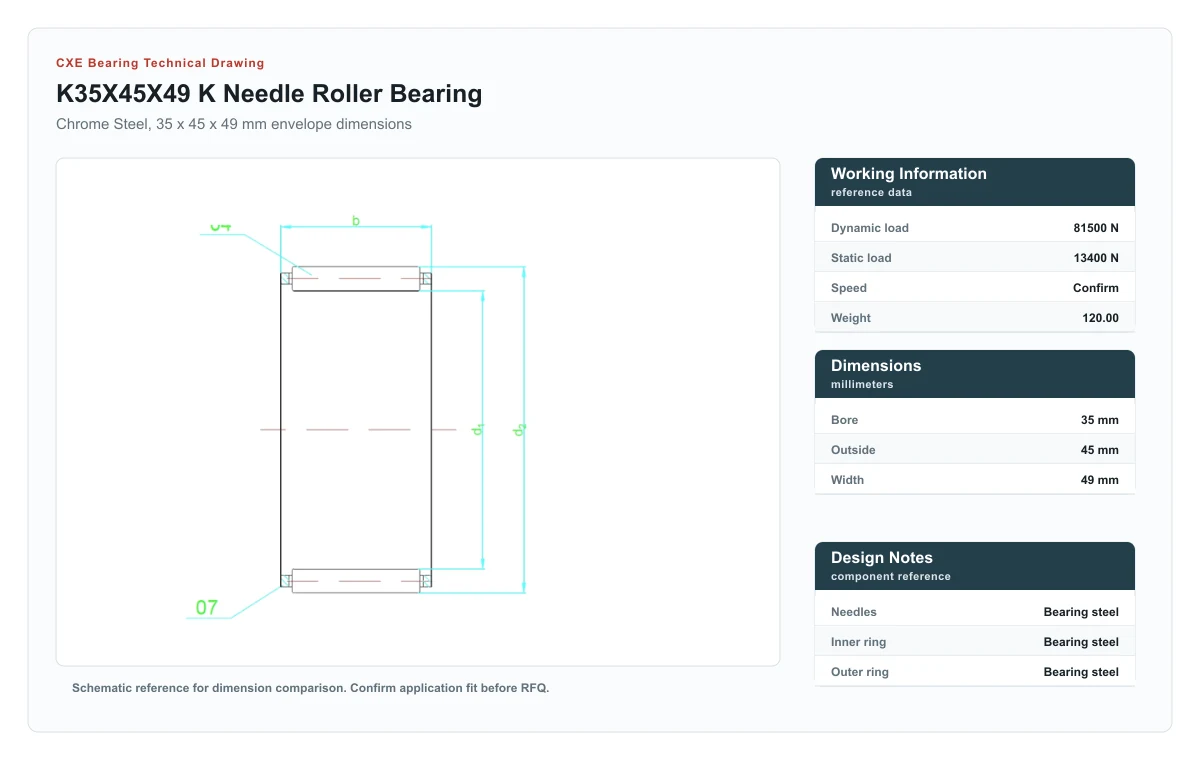
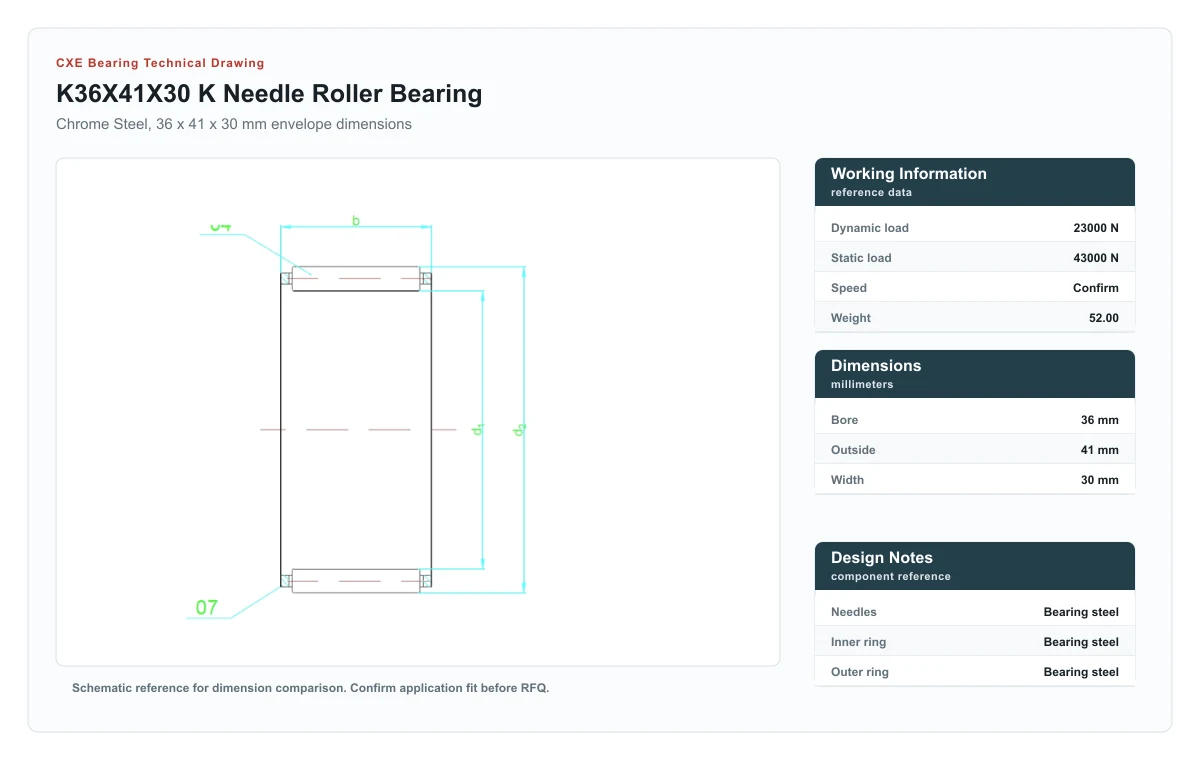
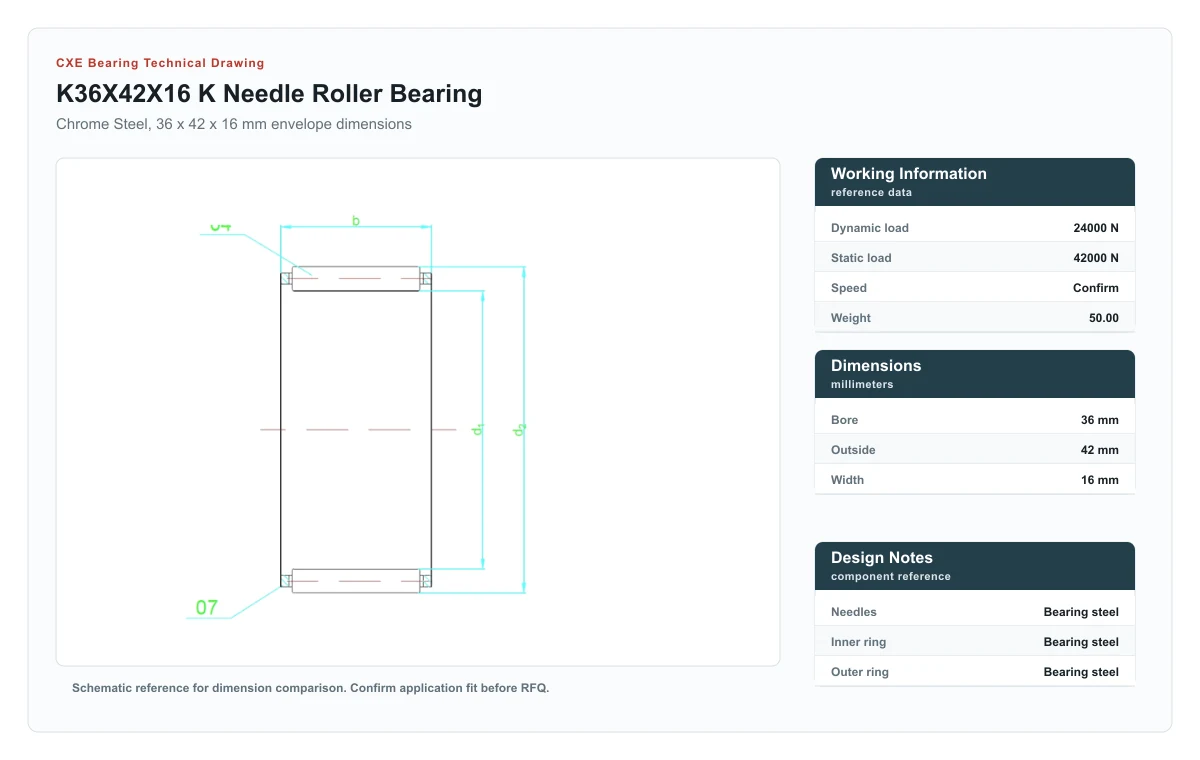
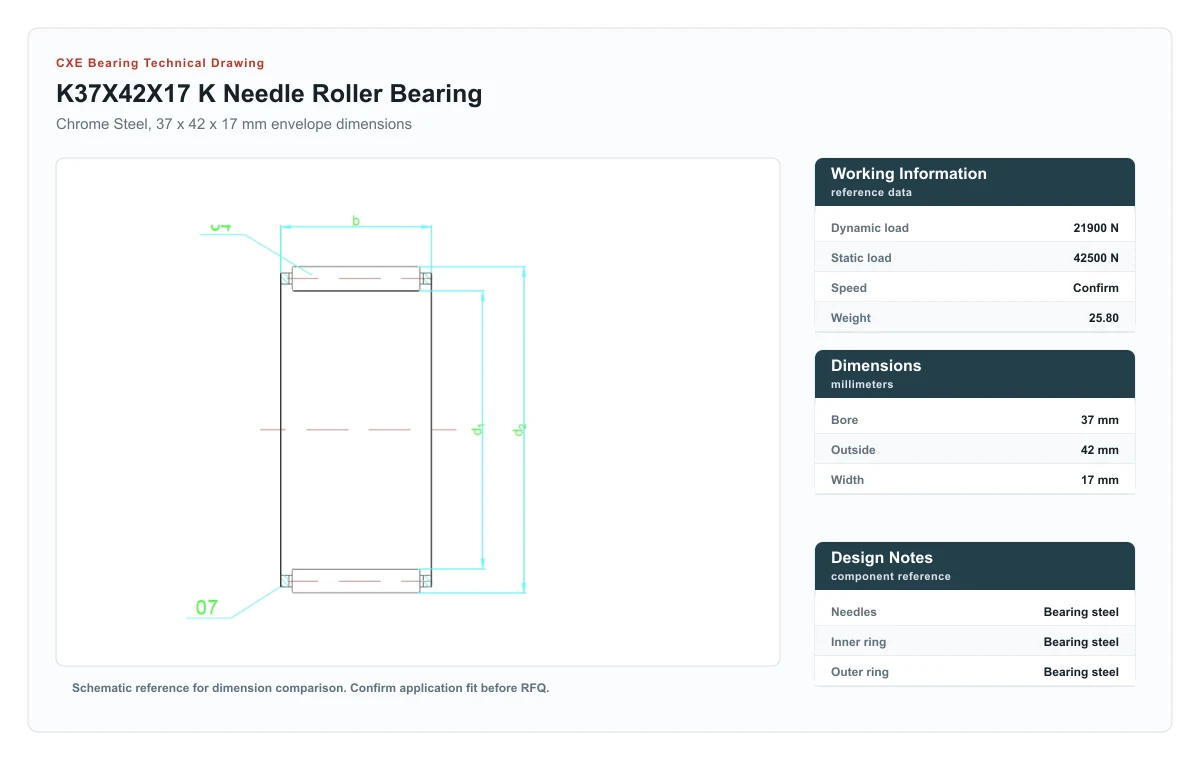
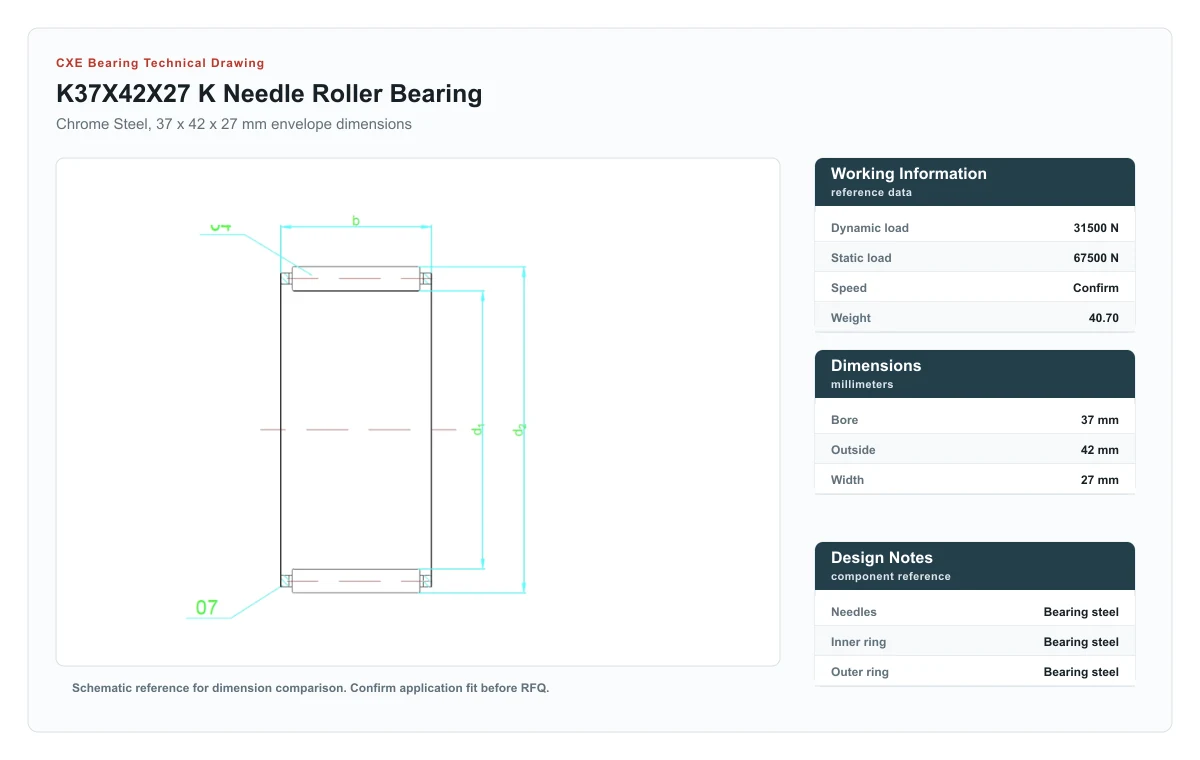
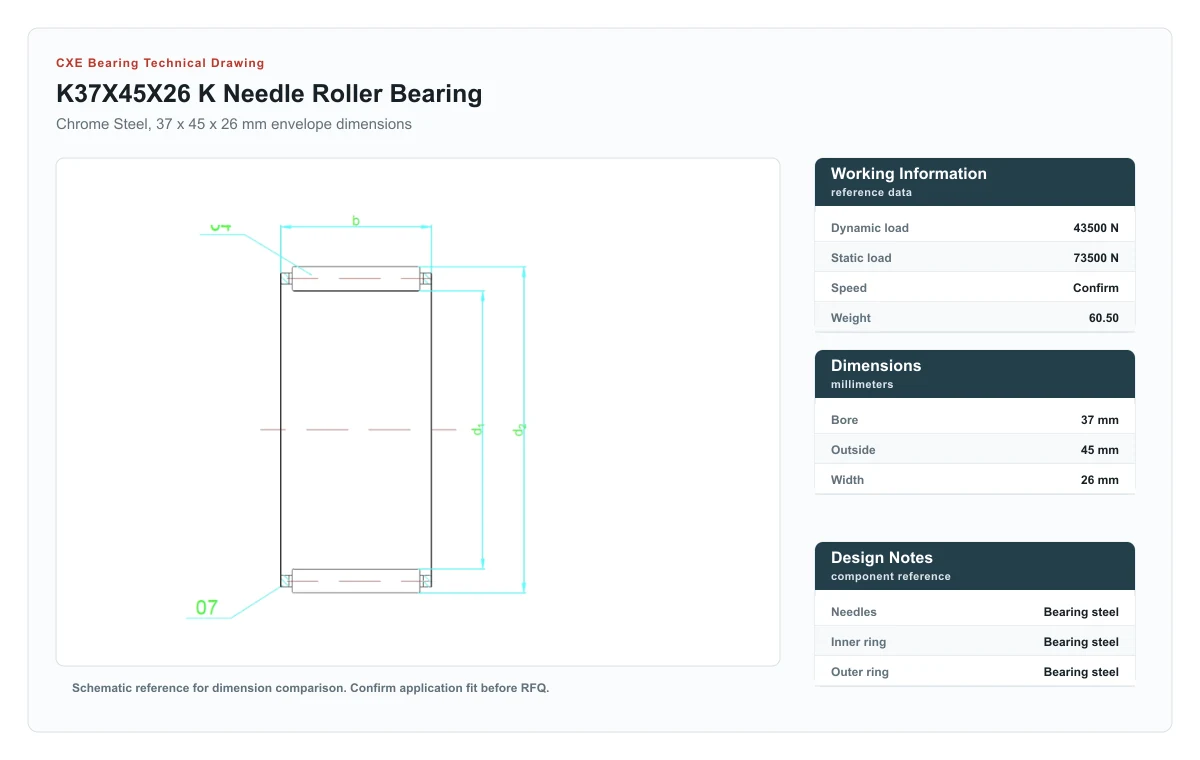
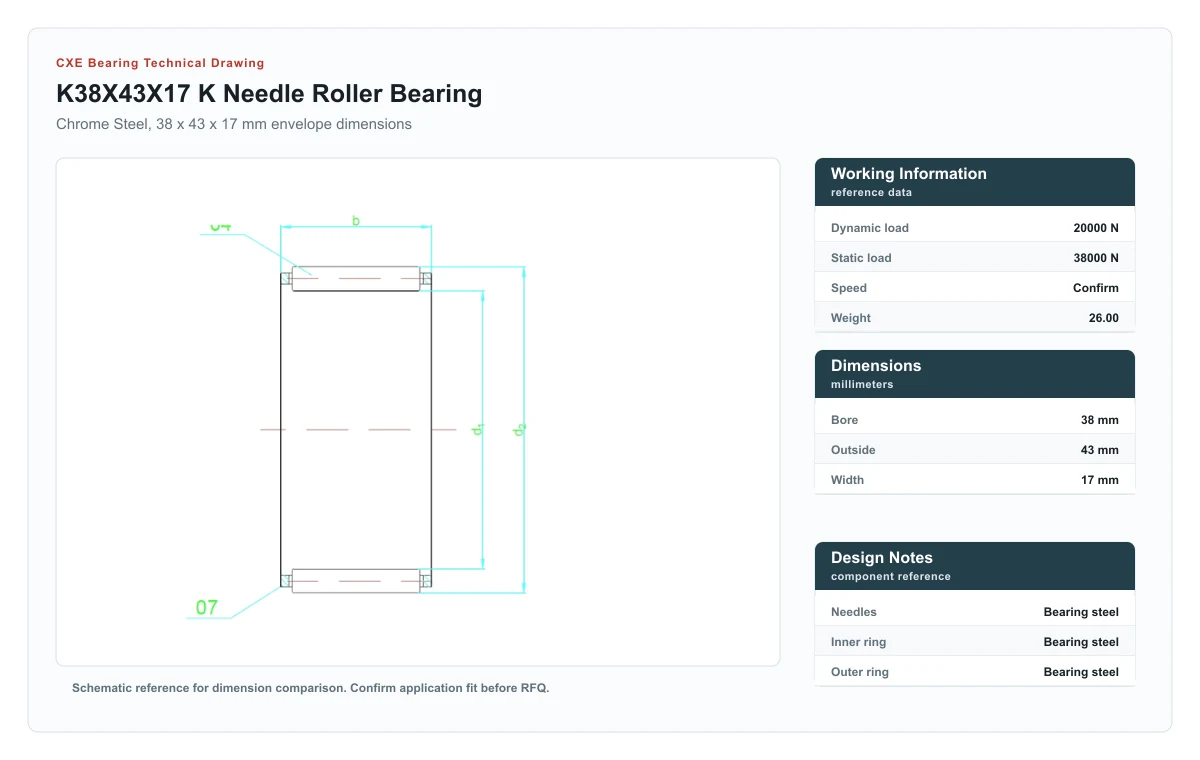
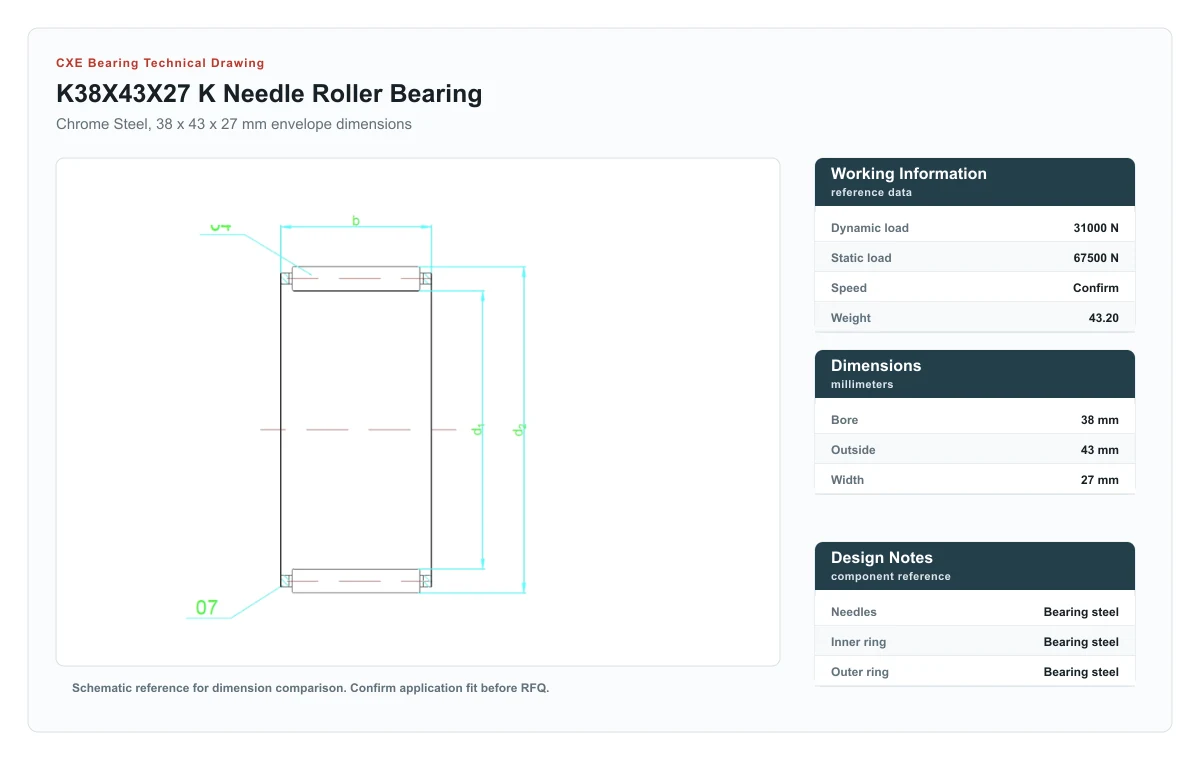
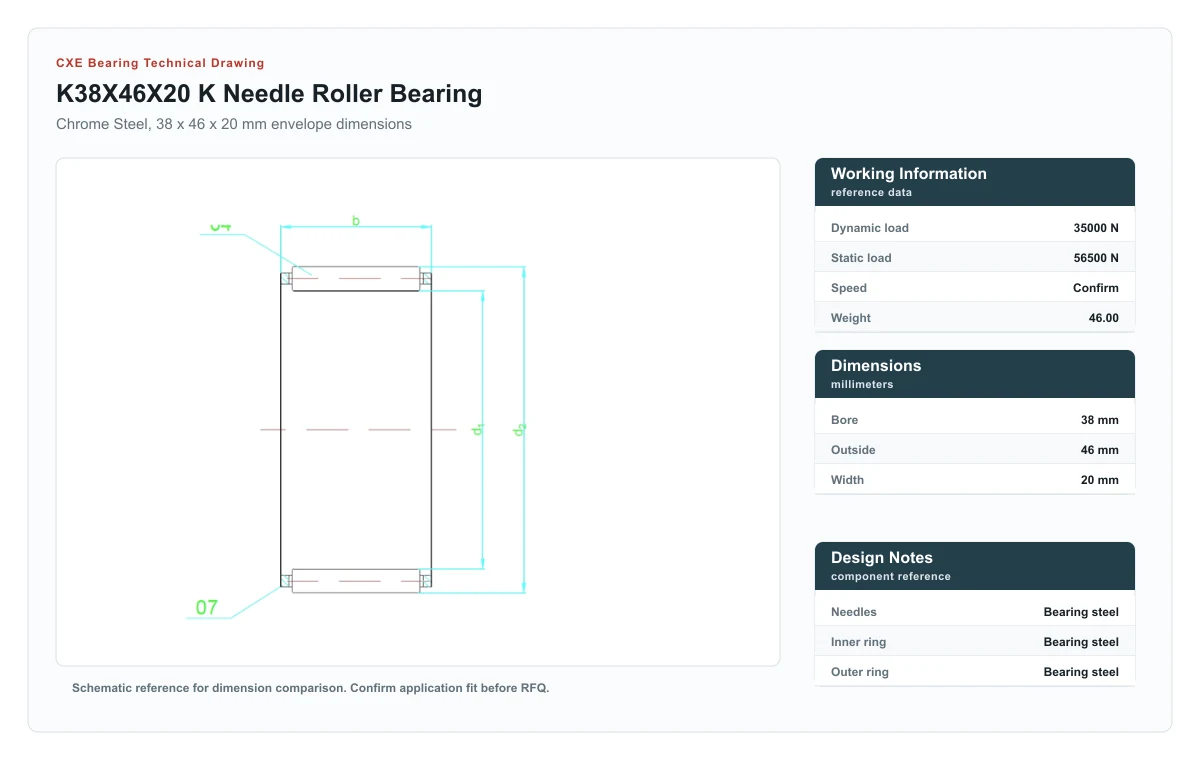
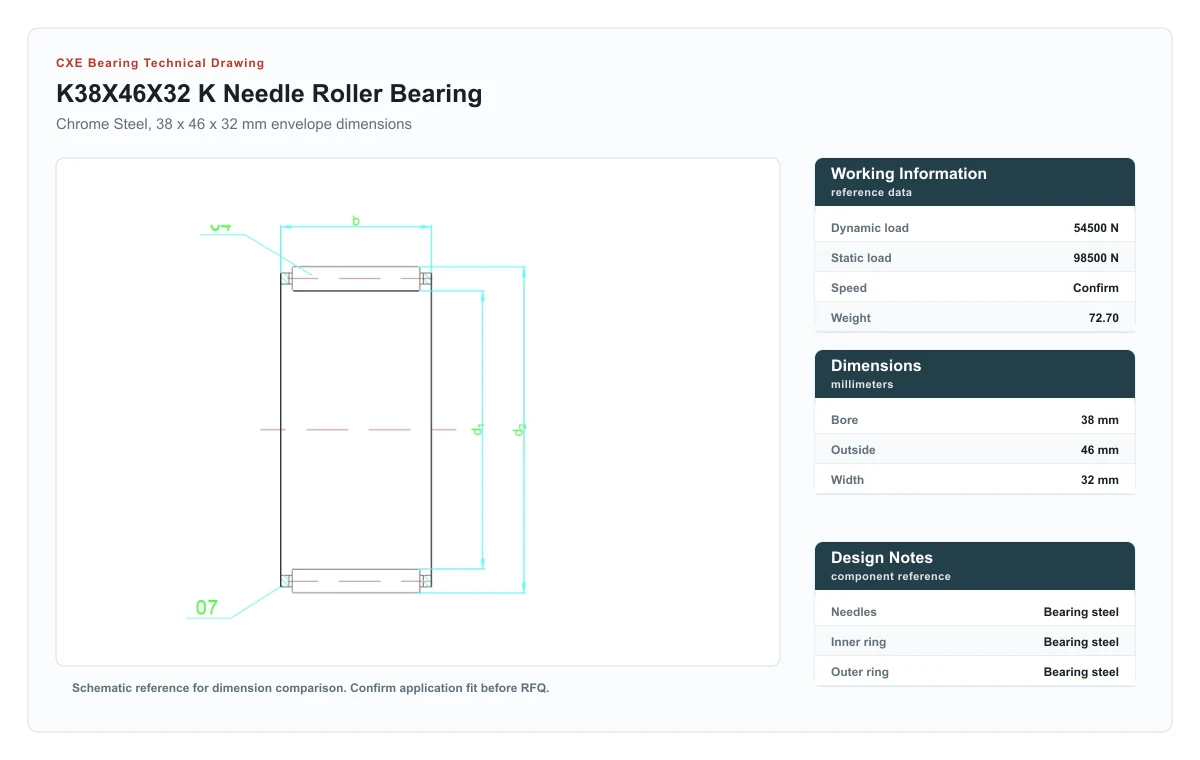
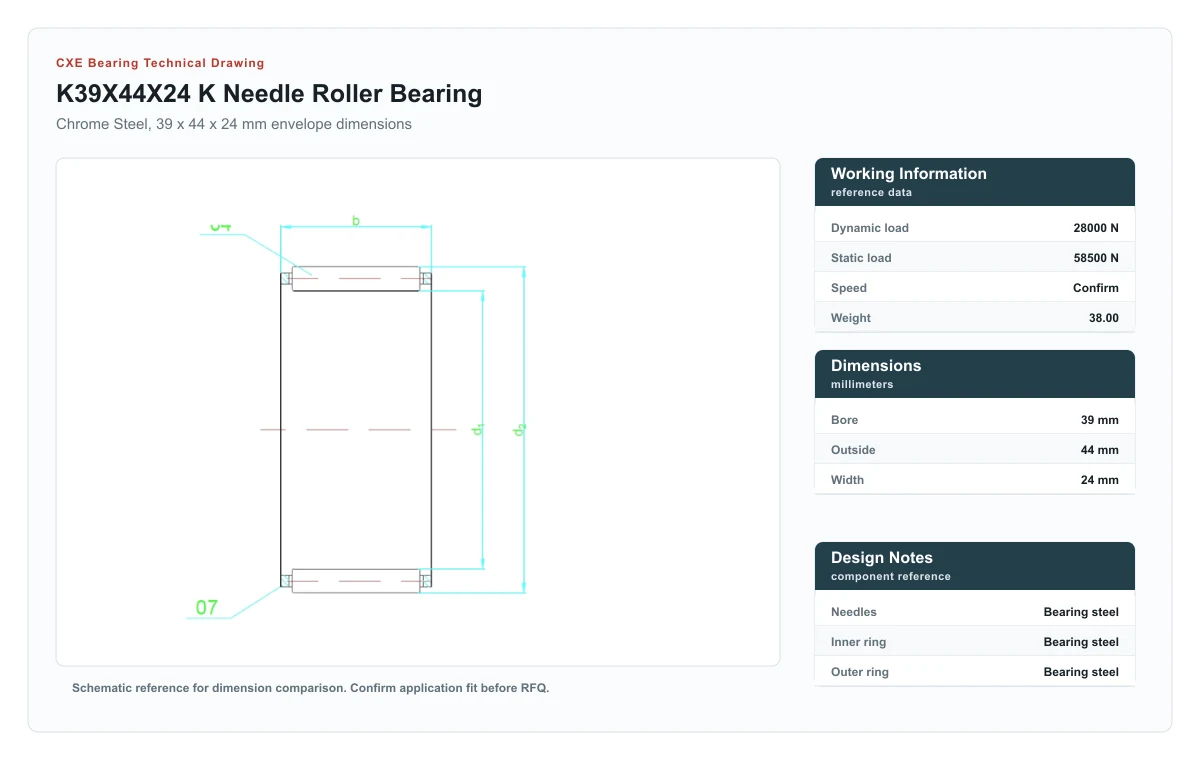
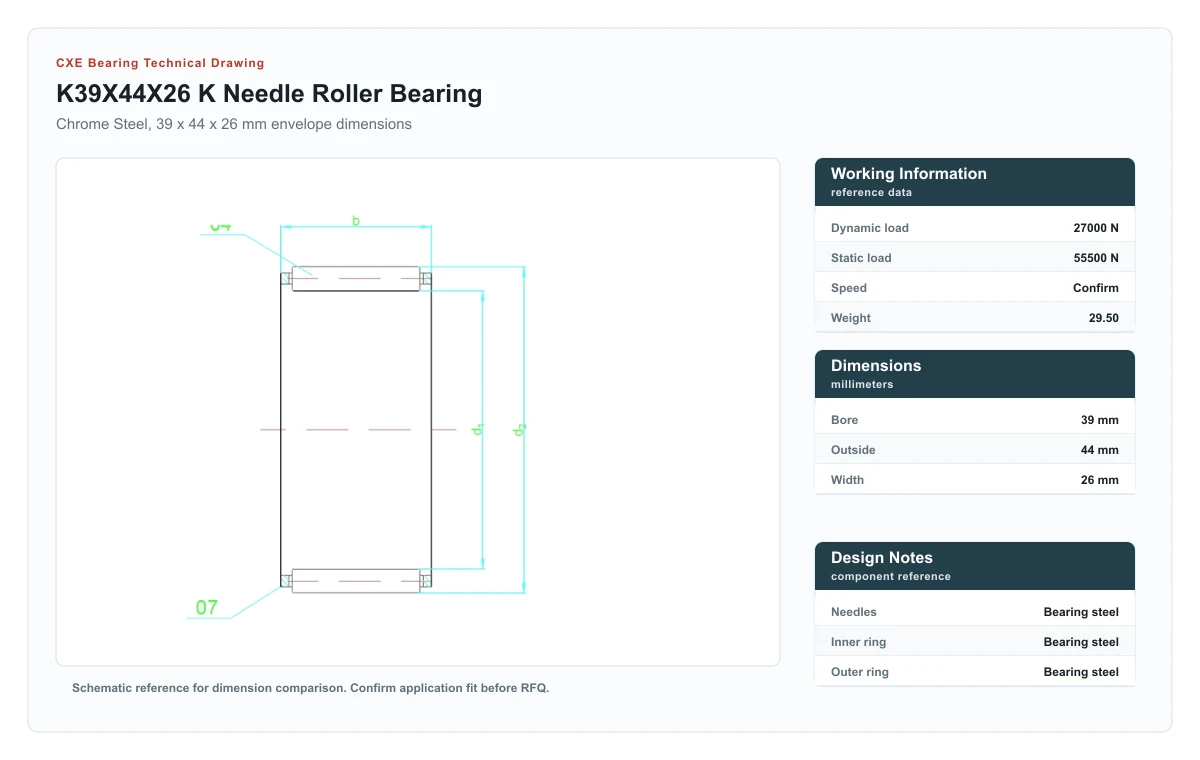
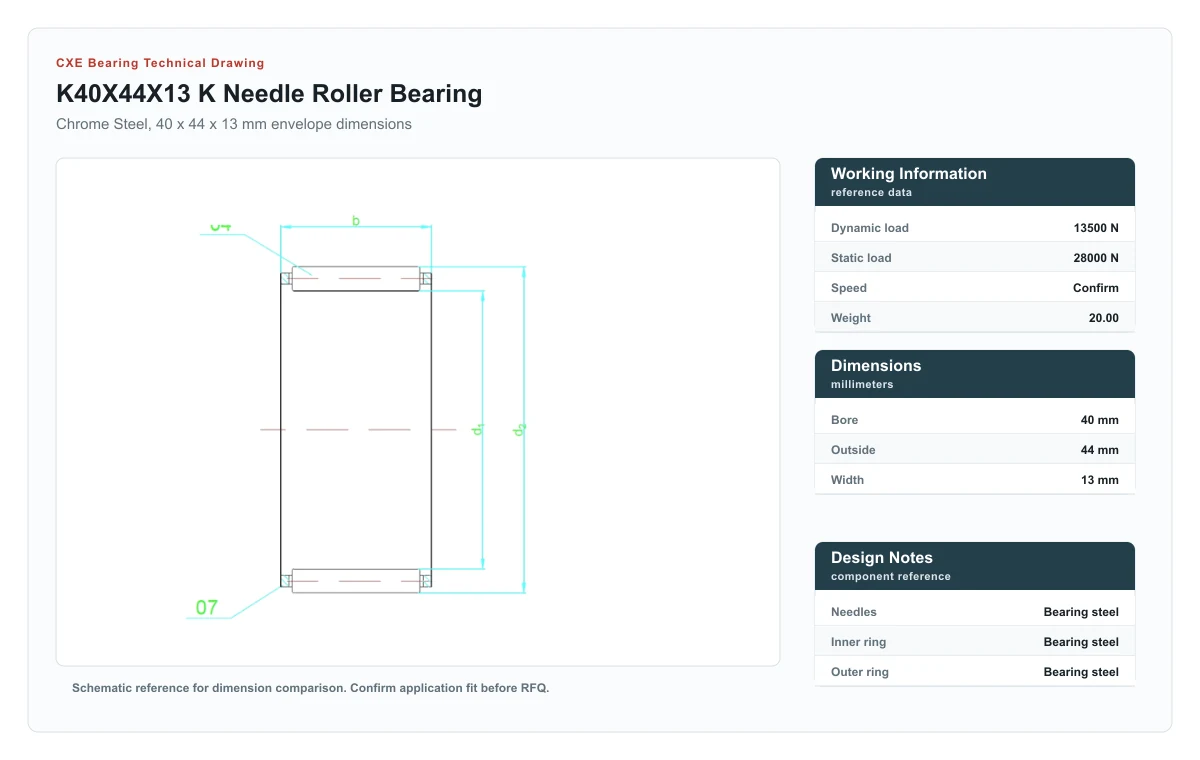
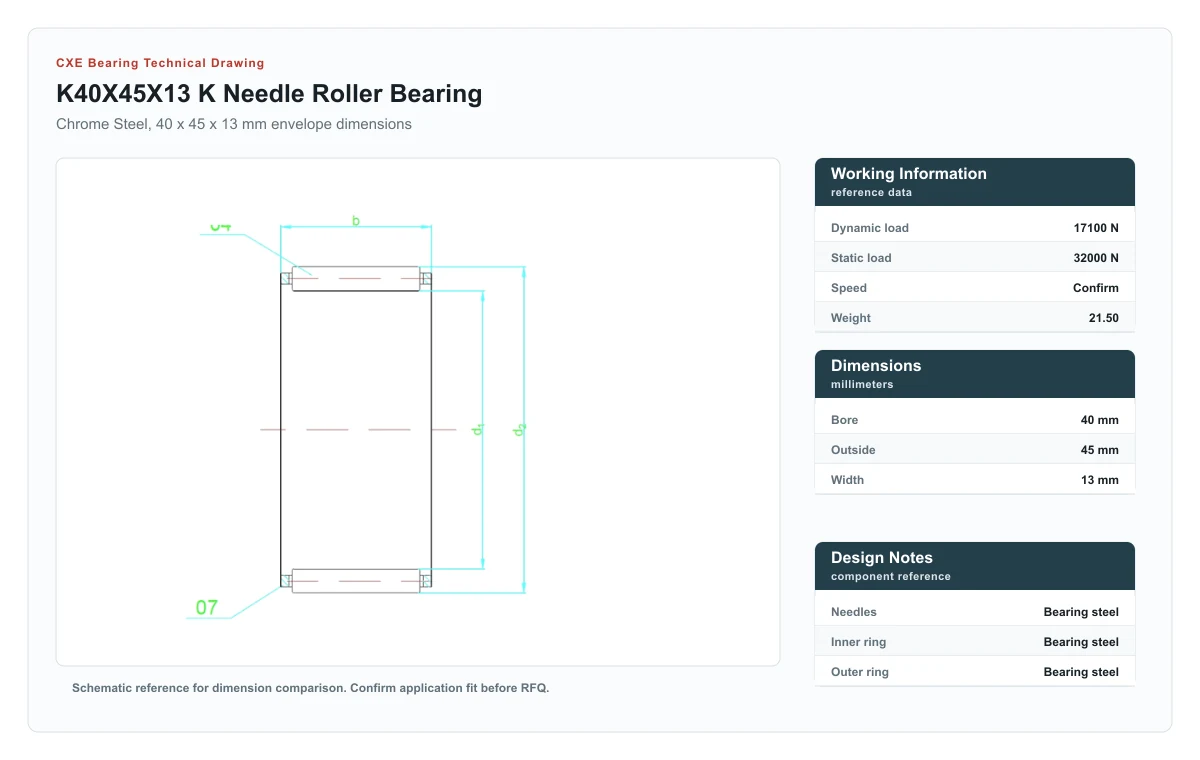
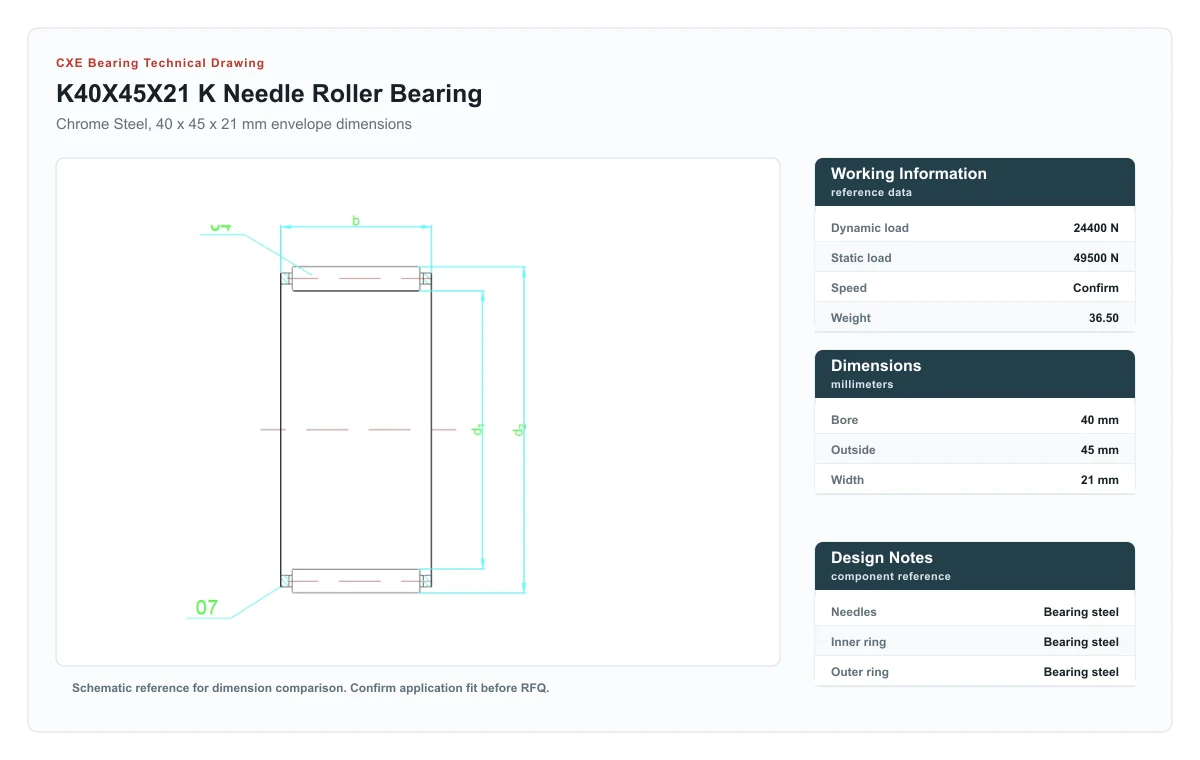
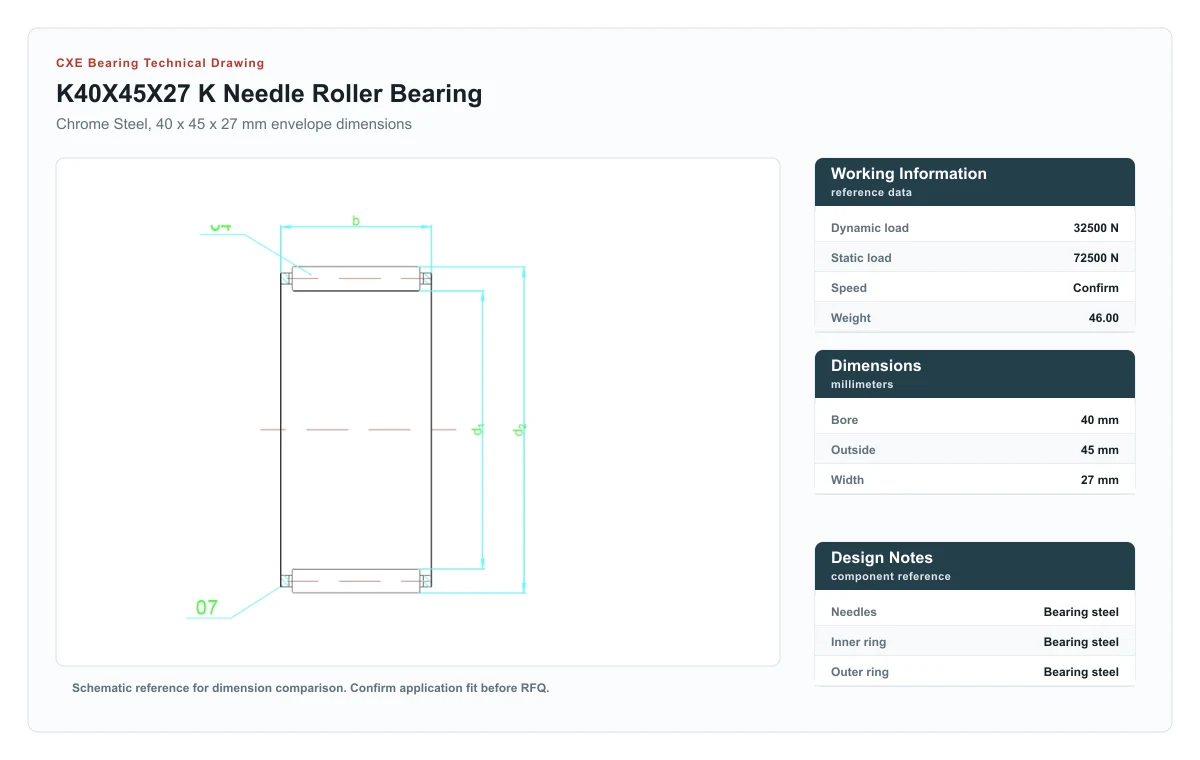
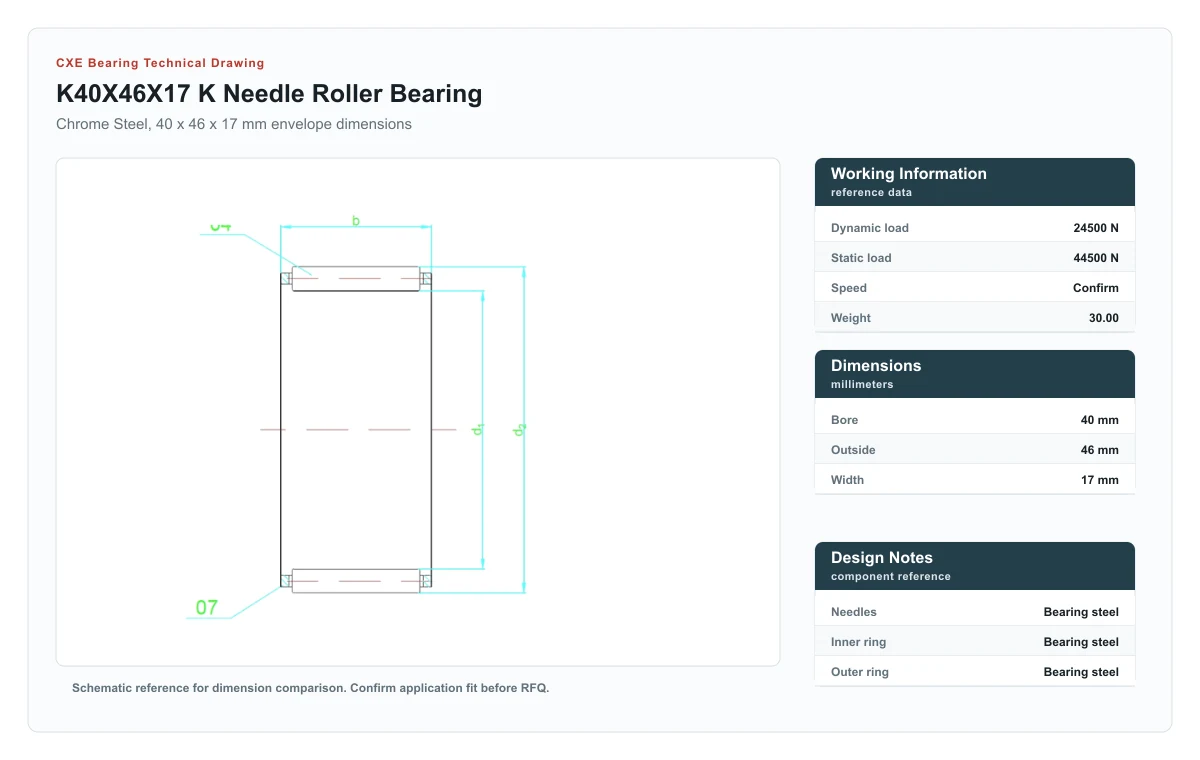
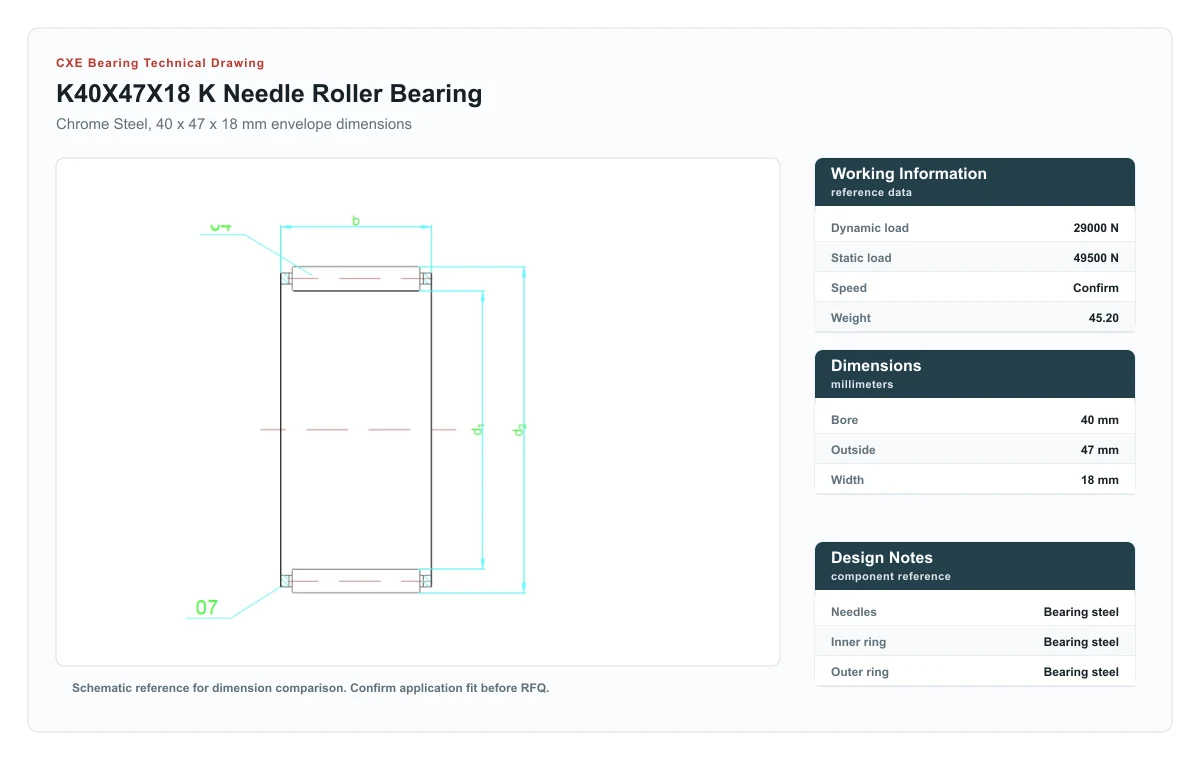
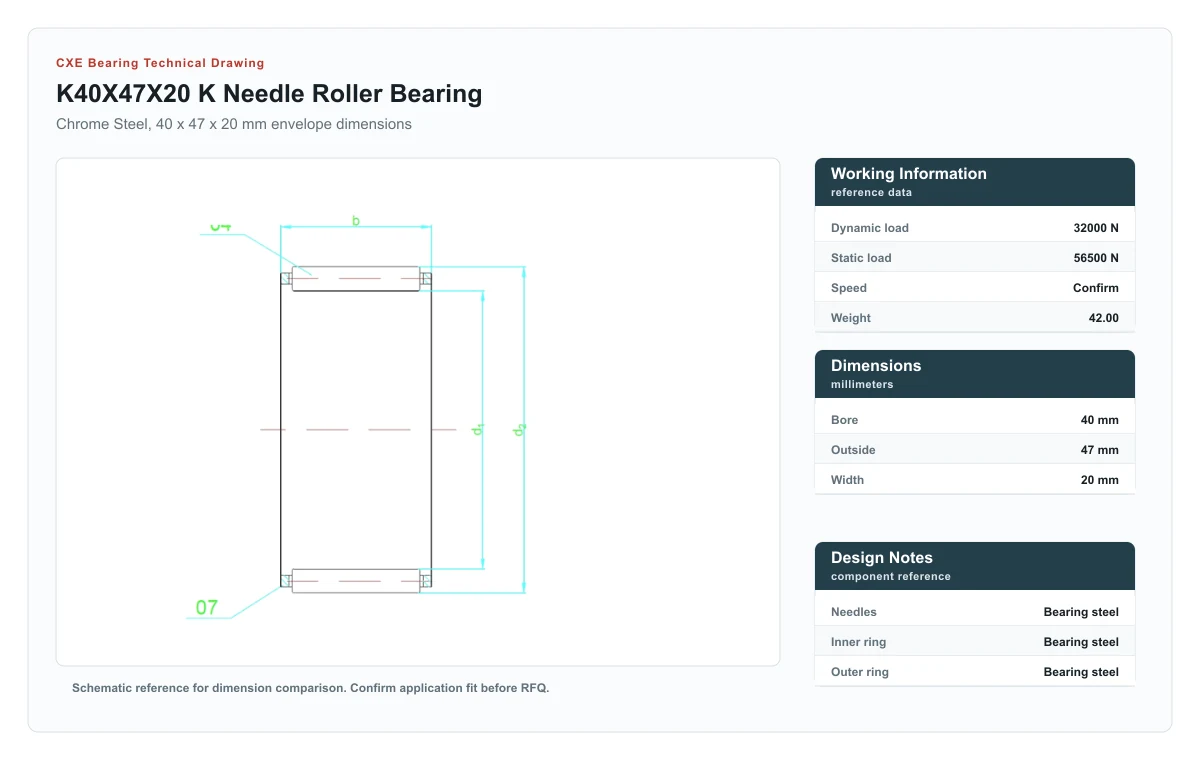
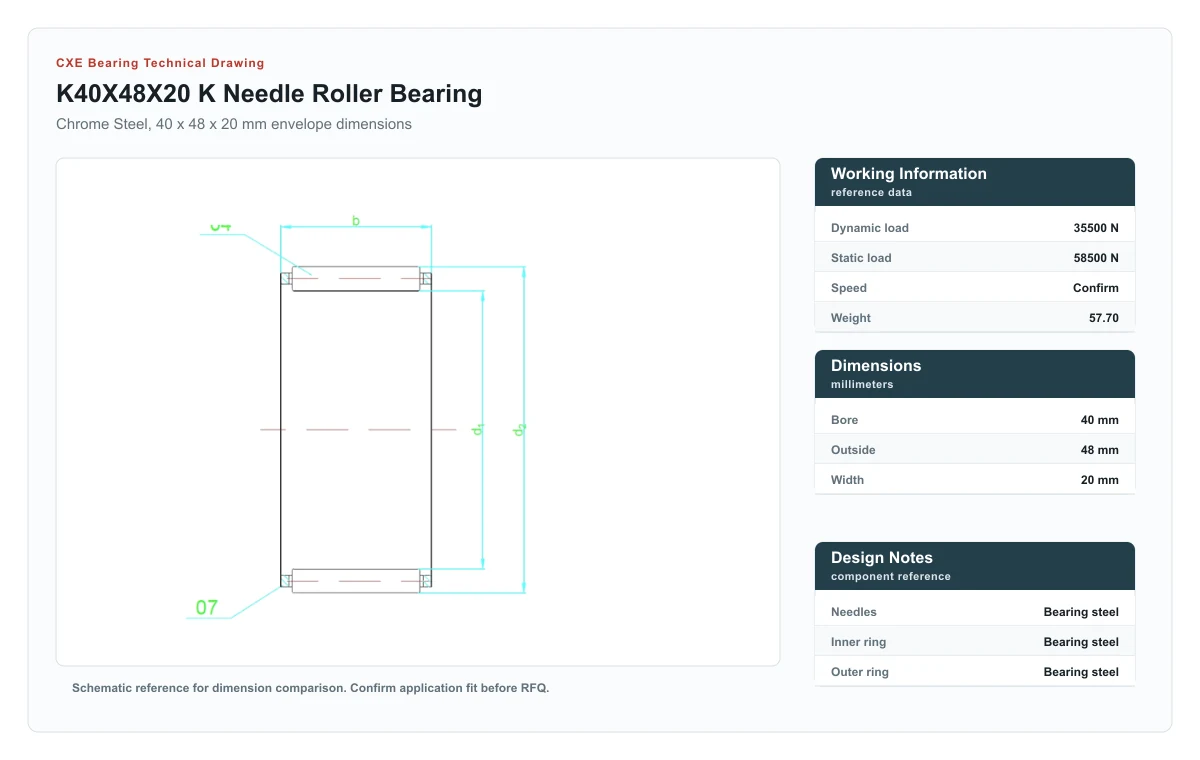
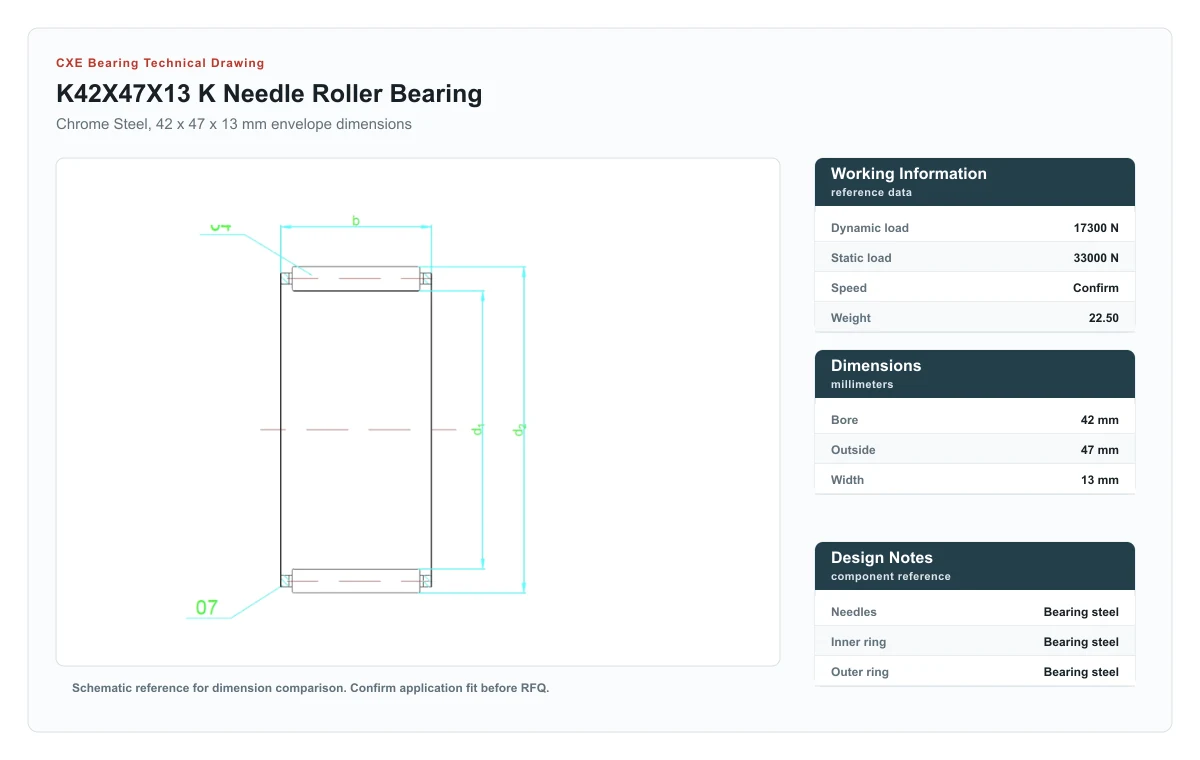
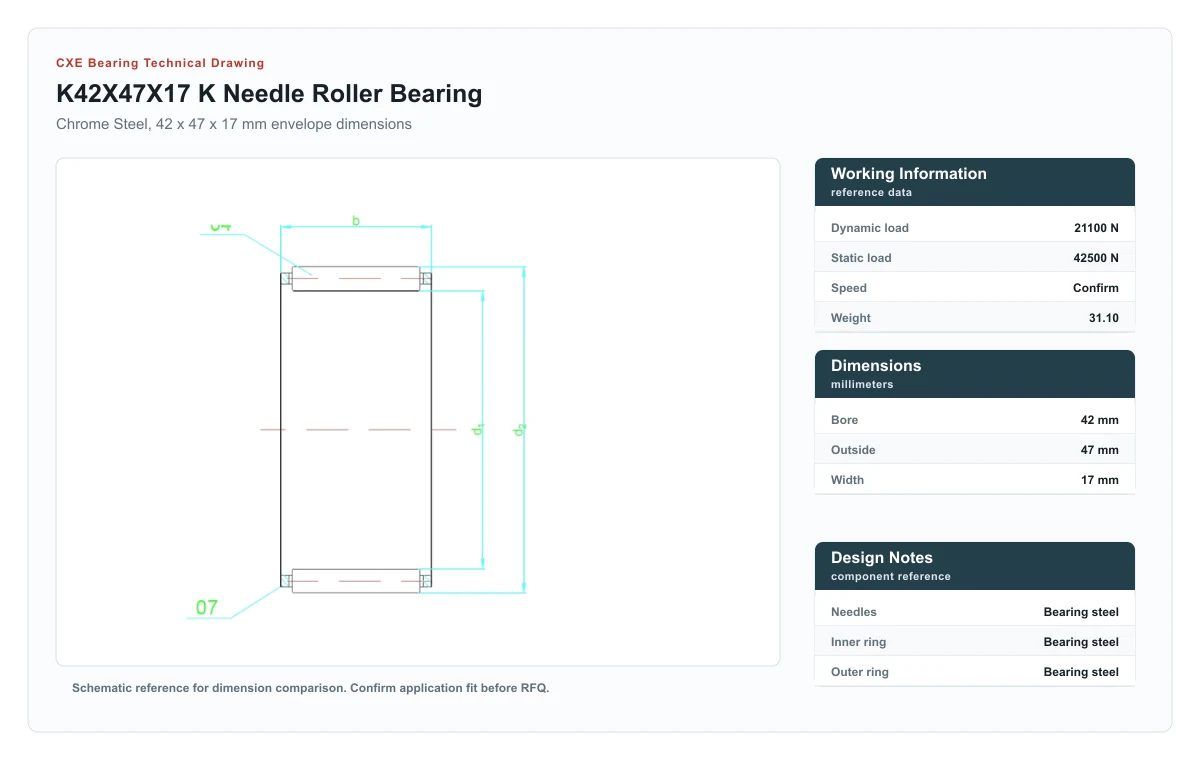
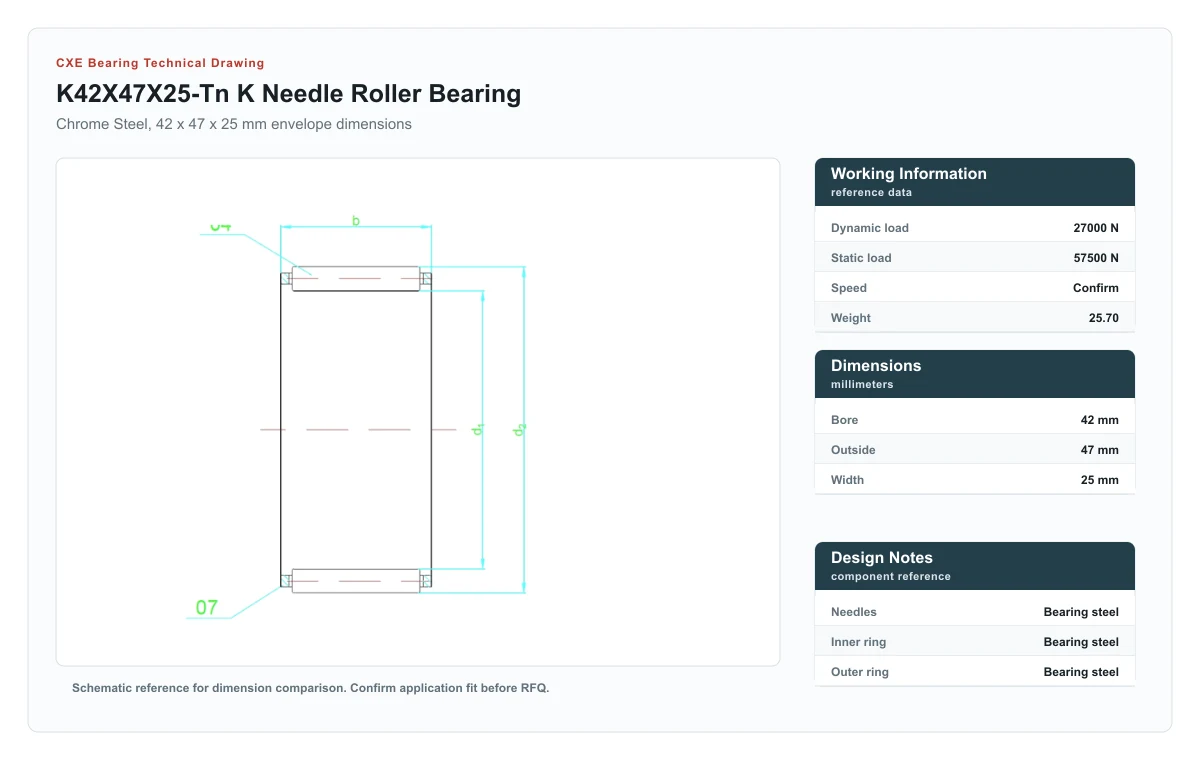
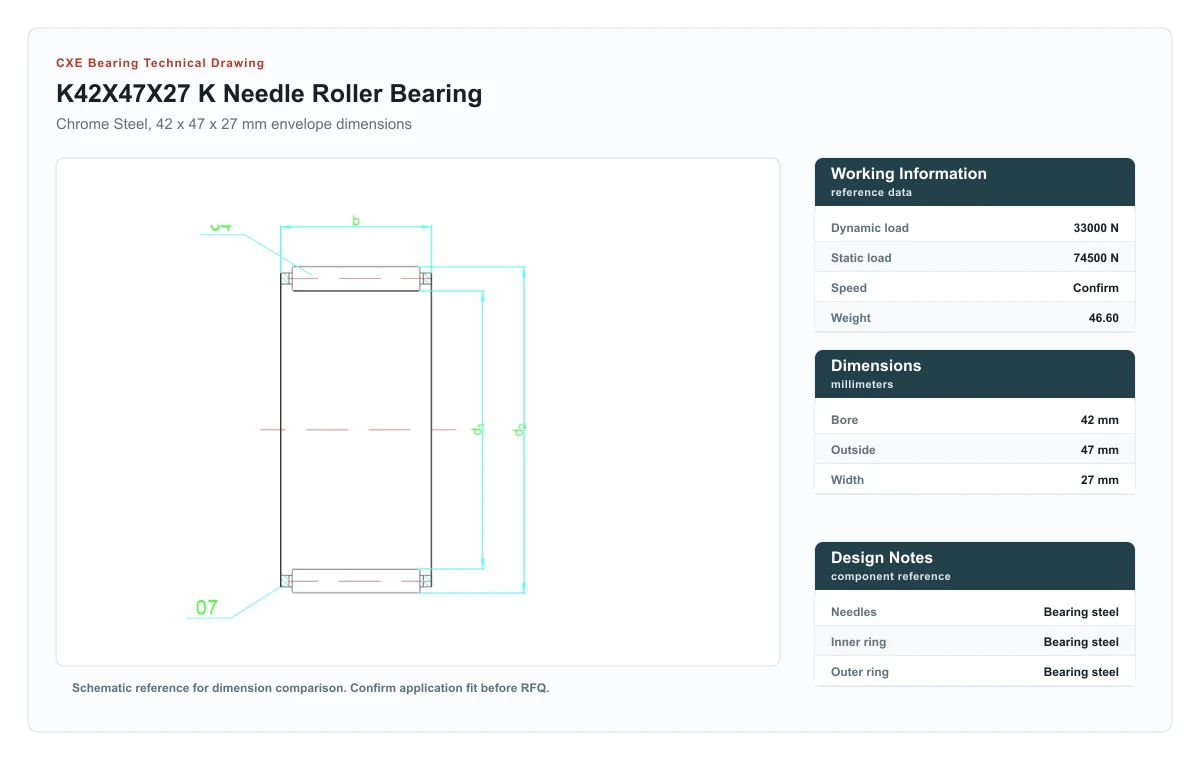
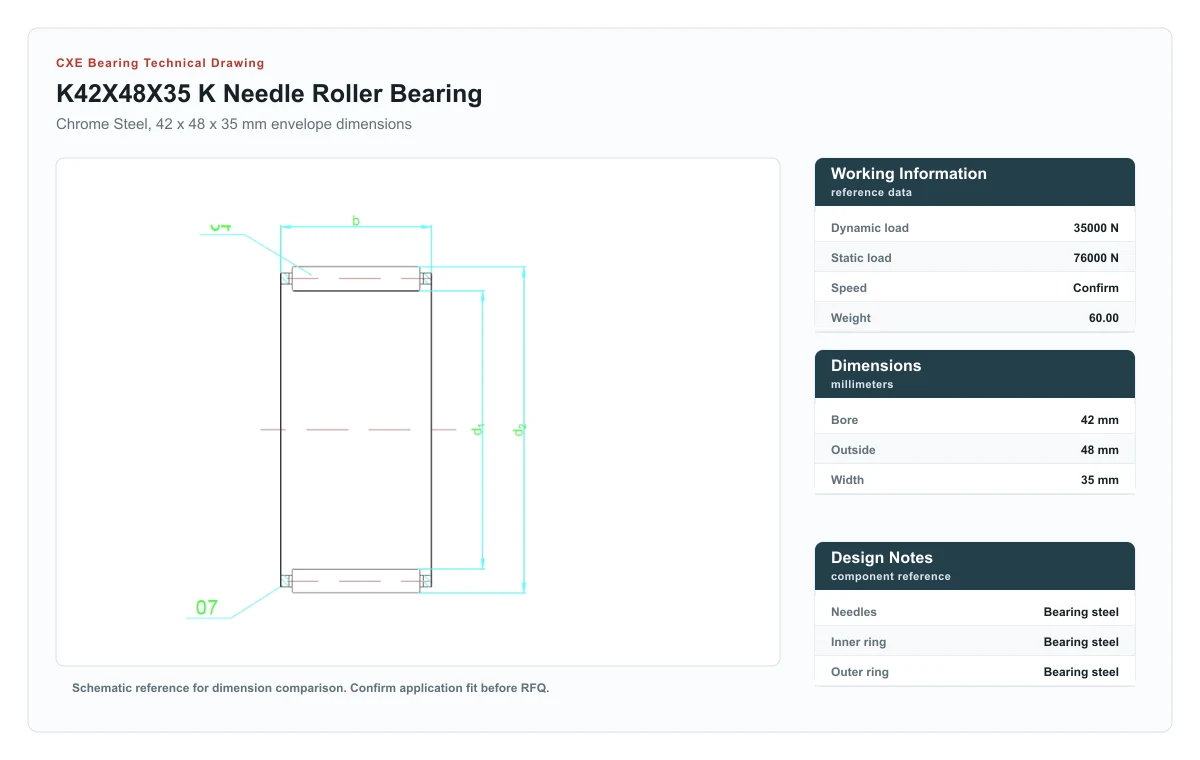
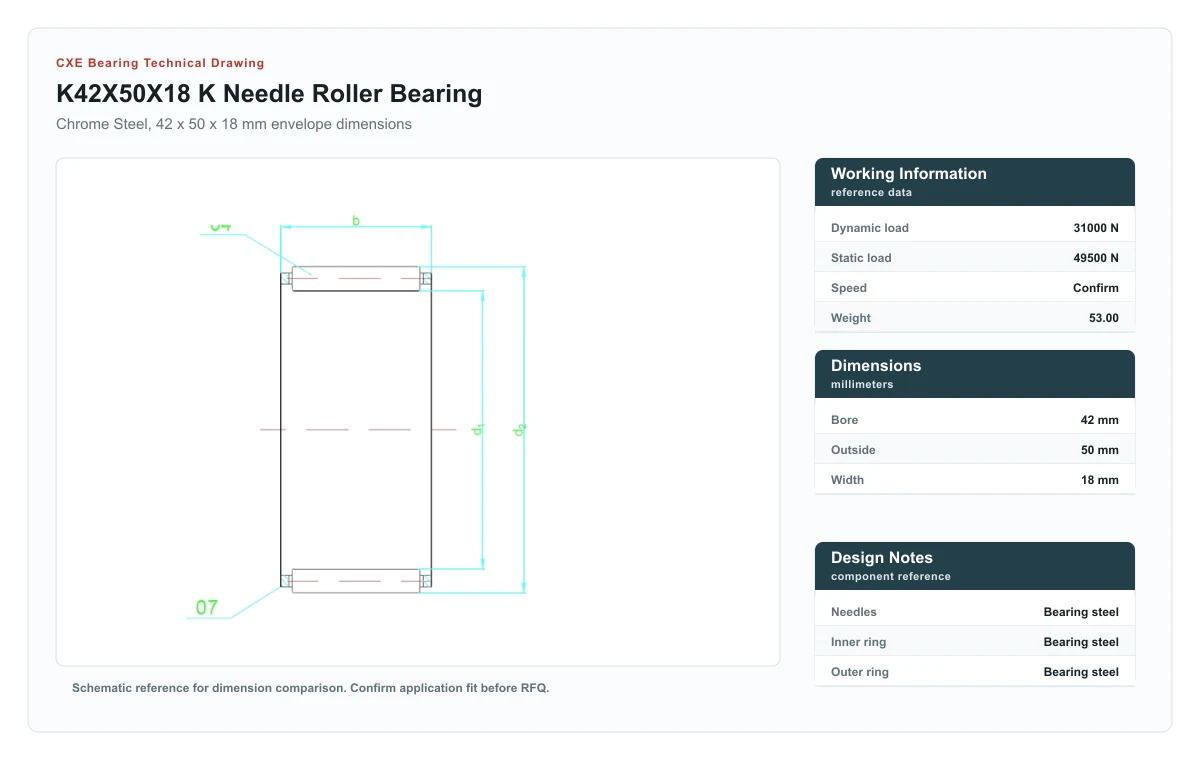
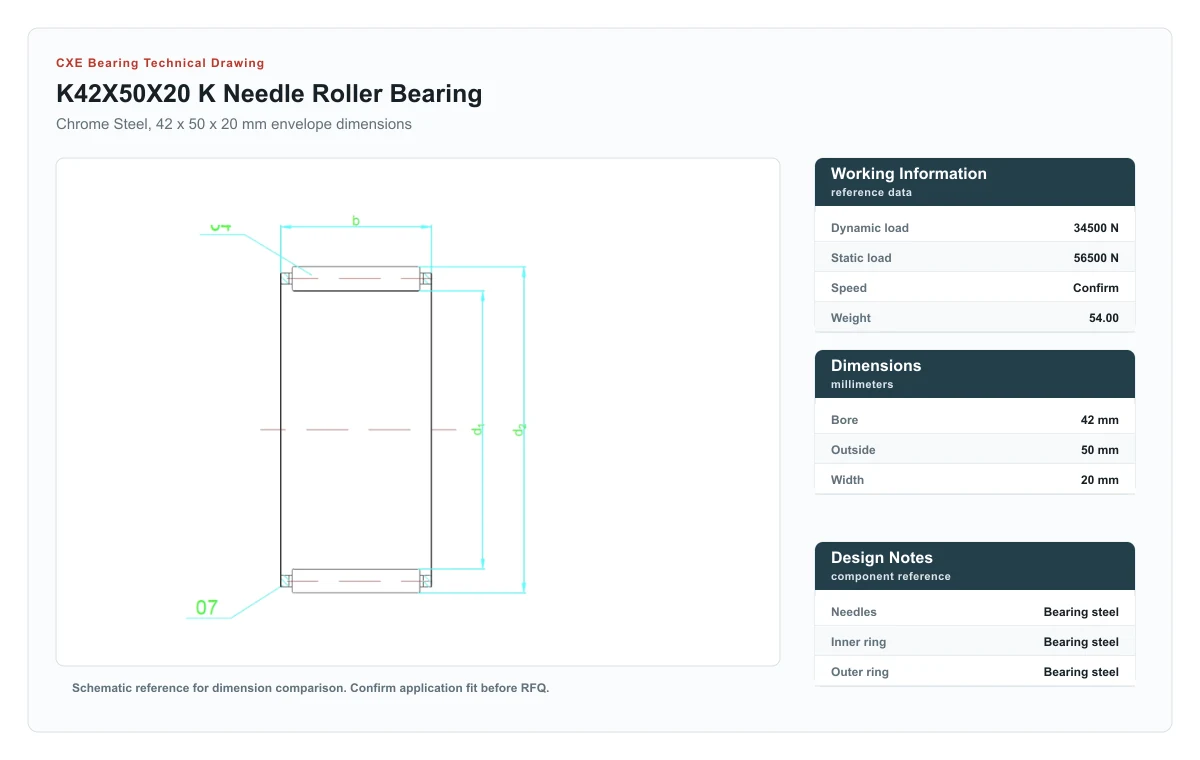
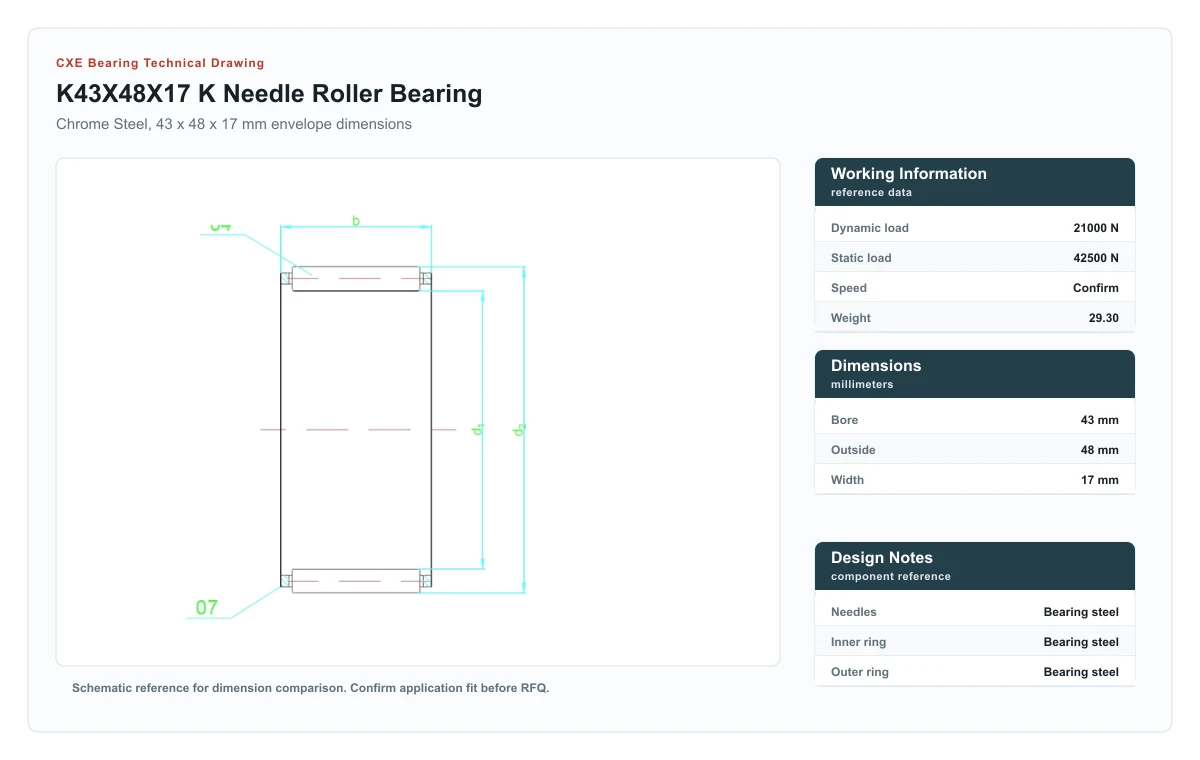
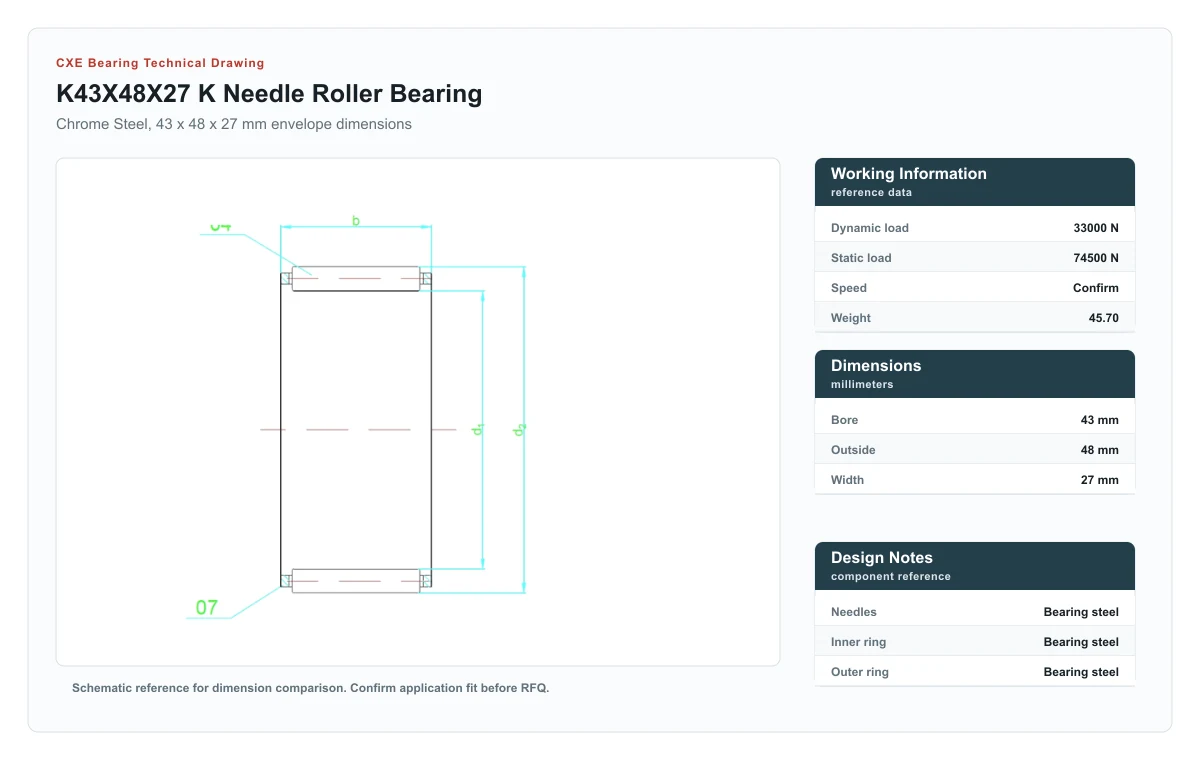
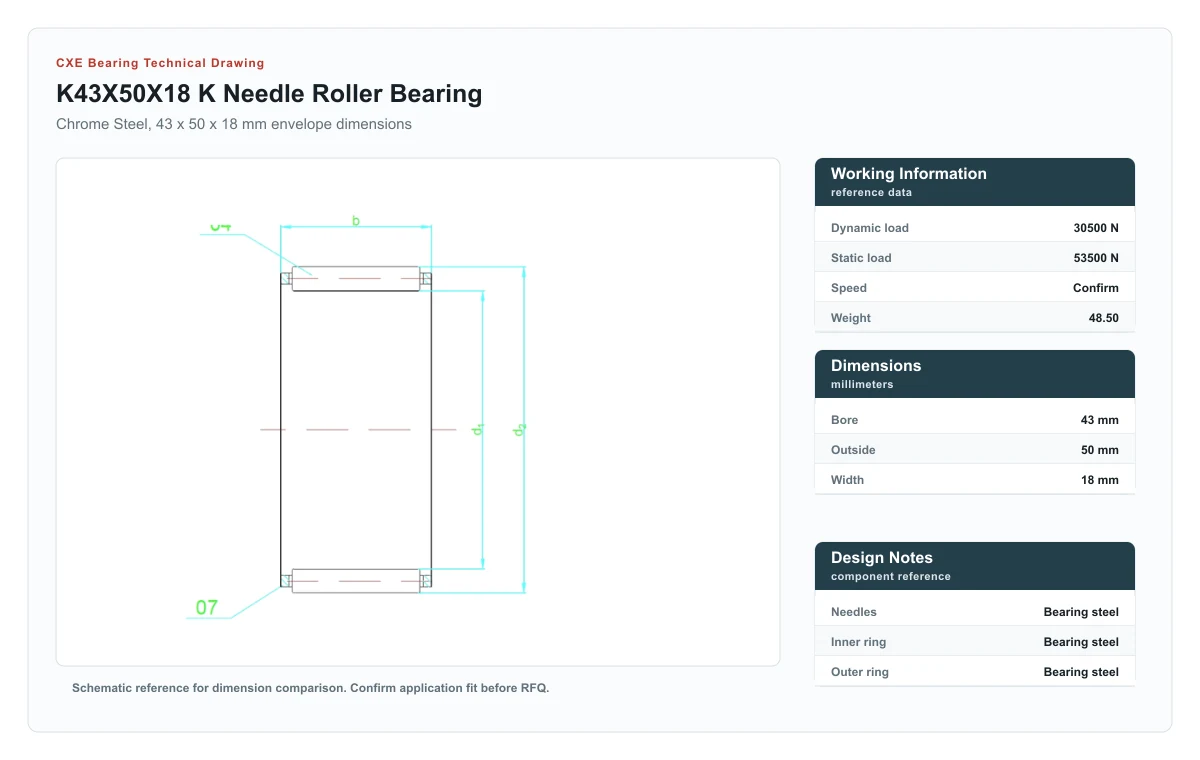
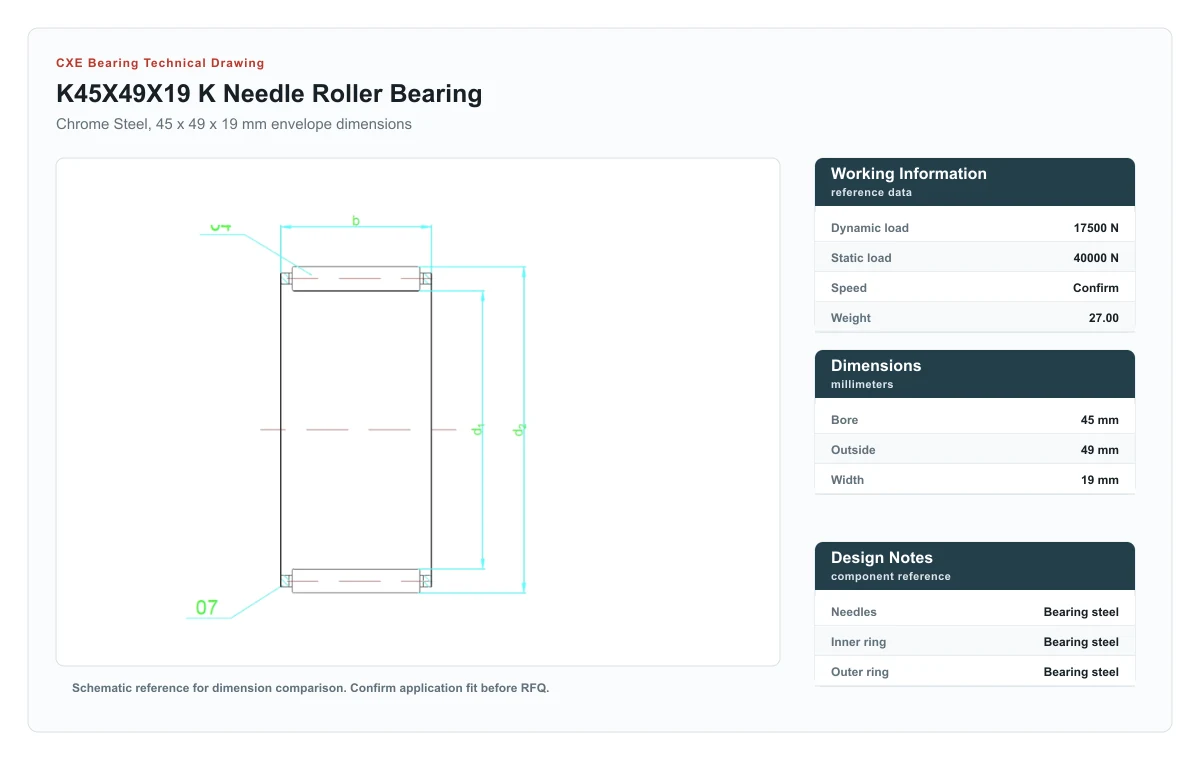
Related Collection Types
Technical Guide Materials, applications, selection notes, and internal reference links for this collection.
Needle roller bearings are selected when a buyer needs high radial load capacity in a compact space. The rollers are long and small in diameter, so the bearing can support more radial load than many ball bearing designs with a similar envelope. This collection is useful for replacement, OEM sourcing, and maintenance review when shaft diameter, housing space, load direction, lubrication, and surface condition all need to be checked.
Needle roller bearings are not one single product shape. Buyers may be comparing drawn cup needle bearings, machined-ring needle bearings, needle roller and cage assemblies, inner rings, thrust needle roller bearings, or combination designs. The right choice depends on whether the shaft can act as a raceway, whether an inner ring is needed, and whether the position carries radial load, axial load, or both.
Common Applications
Needle roller bearings are common in transmissions, gearboxes, small engines, pumps, compressors, agricultural equipment, textile machinery, power tools, steering assemblies, and compact industrial mechanisms. They are especially useful where a ball bearing would take too much radial space or where the design needs many rolling elements around a small shaft.
They are not a shortcut around poor shaft condition. If the design runs directly on the shaft, surface hardness, roundness, finish, and lubrication become part of the bearing system. A replacement bearing may fail quickly if the shaft raceway is worn, pitted, undersized, or contaminated.
How To Choose
Start by identifying the bearing style. A drawn cup bearing, a machined-ring bearing, and a needle roller cage assembly can look similar in photos but require different mounting conditions. If the old bearing has no inner ring, confirm whether the shaft is designed to work as the inner raceway.
| Selection point | What to confirm |
|---|---|
| Bearing style | Drawn cup, machined ring, cage assembly, thrust needle, or combined design |
| Dimensions | Shaft diameter, housing bore, bearing width, and available shoulder support |
| Shaft raceway | Whether the shaft surface can act as a raceway or needs an inner ring |
| Load direction | Radial load, thrust load, oscillation, or combined loading |
| Lubrication | Grease, oil, relubrication path, contamination risk, and heat removal |
| Mounting | Press fit, housing condition, installation tool, and edge damage risk |
| Environment | Dust, moisture, splash, corrosion, and washdown exposure |
If the application needs axial support rather than radial support, compare axial cylindrical roller or thrust ball bearing arrangements. If the radial load is high but the design needs a different roller arrangement, review cylindrical roller bearings.
Material, Load, Speed, And Temperature Notes
Needle roller bearings can carry high radial load, but they are sensitive to alignment, lubrication, and raceway quality. A compact bearing does not remove the need for correct shaft support. Misalignment, housing distortion, insufficient lubrication, and dirt can cause heat, scoring, cage damage, or roller-end wear.
Speed should be reviewed with the cage design, lubrication method, bearing width, and heat path. A needle bearing in a compact housing may need better lubrication control than a larger ball bearing because the contact geometry and available space are different. If the application has high rpm, poor oil flow, or intermittent operation, include those details in the review.
Material and seal choices depend on environment. Many needle bearings use chrome steel in protected machinery. Stainless steel or corrosion-resistant options may be considered for wet or chemical exposure, but only after confirming that the bearing type, shaft surface, and load arrangement still fit the application.
Related Collection Paths
Useful related paths include cylindrical roller bearings for higher radial-load roller positions, axial cylindrical roller bearings for thrust roller arrangements, stainless steel needle bearing where corrosion is part of the selection, and metric ball bearings when the design can use a simpler radial ball bearing.
RFQ Guidance
For a needle roller bearing inquiry, send the bearing number, quantity, shaft diameter, housing bore, bearing width, whether an inner ring is required, load direction, speed, lubrication method, and application photos if possible. If the old bearing ran directly on the shaft, include photos or measurements of the shaft raceway. CXE Bearing can then review whether the request is a drawn cup, machined-ring, cage assembly, thrust needle, or another needle bearing type.