
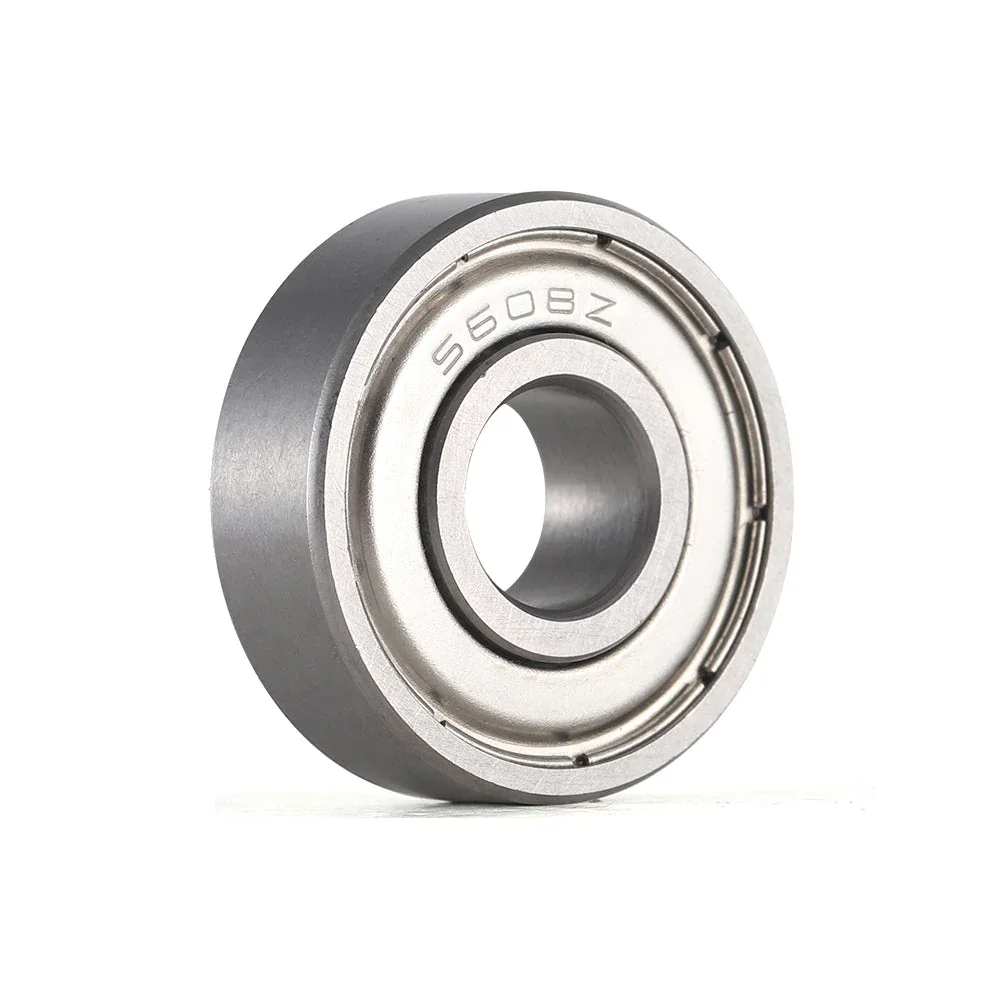
The fundamental reason why bearing steel—specifically high-carbon chrome steel like 52100 steel—is prone to rusting lies in its high-carbon, high-alloy composition. Under specific microstructures, this creates electrochemical inconsistencies. When exposed to external moisture and oxygen, these factors combine to cause localized corrosion that spreads rapidly. I. Microstructural and Electrochemical Corrosion Mechanisms Chrome steel (such as 52100 steel or GCr15) contains high levels of carbon and chromium. After heat treatment, it forms a martensitic matrix with dispersed carbides. However, if the smelting or continuous casting processes are poorly controlled, the material is prone to structural inconsistencies such as segregation, porosity, non-metallic inclusions, and banded carbide distributions.
To connect the corrosion note with purchasable categories, compare CXE Bearing collections for GCR15 chrome steel bearings, stainless steel bearings, and AISI 420 stainless bearings; the linked pages help buyers decide when standard bearing steel is acceptable and when stainless is safer.
Galvanic Cell Effect: These microstructural inconsistencies create electrode potential differences across different areas of the material’s surface. In a humid environment, areas with a lower potential (like carbon-rich zones or the areas immediately surrounding inclusions) act as anodes, while areas with a higher potential act as cathodes. This forms microscopic galvanic cells, accelerating the anodic dissolution and triggering rust.
Impact of Secondary Phases: In traditional bearing steel, the presence of large eutectic carbides can disrupt the continuity of the matrix, lowering its corrosion resistance. Conversely, high-nitrogen stainless bearing steels improve passivation by refining secondary phases (like nitrides), which proves that the coarse or uneven microstructure of standard chrome steel makes it inherently more susceptible to corrosion.
II. Environmental Factors and Chemical Oxidation Even if the internal structure is perfectly uniform, 52100 steel remains a highly reactive iron-based alloy that easily reacts with its surrounding environment:
Synergy of Water and Oxygen: Pure iron or steel is relatively stable in dry air. However, when moisture is present and oxygen from the air dissolves into it, an electrochemical oxidation reaction occurs on the steel surface, generating loose, porous hydrated iron oxide (rust).
The Autocatalytic Nature of Rust: The resulting rust can expand up to eight times its original volume. Because its structure is highly porous, it cannot block oxygen and moisture like the dense chromium oxide passive film found on stainless steel. Instead, it acts like a sponge, absorbing more moisture and accelerating further corrosion deep into the metal.
Acidic Infiltration: In industrial settings, bearings frequently come into contact with acidic or alkaline substances, or corrosive byproducts like aldehydes, ketones, and carbonic acids generated by degrading lubricants. These substances destroy the protective state of the metal surface, inducing both pitting and widespread corrosion.
III. Manufacturing Processes and the Importance of Protection The rusting of bearing steel is often exacerbated by shortcomings in the manufacturing process and inadequate protective measures:
Surface Cleanliness and Storage: During manufacturing, transportation, and storage, if cutting fluids or grinding debris are left on the bearing’s surface, or if the components are kept in a high-humidity environment without effective rust-preventive oils (such as specialized barium petroleum sulfonate-based oils), rust will quickly initiate.
Lack of a Passive Film: Unlike stainless steel, standard chrome steel cannot spontaneously form a dense, stable passive film. Once the surface rust-preventive layer (such as the oil film) is compromised, the bare steel matrix is directly exposed to corrosive media and oxidizes rapidly.
The tendency of chrome steel to rust is the inevitable result of its microstructural electrochemical properties reacting with oxidative environments. At CXE Bearing, we understand that the only way to effectively halt this corrosion process is by optimizing smelting techniques to eliminate structural segregation, paired with rigorous, professional surface rust-prevention treatments before our 52100 steel bearings are delivered to your facility.