
What is High-Nitrogen Austenitic Stainless Steel (HNASS)?
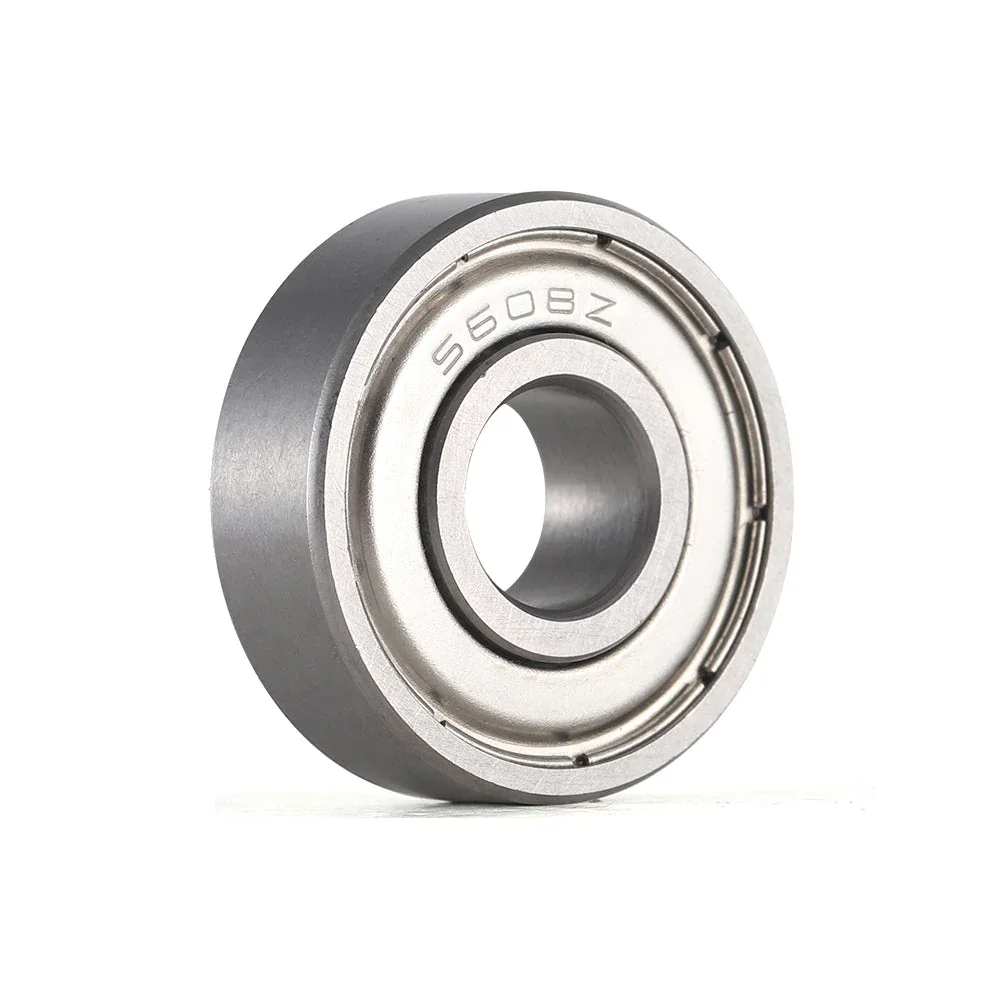
To connect the material notes with purchasable categories, review CXE Bearing collections for stainless steel bearings, AISI 420 stainless bearings, and AISI 316 stainless steel bearings; these collection pages help narrow the grade choice before model-level confirmation.
While traditional bearing steel (such as high-carbon chrome steel or 52100 steel) is excellent for standard high-load applications, it fails rapidly in corrosive environments. High-Nitrogen Austenitic Stainless Steel (HNASS) is an advanced, high-performance material that solves this problem using a “nitrogen-for-nickel” substitution strategy. By utilizing the multiple strengthening effects of nitrogen, HNASS significantly reduces nickel content while breaking through the traditional bottleneck of balancing strength and toughness. Today, it stands as a critical material for extreme environments like marine engineering, transportation, and ballistic armor.
I. Multi-Dimensional Strengthening Mechanisms of Nitrogen The core characteristic of high-nitrogen austenitic stainless steel lies in how nitrogen atoms behave within the crystal lattice. They provide solid solution strengthening, grain refinement, deformation strengthening, and precipitation strengthening, resulting in mechanical properties that far exceed traditional stainless grades.
Solid Solution and Grain Refinement: Nitrogen has a powerful solid solution strengthening effect in steel and effectively refines the grain size. This mechanism dramatically increases the material’s strength without sacrificing ductility, achieving a synergistic optimization of high strength and high toughness.
Dynamic Mechanical Properties: Under dynamic impact loads, HNASS exhibits excellent strain hardening and energy absorption. As the compressive strain rate increases, its yield strength fluctuates, but its strain-hardening exponent increases. By expanding the plastic deformation zone to consume more energy, it demonstrates outstanding potential for ballistic and armor applications.
Cost and Structural Stability: By substituting nitrogen for expensive nickel, manufacturers can stabilize the austenitic structure, significantly lower raw material costs, and simultaneously maintain or even improve the material’s comprehensive mechanical properties.
II. Corrosion Resistance and Advantages in Marine Environments For marine engineering applications, high-nitrogen austenitic stainless steel shows unique advantages in resisting chloride ion corrosion, making it the ideal solution to replace failure-prone traditional materials.
Performance Metric Traditional Austenitic (e.g., 316L) High-Nitrogen Austenitic (e.g., 0Cr20Mn18N0.8) Advantage Analysis
Corrosion Resistance Good, but prone to pitting in high-chloride environments. Excellent; far superior resistance to pitting and crevice corrosion. Nitrogen improves the stability of the passivation film, significantly lowering the corrosion current density.
Mechanical Strength Relatively low yield strength; average wear resistance. Yield strength can exceed 640 MPa; tensile strength approaches 1000 MPa. Solid solution strengthening by nitrogen drastically boosts strength, meeting the high-load demands of marine fasteners and bearings.
Toughness Good toughness, but limited strength. Combines high strength with high toughness; high impact absorption energy. Maintains high ductility (elongation >50%) while providing excellent low-temperature toughness.
SCC Resistance Highly sensitive to Stress Corrosion Cracking (SCC) from chlorides. Significantly enhanced resistance to SCC. The high-nitrogen austenitic structure effectively hinders crack propagation, adapting perfectly to wet/dry alternating marine environments.
III. Microstructural Evolution and Processing Challenges Despite its outstanding performance, the manufacturing and processing of high-nitrogen austenitic stainless steel present specific challenges. Strict control over the process flow is required to manage its microstructure.
Hot Working Window Control: High nitrogen content reduces hot workability. In actual production, deformation temperature and strain rate must be strictly controlled. Research shows that pre-deformation treatments can widen the hot working window and promote dynamic recrystallization, thereby improving thermoplasticity and avoiding the precipitation of the brittle sigma (σ) phase.
Grain Boundary Engineering (GBE): Through processes like electroslag remelting, forging, and strain recrystallization, the fraction of “special grain boundaries” can be significantly increased. A high proportion of special grain boundaries effectively blocks the propagation of intergranular corrosion, extending the material’s service life in harsh environments.
Low-Temperature Brittleness Risk: While high-nitrogen steel performs exceptionally well at room temperature, excessive nitrogen can lead to low-temperature brittleness. The fracture mechanism is related to planar slip and dislocation pile-up. Suppressing this ductile-to-brittle transition requires careful control of stacking fault energy and microstructure.
IV. Conclusion By cleverly introducing nitrogen, High-Nitrogen Austenitic Stainless Steel completely restructures the balance of “strength, toughness, and corrosion resistance.” It not only solves the pitting and stress corrosion cracking problems that plague traditional materials in high-chloride marine environments, but its dynamic mechanical properties also push the boundaries into high-end applications like ballistic protection. At CXE Bearing, we leverage advanced metallurgy to provide solutions where standard 52100 chrome steel falls short. HNASS represents an outstanding achievement in material science, proving that the “nitrogen-for-nickel” strategy is the future of resilient, cost-effective engineering components.