
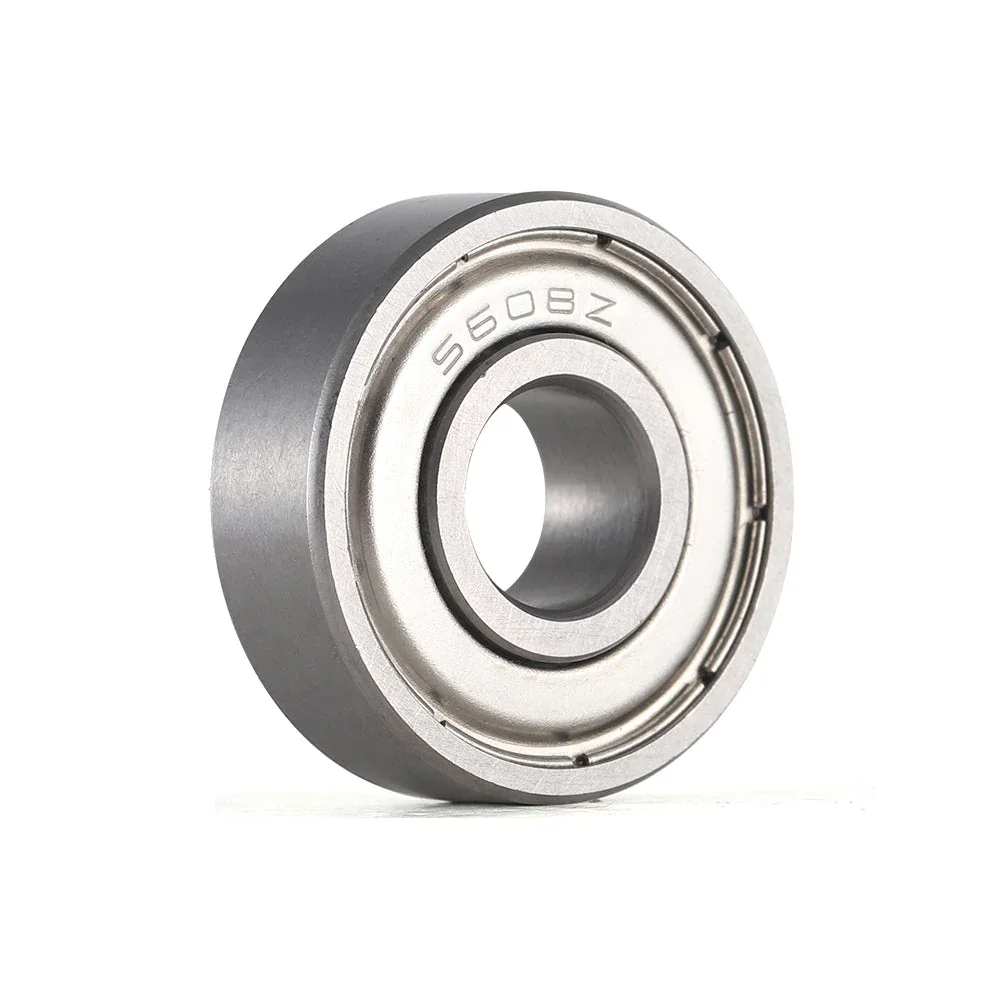
A passivation film is an extremely thin, dense, and highly stable layer of oxides or compounds that forms on a metal surface under specific environmental conditions or through chemical treatments. Its core function is to provide both a physical barrier and chemical passivation, cutting off the metal matrix from external corrosive media. This dual-action mechanism significantly inhibits electrochemical corrosion. I. Formation Mechanisms and Chemical Nature A passivation film is not a manually applied coating, like paint. Rather, it is the product of a controlled oxidation reaction between the metal matrix and its surrounding environment. The stability of this film directly determines the corrosion-resistant lifespan of the material:
To connect the material notes with purchasable categories, review CXE Bearing collections for stainless steel bearings, AISI 420 stainless bearings, and AISI 316 stainless steel bearings; these collection pages help narrow the grade choice before model-level confirmation.
Spontaneous Passivation: Taking stainless steel as an example, when an alloy containing a sufficient proportion of chromium (typically ≥12%) is exposed to air, the chromium on the surface preferentially reacts with oxygen. This forms a microscopic but incredibly dense chromium oxide (Cr₂O₃) film. This layer effectively blocks moisture and oxygen from reaching the internal iron atoms, preventing rust.
Induced Passivation: In highly alkaline environments, such as within concrete (pH 12–13), a passivation film primarily composed of iron hydroxides naturally forms on the surface of rebar. This film remains highly stable under alkaline conditions, protecting the steel from corrosion.
Electrochemical Construction: Through electrochemical processing—such as applying specific voltages in a neutral electrolyte like sodium nitrate—a stable, hydrophobic passivation film can be artificially induced on metals like GCr15 (widely known as 52100 steel or standard chrome steel). The thickness and morphology of this protective layer can be precisely controlled by adjusting voltage and processing time.
II. Protective Characteristics and Failure Risks The protective efficiency of a passivation film relies entirely on its integrity, density, and chemical stability. Once the film is compromised, corrosion can spread rapidly across the bearing steel:
Barrier and Hydrophobic Effects: A high-quality passivation film is not only dense but also hydrophobic (water-repelling). It resists the infiltration of salt ions (such as Cl⁻ and Na⁺) in humid environments, effectively preventing pitting corrosion.
Environmental Sensitivity: Passivation films are highly sensitive to the chemical composition of their environment. For instance, when chloride ion concentrations exceed a critical threshold, the ions will preferentially adsorb onto and penetrate the passivation film. They react with the iron, causing the film to rupture, which leads to rapid rusting.
Repair and Reinforcement: By adding corrosion inhibitors (such as sodium molybdate or BTA), the generation of stable oxides (like FeMoO₄ and Cr₂O₃) within the passivation film can be promoted. Alternatively, an adsorption film can be formed on the surface, significantly enhancing the film’s density and its resistance to chloride ions.
The passivation film serves as an “invisible” yet absolutely critical line of defense in metal anti-corrosion systems. Its presence and quality directly dictate the service life of a material in complex environments. Whether leveraging the spontaneous oxidation of stainless steel or utilizing electrochemical modifications to protect standard chrome steel, establishing and maintaining a robust passivation film is the key to balancing material reactivity with environmental wear. At CXE Bearing, we deeply understand these material sciences, ensuring that our components are manufactured to withstand the toughest industrial conditions.