1. Overview of the Effect of Rotational Speed on Motor Bearing Heating
For high-speed, noise, or heat-sensitive applications, compare the engineering discussion with CXE Bearing collections for GCR15 deep groove ball bearings, single row angular contact ball bearings, and hybrid ceramic bearings; the collection path helps match operating symptoms with bearing family choices.
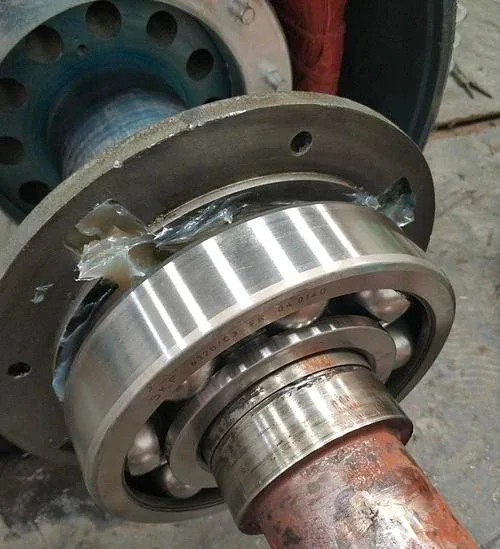
Motor bearing heating is related to the motor’s rotational speed. When selecting motor bearings, engineers will check the maximum and minimum speeds of the bearing. The purpose of speed verification includes considering the contact stress between the rolling elements and raceways, the centrifugal force at given speeds, lubrication, and many other factors. If any of these considerations are not properly addressed, the motor bearing may overheat and show excessively high temperatures.
2. Types of Variable Speed Conditions (Starting, Stopping, Acceleration/Deceleration, Direction Change)
It should be noted that when considering the upper and lower speed limits (maximum and minimum speeds) of a motor bearing, the effect of speed variations on bearing heating must also be taken into account. Such variable speed conditions include starting, stopping, acceleration, and deceleration. In actual operating conditions, this includes slow and fast speed changes, as well as changes in the direction of rotation. Generally, when a motor undergoes slow, unidirectional speed changes, the effect on the bearing is not significant. The speed variations that affect motor bearings include: first, frequent start-stop conditions (which may be unidirectional speed-change conditions) and fast speed-change conditions; second, reversing conditions (reciprocating motion).
3. Relationship Between Oil Film Formation and Sliding Friction
The main reason why the above speed variations affect bearing heating is their influence on oil film formation. We know that a basic condition for the formation of an oil or grease film inside a motor bearing is rotational speed. When speed varies, sliding friction may occur between the rolling elements and raceways. Also, due to rapid speed fluctuations or direction changes, the lubricating film may not form effectively, leading to metal-to-metal contact, which causes bearing heating or wear.
4. Bearing Selection and Lubrication Recommendations for Unidirectional Speed Variation
For unidirectional speed variations (including frequent starts and stops), if the motor bearing overheats, one can check whether the bearing selection is suitable for such conditions. For variable speed applications, it is recommended to select bearings with a strong cage, and preferably a lightweight cage made of a soft material. This reduces collisions between the cage and rolling elements during speed changes, thereby minimizing additional damage and heating. On the other hand, a grease with anti-wear additives can be chosen to reduce friction, heating, and wear caused by sliding contact between bearing components during speed variations.
5. Bearing Verification and Extreme Pressure (EP) Additives for Reciprocating Conditions
For reciprocating (reversing) conditions, additional verification of bearing selection is required – for example, static load calculations should be considered, not just the rated fatigue life calculation. For bearings in reciprocating motion, lubricants with extreme pressure (EP) additives should be selected to protect the friction pair surfaces at low speeds and during direction changes.
6. Summary of Improvement Measures When Oil Film Formation Is Unfavorable
From the above checks, it is not difficult to see that the focus is on lubrication precautions and improvement methods under conditions unfavorable to oil film formation. The main goal is to promote oil film formation, or, when a film cannot be formed, to use other measures (such as EP additives) to prevent direct metal-to-metal contact and friction between bearing components.