
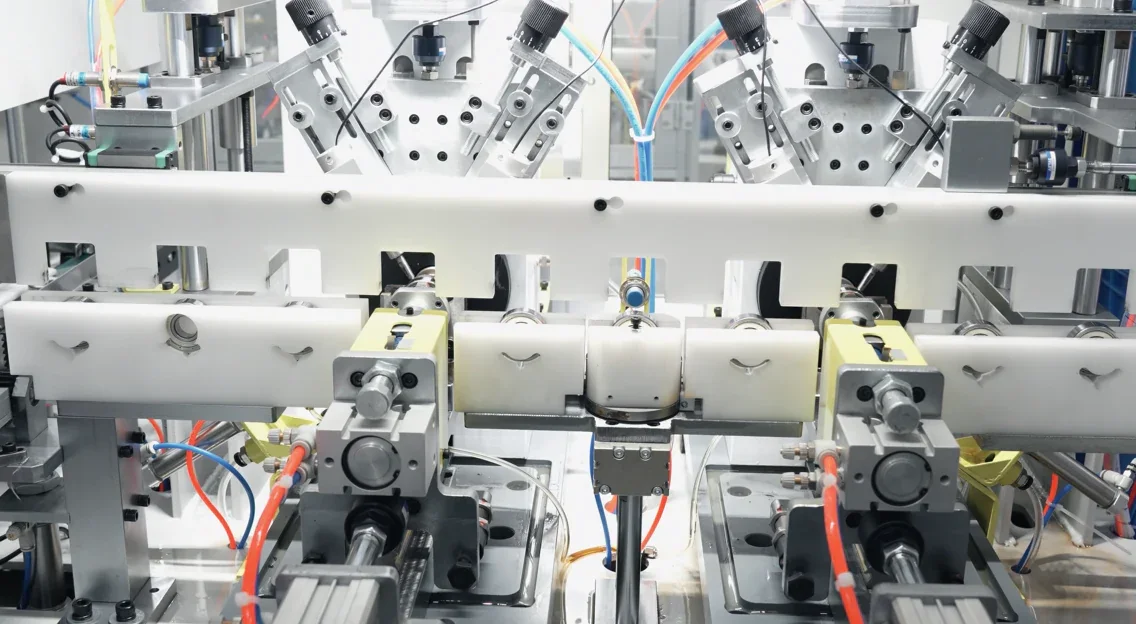
Vibration velocity is one of the common ways to compare noise and running smoothness in deep groove ball bearings. Buyers usually ask for this data when a bearing is used in electric motors, fans, pumps, precision equipment, instruments, or other assemblies where noise, heat, and vibration can affect the finished machine.
For high-speed, noise, or heat-sensitive applications, compare the engineering discussion with CXE Bearing collections for GCR15 deep groove ball bearings, single row angular contact ball bearings, and hybrid ceramic bearings; the collection path helps match operating symptoms with bearing family choices.
How to Read the Vibration Velocity Table
The values below are organized by metric outer diameter and vibration grade. Lower vibration grades are typically used when the application needs quieter running, smoother rotation, or more consistent motor performance. Treat the table as a reference for communication and comparison, not as a substitute for a full bearing test report or machine-level noise diagnosis.
When requesting low-vibration deep groove ball bearings, include the bearing model, required vibration grade, speed, load, lubricant, seal type, temperature range, and whether the application is motor, fan, pump, gearbox, instrument, or general rotating equipment.
Reference Table
GB / T 32325 — 2015
Metric Outer Diameter D (mm) V V1 V2 V3 V4
frequency frequency frequency frequency frequency
> ≤ Low Mid High Low Mid High Low Mid High Low Mid High Low Mid High
10 15 110 60 60 80 40 40 55 28 28 40 18 18 28 12 12
15 20 145 70 70 100 50 50 65 30 30 45 18 18 32 12 12
20 25 185 85 95 120 55 60 80 35 35 52 20 20 35 12 12
25 30 225 100 125 145 65 75 95 40 45 60 25 25 38 15 15
30 40 265 120 170 170 75 100 110 50 65 70 32 35 45 20 20
40 50 310 140 220 195 90 130 125 60 85 80 38 50 50 25 30
50 60 360 160 270 225 105 165 145 70 105 90 45 65 55 30 40
60 70 410 185 320 255 120 200 165 80 125 105 52 80 65 35 50
70 80 460 210 370 285 135 235 185 90 145 120 60 95 75 40 60
80 90 510 240 430 320 155 270 205 100 170 135 68 110 85 45 70
90 100 560 270 490 355 175 310 225 110 195 150 75 125 95 50 80
100 110 610 300 550 390 195 350 250 120 220 165 82 140 105 55 90
110 120 660 330 610 425 215 390 275 130 245 180 90 155 115 60 100
120 130 710 360 670 460 235 430 300 140 270 200 98 170 130 65 110
130 140 760 390 730 500 255 470 330 155 295 220 105 190 145 70 120
140 150 810 420 790 540 275 510 360 170 325 240 115 210 160 75 135
150 160 860 450 850 580 295 550 390 185 355 260 125 230 175 80 150
160 170 920 480 910 620 315 590 420 200 385 280 135 250 190 85 165
170 180 980 510 970 660 335 635 450 215 415 300 145 270 205 90 180
180 190 1040 540 1030 705 355 680 480 230 445 320 155 295 220 100 195
190 200 1100 570 1100 750 375 730 510 250 480 345 165 320 235 110 210
- Under the specified measurement conditions, the bearing vibration shall be allowed to reach a steady state and run for 1 second before measurement begins. The measurement duration shall be 2 s to 5 s, and the value at each measurement point position shall be read under these conditions.
- Select three measuring point positions approximately equally spaced along the circumferential direction of the outer cylindrical surface of the bearing outer ring. Measure on both sides (front and back). The maximum measured value in a given frequency band shall be taken as the vibration value of the bearing for that frequency band
- When a single bearing is measured by the method specified in this standard, if the vibration velocity value in any frequency band exceeds the limit value for the corresponding group in Table 1, the bearing shall be considered non-conforming (or unqualified),Group V applies to manufacturer’s inspection, while Groups V1, V2, and V3 apply to bearings for which the user requires control of vibration level
- This standard specifies the technical requirements, measurement methods, evaluation methods, and inspection rules for vibration (velocity) of deep groove ball bearings with nominal outside diameters greater than 10 mm up to 200 mm, with boundary dimensions conforming to GB/T 276, for diameter series 0, 2, and 3.
What the Grade Means for Buyers
A lower vibration bearing grade can help reduce audible noise and improve running smoothness, but it does not automatically solve every vibration problem. Shaft accuracy, housing fit, grease type, preload, contamination, alignment, and motor balance can all influence final noise and vibration.
If a machine becomes noisy after installation, first check whether the bearing was pressed correctly, whether the shaft and housing fits are within the expected range, and whether lubricant or seal drag is creating heat. Replacing the bearing with a lower vibration grade is useful only when the bearing itself is the limiting factor.
Common Mistakes
- Selecting only by vibration grade while ignoring bearing clearance and seal type.
- Comparing vibration values without confirming bore, outside diameter, and bearing series.
- Using a low-noise bearing in a damaged housing or on a worn shaft.
- Asking for V3 or V4 performance without confirming lubricant, speed, and operating temperature.
- Treating a bearing test value as a guarantee of complete machine quietness.
RFQ Checklist
For a low-vibration deep groove ball bearing quote, send the bearing number, quantity, required vibration grade, clearance, seal or shield type, lubricant preference, operating speed, application, and any noise or heat complaint from the existing assembly. If the bearing is for an electric motor or fan, include the motor frame or fan position when available.
FAQ
Does a lower vibration grade always mean a better bearing?
It means the bearing has tighter vibration requirements, but the best choice still depends on the machine. Some applications need low noise; others need load capacity, sealing, corrosion resistance, or cost control first.
Can vibration grade fix motor noise?
Only if bearing vibration is the main cause. Rotor balance, shaft fit, housing roundness, grease, preload, and assembly damage can also cause motor noise.
Should I choose V2, V3, or V4?
Choose the grade based on the equipment noise target, speed, customer requirement, and cost tolerance. For critical applications, confirm the requirement with the machine design or customer specification.