
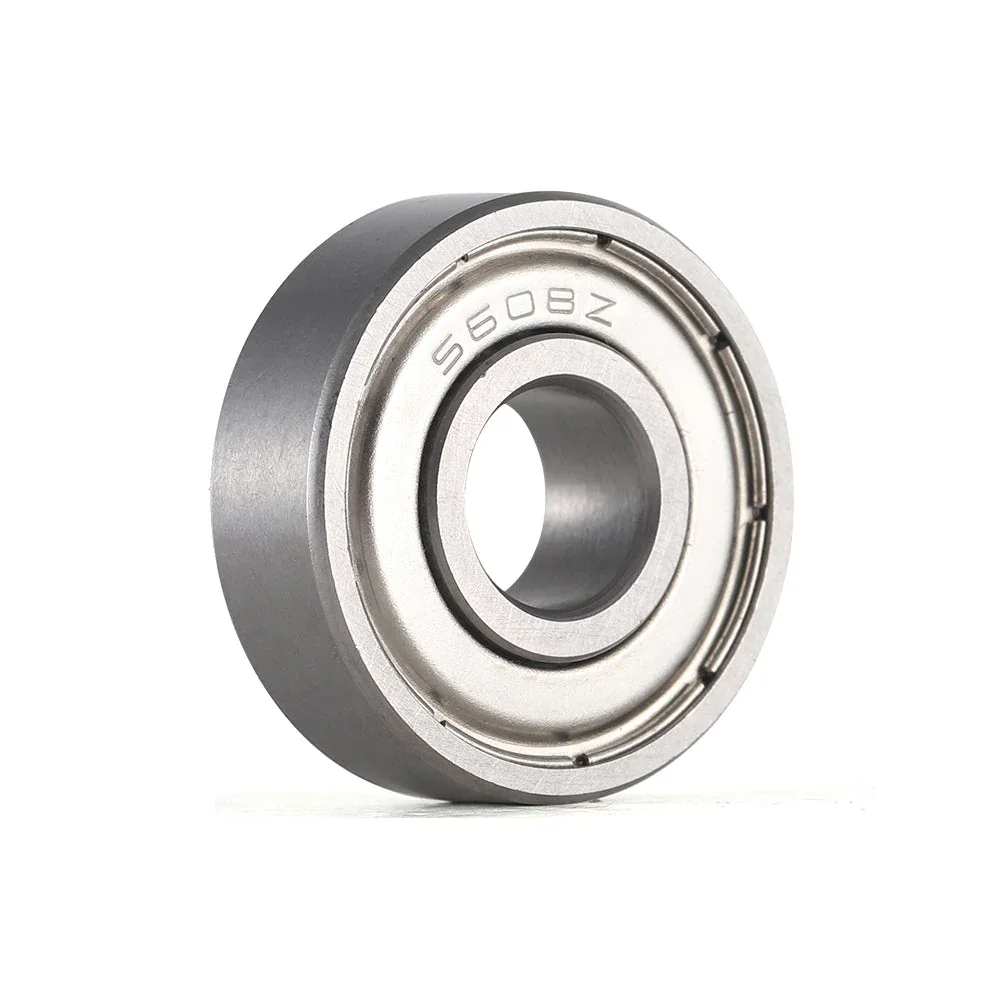
Quick answer: Yes, stainless steel bearings can rust. They are corrosion resistant, not corrosion proof. A stainless bearing is much less likely to rust than a standard chrome steel bearing in humid, wet, or mildly corrosive environments, but rust can still appear when the bearing is exposed to chlorides, trapped moisture, aggressive cleaning chemicals, damaged packaging, poor drying, or contaminated lubricant.
For a buyer or maintenance engineer, the useful question is not only “Can stainless steel rust?” The better question is: “What condition is defeating the corrosion resistance, and should I change the bearing material, seal, grease, packaging, or cleaning process?”
| If You See This | Do Not Assume | Check First |
|---|---|---|
| Orange staining after washdown | The stainless grade is fake | Cleaner chemistry, drying, seal lip condition, trapped water, and chloride level. |
| Rust before installation | The bearing material is wrong | Broken packaging, warehouse humidity, condensation, finger marks, and open storage time. |
| Rust under seals or shields | The whole bearing is unsuitable | Crevice corrosion, lubricant washout, pressure wash angle, and seal compatibility. |
| Rough rotation after storage | The bearing was overloaded | Raceway staining, grease condition, moisture entry, and packaging oil film. |
| Repeated corrosion on one machine position | Stainless cannot work there | Spray direction, drainage, housing pocket, galvanic contact, and maintenance practice. |
Why Stainless Steel Bearings Can Still Rust
Stainless steel resists rust because chromium in the alloy helps form a thin passive oxide layer on the surface. That passive layer is the reason stainless steel behaves differently from plain carbon steel or standard chrome bearing steel in wet air.
The passive layer is also the weak point in many real bearing failures. If the environment damages the film faster than it can recover, localized corrosion can start. On a bearing, even small rust spots can matter because raceways, balls, cage pockets, shields, and seal contact surfaces are precision surfaces.
The Passive Layer Needs the Right Environment
Stainless steel does not work by being immune to corrosion. It works by maintaining a protective surface condition. Moisture, oxygen, salts, residue, temperature, and surface contamination all influence whether that surface stays protected.
In a clean indoor machine, a stainless deep groove ball bearing may run for a long time without visible rust. In a seafood conveyor, bottle washer, coastal warehouse, fertilizer pump, or high-pressure washdown line, the same bearing family may stain quickly if the grade, sealing, lubrication, and cleaning process are not matched to the environment.
Chlorides Are a Common Rust Trigger
Chlorides are one of the most common reasons stainless steel bearings rust in service. Saltwater, coastal air, brine, bleach, some sanitizers, road salt, and certain process fluids can attack stainless surfaces by encouraging pitting or crevice corrosion.
This is why a bearing described as “stainless” is not automatically suitable for marine equipment, seafood processing, or repeated chemical washdown. Standard stainless steel bearings can be a strong upgrade from chrome steel in wet industrial equipment, but chloride-rich service may require a different stainless grade, a premium corrosion-resistant bearing steel, a coated bearing, a full ceramic bearing, or a design change around sealing and drainage.
Bearings Create Crevice Conditions
A bearing has many small spaces where liquid can sit: between shield and ring, under a contact seal, around the cage, in the housing shoulder, at the snap ring groove, or between the shaft and inner ring. These areas can become crevice corrosion sites when stagnant liquid, oxygen imbalance, and cleaner residue remain after washdown.
This is one reason rust often appears in a narrow band instead of evenly across the bearing. The location of the corrosion is evidence. Rust at the seal edge suggests a different problem than rust on a handled outer surface or rust across many bearings in the same damaged carton.
Stainless Steel Bearing Rust Is Usually a System Clue
Rust on a stainless steel bearing often means the bearing position has a system problem. The material may be part of the solution, but the root cause may sit in cleaning, storage, lubricant, seal design, or the surrounding hardware.
A Field Scenario: Washdown Conveyor Bearing
A food packaging line replaces chrome steel bearings with stainless steel bearings after repeated rust. The first month looks better. Then the same outer bearing on the wet side of the conveyor begins to stain and feel rough after weekend sanitation.
Changing to a harder or more expensive stainless grade may help, but it may not solve the root cause. The bearing may be receiving direct high-pressure spray at the seal lip. Cleaning solution may be trapped behind the shield. The grease may not resist water washout. The housing may hold liquid against the outer ring. The bearing may also sit wet for hours before restart.
In that case, the stronger solution is a package: stainless bearing material, washdown-compatible seals, water-resistant grease, better drainage, controlled spray direction, and a drying step. If the load is light and corrosion is severe, a 316 stainless design or a non-metallic/ceramic option may be reviewed, but only after load and speed limits are checked.
Rust Before Installation Points to Storage
If stainless bearings show corrosion before they are installed, inspect the supply chain before blaming the bearing grade. Precision bearing surfaces can be affected by humidity, condensation, torn inner bags, missing rust preventive film, dirty gloves, salt air during ocean shipping, or long open-shelf storage.
Bearings should remain sealed until use. If a package is opened for inspection and the bearing is not installed immediately, it should be protected again from moisture, dust, hand contact, and temperature swings. A bearing moved from a cold warehouse into warm humid air can collect condensation if the package is opened too soon.
Rust After Cleaning Points to Residue or Drying
If rust appears after cleaning or sanitation, look for water films, cleaner residue, chlorides, and poor drying. A stainless bearing can be attacked when liquid remains in raceway-adjacent spaces or under seals. Strong cleaners can also reduce lubricant performance or carry contaminants into the bearing.
For sealed bearings, do not judge corrosion resistance by ring material alone. Grease type, grease fill, seal lip material, cage material, and closure design all influence whether the bearing survives repeated wet cleaning.
How Material Grade Changes Rust Risk
Material grade matters, but this article should not become only a grade comparison. The practical difference is that bearing rings and balls must resist both corrosion and rolling contact stress. The most corrosion-resistant stainless grade is not always the strongest bearing raceway material.
| Bearing Material Path | Where It Helps | Rust-Related Caution |
|---|---|---|
| AISI 420 stainless steel | General wet or humid industrial use where cost and moderate corrosion resistance matter. | Not a severe chloride or aggressive chemical solution by itself. |
| AISI 440C stainless steel | Common stainless ball bearing rings and balls where hardness, wear resistance, and fatigue performance matter. | Better than chrome steel for rust, but still vulnerable in harsh washdown, chloride, or trapped-moisture service. |
| AISI 304 stainless steel | Cages, shields, housings, and light-duty corrosion-focused designs. | Usually not the default for loaded raceways because hardening and load capacity are limited. |
| AISI 316 stainless steel | Chloride-prone, marine-adjacent, food, chemical, or light-load corrosion-focused applications. | Corrosion resistance may improve, but load, speed, and raceway hardness must be verified from the actual bearing design. |
| Nitrogen-enhanced stainless bearing steel | High humidity or corrosive duty where standard 440C is not enough. | Availability, cost, dimensions, seals, and catalog ratings must be confirmed. |
| Coated, hybrid ceramic, full ceramic, or polymer bearings | Special environments where metal corrosion is the main failure mode. | These are engineering alternatives, not automatic upgrades for shock, high load, or poor installation. |
For many U.S. industrial buyers, AISI 420 stainless bearings or 440C stainless bearings are the realistic first choice for common stainless ball bearing sizes. For stronger corrosion requirements, AISI 316 stainless steel bearings may be worth reviewing when chloride exposure is part of the corrosion pattern, but the final choice still depends on load, speed, seal design, and availability.
How to Reduce Rust in Real Equipment
The best corrosion control plan treats the bearing as a small precision system. Rings, balls, cage, lubricant, seals, housing, shaft, packaging, and maintenance practice all interact.
| Control Area | What to Do | Why It Matters |
|---|---|---|
| Storage | Keep bearings sealed, dry, off the floor, away from temperature swings, and protected from salt air. | Rust can start before installation, especially after packaging damage or condensation. |
| Handling | Use clean gloves and clean tools; avoid touching precision surfaces. | Fingerprints, salts, and dirt can create local corrosion marks. |
| Packaging | Inspect inner bags, heat seals, VCI materials, desiccants, labels, and oil film condition when corrosion complaints occur. | A good stainless bearing can still arrive damaged if the package loses moisture protection. |
| Cleaning | Avoid direct high-pressure spray into seal lips; verify cleaner compatibility and rinse/dry practice. | Water and chemicals can sit in crevices and reduce lubricant protection. |
| Lubrication | Match grease to moisture, temperature, speed, load, noise requirement, and food-grade requirements if applicable. | Grease provides lubrication and can help protect against corrosion, but only if it remains compatible and clean. |
| Sealing | Choose open, ZZ, 2RS, contact seal, or special seal design based on contamination, speed, friction, and washdown exposure. | A seal that traps liquid can be worse than a seal that only blocks dust in the wrong environment. |
| Housing Design | Improve drainage, avoid liquid pockets, and review galvanic contact with surrounding metals. | Rust may start because water sits around the bearing rather than because the bearing material is poor. |
| Inspection | Record where rust appears: raceway, seal edge, outer ring, cage, packaging side, or handled surface. | Rust location helps separate material, storage, cleaning, and installation causes. |
Common Mistakes When Buying Stainless Steel Bearings
The first mistake is asking for “stainless bearings” without naming the exposure. Humid air, freshwater splash, salt spray, sanitizer, bleach, caustic cleaner, acid vapor, and storage condensation are different corrosion problems.
The second mistake is assuming stainless steel means no rust. Stainless steel can stain, pit, or corrode when the passive film is attacked or when liquid remains trapped in a crevice.
The third mistake is upgrading material while keeping the same failing seal and grease. If pressure wash pushes water past the seal, changing 420 to 440C may not fix the wet grease and crevice corrosion problem.
The fourth mistake is choosing 316 only because it sounds more corrosion resistant. 316 may be useful in chloride-prone environments, but the final bearing still needs enough load capacity, hardness, speed capability, and dimensional availability.
The fifth mistake is ignoring packaging. If bearings sit in a coastal warehouse for months after the inner bag is opened, rust can start before the equipment ever runs.
When Not to Change to Stainless Steel Bearings
Do not switch to stainless steel bearings if rust is not the real failure mode. A bearing that overheats, turns blue, loses clearance, flakes the raceway, or fails immediately after installation may be suffering from overload, wrong fit, preload, misalignment, over-greasing, poor lubrication, electrical damage, or installation brinelling.
Do not use stainless steel as a substitute for correct sealing. If mud, metal chips, abrasive powder, or high-pressure washdown is entering the bearing, sealing and housing protection may matter more than the alloy name.
Do not assume the stainless version of a bearing has the same load rating as the chrome steel version. Compare the actual catalog dynamic load rating, static load rating, speed limit, clearance, seal type, and grease. Stainless material can change mechanical performance, especially when the design moves away from hardened bearing raceway steels.
Do not choose a corrosion-resistant bearing that cannot handle the job mechanically. A bearing that resists rust but lacks load margin will still fail.
What to Confirm Before Ordering
Send enough information for the supplier to separate material corrosion from application failure. A useful RFQ for stainless steel bearings should include:
- Bearing number, dimensions, and current suffix, such as open,
ZZ,2RS, clearance class, cage, or precision requirement. - Current bearing material if known: chrome steel, 420 stainless, 440C stainless, 304, 316, hybrid ceramic, coated, or unknown.
- Equipment type and bearing position: pump, conveyor, motor, marine hardware, food line, medical device, packaging machine, or outdoor mechanism.
- Radial load, axial load, speed, duty cycle, temperature, and whether the bearing sits idle for long periods.
- Exact corrosion exposure: humidity, freshwater, saltwater, brine, sanitizer, bleach, caustic cleaner, acid, alkali, steam, fertilizer, or process vapor.
- Cleaning method, pressure wash direction, cleaning frequency, rinse quality, and drying time.
- Grease requirement, food-grade requirement, low-noise requirement, and whether relubrication is possible.
- Photos of rust location, grease condition, seal damage, packaging condition, and failed bearing orientation in the machine.
- Storage route: ocean freight, coastal warehouse, long-term inventory, opened cartons, or repeated inspection before installation.
With that information, CXE Bearing can compare stainless bearing grades, coated bearings, hybrid ceramic bearings, or full ceramic bearings without guessing from the word “rust” alone.
FAQ
Are stainless steel bearings rust proof?
No. Stainless steel bearings are corrosion resistant, not rust proof. They can still rust or stain if exposed to chlorides, aggressive cleaning chemicals, trapped moisture, damaged packaging, poor drying, or contaminated lubricant.
Why did my stainless bearing rust after washdown?
Rust after washdown usually points to liquid or cleaner residue staying near the bearing. Check pressure wash direction, seal design, drainage, grease compatibility, drying time, chloride-containing cleaners, and whether water is trapped under shields or seals.
Is 316 stainless better than 440C for rust?
316 stainless often has better resistance to chloride-related corrosion than 440C, but 440C is commonly used for hardened bearing rings and balls. For loaded ball bearings, compare corrosion resistance together with hardness, catalog load rating, speed, and availability.
Can a rusted stainless bearing still be used?
Do not reuse a rusted precision bearing without inspection. Rust on raceways, balls, cage pockets, or seal contact surfaces can increase noise, vibration, heat, and early fatigue. If rust is only light external staining, the decision still depends on application risk and supplier/OEM review.
What is the best way to prevent stainless bearing rust in storage?
Keep bearings sealed in their original packaging, avoid humid or salty storage areas, prevent condensation, do not touch precision surfaces with bare hands, inspect damaged bags or cartons, and reseal bearings if they are opened before installation.